
For anyone buying a home in Florida, or even owning one that’s a bit older, the term “4 point inspection” often comes up with a sense of urgency, typically prompted by an insurance provider. Unlike a standard home inspection that covers hundreds of items and aims to inform a buyer about the general condition of a property, a 4 point inspection serves a very specific and financially critical purpose: to assess the insurability of a home. In a state known for its unique climate challenges and an aging housing stock, understanding this inspection is paramount for securing adequate and affordable homeowners insurance, which is, in essence, the bedrock of your financial security as a property owner.
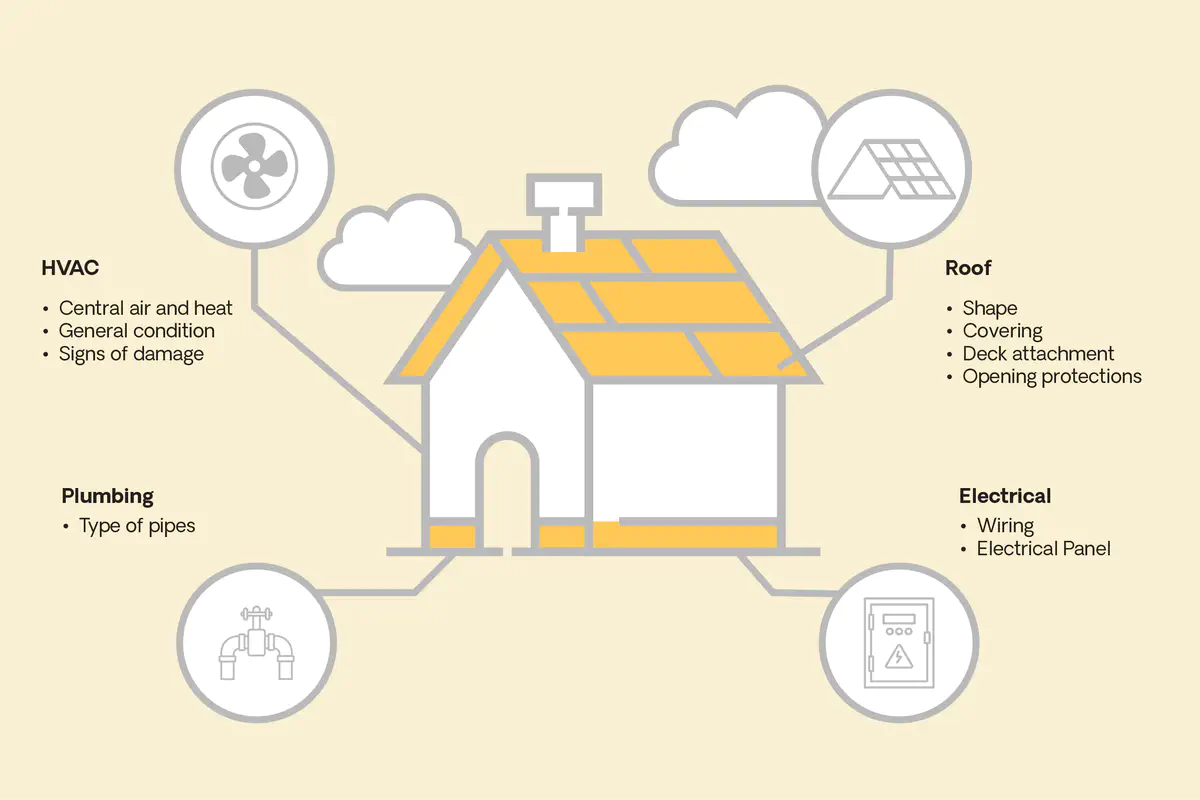
This isn’t merely a checklist; it’s a focused financial risk assessment for insurers. They want to ensure that four critical systems of your home – the roof, HVAC, electrical, and plumbing – are in good working order and not prone to imminent failure, which could lead to expensive claims. Without a satisfactory 4 point inspection, particularly for homes 10 years or older (though this threshold can vary by insurer), obtaining or renewing an insurance policy in Florida can become an insurmountable hurdle, leaving your significant investment exposed to considerable financial risk.
The Financial Imperative Behind Florida’s 4 Point Inspection
Florida’s unique geographical position and history make it a high-risk state for property insurers. From the annual hurricane season to widespread intense heat and humidity, properties here face challenges that significantly impact their longevity and susceptibility to damage. This environment, coupled with a substantial inventory of older homes built before more stringent building codes, creates a complex financial landscape for both homeowners and insurance companies.
Understanding the Insurance Landscape in the Sunshine State
The financial stability of Florida’s insurance market has been a recurring concern. Insurers face immense exposure to natural disasters, leading to high claim volumes and escalating costs. Consequently, they have become exceptionally selective about the properties they cover, especially those that represent a higher inherent risk. An older home, with systems that may be nearing the end of their useful life, presents a much greater financial liability for an insurer than a newly constructed property. The 4 point inspection is their primary tool to mitigate this risk, effectively helping them decide whether a property is a prudent financial undertaking to insure and at what premium. Without this assessment, insurers might face unexpected, large payouts for damages originating from failing fundamental systems, impacting their profitability and solvency.
The Role of Age in Insurance Underwriting
Age is a significant factor in insurance underwriting, directly correlating with financial risk. As homes age, their critical systems naturally deteriorate. A 30-year-old roof, for example, is far more likely to leak during a rainstorm than a 5-year-old one, potentially leading to water damage that can cost tens of thousands to repair. Similarly, an outdated electrical system poses a higher risk of fire, and old plumbing can burst, causing extensive flooding. These potential failures represent substantial financial losses for insurers. Therefore, for homes typically 10 years or older (though some insurers might apply this to homes as young as 5 years, and others only to those 20-30+ years old), the 4 point inspection becomes a mandatory financial gatekeeper. It allows insurers to evaluate the current condition and estimated remaining useful life (RUL) of these systems, enabling them to make an informed decision on coverage eligibility and appropriate premium levels that reflect the assessed risk.
Beyond a Standard Home Inspection: Its Purpose for Financial Protection
It’s crucial to distinguish a 4 point inspection from a comprehensive buyer’s home inspection. While both are performed by licensed professionals, their scope and purpose diverge significantly. A full home inspection provides a detailed overview of the entire property, from foundation to roof, designed to educate a prospective buyer about the home’s overall condition and potential repair needs. Its primary goal is informed decision-making during a real estate transaction.
In contrast, a 4 point inspection is narrow in its focus, exclusively targeting the four critical systems for insurance underwriting purposes. Its sole objective is to provide a snapshot of these systems’ current condition, age, and any apparent deficiencies that could pose an immediate financial risk to an insurer. It doesn’t delve into cosmetic issues, minor repairs, or overall home efficiency, but rather concentrates on the high-risk, high-cost components. For a homeowner, a successful 4 point inspection translates directly into the ability to secure necessary insurance coverage, protecting their most significant financial asset from unforeseen damages and safeguarding their personal finances against catastrophic losses.
Deconstructing the “Four Points”: Key Systems & Their Financial Impact
Each of the four points scrutinized in the inspection represents a significant financial vulnerability for a homeowner if not properly maintained or updated. The inspector’s role is to assess these systems thoroughly, providing critical data that directly influences your insurance premiums and eligibility.
Roofing: Your Home’s First Line of Defense (and Expense)
The roof is arguably the most critical component from an insurance perspective, acting as your home’s primary shield against Florida’s severe weather. The inspection will meticulously document the roof’s material (e.g., shingles, tile, metal), its age, and its overall condition, noting any visible signs of wear, damage, missing components, or past repairs. Critically, the inspector will estimate the remaining useful life (RUL) of the roof.
Financial Implications: An older roof (typically 15-20 years for asphalt shingles, though this varies by material) with a limited RUL (e.g., less than 3-5 years) can render a home uninsurable, or significantly increase premiums. Insurers are wary of imminent roof replacement costs, which can easily run into tens of thousands of dollars, especially after a storm. A failing roof means a higher likelihood of water intrusion, leading to costly interior damage, mold remediation, and structural repairs – all significant financial burdens for both the insurer and, potentially, the homeowner if not adequately covered. Proactive roof maintenance and timely replacement are significant long-term financial investments that protect your property value and ensure insurability.
HVAC (Heating, Ventilation, Air Conditioning): Comfort, Efficiency, and Cost
While Florida homes primarily rely on air conditioning, the HVAC system encompasses both heating and cooling units. The inspection focuses on the age of the units, their visible condition, and any obvious signs of disrepair, leaks, or rust. The primary concern here is the potential for significant breakdowns that lead to costly repairs or replacements.
Financial Implications: An aging or malfunctioning HVAC system not only drives up utility bills due to inefficiency but also represents a major potential expense. A full HVAC system replacement can cost upwards of $5,000-$15,000 or more. While a failing HVAC might not directly cause catastrophic damage like a burst pipe, it can lead to secondary issues such as mold growth from excessive humidity if not functioning correctly, or simply render the home uncomfortable and unlivable without costly immediate repair. Insurers consider the age and condition of HVAC systems as indicators of potential future large claims related to system failure.
Plumbing: Preventing Water Damage Disasters & Soaring Claims
The plumbing system assessment includes visible piping, water heaters, and fixtures. Inspectors look for the type of piping material (e.g., copper, PEX, PVC, galvanized, polybutylene), signs of leaks, corrosion, water pressure issues, and the age and condition of the water heater. Certain older piping materials, like polybutylene, are notorious for sudden failure and are often red flags for insurers.
Financial Implications: Water damage is one of the most common and expensive claims for homeowners insurance. A burst pipe or a leaking water heater can cause extensive damage to flooring, walls, ceilings, and personal belongings, leading to remediation and repair costs that often exceed $10,000, and sometimes much more if mold develops. The financial risk associated with outdated or compromised plumbing is immense. An unsatisfactory plumbing assessment due to old, problematic piping or an aged water heater will almost certainly lead to higher premiums, coverage denials, or demands for system replacement as a condition of insurance. Investing in modern, reliable plumbing is a crucial financial safeguard.
Electrical Systems: Safety, Modernization, and Insurance Premiums
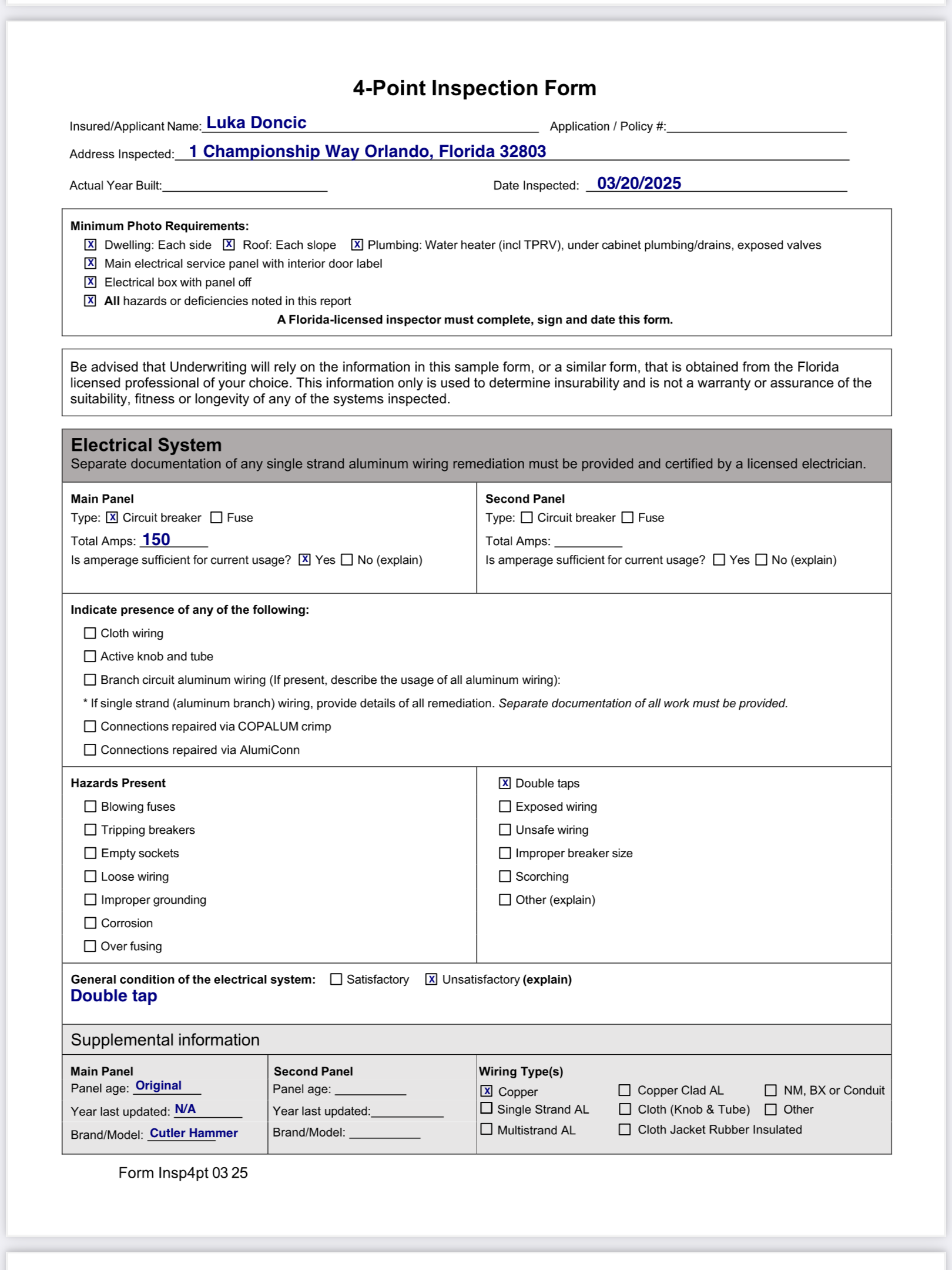
The electrical system inspection examines the electrical panel (breaker box), wiring types (e.g., aluminum, knob and tube, copper), and general condition of outlets and switches. Inspectors will note the amperage of the service, any visible hazards like frayed wires, improper wiring, or overloaded circuits. Certain wiring types, such as “knob and tube” or “aluminum branch circuit wiring” (especially from the 1960s and 70s), are considered high-risk due to fire hazards.
Financial Implications: Electrical fires are devastating and incredibly costly, often resulting in total loss of property and, tragically, sometimes lives. Insurers view outdated or faulty electrical systems as a major financial liability. Homes with older, problematic wiring types will frequently face challenges obtaining insurance or will be subject to prohibitively high premiums. Upgrading an electrical panel or rewiring a home is a significant expense, ranging from a few thousand to over $15,000 for a full rewire. However, this investment is often non-negotiable for securing insurance and, more importantly, for ensuring the safety and long-term financial viability of your property. Addressing electrical deficiencies proactively protects your asset from catastrophic loss and reduces insurance costs.
Financial Implications for Florida Homeowners and Buyers

The outcome of a 4 point inspection ripples across various aspects of a homeowner’s financial life, from immediate insurance costs to long-term property value. Understanding these implications is key to making informed financial decisions.
Securing Affordable Homeowners Insurance
The most direct financial consequence of a 4 point inspection is its impact on your ability to secure homeowners insurance, and at what cost. In Florida, a satisfactory report is often a prerequisite for obtaining or renewing a policy, especially for older homes. An unsatisfactory report – highlighting significant deficiencies in one or more of the four points – can lead to outright denial of coverage, non-renewal, or a requirement to complete costly repairs before coverage is granted. Without insurance, mortgage lenders will not finance a property, effectively stalling real estate transactions. For cash buyers, foregoing insurance exposes them to immense personal financial risk. A clean report, conversely, enables access to competitive rates, protecting your wallet from excessive premiums.
Budgeting for Potential Repairs and Upgrades
The inspection report serves as an invaluable financial planning tool. If deficiencies are found, it provides a clear roadmap of necessary repairs or upgrades. Homeowners and prospective buyers can use this information to budget accordingly. Rather than being caught off guard by a sudden roof replacement or electrical panel upgrade, the inspection allows for proactive financial allocation. Establishing a “home maintenance sinking fund” is a smart financial strategy, where a portion of income is regularly set aside to cover anticipated major expenses identified by such inspections, preventing financial distress when these costs arise.
Impact on Real Estate Transactions
For buyers, a 4 point inspection is often a non-negotiable contingency of their mortgage and insurance approval. If the inspection reveals significant issues, it can prompt negotiations with the seller for repairs or credits, potentially saving the buyer thousands of dollars. If an agreement isn’t reached, it can even lead to the cancellation of the contract, protecting the buyer from inheriting a property with immediate, costly problems and uninsurable systems. For sellers, proactively addressing 4 point inspection concerns before listing can streamline the sale, prevent delays, and often increase the home’s marketability and final sale price by demonstrating a well-maintained property ready for insurance coverage.
Long-Term Financial Planning and Property Value
Beyond immediate transactional impacts, diligent attention to the four points contributes significantly to long-term financial planning and property value. Regularly maintaining and updating these critical systems extends their useful life, reduces emergency repair costs, and enhances the overall safety and appeal of your home. A home with a relatively new roof, updated electrical, efficient HVAC, and sound plumbing will command a higher market value and be more attractive to future buyers and insurers. This proactive approach safeguards your investment, ensuring it remains a valuable and insurable asset in your financial portfolio.
The Inspection Process and Choosing the Right Professional
Understanding the process and selecting a competent inspector are crucial steps in navigating the 4 point inspection successfully, directly impacting the accuracy of the report and your subsequent financial decisions.
What to Expect During the Inspection
A 4 point inspection is typically quicker than a full home inspection, usually taking between 30 minutes to an hour, depending on the property’s size and complexity. The inspector will methodically examine each of the four systems, primarily focusing on visible components. They will take numerous photographs, document the age and condition of each system, and note any deficiencies or safety concerns. For example, they will photograph the data plate on the water heater for its age, walk the roof to assess its condition, open the electrical panel for a visual check, and examine visible plumbing lines. The resulting report will generally include a summary of findings for each system, along with photos and recommendations.
Selecting a Qualified Inspector
Choosing a qualified and reputable inspector is paramount. While many home inspectors can perform a 4 point inspection, look for someone who is:
- Licensed and Insured: Ensure they are a licensed home inspector in Florida and carry appropriate liability insurance.
- Experienced: Opt for inspectors with a solid track record, particularly in assessing older homes in Florida.
- Thorough and Unbiased: A good inspector will provide an objective assessment, not one skewed to either the buyer or seller.
- Communicative: They should be able to clearly explain their findings and answer any questions you may have.
- Familiar with Insurer Requirements: An experienced inspector will know what specific details and reporting formats insurance companies in Florida typically require.
The quality of the report directly influences your financial outcome, so investing in a skilled professional is a wise decision.
Interpreting the Report and Next Steps
Once you receive the report, meticulously review its findings. Understand what “satisfactory,” “marginal,” or “unsatisfactory” means for each system. If deficiencies are noted, get multiple quotes from qualified contractors for the recommended repairs or replacements. This information is vital for negotiating with a seller (if you’re a buyer) or for planning your home improvement budget (if you’re an existing homeowner). Finally, share the report with your insurance agent immediately. They will guide you on whether the report is acceptable, if repairs are required as a condition of coverage, or if further documentation is needed to secure your policy.
Beyond the 4 Point: Other Financial Considerations for Florida Homeowners
While the 4 point inspection is crucial, it’s just one piece of the complex financial puzzle for Florida homeowners. Other inspections and proactive measures can further protect your investment and reduce ongoing costs.
Wind Mitigation Inspections: Further Savings on Insurance
A wind mitigation inspection is a specialized assessment focused on a home’s ability to withstand high winds, particularly from hurricanes. It examines features like roof-to-wall attachments, roof shape, roof decking attachment, secondary water resistance, and opening protection (e.g., hurricane shutters). While separate from a 4 point, a successful wind mitigation inspection can lead to significant discounts on the windstorm portion of your homeowners insurance premium, often saving hundreds or even thousands of dollars annually. It’s a highly recommended financial investment for any Florida homeowner.
Flood Insurance: A Separate but Crucial Financial Protection
It’s critical to understand that standard homeowners insurance policies do not cover flood damage. Given Florida’s vulnerability to tropical storms and sea-level rise, flood insurance is often a separate, yet absolutely essential, financial protection. Even if your home isn’t in a high-risk flood zone, recent changes to flood mapping and increasing rainfall intensity mean that many properties previously considered low-risk are now vulnerable. Lenders will require flood insurance in high-risk zones, but it’s a prudent financial decision for anyone in Florida to consider, regardless of official zone designation.
Proactive Maintenance: Your Best Financial Defense
Ultimately, the best defense against costly repairs, insurance headaches, and property value depreciation is proactive home maintenance. Regular inspections, addressing minor issues before they escalate, and planning for the eventual replacement of major systems based on their estimated useful life can save you significant financial heartache. This means regularly cleaning gutters, checking for leaks, servicing your HVAC, and keeping an eye on your roof’s condition. A well-maintained home is an insurable home, a valuable asset, and a source of financial peace of mind.
Conclusion: Proactive Protection for Your Florida Home and Wallet
The 4 point inspection in Florida is more than just a bureaucratic requirement; it’s a vital tool for safeguarding your most significant financial asset. By thoroughly assessing the roof, HVAC, electrical, and plumbing systems, it provides a critical snapshot for insurers to gauge risk, and for homeowners to understand potential liabilities. Navigating this inspection successfully means securing essential homeowners insurance, budgeting effectively for necessary updates, and ultimately protecting your property value and personal finances against the unique challenges of Florida homeownership. Being informed, choosing qualified professionals, and adopting a proactive maintenance mindset are your best strategies for long-term financial security in the Sunshine State.
aViewFromTheCave is a participant in the Amazon Services LLC Associates Program, an affiliate advertising program designed to provide a means for sites to earn advertising fees by advertising and linking to Amazon.com. Amazon, the Amazon logo, AmazonSupply, and the AmazonSupply logo are trademarks of Amazon.com, Inc. or its affiliates. As an Amazon Associate we earn affiliate commissions from qualifying purchases.