
In the vast world of numismatics, few coins evoke as much nostalgic charm as the Lincoln Wheat Penny. Minted from 1909 to 1958, these copper cents served as a tangible piece of American history, passing through countless hands and pockets. Among these, the 1956 issue holds a particular place, often prompting curious individuals to wonder about its potential value. While millions of these coins were produced, the worth of a specific 1956 Wheat Penny can range from mere face value to significant sums, depending on a confluence of factors that intrigue collectors and investors alike. This guide delves into the specifics of the 1956 Wheat Penny, dissecting the elements that determine its market value and offering insights into its place within the broader numismatic landscape. Understanding these dynamics is crucial for anyone looking to appraise their inherited treasure or make an informed addition to their coin collection.
Understanding the 1956 Wheat Penny: A Historical Context
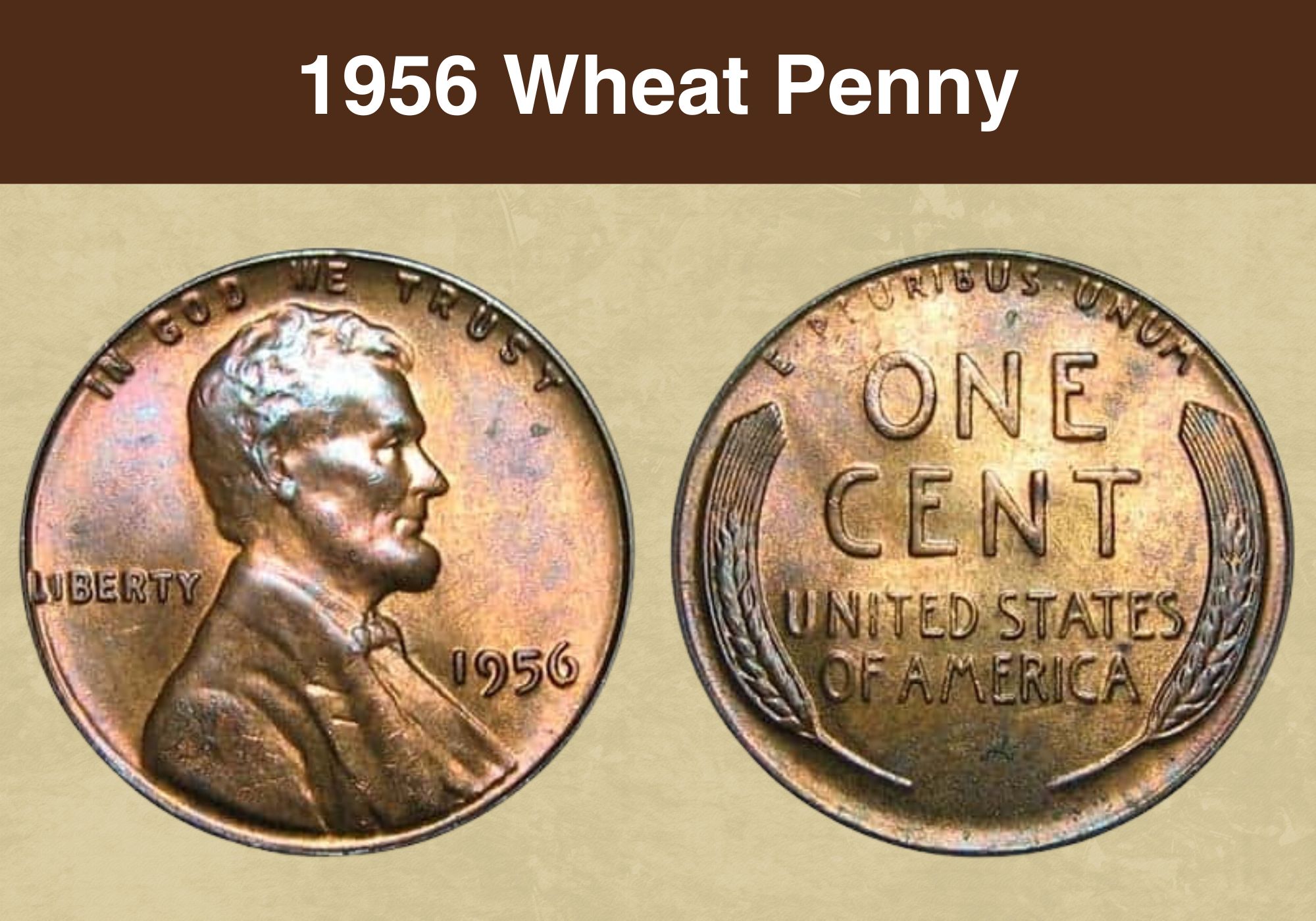
To properly assess the value of a 1956 Wheat Penny, it’s essential to first appreciate its historical backdrop and specific characteristics. The Lincoln Cent series, initiated in 1909 to commemorate Abraham Lincoln’s 100th birthday, marked the first time a real person appeared on a U.S. coin. The initial design, featuring Victor David Brenner’s iconic bust of Lincoln on the obverse, was paired with a reverse design showcasing two stalks of wheat, hence the popular “Wheat Penny” moniker. This design remained largely unchanged until 1958, making the 1956 issue one of the later entries in this beloved series.
Brief History of the Wheat Cent Series
The Wheat Cent’s introduction was a landmark moment in American coinage. Its simple yet elegant design quickly garnered public affection, and it became a staple of daily commerce for five decades. Throughout its run, various mints—Philadelphia (no mint mark), Denver (D), and San Francisco (S)—produced billions of these coins. The series saw changes in metallic composition during World War II, with steel cents appearing in 1943 due to copper rationing, but by 1956, the traditional bronze alloy (95% copper, 5% zinc/tin) was back in use. The longevity and high mintage numbers of most Wheat Pennies mean that common examples are readily available, though specific years and conditions can command premiums.
Distinguishing Features of the 1956 Issue
The 1956 Wheat Penny, like its counterparts, features Abraham Lincoln facing right on the obverse, with the inscriptions “IN GOD WE TRUST” above, “LIBERTY” to his left, and the date “1956” to his right. The reverse displays the two wheat ears, along with “E PLURIBUS UNUM” at the top, “ONE CENT” in the center, and “UNITED STATES OF AMERICA” at the bottom. For a coin of this age, its design is remarkably clear and intricate, even in circulated condition. Identifying a 1956 penny is straightforward due to its prominent date, but determining its worth requires a deeper dive into its specific mintage and condition.
Mint Marks and Production Figures
The 1956 Wheat Penny was produced at two different U.S. Mints:
- Philadelphia Mint (no mint mark): The Philadelphia Mint produced a staggering 1,098,209,000 pennies in 1956. Coins from Philadelphia do not carry a mint mark.
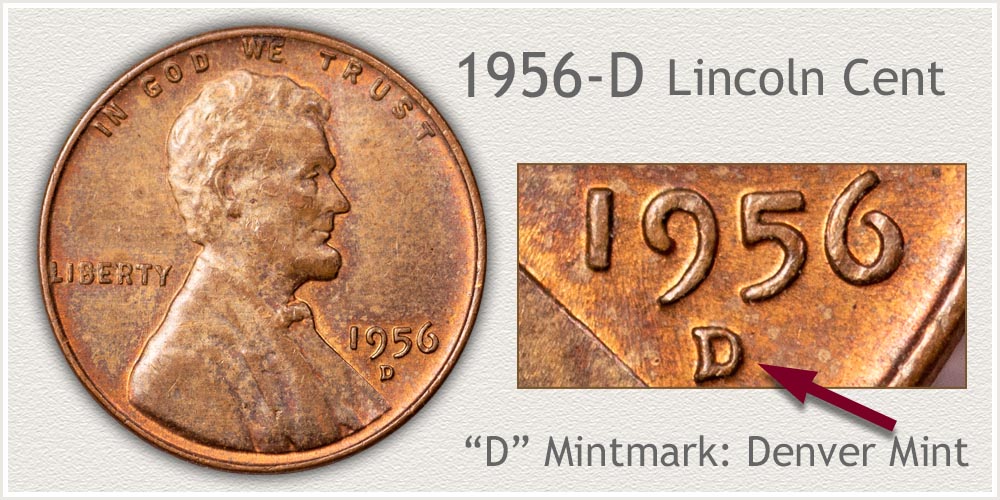
- Denver Mint (D mint mark): The Denver Mint contributed significantly with 517,404,500 pennies. Coins from Denver bear a small “D” mint mark located just below the date on the obverse.
These exceptionally high mintage figures indicate that the 1956 Wheat Penny, regardless of its mint of origin, is not considered rare in absolute terms. Billions were struck, meaning countless examples survive today. This high availability significantly impacts the base value of these coins, pushing common circulated examples towards their face value or slightly above. True value differentiation begins with condition and the presence of any rare anomalies.
Factors Influencing a 1956 Wheat Penny’s Value
While the sheer volume of 1956 Wheat Pennies might suggest uniform low value, the reality for coin collectors is far more nuanced. Several critical factors converge to determine the true market worth of any specific coin. Understanding these elements is paramount for accurate appraisal and for appreciating the intricate economics of numismatics.
Condition: The Cornerstone of Value (Grading Scales)
The physical condition of a coin is by far the most influential factor in determining its value. Coins are graded on a 70-point scale established by Sheldon, ranging from Poor (P-1) to Perfect Mint State (MS-70). For a 1956 Wheat Penny, the difference in value between a heavily worn example and a pristine, uncirculated one can be hundreds, if not thousands, of dollars.
- Circulated Condition (P-1 to AU-58): Most 1956 pennies found in circulation are in Good (G), Very Good (VG), Fine (F), or Very Fine (VF) condition. In these grades, details like Lincoln’s hair and beard, or the wheat lines on the reverse, are worn down. A common 1956 penny in these grades is typically worth only a few cents to perhaps 10-25 cents. Even in Extremely Fine (EF) or About Uncirculated (AU) conditions, where most details are sharp but slight wear is visible, the value rarely exceeds a few dollars for a standard example.
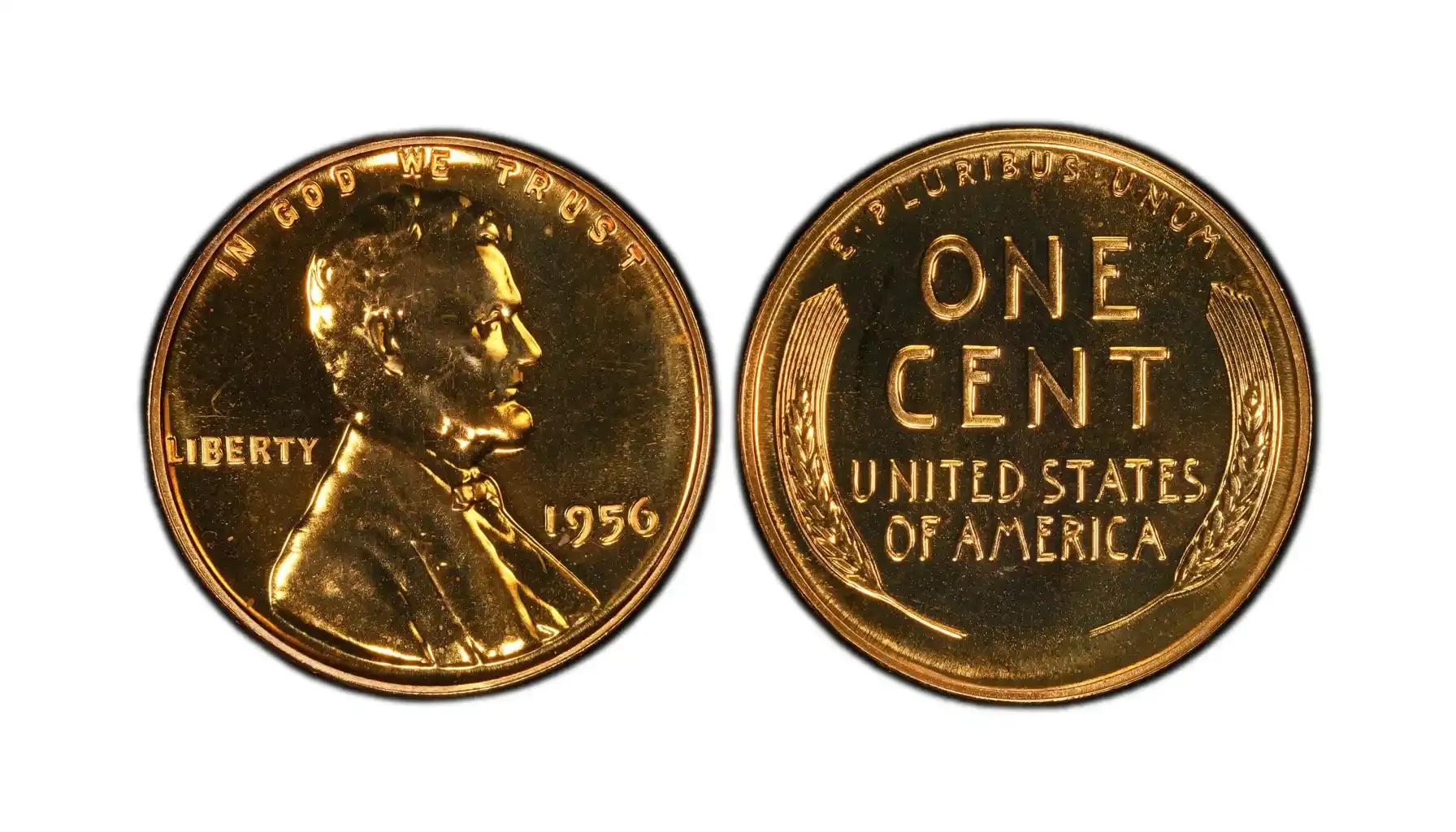
- Uncirculated Condition (MS-60 to MS-70): Uncirculated coins, also known as “Mint State” (MS), have never been used in commerce and retain their original mint luster. For a 1956 Wheat Penny, an MS-60 example might fetch a few dollars, but values escalate sharply for higher grades. An MS-65 (Gem Uncirculated) coin, with minimal contact marks and full luster, could be worth $10-$30, while an MS-66 might reach $50-$100. Exceptionally well-preserved coins, such as an MS-67, can command hundreds or even thousands of dollars, as they are truly rare in such high states of preservation. “Red” (RD) designation, indicating original copper color, also adds value compared to “Red Brown” (RB) or “Brown” (BN) coins.
Rarity and Mint Errors
While common 1956 Wheat Pennies are abundant, certain rare varieties or minting errors can significantly elevate their value. Collectors actively seek out these anomalies, turning seemingly ordinary coins into valuable treasures.
- Doubled Die Varieties: These occur when a coin’s die is struck multiple times during its creation, resulting in a doubled image on the coin. While not as famous as the 1955 Doubled Die Obverse, some minor doubled die varieties have been noted for the 1956 penny, particularly on the reverse (Doubled Die Reverse – DDR) affecting the lettering. These are rare and require close inspection, often with magnification, to identify. Their value can range from tens to hundreds of dollars, depending on the prominence of the doubling and the coin’s condition.
- Other Mint Errors: Other types of errors include off-center strikes, planchet errors (e.g., lamination errors, clipped planchets), or re-punched mint marks (RPMs). While not as common for the 1956 issue as for some other years, these errors are unique and can add significant value. An obvious error, even on a common date like 1956, can turn a cent into a multi-dollar or even hundred-dollar coin.
Market Demand and Economic Trends
The value of any collectible, including coins, is ultimately influenced by market demand. The collector base for Wheat Pennies remains strong, driven by nostalgia, affordability for common examples, and the challenge of finding high-grade or error coins. Economic trends can also play a role; during times of economic uncertainty, tangible assets like precious metals and rare coins sometimes see increased interest as a hedge against inflation. However, for common 1956 pennies, overall market sentiment has a less dramatic impact than condition or rarity. The long-term trend for truly high-grade or rare error coins tends to be one of appreciation, making them potentially sound numismatic investments.
Appraising Your 1956 Wheat Penny: Professional Guidance
For those holding a 1956 Wheat Penny and wondering about its specific worth, a systematic approach to appraisal is key. While many resources exist for self-assessment, knowing when to seek professional verification can be invaluable, particularly for potentially high-value specimens.
Self-Assessment: What to Look For
Before consulting an expert, you can conduct an initial assessment of your coin:
- Mint Mark: Carefully examine the area below the date for a “D” (Denver) or its absence (Philadelphia).
- Condition Assessment: Using a magnifying glass (10x is ideal), inspect the coin for wear. Look at Lincoln’s hair, cheekbone, and jawline. On the reverse, check the distinctness of the wheat stalks and the lettering. Compare your coin to online grading guides or images of graded coins. Pay attention to the original luster; a coin retaining its “red” copper color will be more valuable than a “brown” one.
- Search for Errors: Scrutinize the date and mint mark for any signs of doubling or repunching. Look for anomalies in the strike or planchet. If you suspect an error, research known varieties for the 1956 issue.
- Consult Price Guides: Use reputable coin price guides (like those from PCGS, NGC, or specialized publications) to get an estimated range. Remember that these guides list values for graded coins, and your self-assessment will be approximate.
When to Seek Professional Grading
If your 1956 Wheat Penny appears to be in exceptional, uncirculated condition (MS-65 or higher), or if you strongly suspect it’s a rare error variety, professional grading is highly recommended. Organizations like the Professional Coin Grading Service (PCGS) and the Numismatic Guaranty Corporation (NGC) are industry standards for third-party authentication and grading.
- Benefits of Professional Grading:
- Authenticity: Confirms the coin is genuine.
- Accurate Grade: Provides an objective, expert assessment of the coin’s condition, which is crucial for determining value.
- Encapsulation: The coin is sealed in a tamper-evident holder, protecting it and preserving its grade.
- Enhanced Liquidity: Graded coins are more readily accepted and command higher prices in the marketplace due to trust in their authenticity and grade.
- Identification of Varieties: Professional graders are adept at spotting subtle error varieties that might be missed by an amateur.
Given the cost of professional grading (typically $20-$50+ per coin), it is generally advisable only for coins that you believe are worth at least $100-$200 in their current state, as the grading fee could otherwise outweigh the potential increase in value for lower-tier coins.
Trusted Resources for Valuation
Beyond professional grading services, several resources can aid in valuation:
- Online Price Guides: Websites like PCGS.com, NGCcoin.com, and CoinValues.com offer extensive price guides for various grades of coins. Be sure to check multiple sources for consistency.
- Auction Records: Reputable auction houses (e.g., Heritage Auctions, Stack’s Bowers Galleries) publish past auction results, which offer real-world transaction data for specific coins. This is particularly useful for rare errors or high-grade examples.
- Numismatic Books and Periodicals: Standard catalogs such as “A Guide Book of United States Coins” (the “Red Book”) provide comprehensive pricing information.
- Local Coin Dealers: An experienced local coin dealer can offer an initial opinion on your coin’s grade and potential value, and may even be interested in purchasing it. While not an official grading, it’s a good starting point.
Collecting 1956 Wheat Pennies: Tips for Enthusiasts
Collecting 1956 Wheat Pennies, whether as part of a larger Lincoln Cent collection or as a standalone pursuit, can be a rewarding endeavor. Given their commonality in lower grades, it’s an accessible entry point for new collectors, while the pursuit of high-grade examples or elusive errors offers a challenge for seasoned numismatists.
Starting Your Wheat Penny Collection
For beginners, the 1956 Wheat Penny is an excellent coin to start with due to its low cost in circulated grades. You can easily find them in rolls from banks, estate sales, or coin shows.
- Focus on Condition: Even if starting with circulated coins, try to acquire the best possible examples for your budget. A well-preserved VF-30 coin will always be more aesthetically pleasing and hold more long-term appeal than a G-4 coin.
- Mint Mark Sets: A popular goal is to collect one of each mint mark for a given year. For 1956, this means finding a “P” (no mark) and a “D” penny.
- Educate Yourself: Invest in a basic coin grading guide or numismatic reference book. Understanding the terminology and grading standards will greatly enhance your collecting experience and help you make smarter purchases. Join online forums or local coin clubs to connect with other enthusiasts.
Preservation and Storage Best Practices
Once you acquire coins, proper preservation is paramount to maintaining their condition and value.
- Handle Coins Carefully: Always hold coins by their edges to avoid transferring oils and dirt from your skin, which can cause permanent damage or toning. Use cotton gloves if available.
- Appropriate Storage: Store coins in inert, PVC-free holders. Options include 2×2 cardboard flips (mylar window), Mylar “safety flips,” or archival-safe plastic capsules/slabs. Avoid soft plastic (PVC) holders, as they can leach chemicals that damage coins over time, leaving a sticky green residue.
- Environment: Store your collection in a cool, dry, and stable environment, away from direct sunlight, extreme temperature fluctuations, and high humidity, which can accelerate corrosion or toning.
- Avoid Cleaning Coins: Never clean coins unless you are an expert conservator. Cleaning, even seemingly gentle methods, can irrevocably damage a coin’s surface, destroy its original patina, and significantly reduce its numismatic value. A coin in its original, dirty state is almost always worth more than a poorly cleaned one.
Identifying Key Varieties and Errors
While most 1956 Wheat Pennies are standard issues, the excitement lies in discovering a rare variety or error.
- Magnification is Key: A jeweler’s loupe (10x power) or a good quality microscope is indispensable for examining details, mint marks, and potential errors.
- Known Errors: Research known doubled die varieties (DDO/DDR) or re-punched mint marks (RPMs) for the 1956 date. Websites like VarietyVista.com or Wexler’s Die Varieties provide detailed listings and images to help with identification.
- Patience and Persistence: Finding an error coin in circulation is akin to finding a needle in a haystack, but it’s not impossible. The thrill of the hunt is a significant part of the collecting experience. Continuously learning and honing your observational skills will increase your chances of making a valuable discovery.
In conclusion, the 1956 Wheat Penny, while a common coin in everyday terms, holds a spectrum of values influenced primarily by its condition and the presence of rare minting errors. For the average circulated example, its worth is modest, appealing mainly to nostalgic collectors. However, uncirculated specimens, especially those in high-grade “Red” condition, or those exhibiting significant errors, can be quite valuable, transforming a simple copper cent into a prized numismatic asset. Whether you’re a seasoned investor or a budding collector, understanding these nuances is essential for navigating the fascinating world of coin collecting and truly appreciating the historical and monetary significance of the 1956 Wheat Penny.
aViewFromTheCave is a participant in the Amazon Services LLC Associates Program, an affiliate advertising program designed to provide a means for sites to earn advertising fees by advertising and linking to Amazon.com. Amazon, the Amazon logo, AmazonSupply, and the AmazonSupply logo are trademarks of Amazon.com, Inc. or its affiliates. As an Amazon Associate we earn affiliate commissions from qualifying purchases.