
The humble nickel, a five-cent piece, often passes through our hands unnoticed, its value seemingly fixed at face value. However, for the astute observer and the passionate numismatist, certain years and conditions can transform this everyday coin into a prized possession with a value far exceeding its denomination. Among these, the 1941 Jefferson Nickel holds a peculiar charm, minted on the cusp of America’s entry into World War II, bearing witness to a pivotal moment in history. While many 1941 nickels are still worth just their face value, some possess characteristics that elevate them into the realm of collectible assets, representing a fascinating intersection of history, artistry, and monetary value. Understanding what makes a 1941 nickel valuable requires delving into its historical context, physical attributes, and the intricate world of coin grading and market dynamics.
The 1941 Jefferson Nickel: A Historical Snapshot
The Jefferson Nickel series, introduced in 1938, replaced the iconic Buffalo Nickel, marking a new era in American coinage. Designed by Felix Schlag, it features a profile of Thomas Jefferson on the obverse and his Monticello estate on the reverse. The 1941 issue falls within the early years of this series, a period of global tension as World War II raged in Europe and Asia, and the United States prepared for its inevitable involvement. This historical backdrop imbues every 1941 nickel with a silent narrative, making it more than just a piece of metal.
Historical Context of 1941 Nickels
In 1941, the U.S. economy was steadily recovering from the Great Depression, and industrial production was ramping up in anticipation of war. The mints were busy producing vast quantities of coinage to facilitate everyday transactions in a bustling economy. This widespread production means that 1941 nickels are generally abundant, but their journey through circulation over decades determines their present condition and, consequently, their worth. These coins were handled by millions of Americans during a period of immense change, from pre-war prosperity to wartime rationing, each coin potentially having a story etched into its worn surfaces.
Composition and Basic Specifications
All 1941 Jefferson Nickels, like their counterparts from 1938-1942, are composed of 75% copper and 25% nickel. Each coin weighs 5.0 grams and has a diameter of 21.21 mm with a plain edge. This standard composition and size are consistent across all mint marks for that year. It’s crucial to note this composition because later in the war (1942-1945), due to nickel being a critical war material, the “War Nickels” were introduced, featuring a different alloy of 56% copper, 35% silver, and 9% manganese, easily identified by a large mint mark above Monticello. The 1941 nickels predate this change, sticking to the classic copper-nickel blend.
Mint Marks and Their Significance
In 1941, Jefferson Nickels were minted at three U.S. Mint facilities:
- Philadelphia (no mint mark): The primary mint produced the largest quantity, over 203 million coins.
- Denver (D): Minted approximately 53.4 million coins.
- San Francisco (S): Minted approximately 43.4 million coins.
For 1941, the Philadelphia mint mark is conspicuous by its absence, with no “P” appearing on the reverse. The “D” and “S” mint marks are located to the right of Monticello on the reverse side of the coin. While the Denver and San Francisco mintages are significantly lower than Philadelphia’s, they are still high enough that none of the 1941 mint marks are considered truly “rare” in circulated conditions. However, in higher, uncirculated grades, the “D” and “S” issues tend to command slightly higher values due to their comparatively smaller populations.
Factors Determining a 1941 Nickel’s Value
The intrinsic value of a 1941 nickel as just metal is negligible. Its worth as a collectible stems from a combination of factors that appeal to numismatists. These factors collectively transform a five-cent piece into a potential investment or a cherished part of a collection.
Condition (Grade)
Without a doubt, the single most critical factor influencing a 1941 nickel’s value is its condition, or “grade.” Coin grading is a standardized system that assesses a coin’s wear, luster, strike quality, and eye appeal. The Sheldon Scale, ranging from Poor (P-1) to Perfect Mint State (MS-70), is universally used.
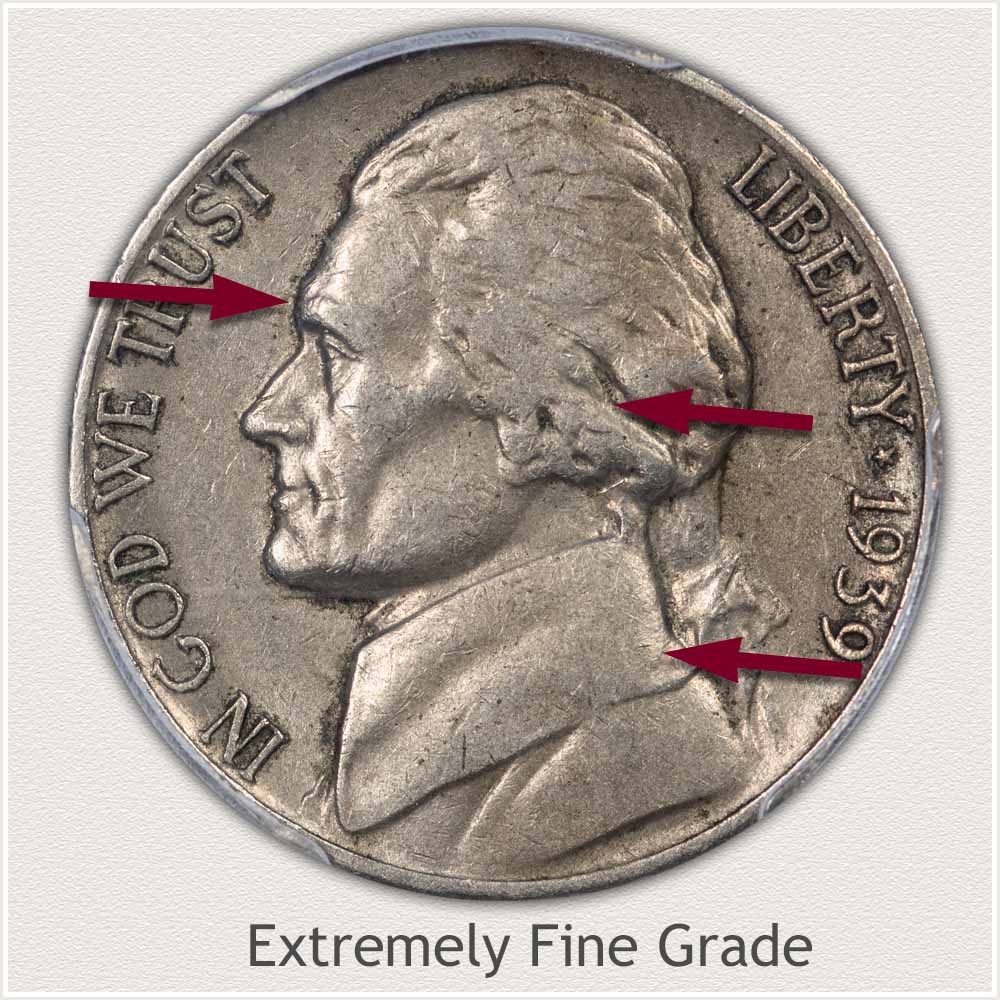
- Circulated Grades (e.g., Good, Very Fine, Extremely Fine): Coins that have seen extensive use will show significant wear. Features like Jefferson’s hair details, the steps of Monticello, and the lettering will be flattened or incomplete. Most 1941 nickels found in circulation fall into these categories and are typically worth slightly more than face value, perhaps $0.25 to a few dollars, depending on the specific grade and mint mark.
- Uncirculated Grades (e.g., AU, MS-60 to MS-70): These coins show no signs of wear from circulation. Their value is determined by the quality of their original strike, the presence of original mint luster, and the absence of post-mint damage. An “AU” (About Uncirculated) coin might have faint signs of handling but no wear. “MS” (Mint State) coins are uncirculated.
- Full Steps (FS) Designation: For Jefferson Nickels, an additional premium is often placed on coins exhibiting “Full Steps” (FS) on the reverse, meaning all six steps of Monticello are clearly visible and sharply defined. This indicates a superb strike, which is less common. A 1941-S nickel with Full Steps in MS-65 condition, for example, would be significantly more valuable than one without the FS designation.
- Proof Coins: In 1941, the Philadelphia Mint also produced “Proof” nickels – coins specially struck for collectors with highly polished dies and planchets, resulting in mirror-like fields and frosted devices. Only 17,965 Proof 1941 nickels were minted, making them considerably rarer and more valuable than their business-strike counterparts.
Mint Mark Rarity
As mentioned, while no 1941 mint mark is truly rare in low grades, the lower mintages of the Denver (“D”) and San Francisco (“S”) issues mean that pristine, uncirculated examples of these coins tend to fetch higher prices than their Philadelphia (no mint mark) counterparts. Collectors often seek to complete sets that include all mint marks in high grades, driving demand for the scarcer “D” and “S” issues.
Key Dates, Varieties, and Errors
While the 1941 Jefferson Nickel isn’t known for any major “key date” varieties like some other series (e.g., the 1937-D 3-leg Buffalo Nickel), minor varieties and striking errors can significantly boost a coin’s value.
- Varieties: These are slight differences that occurred during the die-making process. For Jefferson Nickels, collectors often look for doubled dies (where the design appears doubled), repunched mint marks (where the mint mark was struck more than once in slightly different positions), or other die anomalies. While no widely recognized, highly valuable major varieties are famous for 1941, minor varieties can exist and are prized by specialized collectors.
- Errors: Errors occur during the minting process itself, such as off-center strikes, planchet errors (e.g., clipped planchets), or die breaks. A dramatic error can turn an otherwise common coin into a highly sought-after rarity. For instance, a significantly off-center 1941 nickel would be worth considerably more than a standard one, depending on the degree of the error and the coin’s overall condition.
Market Demand and Trends
The value of any collectible item, including a 1941 nickel, is also influenced by the broader market. The overall health of the coin collecting hobby, economic conditions, and specific trends within the Jefferson Nickel series can all affect prices. High demand for a particular year or grade can drive prices up, while a decline in interest or an influx of new supply can cause them to stabilize or even drop. Websites, forums, and price guides often reflect these market dynamics, making continuous research essential for serious collectors and investors.
Estimating the Worth: A Practical Guide
Determining the exact worth of a 1941 nickel requires careful assessment. For most individuals, the process begins with a personal examination, followed by consultation with reliable resources or, for more valuable pieces, professional authentication and grading.
Common 1941 Nickels

The vast majority of 1941 nickels encountered in everyday life are circulated examples. These coins show considerable wear, and their value is typically modest:
- Good (G-4) to Fine (F-12) condition: $0.10 to $0.50. These are often considered “filler” coins for basic collections or just worth face value.
- Very Fine (VF-20) to Extremely Fine (XF-40) condition: $0.50 to $5.00. In these grades, some details are discernible, but significant wear is still evident.
These values are general estimates and can fluctuate based on specific demand and dealer pricing.
Uncirculated and Higher Grades
This is where the real value often lies. Coins in uncirculated condition, especially those with Full Steps (FS), command significantly higher prices:
- About Uncirculated (AU-50 to AU-58): $5.00 to $20.00, depending on the mint mark and exact grade.
- Mint State (MS-60 to MS-64): $10.00 to $50.00. These coins retain their original luster but may have some minor marks or imperfections.
- Gem Uncirculated (MS-65 and higher): $50.00 to several hundred dollars, particularly for “D” and “S” mint marks, and even more so for those with the coveted Full Steps (FS) designation.
- A 1941-S nickel graded MS-66 FS could potentially fetch over $1,000, while a 1941 Proof nickel in PR-65 might be in the $100-$300 range. Top-tier specimens can reach even higher figures.
Role of Professional Grading Services (PCGS, NGC)
For any 1941 nickel that appears to be in uncirculated condition or suspected of having a rare variety/error, professional grading is highly recommended. Services like PCGS (Professional Coin Grading Service) and NGC (Numismatic Guaranty Corporation) are industry standards. They authenticate the coin, assign a precise numerical grade, and encapsulate it in a tamper-proof slab. While there’s a cost involved (typically $20-$50 per coin, plus shipping and insurance), professional grading provides:
- Authentication: Confirms the coin’s genuineness.
- Reliable Grade: An unbiased, expert assessment of condition.
- Enhanced Liquidity: Graded coins are easier to sell and command higher prices due to buyer confidence.
- Protection: The slab protects the coin from environmental damage and handling.
It is generally advisable to only submit coins for grading if their estimated value in uncirculated condition substantially outweighs the grading costs.
Where to Find Current Values
To get the most up-to-date values for 1941 nickels, consult multiple reputable sources:
- Online Price Guides: Websites like PCGS.com, NGC.com, and CoinValues.com offer extensive price guides based on graded coins.
- Auction Results: Reviewing past auction sales (e.g., Heritage Auctions, eBay completed listings for graded coins) provides real-world transaction data.
- The “Greysheet” (Coin Dealer Newsletter): A professional resource used by dealers for wholesale pricing.
- Local Coin Dealers: Reputable dealers can provide appraisals and offer insights into local market conditions.
Always compare prices across several sources, as values can fluctuate and vary between different dealers and platforms.
Investing in Collectible Coins: Beyond the 1941 Nickel
While a 1941 nickel might not be a direct path to immense wealth, understanding its value dynamics provides a microcosm for the broader world of numismatic investing. For those considering coins as part of their financial portfolio, a strategic approach is essential.
Hobby vs. Investment
It’s crucial to differentiate between collecting coins as a hobby for enjoyment and viewing them purely as an investment. Many collectors are driven by historical interest, aesthetic appeal, or the thrill of the hunt, with monetary appreciation being a secondary benefit. Investors, on the other hand, prioritize rarity, condition, market demand, and potential for growth. While a high-grade 1941 nickel can be a good example of a coin that blends both, most circulated coins are primarily hobby pieces.
Research Is Key
Whether pursuing a hobby or an investment, thorough research is paramount. Understand the specific series you are interested in, learn about key dates, varieties, and typical error types. Familiarize yourself with grading standards and market trends. Knowledge is your most valuable asset in numismatics. Attend coin shows, join online forums, read books, and consult with experienced collectors and dealers.
Storage and Preservation
The value of a coin can quickly diminish if not properly stored. Coins should be kept in inert, archival-safe holders (e.g., Mylar flips, non-PVC holders, certified slabs). Avoid handling coins directly with bare hands; use cotton gloves. Store them in a stable environment away from extreme temperatures, humidity, and direct sunlight. Proper preservation is not just about maintaining value but also about safeguarding a piece of history.
Liquidity Considerations
Collectible coins, while potentially appreciating, are not as liquid as stocks or bonds. Selling them can take time and effort, and you might not always achieve your desired price immediately. While popular series and high-grade examples tend to be more liquid, niche items or lower-grade common coins might require more patience to sell. Factor in potential dealer commissions or auction fees when calculating your net return.

Conclusion
The question, “What is a 1941 nickel worth?” leads to a nuanced answer that goes far beyond its face value. For the vast majority of circulated examples, the value remains modest, perhaps a few cents to a few dollars above its five-cent denomination. However, for those few pieces that have survived the past 80-plus years in pristine, uncirculated condition, particularly those from the Denver and San Francisco mints, or those exhibiting superb strikes with Full Steps, the worth can ascend into the tens, hundreds, or even thousands of dollars.
More than just a monetary figure, each 1941 nickel carries a fragment of American history, minted as the nation stood at the precipice of global conflict. Understanding its value involves appreciating its historical context, discerning its physical characteristics, and navigating the intricate world of numismatic grading and market forces. For collectors and investors alike, the 1941 nickel serves as a tangible reminder that sometimes, the smallest denomination can hold the greatest stories and surprising financial potential.
aViewFromTheCave is a participant in the Amazon Services LLC Associates Program, an affiliate advertising program designed to provide a means for sites to earn advertising fees by advertising and linking to Amazon.com. Amazon, the Amazon logo, AmazonSupply, and the AmazonSupply logo are trademarks of Amazon.com, Inc. or its affiliates. As an Amazon Associate we earn affiliate commissions from qualifying purchases.