
The classic riddle, “What has many keys but can’t open a lock?” often evokes a simple, singular answer: a computer keyboard. While seemingly straightforward, this playful enigma holds a profound, almost prophetic, resonance in the digital age. On the surface, the keyboard’s array of physical keys indeed cannot unlock a tangible door. Yet, this very device, a fundamental interface to our technological world, is instrumental in generating, transmitting, and validating the digital keys that unlock virtually every aspect of our modern lives. From logging into our email to authenticating financial transactions, the keyboard is the silent orchestrator of access, a paradoxical tool whose physical limitations belie its immense power in the realm of virtual locks and keys.
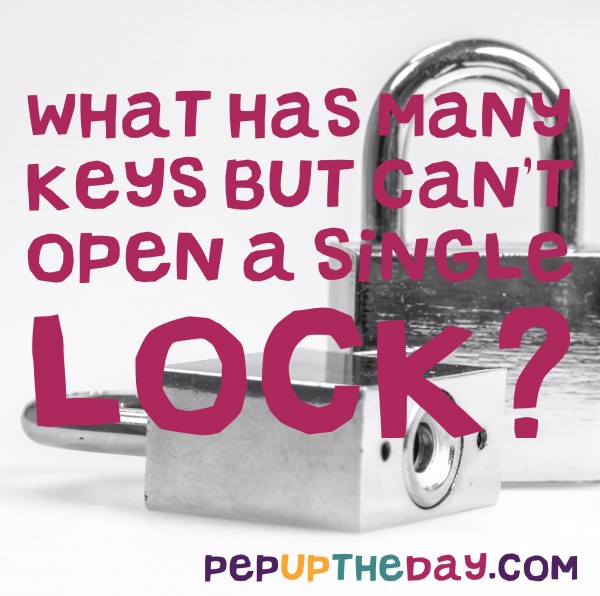
This article delves into this intriguing paradox, exploring the journey from the physical “keys” of a keyboard to the abstract “keys” of cybersecurity and access management. We will navigate the evolution of digital input, dissect the architecture of modern security, examine the challenges inherent in protecting our digital locks, and peer into the future of identity and access in an increasingly interconnected world. The riddle, therefore, transforms from a simple brain-teaser into a potent metaphor for the intricate, often vulnerable, ecosystem of digital trust and security.
The Ubiquitous Keyboard: More Than Just Type and Click
Our interaction with the digital world fundamentally begins with the keyboard. This array of tactile keys, each representing a character or command, serves as our primary physical bridge to the abstract realm of computing. Its design, largely unchanged for decades, underscores its enduring utility, even as the digital landscape it interacts with morphs at an exponential pace.
From QWERTY to Quantum: The Evolution of Digital Input
The story of the keyboard is one of ingenious design born from mechanical necessity. The QWERTY layout, notoriously designed to slow down typists to prevent typewriter jams, ironically became the standard for digital input. From bulky electromechanical typewriters to the sleek, haptic feedback models of today, the core concept remains: a matrix of individual keys that, when pressed, translate into digital signals. Beyond the standard QWERTY, specialized keyboards for gaming, programming, and accessibility highlight the diverse needs of users, each set of “many keys” tailored for specific interactions. Looking ahead, advancements like virtual keyboards, holographic interfaces, and even brain-computer interfaces (BCIs) hint at a future where the physical keys may become abstract gestures, yet the underlying principle of intentional input—of generating a “key” signal—will persist.
The Physical Limit: Why Keys Don’t Open Locks (Physically)
The literal truth of the riddle is undeniable: a computer keyboard, for all its functionality, possesses no mechanism to engage with a physical locking cylinder. Its keys are designed for input, not for mechanical leverage or coded rotation. This straightforward reality grounds the riddle, serving as a reminder of the distinction between the physical and digital realms. The keyboard operates on electrical impulses, sending signals to a processor; it is not a tool of locksmithery. This inherent limitation is precisely what makes the riddle so clever, setting the stage for its metaphorical journey into the digital domain.
The Gateway to the Digital Realm: Crafting Digital Keys
While physically inert, the keyboard’s true power lies in its capacity to generate and transmit digital information. Each keystroke contributes to the formation of data strings – whether an email, a document, or, most critically, a password. The keyboard is the crucial interface where we create and enter our digital keys. It transforms our intent into machine-readable code, enabling us to type out the complex combinations of characters that serve as our digital identities and unlock pathways to information, services, and virtual environments. Without this seemingly simple device, the very concept of digital access as we know it would be dramatically altered, perhaps even impossible.
The Invisible Keys: Navigating Digital Locks and Access
Beyond the physical interface, the concept of “keys” proliferates throughout the digital landscape. These are not tangible objects but rather abstract pieces of information, cryptographic constructs, or biometric data that grant or deny access to digital “locks”—whether data, applications, networks, or devices.
Passwords, Passkeys, and PINs: Our Everyday Digital Keys
The most common digital keys are passwords, passkeys, and PINs. Passwords, alphanumeric strings remembered by the user, have been the bedrock of digital security for decades. While ubiquitous, their reliance on human memory and susceptibility to common attack vectors (phishing, brute force) have highlighted their inherent vulnerabilities. PINs, typically shorter numerical codes, offer a quicker, though often less secure, form of access, common for mobile devices and banking.
Emerging as a more robust successor, passkeys represent a significant leap forward. Built on public-key cryptography, passkeys eliminate the need for users to remember complex strings. Instead, they leverage cryptographic pairs: a public key stored with the service and a private key stored securely on the user’s device (often protected by a biometric or PIN). This approach significantly mitigates phishing risks and enhances overall security, embodying a more advanced form of digital “key” management that is both more secure and user-friendly. These everyday keys are the frontline defenders of our personal digital locks.
Encryption and Cryptography: The Master Keys of Cybersecurity
Beneath the surface of user-facing credentials lies the sophisticated world of encryption and cryptography – the master keys of cybersecurity. Encryption is the process of converting information or data into a code to prevent unauthorized access, while cryptography is the science of secure communication in the presence of adversaries. At their heart are cryptographic keys, mathematical values used to encrypt and decrypt data.
These keys, often incredibly complex and lengthy digital strings, transform readable plaintext into unintelligible ciphertext and back again. Public-key cryptography, for example, uses a pair of mathematically linked keys: a public key for encryption (which can be shared openly) and a private key for decryption (kept secret by the owner). This system underpins secure communication across the internet, digital signatures, and the very integrity of online transactions. Without these invisible master keys, the digital locks protecting sensitive data, intellectual property, and national security would be entirely permeable.
The Paradox of Power: Keys That Open, Keys That Protect

The digital key presents a fascinating paradox: it is simultaneously a tool of access and a mechanism of protection. A well-constructed password or a robust encryption key opens the intended digital lock for its legitimate owner, granting access to invaluable resources. Yet, that very same key acts as an impenetrable barrier to unauthorized individuals, denying them entry and safeguarding the integrity and confidentiality of the locked content.
This duality underscores the critical importance of key management. If a key is compromised (stolen, leaked, or guessed), the protective barrier collapses, and the lock becomes meaningless. Conversely, if a key is lost, even the legitimate owner can be permanently locked out. The digital key, therefore, is a testament to both empowerment and vulnerability, a powerful instrument that demands meticulous care and sophisticated management to ensure its efficacy in an ever-hostile digital environment.
When the Keys Don’t Fit: Challenges in Digital Security
Despite the sophistication of digital keys and locks, the system is far from infallible. The constant cat-and-mouse game between cybersecurity professionals and malicious actors highlights significant challenges in maintaining robust digital security. Often, the keys don’t fit, or the locks themselves are compromised.
The Human Factor: The Weakest Link in the Key Chain
Ironically, the most sophisticated digital security systems can be undone by the simplest human errors. Users often choose weak, easily guessable passwords (e.g., “123456,” “password”), reuse credentials across multiple services, or fall victim to social engineering tactics like phishing. Phishing attacks, where attackers impersonate legitimate entities to trick users into divulging their digital keys, remain a leading cause of data breaches. Even with multi-factor authentication (MFA) in place, sophisticated social engineering can sometimes bypass these layers. Educating users about best practices, fostering a culture of security awareness, and implementing user-friendly, secure authentication methods (like passkeys) are crucial steps to strengthen this often-overlooked weak link.
The Threat Landscape: Malicious Attempts to Pick Digital Locks
The digital world is under constant siege from a diverse array of threats. Cybercriminals employ various techniques to “pick” digital locks, ranging from brute-force attacks (trying every possible key combination) and dictionary attacks (using common words/phrases) to more advanced methods like credential stuffing (using leaked credentials from one breach to try and access accounts on other services). Ransomware encrypts a victim’s data and demands a “key” (payment) for decryption, while malware, spyware, and viruses aim to steal keys or compromise entire systems. The sheer volume and sophistication of these attacks necessitate continuous innovation in defensive strategies, including advanced threat detection, intrusion prevention systems, and proactive vulnerability management.
The Search for the Universal Key: Interoperability and Standards
The digital ecosystem is fragmented, with myriad platforms, services, and devices, each often requiring its own set of keys and authentication methods. This lack of seamless interoperability can lead to “password fatigue,” where users struggle to manage numerous unique credentials, often resorting to insecure practices. The search for a “universal key” – or at least highly interoperable standards – is a significant challenge. Efforts like single sign-on (SSO) systems, identity providers (IdPs), and open standards like OAuth and OpenID Connect aim to simplify authentication and improve user experience while maintaining security. However, balancing convenience with robust security across a disparate landscape remains an ongoing quest, seeking to make digital keys work harmoniously across all digital locks.
The Future of Keys and Locks: Beyond the Keyboard
As technology evolves, so too do the methods of access and security. The reliance on physical keyboards for key generation is slowly diversifying, ushering in an era where the “key” might be an inherent part of who you are or how your identity is validated across decentralized networks.
Biometrics: The Key Is You
Biometrics represent a significant shift from “what you know” (passwords) or “what you have” (tokens) to “who you are.” Fingerprint scanners, facial recognition, iris scans, and voice authentication leverage unique biological traits as digital keys. These methods offer enhanced convenience and often stronger security than traditional passwords, as biometric data is harder to steal or forget. However, challenges remain, including the irrevocability of compromised biometric data (you can’t change your fingerprint) and privacy concerns regarding the storage and use of such sensitive information. Yet, biometrics are rapidly becoming a cornerstone of modern authentication, transforming our very selves into digital keys.
Multi-Factor Authentication: Layering the Locks
Recognizing the inherent vulnerabilities of single-factor authentication, Multi-Factor Authentication (MFA) has become an essential security standard. MFA requires users to provide two or more verification factors from independent categories (something you know, something you have, something you are) to gain access. Examples include a password (something you know) combined with a code sent to your phone (something you have) or a fingerprint scan (something you are). By layering multiple “locks” that require different types of “keys,” MFA significantly increases the difficulty for unauthorized individuals to gain access, even if one factor is compromised. It’s a pragmatic approach to bolstering security in a world where single keys are increasingly fragile.
Decentralized Identity and Blockchain: New Paradigms for Access
Emerging technologies like blockchain and decentralized identity (DID) promise a revolutionary overhaul of how we manage our digital keys and identities. Instead of relying on centralized authorities to verify our identity, DID empowers individuals with self-sovereign control over their personal data. Through cryptographic credentials stored on distributed ledgers, users can selectively share verified attributes (e.g., “over 18” without revealing a birthdate) without exposing their full identity. This paradigm aims to eliminate single points of failure, reduce the risk of identity theft, and create a more secure, private, and interoperable system of digital keys and locks, shifting power from institutions back to the individual.

The Ever-Evolving Role of the Digital Key
The riddle “What has many keys but can’t open a lock?” serves as a powerful metaphor for our complex relationship with technology. The humble keyboard, with its multitude of physical keys, cannot manipulate a physical lock, yet it is the very instrument through which we create and manage the intangible, yet immensely powerful, digital keys that govern our modern existence. These digital keys—passwords, encryption algorithms, biometric identifiers, and future decentralized credentials—are the guardians of our data, the gatekeepers of our access, and the enablers of our digital lives.
As we move forward, the challenge remains to create keys that are simultaneously robust against sophisticated attacks, user-friendly for the everyday individual, and respectful of privacy. The continuous evolution of threats necessitates an equally relentless pace of innovation in security technologies. From the foundational role of the keyboard to the cutting-edge promise of blockchain-based identity, the story of digital keys and locks is one of ongoing adaptation, ingenuity, and the critical pursuit of a secure and accessible digital future. The answer to the riddle, therefore, transcends its literal interpretation, urging us to reflect on the profound implications of the digital keys we wield and the intricate locks they protect.
aViewFromTheCave is a participant in the Amazon Services LLC Associates Program, an affiliate advertising program designed to provide a means for sites to earn advertising fees by advertising and linking to Amazon.com. Amazon, the Amazon logo, AmazonSupply, and the AmazonSupply logo are trademarks of Amazon.com, Inc. or its affiliates. As an Amazon Associate we earn affiliate commissions from qualifying purchases.