
In the vast and intricate world of numismatics, the humble half dollar stands as a fascinating and potentially lucrative area of exploration for collectors and investors alike. While many perceive coins merely as currency, certain half dollars transcend their face value, becoming valuable assets sought after for their rarity, historical significance, and pristine condition. For those looking to delve into coin collecting as a hobby or an alternative investment, understanding which half dollars hold substantial worth is the first crucial step. This guide will illuminate the series, dates, and characteristics that distinguish common coinage from genuine treasures, providing a roadmap for identifying and appreciating these valuable pieces of American history.
Understanding the Appeal of Half Dollar Collecting
The allure of half dollars extends beyond their metallic composition; it encompasses a journey through American history, economic shifts, and artistic evolution. Collecting these coins is not just about accumulating metal; it’s about curating pieces of the past, each with a story to tell and a potential financial appreciation.
A Glimpse into American Numismatic History
Half dollars have played a significant role in American commerce since the late 18th century, serving as a vital denomination in a growing nation. From the early draped bust designs to the iconic Walking Liberty and Franklin depictions, each series reflects the artistic tastes and national identity of its era. This historical lineage is a primary draw for many collectors, offering a tangible connection to pivotal moments in the nation’s development. Understanding the historical context of each series can significantly enhance a collector’s appreciation and ability to identify valuable specimens. For instance, coins minted during periods of economic instability or war often have lower mintages or unique compositions, driving up their scarcity and value.
Factors Driving Coin Value: Rarity, Condition, and Demand
The intrinsic value of a half dollar, beyond its silver or clad content, is fundamentally dictated by three core pillars: rarity, condition, and demand. Rarity refers to the number of coins originally minted and, more importantly, the number that have survived to the present day. Lower mintages or coins lost to melting pots are inherently rarer. Condition, or grade, is paramount; a coin in pristine, uncirculated condition will always command a significantly higher price than a heavily worn counterpart, even if they are the same rare date. Finally, demand from collectors drives market prices. Popular series or coins with compelling backstories often attract a broader base of enthusiasts, pushing values upward. A confluence of high rarity, superb condition, and strong demand creates the perfect storm for a truly valuable half dollar.
The Investment Potential of Collectible Coins
While primarily a hobby, serious coin collecting, particularly with an eye towards valuable half dollars, can also serve as a legitimate alternative investment. Like art or antiques, rare coins are tangible assets that can appreciate in value over time, often uncorrelated with traditional stock markets. However, success in this realm requires diligence, education, and a keen understanding of market dynamics. Investors must learn to differentiate between speculative trends and genuinely sound acquisitions, focusing on well-preserved, historically significant, and genuinely rare coins. Building a diversified portfolio of collectible half dollars can offer a unique hedge against inflation and a tangible store of wealth, provided one approaches it with a long-term perspective and robust research.
Key Series and Eras for Valuable Half Dollars
The United States has issued several distinct half dollar series over its history, each with its own nuances, key dates, and potential for significant value. Identifying which series to focus on is crucial for anyone seeking valuable specimens.
Early Silver Half Dollars (Pre-1839): Bust and Capped Bust Designs
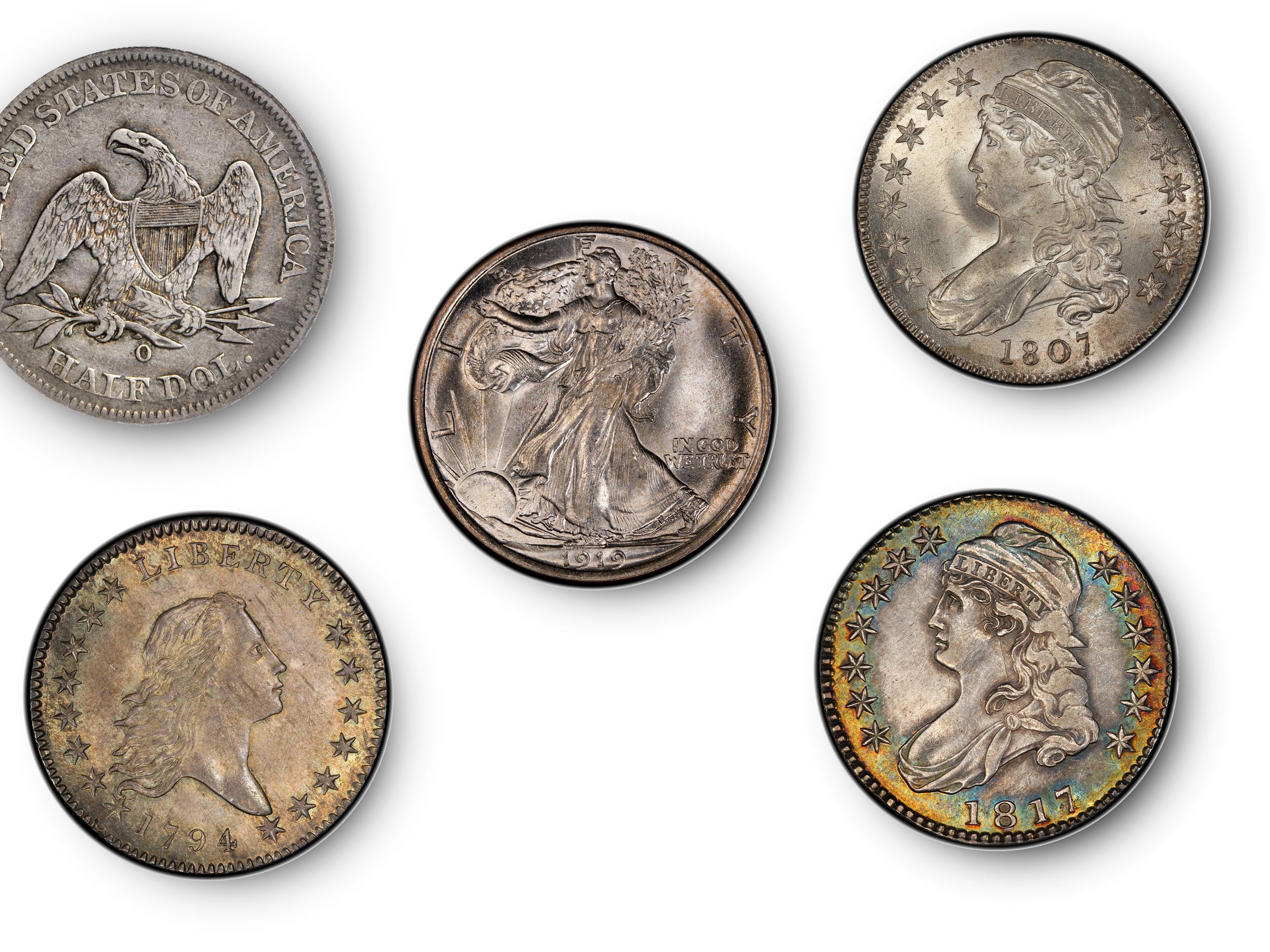
The earliest U.S. half dollars, including the Draped Bust (1796-1807) and Capped Bust (1807-1839) designs, are generally highly sought after by collectors. These coins represent the nascent stages of U.S. coinage and were produced in relatively small quantities compared to later issues. Any Draped Bust half dollar, regardless of condition, is considered rare and valuable due to its age and limited mintage. Key dates within the Capped Bust series, particularly those with low mintages or rare varieties like the “Small 8” or “Lettered Edge” errors, can fetch substantial sums. Their age means finding them in higher grades is exceptionally challenging, making well-preserved examples even more prized.
Seated Liberty Half Dollars (1839-1891): A Century of Change
The Seated Liberty design, featuring Lady Liberty seated on a rock, endured for over half a century and saw numerous variations due to design modifications and minting location changes. This long series offers a rich hunting ground for valuable coins. Key dates include those from the Carson City (CC) mint, known for its low mintages and frontier history, such as the 1870-CC, 1871-CC, 1872-CC, and 1874-CC. Other rare issues stem from specific years and mint marks, particularly those from New Orleans (O) and San Francisco (S) mints in certain years. The various design subtypes—no drapery, drapery, arrows at date, legend on obverse—also add layers of collectibility and value.
Barber Half Dollars (1892-1915): Transition to Modern Design
Designed by Charles E. Barber, these half dollars feature a stoic Liberty head on the obverse. While many Barber half dollars saw heavy circulation, specific dates and mint marks can be quite valuable. Low mintage issues from the San Francisco (S) and New Orleans (O) mints are particularly prized, such as the 1892-O, 1892-S, 1897-O, 1904-S, and 1913-S. Coins in uncirculated condition, especially those with strong strikes and original luster, command significant premiums. This series bridges the gap between earlier, more ornate designs and the more streamlined aesthetics of the 20th century.
Walking Liberty Half Dollars (1916-1947): The Iconic American Coin
Often considered one of the most beautiful U.S. coin designs, the Walking Liberty half dollar is highly popular among collectors. Its majestic depiction of Lady Liberty striding towards a rising sun is an enduring symbol. While many dates are relatively common in circulated condition, key dates and mint marks are exceedingly valuable. These include the 1916-S, 1917-D (obverse mint mark), 1917-S (obverse mint mark), 1919-D, 1919-S, 1921, 1921-D, 1921-S, 1938-D, and all coins from 1934-S through 1938. High-grade examples, especially those with Full Head (FH) details on Liberty, are especially valuable. All Walking Liberty half dollars were struck in 90% silver, adding to their intrinsic value even for common dates.
Franklin Half Dollars (1948-1963): A Brief, Beloved Series
The Franklin half dollar, featuring Benjamin Franklin on the obverse and the Liberty Bell on the reverse, had a relatively short run. All Franklin half dollars are 90% silver, making even common dates desirable for their melt value. Key dates and varieties include the 1949-D and 1949-S, as well as the 1961 and 1962 Proof issues with “Bugs Bunny” varieties (an impression that makes Franklin appear to have buck teeth). Additionally, coins with full bell lines (FBL) on the Liberty Bell, indicating a strong strike and excellent preservation, are highly sought after and command premium prices.
Kennedy Half Dollars (1964-Present): From Silver to Clad
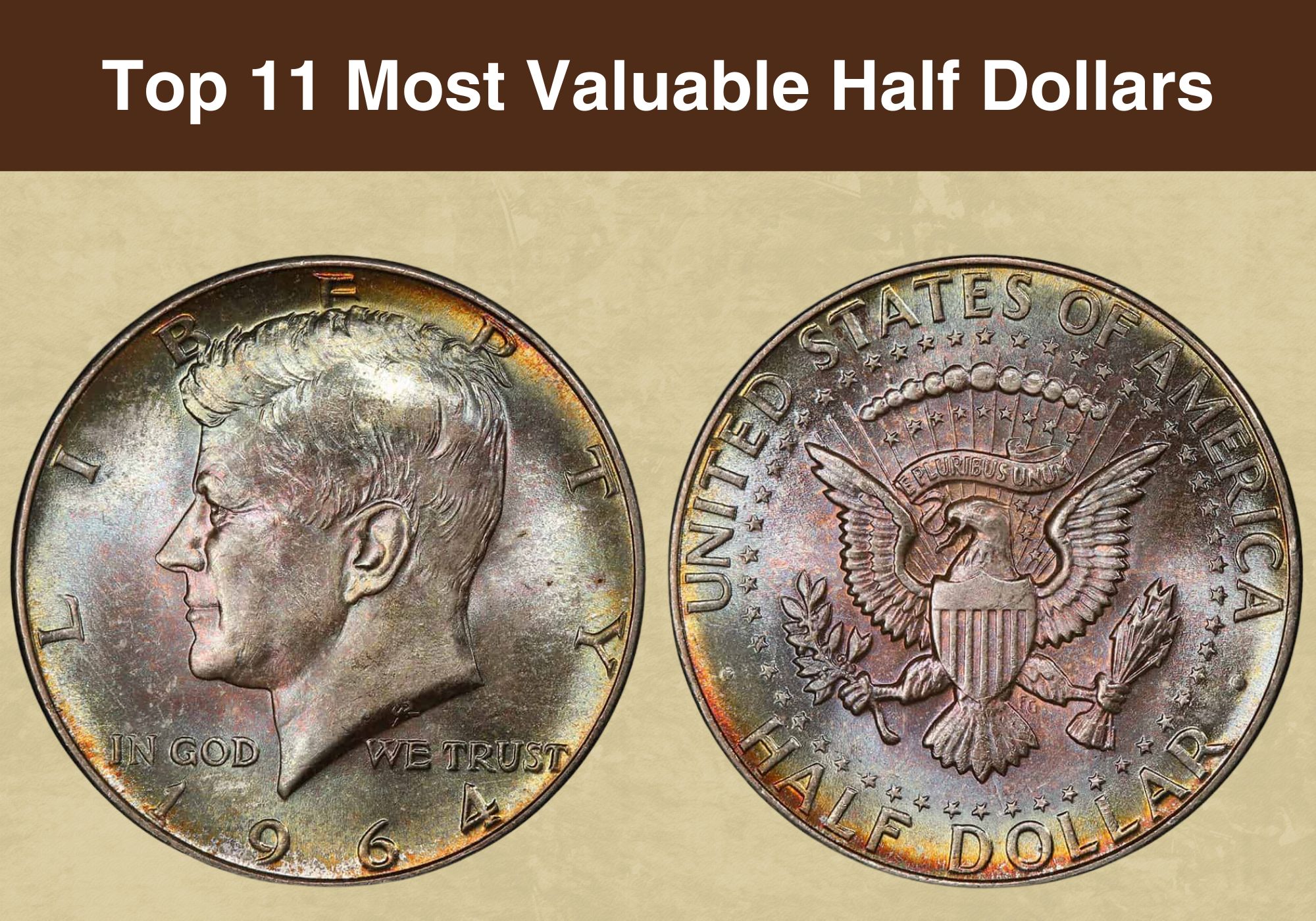
The Kennedy half dollar was introduced shortly after President John F. Kennedy’s assassination. The 1964 issue is particularly significant as it’s the only year struck in 90% silver for general circulation. These are highly collectible and valuable for their silver content alone. From 1965 to 1970, Kennedy half dollars were produced in a 40% silver composition, making them less valuable than their 1964 counterparts but still worth more than their face value. Beginning in 1971, the coins shifted to a copper-nickel clad composition, and most post-1970 circulation strikes hold little value beyond face value, unless they are rare error coins or high-grade uncirculated examples. However, certain special issues, such as the 1976 Bicentennial (Type 1 and Type 2) and certain uncirculated or proof issues, can be valuable. The 1964 SMS (Special Mint Set) half dollar is also a highly prized rarity.
Critical Factors Determining a Half Dollar’s Worth
Beyond the series and date, several specific factors play a decisive role in a half dollar’s market value. Understanding these nuances is paramount for accurate appraisal and smart collecting.
Mint Marks: Decoding the Origin of Your Coin
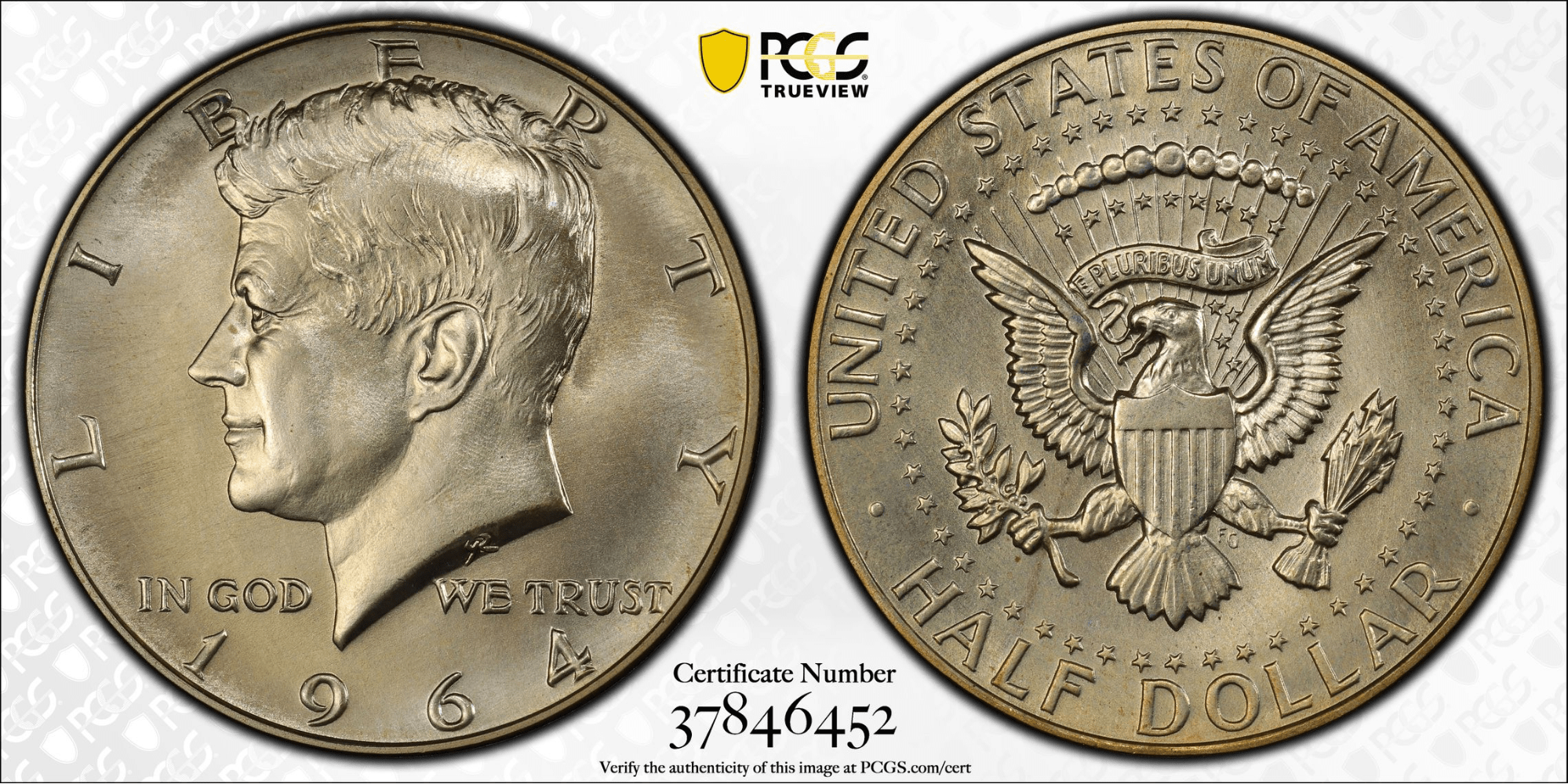
Mint marks are small letters (e.g., “D” for Denver, “S” for San Francisco, “O” for New Orleans, “CC” for Carson City, no mark for Philadelphia) found on coins that indicate where they were produced. Different mints had varying production numbers, making coins from certain mints significantly rarer for specific years. For instance, Carson City (CC) mint marks are almost universally desirable across all series due to their historically low mintages. Always check for the mint mark, as it can be the difference between a common coin and a valuable one.
Key Dates and Varieties: The Scarcity Premium
“Key dates” refer to specific year-mint mark combinations that have very low mintages, making them scarce and highly valuable. Examples include the 1870-CC Seated Liberty or the 1921 Walking Liberty. “Varieties” are minor design differences or errors that occurred during the minting process, such as doubled dies, overdates, or repunched mint marks. The 1942/1 Mercury Dime is a famous example (though not a half dollar). For half dollars, a well-known variety is the “Bugs Bunny” Franklin half dollar. These unique anomalies are highly sought after by collectors and can command significant premiums.
Condition is King: Grading Standards and Their Impact
The condition, or grade, of a coin is perhaps the single most important factor influencing its value. Professional coin grading services use a standardized scale (the Sheldon scale, from P-1 for Poor to MS-70 for Perfect Mint State) to assess a coin’s wear, luster, strike, and eye appeal. An uncirculated (Mint State, MS) coin will be worth exponentially more than a Good (G) or Very Fine (VF) example of the same key date. Even subtle differences in grade (e.g., MS-65 versus MS-66) can translate to hundreds or thousands of dollars in value for rare coins. Learning the basics of coin grading is essential for any serious collector.
Provenance and Certification: Enhancing Authenticity and Value
For highly valuable half dollars, provenance (the history of ownership) and professional certification are critical. A coin’s history, especially if it was part of a famous collection, can add to its allure. Certification by reputable third-party grading services (TPGS) like PCGS (Professional Coin Grading Service) or NGC (Numismatic Guaranty Corporation) provides an independent, expert opinion on a coin’s authenticity and grade. This encapsulation in a sealed holder, along with a unique serial number, offers security, liquidity, and confidence to both buyers and sellers, significantly enhancing a coin’s market value, especially for high-value pieces.
Navigating the Market: Buying, Selling, and Protecting Your Collection
Engaging with the numismatic market requires strategy, research, and a clear understanding of best practices to maximize value and minimize risk.
Reputable Dealers and Online Marketplaces
When buying or selling valuable half dollars, choosing the right platform is crucial. Reputable coin dealers offer expertise, authenticity guarantees, and a curated selection, though often at a premium. Online marketplaces like eBay or specialized numismatic auction sites can offer a wider selection and potentially lower prices, but they also carry higher risks of counterfeits or misgraded coins, especially if dealing with unverified sellers. It’s wise to stick to established dealers, major auction houses, or highly rated sellers with strong return policies and third-party graded coins for significant purchases. Always cross-reference prices using current market guides and past auction results.
Essential Tools for Collectors: Magnifiers, Scales, and Reference Guides
Serious collectors and investors need more than just a keen eye. A quality magnifier (e.g., 5x to 10x loupe) is indispensable for examining mint marks, varieties, and condition details. A precise digital scale helps verify a coin’s weight, which can be an indicator of authenticity or specific metallurgical variations. Most importantly, comprehensive reference guides, such as “A Guide Book of United States Coins” (the “Red Book”) or specialized guides for half dollars, provide invaluable information on mintages, key dates, historical context, and estimated values. Online databases from grading services also offer up-to-date pricing and population reports.
Storage and Preservation: Safeguarding Your Investment
Proper storage is vital to preserving the condition and value of your half dollars. Coins should be stored in inert, non-PVC holders (such as Mylar flips, archival-safe slabs, or dedicated coin albums) to prevent chemical reactions that can damage their surfaces. Avoid handling coins directly; always use cotton gloves to prevent oils from your skin from tarnishing the metal. Keep your collection in a stable environment, away from extreme temperature fluctuations or humidity, which can accelerate corrosion. For highly valuable coins, consider secure storage in a bank safety deposit box or a home safe with appropriate insurance coverage.
Educating Yourself: Continuous Learning for Collectors
The world of numismatics is dynamic and ever-evolving. Continuous education is key to making informed decisions. Read numismatic publications, join local or national coin clubs, attend coin shows, and engage with experienced collectors. Learning about market trends, grading nuances, new discoveries in varieties, and historical contexts will sharpen your eye for value and protect you from common pitfalls. The more knowledgeable you become, the better equipped you will be to identify truly valuable half dollars and build a collection that is both personally rewarding and financially sound.
Beyond Monetary Value: The Intrinsic Rewards of Numismatics
While the pursuit of valuable half dollars often includes a financial objective, the hobby offers a wealth of non-monetary benefits that enrich the collector’s life in profound ways.
Historical Connection and Educational Enrichment
Collecting half dollars is, in essence, collecting history. Each coin represents a snapshot of a particular era, reflecting the artistry, technology, and economic conditions of its time. Researching the stories behind the designs, the mints, and the people depicted or responsible for their creation provides a deep dive into American history. It’s an engaging, hands-on way to learn about significant events, cultural shifts, and the evolution of the nation, far more captivating than reading a textbook.
The Thrill of the Hunt and Community Engagement
There’s an undeniable thrill in the “hunt” for a specific key date or a rare variety. The excitement of sifting through rolls of coins, browsing dealer inventories, or participating in auctions, hoping to unearth a hidden gem, is a core appeal of the hobby. Furthermore, coin collecting is a vibrant community. Engaging with fellow enthusiasts, sharing knowledge, participating in club meetings, and attending shows fosters camaraderie and provides opportunities for mentorship and friendship, enriching the experience beyond individual acquisitions.
Building a Legacy: A Tangible Asset for Future Generations
A well-curated collection of valuable half dollars can be more than just an investment; it can be a tangible legacy. Passed down through generations, these coins carry not only monetary worth but also family history and stories. They serve as a unique and enduring asset that can spark an interest in history and finance in younger family members, offering both a financial inheritance and a piece of cultural heritage that connects them to the past.
In conclusion, identifying valuable half dollars requires a blend of historical knowledge, an understanding of market dynamics, and a keen eye for detail. From the early silver issues to specific modern errors, the potential for discovering a numismatic treasure is always present. By focusing on rarity, condition, mint marks, and key varieties, collectors and investors can navigate this fascinating segment of the coin market, building a collection that offers both significant financial potential and immeasurable personal satisfaction.
aViewFromTheCave is a participant in the Amazon Services LLC Associates Program, an affiliate advertising program designed to provide a means for sites to earn advertising fees by advertising and linking to Amazon.com. Amazon, the Amazon logo, AmazonSupply, and the AmazonSupply logo are trademarks of Amazon.com, Inc. or its affiliates. As an Amazon Associate we earn affiliate commissions from qualifying purchases.