
In the fast-paced world of digital communication, where every character counts and speed often trumps traditional grammar, encountering seemingly cryptic letter combinations is common. One such enigma that occasionally puzzles recipients is the solitary “th.” While it might appear as a simple typo or a fragment, understanding its potential meanings and implications is crucial for effective online interaction. This article delves into the various interpretations of “th” in text, offering a comprehensive guide to deciphering such digital shorthand and enhancing your overall communication prowess in the technological landscape. From common errors to niche linguistic cues and the tools that help us navigate them, we’ll explore why understanding these micro-details matters in our increasingly text-driven lives.

The Ubiquity of “th”: Common Scenarios in Digital Dialogue
The string “th” can manifest in text messages, emails, social media posts, and chat applications in several predictable ways. Often, its appearance isn’t a profound mystery but rather a byproduct of our rapid typing habits and the software we use. Recognizing these common scenarios is the first step in quickly understanding the message at hand.
The Typosaurus Rex: Autocorrect Mishaps and Incomplete Thoughts
Perhaps the most frequent reason for “th” appearing in isolation or as part of an odd word fragment is a simple typo or an autocorrect intervention gone awry. In the heat of a rapid conversation, fingers might slip, leading to an accidental press of the ‘t’ and ‘h’ keys instead of the intended word. For instance, a user intending to type “the” might only manage “th” before sending, or a phone’s predictive text might suggest “th” when “though” or “this” was the actual target.
Modern smartphone keyboards and messaging apps are designed for speed, often anticipating words and correcting mistakes on the fly. However, this automation isn’t foolproof. Autocorrect algorithms, while sophisticated, sometimes misinterpret a partial word or a quick swipe gesture, resulting in truncated words like “th” instead of “thing,” “thought,” or “thanks.” Similarly, in contexts where a sender is typing quickly or distracted, “th” might be an accidental remnant of a word they were in the process of typing, indicating an incomplete thought or a message sent before completion. Identifying this often requires little more than a quick re-read of the message or considering the sender’s usual typing style.
Numeric Markers: When “th” Denotes Order
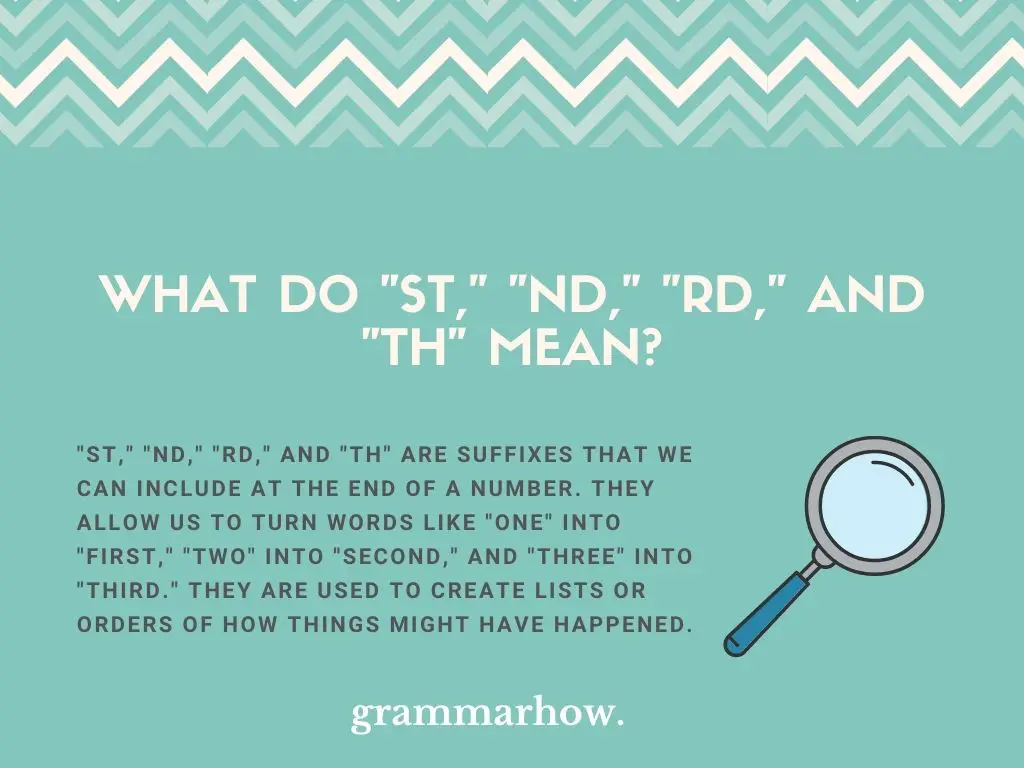
Another straightforward interpretation of “th” is its role as an ordinal indicator following a number. This is a universally recognized convention, especially in English, used to denote position in a sequence. For example:
- “4th” (fourth)
- “5th” (fifth)
- “10th” (tenth)
- “21st” (twenty-first) – note the ‘st’ and ‘nd’ for 1, 2, 3 but ‘th’ for 4 onwards.
When “th” directly follows a number, its meaning is almost invariably linked to an ordinal position. This is perhaps the least ambiguous use of “th” in text and is a common feature across all forms of digital communication, from event dates (“The party is on the 20th”) to competitive rankings (“He finished 10th in the race”). While not a standalone “th,” its presence in this context is a fundamental part of numeric digital literacy.
Lingering Fragments: Unfinished Business in Rapid Texts
Beyond simple typos, “th” can also be a fragment of a larger, commonly used word that was simply left unfinished. This often happens when a sender is interrupted, distracted, or simply sends a message mid-thought to convey urgency or a quick update. Consider scenarios where someone might type “I was th…” before being called away, or “Just picking up th…” when their attention is diverted. In these cases, “th” is an unfortunate casualty of a communication stream that was prematurely cut off.
The context of the conversation usually provides strong clues. If the preceding messages were about a specific object or action, “th” might be an incomplete “the” or “this.” If the sender frequently communicates with brevity or in a hurried manner, such fragments become more commonplace and less perplexing over time. This particular instance highlights the challenge of maintaining clarity in real-time digital dialogues, where the expectation of instantaneity can sometimes compromise grammatical completeness.
Beyond the Surface: Unraveling Context and Intent
While typos and ordinal numbers account for many instances of “th,” there are times when its appearance might seem more perplexing. In these situations, a deeper dive into the communicative context, the sender’s habits, and even community-specific jargon becomes necessary. This analytical approach transforms a simple letter combination into a puzzle requiring careful deduction within the digital sphere.
The Power of Proximity: Clues from Surrounding Words
One of the most effective strategies for interpreting ambiguous text fragments like “th” is to look at the words immediately surrounding it. The context provided by the preceding and following sentences, or even just the rest of the current message, can offer invaluable clues.
- If “th” appears after a verb like “grab” or “get,” it might be an incomplete “the” or “this” (“Can you grab th[e] book?”).
- If it’s at the beginning of a sentence, it could be a truncated “though,” “this,” or “that” (“Th[is] is what I meant”).
- Consider the topic of the conversation. If you’re discussing plans for an event, “th” could be an unfinished “Thursday.”
Analyzing the semantic and syntactic environment of “th” helps fill in the gaps that the sender might have inadvertently left. Our brains are adept at pattern recognition and context inference, and applying this ability to digital texts can quickly clarify most ambiguities. This skill is a cornerstone of digital literacy, allowing users to move beyond literal interpretations to understand inferred meanings.
Sender Specifics: Understanding Individual Communication Styles
Every digital communicator develops a unique style, a personal “textual fingerprint” shaped by their typing speed, device, communication habits, and even personality. Some individuals are meticulous with grammar and spelling, while others embrace brevity and abbreviation to the point of occasional obscurity.
If you frequently communicate with the sender, consider their past messages. Do they often make similar typos? Are they known for sending incomplete sentences or using highly personalized shorthand? A sender who frequently uses abbreviations like “u” for “you” or “g2g” for “got to go” might also be prone to sending a solitary “th” as an abbreviated form of something else, or simply as a partial word. Understanding these individual quirks can significantly aid in decoding messages and helps personalize the interpretation process, moving beyond generic rules to specific human intent. Tools within messaging apps, like “contact info” or “mutual chat history,” effectively serve as a personal dictionary for a sender’s unique lingo.
Platform and Community Lingo: Decoding Niche Vernaculars
While “th” isn’t a widely recognized standalone abbreviation across all platforms, specific online communities, gaming groups, or niche forums sometimes develop their own unique jargon and shorthand. In such insular digital environments, a seemingly random letter combination might carry a very specific, albeit limited, meaning.
For example, in some specific gaming contexts or highly specialized technical forums, “th” might be an acronym for something relevant to that community (“Town Hall” in Clash of Clans, “Thread” in forum discussions, though these are typically full words). However, it’s crucial to emphasize that such instances are rare and heavily context-dependent. If you encounter “th” in a highly specialized digital space and the common interpretations don’t fit, it’s worth considering if it’s part of a very specific lexicon. Often, the best approach in these scenarios is to consult community wikis, glossaries, or simply ask a fellow member for clarification, leveraging the collective intelligence of the digital group.
The Communication Conundrum: Why Ambiguity Matters
The digital realm thrives on efficiency, but this often comes at the cost of clarity. Ambiguities like an unexplained “th” can have a range of effects, from minor confusion to significant misunderstandings, impacting relationships and professional interactions. Understanding these repercussions underscores the importance of striving for clear, unambiguous communication.

The Ripple Effect: From Minor Misunderstandings to Major Missed Signals
In casual conversations, a fleeting moment of confusion over “th” might lead to a brief pause, a polite request for clarification, or a chuckle. However, in more critical contexts, ambiguity can have a more profound ripple effect. Imagine a time-sensitive instruction in a team chat where “th” is misinterpreted, leading to incorrect actions or missed deadlines. Or a personal message where a crucial detail is lost, causing emotional distress or misaligned expectations.
Digital communication, by its very nature, lacks the non-verbal cues (tone of voice, facial expressions, body language) that provide rich context in face-to-face interactions. This absence makes every character, every word, and every abbreviation carry more weight. A seemingly innocuous “th” can, therefore, become a bottleneck, disrupting the flow of information and demanding extra effort from the recipient to decode the sender’s true intent. This breakdown highlights the constant negotiation between speed and precision in our digital lives.
The Professional vs. Casual Divide: Adapting Your Textual Tone
The implications of using or encountering ambiguous shorthand like “th” vary dramatically between professional and casual settings. In an informal chat with close friends or family, a typo or an incomplete word is usually forgiven or easily clarified. The shared context and established relationship often absorb minor communication errors without issue.
However, in professional correspondence – be it with colleagues, clients, or superiors – the expectation for clarity, precision, and adherence to professional norms is significantly higher. Sending an uncorrected “th” in a work email or a client message can be perceived as unprofessional, careless, or even disrespectful. It can undermine credibility, particularly when dealing with critical information or sensitive topics. Therefore, understanding the context and adjusting one’s communication style accordingly is paramount. Leveraging advanced email clients and communication platforms that offer robust spell-check and grammar-check features is essential in professional settings.
Best Practices for Clarity: Proactive Steps for Effective Messaging
Given the potential pitfalls of ambiguity, adopting best practices for clear digital communication is not just advisable, but essential. These strategies empower both senders and recipients to navigate the complexities of text-based interactions more effectively.
For senders:
- Proofread: A quick glance before hitting send can catch most typos and incomplete words.
- Be explicit: When in doubt, spell out the full word or phrase. It takes slightly longer but prevents confusion.
- Use full sentences (when appropriate): While not always necessary, especially in rapid chats, full sentences reduce ambiguity in important messages.
- Utilize communication tools: Leverage spell-check, grammar-check, and predictive text features on your devices, but don’t rely on them blindly.
For recipients:
- Ask for clarification: If you’re genuinely unsure what “th” or any other cryptic message means, simply ask. “What does ‘th’ mean?” is a perfectly valid question.
- Consider the source: Factor in the sender’s typical communication style and the context of your relationship.
- Don’t overthink: Sometimes, it really is just a typo. Start with the simplest explanation.
Enhancing Your Digital Lexicon: Tools and Strategies for Smarter Texting
In an ecosystem brimming with communication technologies, we have a wealth of tools and strategies at our disposal to both prevent and resolve textual ambiguities. From built-in keyboard features to advanced AI, these technological aids are constantly evolving to make our digital dialogues smoother and more intuitive.
Harnessing Predictive Text and Smart Keyboard Features
Modern smartphone keyboards and messaging apps are equipped with sophisticated predictive text and autocorrect functionalities. While sometimes the cause of a “th” mishap, these features are primarily designed to enhance typing speed and accuracy. By learning your common phrases, vocabulary, and even specific slang, predictive text can significantly reduce the likelihood of incomplete words or typos.
Users can optimize these features by:
- Training the keyboard: Consistently correcting errors helps the AI learn your preferred words and spellings.
- Adding custom vocabulary: Most keyboards allow you to add unique words, names, or industry-specific jargon to your dictionary, preventing them from being autocorrected.
- Exploring keyboard settings: Customizing aspects like swipe typing sensitivity or haptic feedback can improve accuracy.
These smart keyboard features are more than just conveniences; they are AI-driven tools that adapt to individual usage, acting as a personal editor that minimizes errors and facilitates clearer communication, effectively reducing the chances of a stray “th” appearing without intent.
The Art of Emoji and Multimedia: Adding Context and Emotion
When text alone fails to convey the full meaning or tone, emojis, GIFs, and other multimedia elements step in as powerful contextualizers. In situations where a phrase or a single word might be ambiguous, an accompanying emoji can instantly clarify intent.
- A simple “Okay th[anks]!” followed by a smiling emoji ( ) removes any doubt about positive reception.
- A fragmented “Th…” followed by a confused face emoji ( ) clearly indicates a thought in progress or a question.
Multimedia can bridge the gap left by the absence of non-verbal cues. A short voice note, a quick photo, or a relevant GIF can provide a rich layer of context that plain text often lacks. These tools are integrated into nearly all messaging apps, making them readily accessible for enriching communication and mitigating misunderstandings, proving that digital communication is becoming increasingly multimodal.
Future Forward: How AI is Shaping Text Interpretation
The future of deciphering digital shorthand and improving text communication lies increasingly in advanced Artificial Intelligence and Natural Language Processing (NLP). AI-powered tools are already moving beyond simple spell-check to understand context, infer meaning, and even suggest rephrasing for clarity.
Consider applications that can:
- Contextual spell-check: Identify if “th” is likely a typo for “the” based on the surrounding sentence structure, even if it’s not a direct dictionary word.
- Sentiment analysis: Analyze the overall tone of a message to help interpret ambiguous phrases more accurately.
- Predictive completion: Not just individual words, but entire phrases or sentences, anticipating the user’s thought and reducing the chance of fragments.
- Automated clarification prompts: In professional settings, AI could potentially flag ambiguous sentences and suggest asking for clarification if a high level of precision is required.
As AI continues to evolve, our digital devices will become even more adept at understanding our imperfect human communication, making instances like a confusing “th” less common and easier to resolve. This ongoing development signifies a broader trend in tech towards intelligent assistance in all forms of digital interaction, promising a future of increasingly seamless and unambiguous textual exchanges.
In conclusion, while “th” in text might initially seem like a minor detail, its various interpretations and the strategies for decoding it reflect the broader challenges and innovations in digital communication. By understanding the common scenarios, leveraging contextual clues, and embracing the technological tools at our disposal, we can all become more adept navigators and creators of clear, effective messages in our interconnected world.
aViewFromTheCave is a participant in the Amazon Services LLC Associates Program, an affiliate advertising program designed to provide a means for sites to earn advertising fees by advertising and linking to Amazon.com. Amazon, the Amazon logo, AmazonSupply, and the AmazonSupply logo are trademarks of Amazon.com, Inc. or its affiliates. As an Amazon Associate we earn affiliate commissions from qualifying purchases.