
In the dynamic world of automotive engineering and vehicle performance, the term “staggered rims” frequently surfaces, often associated with high-performance sports cars, custom builds, and dedicated track machines. Far from a mere aesthetic choice, a staggered wheel setup is a deliberate technical configuration designed to optimize specific aspects of a vehicle’s handling, traction, and overall dynamic performance. Understanding what staggered rims mean requires delving into the engineering principles that govern wheel mechanics, tire dynamics, and vehicle stability.
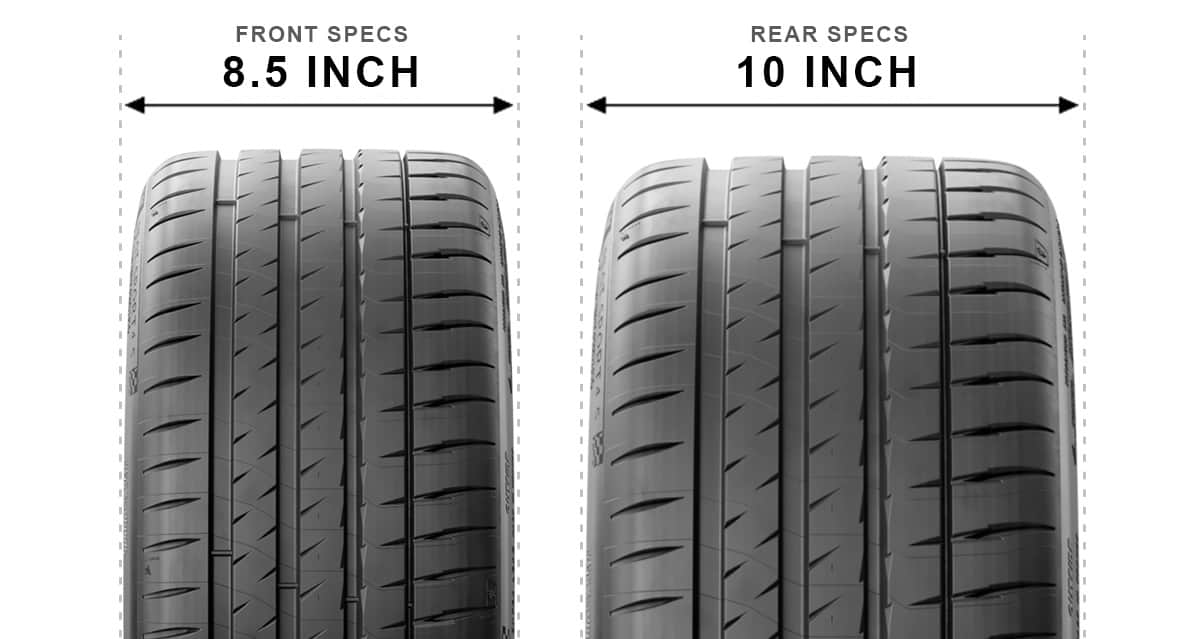
At its core, a staggered rim setup involves fitting wheels of different widths to the front and rear axles of a vehicle. Typically, the rear wheels are wider than the front wheels, though in some specialized applications (like certain front-wheel-drive drag racing setups), the front wheels might be wider. This variation in width directly impacts the tires that can be mounted, resulting in wider tires at one end of the vehicle than the other. This isn’t just about appearance; it’s a calculated decision rooted in automotive technology to achieve a desired performance outcome.
The Engineering Principle Behind Staggered Setups
The concept of staggering wheels is not new, tracing its origins to early racing where engineers sought every advantage to improve speed and control. It’s a testament to applied physics and mechanical engineering, aiming to fine-tune the delicate balance between grip, power delivery, and steering response.
Defining Staggered Rims: Width and Offset
To fully grasp staggered rims, one must understand two key parameters: width and offset.
- Rim Width: This is the measurement of the rim from bead seat to bead seat, dictating the width of the tire that can be safely mounted. A wider rim allows for a wider tire, which in turn increases the tire’s contact patch with the road. In a staggered setup, the rear rims are typically wider than the front rims, enabling the use of wider rear tires.
- Wheel Offset: This is the distance from the mounting surface of the wheel (where it bolts to the hub) to the true centerline of the wheel. A positive offset means the mounting surface is towards the front face of the wheel, pushing the wheel deeper into the fender. A negative offset means the mounting surface is towards the rear face, pushing the wheel outwards. While not directly defining “staggered,” offset plays a crucial role in ensuring proper fitment and maintaining critical clearances when installing wider rims, preventing rubbing against suspension components or fender wells. A carefully selected offset is critical for integrating wider rims without compromising the vehicle’s original suspension geometry or causing clearance issues.
Historical Context and Automotive Evolution
The adoption of staggered wheel setups gained prominence as automotive technology evolved, particularly with the advent of more powerful engines. Early rear-wheel-drive performance cars and dedicated race cars, struggling to put increasing horsepower to the ground efficiently through their rear wheels, found a solution in wider rear tires. This historical trend illustrates a direct correlation between engine power output and the need for enhanced traction, positioning staggered setups as a natural evolution in automotive performance engineering. The philosophy extended beyond just drag racing, finding its way into circuit racing and high-performance road cars where managing cornering forces and overall vehicle dynamics became paramount.
The Rationale: Balancing Grip and Handling Dynamics
The fundamental rationale behind a staggered setup is to optimize the vehicle’s grip distribution and handling characteristics. Wider rear tires provide a larger contact patch, which significantly increases the amount of grip available at the driven wheels. This is particularly beneficial for high-horsepower, rear-wheel-drive (RWD) vehicles, allowing them to accelerate more effectively by minimizing wheel spin. However, the choice is not without its trade-offs. The interplay between front and rear tire width directly influences the vehicle’s tendency to understeer (front wheels lose grip first) or oversteer (rear wheels lose grip first), a critical aspect of vehicle dynamics that engineers meticulously tune for a desired handling balance.
Performance Technology: Advantages and Disadvantages
Integrating staggered rims into a vehicle’s design is a complex engineering decision, offering distinct performance advantages while also introducing certain disadvantages that must be managed.
Enhanced Traction for Power Delivery
The most direct benefit of wider rear tires is a substantial increase in longitudinal grip. For RWD vehicles, this translates to improved acceleration off the line and better power delivery during spirited driving. The larger contact patch distributes the engine’s torque over a greater surface area, reducing the likelihood of traction loss and allowing the vehicle to more efficiently convert horsepower into forward motion. This technological advantage is why staggered setups are almost ubiquitous in muscle cars, sports cars, and supercars where immense power needs to be effectively transferred to the road.
Impact on Cornering and Steering Response
While wider rear tires boost rear-end grip, the narrower front tires maintain a sharper steering response. This configuration helps to reduce understeer, a common characteristic in many production cars, by allowing the front end to “bite” more aggressively into turns. The differential grip levels contribute to a more agile feel, improving the vehicle’s ability to change direction quickly and precisely. However, this balance is delicate; an overly aggressive stagger can lead to an increased tendency for oversteer, especially under power or during sudden weight transfers, demanding more skillful driver input.
Aerodynamic Considerations and Vehicle Stability
The overall footprint of the vehicle, influenced by wheel width, also plays a subtle role in aerodynamics. Wider wheels can increase drag, but when designed as part of an integrated performance package, the increased stability and cornering speeds they enable often outweigh minor aerodynamic penalties. The broader stance provided by wider rear wheels can also contribute to a sense of enhanced stability at high speeds, providing a more planted feel.
The Trade-offs: Understeer, Tire Wear, and Rotational Mass
Despite their benefits, staggered rims come with technical compromises.
- Handling Imbalance: While reducing understeer, an aggressive stagger can induce or exacerbate oversteer, making the car more prone to losing rear-end traction during cornering, especially when driven at the limit. This requires specific suspension tuning and driver adaptation.
- Increased Tire Wear: Tires cannot be rotated front-to-back in a staggered setup, leading to uneven wear rates (typically faster wear on the driven rear tires). This translates to higher operating costs over the vehicle’s lifetime.
- Rotational Mass: Wider and often heavier wheels/tires increase the unsprung and rotational mass. This can negatively impact acceleration, braking performance, and fuel economy, as the engine and brakes must work harder to accelerate and decelerate this extra mass. Modern lightweight alloy technologies aim to mitigate this effect.
- Limited Customization: Finding aftermarket tires and wheels for staggered setups can sometimes be more challenging or expensive due to the need for specific sizes.
Design, Materials, and Manufacturing Innovations
The evolution of staggered rims is intrinsically linked to advancements in materials science, manufacturing processes, and computer-aided design, all falling squarely within the realm of automotive technology.
Advanced Alloy Technologies and Lightweighting
Modern rims are engineering marvels. The shift from steel to various aluminum alloys has significantly reduced unsprung weight, directly improving suspension response and overall vehicle dynamics. Advanced alloys, sometimes incorporating titanium or magnesium, offer superior strength-to-weight ratios. The pursuit of lightweighting is crucial, as reducing rotational mass directly translates to better acceleration, braking, and handling. This is a continuous area of research and development in wheel technology.
Forging vs. Casting: Strength and Durability

The manufacturing method profoundly impacts a wheel’s properties.
- Casting: Molten alloy is poured into a mold. While cost-effective, cast wheels are generally heavier and less strong than forged wheels due to their grain structure.
- Forging: A solid billet of alloy is subjected to immense pressure, altering its molecular grain structure to create a denser, stronger, and typically lighter wheel. This process, though more expensive, is preferred for high-performance applications where strength and weight savings are paramount. Flow-forming or rotary forging are hybrid methods that offer some benefits of forging at a lower cost.
These technological choices directly influence the durability and performance of a staggered setup, particularly under the extreme stresses of track use or high-performance driving.
Role of Computer-Aided Design (CAD) in Wheel Optimization
Modern wheel design relies heavily on CAD and Finite Element Analysis (FEA) software. Engineers can simulate various loads, stresses, and aerodynamic forces on a wheel design before a single physical prototype is made. This allows for iterative optimization of spoke patterns, rim profiles, and material distribution to achieve maximum strength with minimum weight. CAD tools are instrumental in perfecting the fitment and offset for staggered setups, ensuring precise clearances within the wheel wells and around brake components.
Sensor Integration: TPMS and Smart Wheel Technology
Contemporary rims are no longer just passive components. They are increasingly integrated with vehicle technology. Tire Pressure Monitoring Systems (TPMS) sensors are standard, relaying vital tire pressure data to the driver. Future advancements are exploring “smart wheel” technology, which could embed sensors to monitor tire temperature, wear, and even road conditions, providing real-time feedback to advanced driver-assistance systems (ADAS) or even active suspension systems. This integration transforms the rim from a simple structural component into a data-gathering platform, further solidifying its place within the Tech category.
Application in Modern Automotive Technology
Staggered rims are not a universal solution but a specialized application tailored to specific vehicle types and performance objectives.
High-Performance Sports Cars and Supercars
These vehicles are the primary beneficiaries of staggered setups. Brands like Porsche, Ferrari, and Corvette frequently employ wider rear tires to manage the immense power generated by their engines and optimize their handling balance for aggressive driving. The staggered configuration is a crucial part of their performance DNA, allowing them to achieve blistering acceleration and exceptional cornering grip.
Drifting and Motorsport Engineering
In motorsports like drifting, where controlled oversteer is key, the strategic use of tire width and compound (often wider fronts for steering bite, narrower rears for easier breakaway) is highly specialized. Similarly, in various forms of circuit racing, engineers meticulously choose tire sizes for specific tracks and conditions, often opting for staggered setups to fine-tune handling.
Aftermarket Customization and Technical Considerations
For enthusiasts modifying their vehicles, choosing a staggered setup requires careful technical consideration. It’s not just about aesthetics; it involves understanding suspension geometry, fender clearances, and the potential impact on ABS, traction control, and stability control systems. An incorrectly chosen stagger can adversely affect these integrated safety systems, highlighting the need for technical expertise in aftermarket modifications.
Future Trends in Wheel Design and Vehicle Integration
As electric vehicles (EVs) become more prevalent, wheel design is evolving. EVs have different weight distribution, instant torque, and often require lower rolling resistance for extended range. While some high-performance EVs may still benefit from staggered setups for traction, others might prioritize aerodynamic wheel designs or non-staggered configurations for efficiency. The integration of “wheel-end” technologies, such as in-wheel motors or active suspension components directly within the wheel assembly, represents the next frontier, blurring the lines between the wheel and the vehicle’s core technological systems.
Deciding on Staggered Rims: A Technical User’s Guide
For those considering a staggered wheel setup, whether for a performance upgrade or a custom build, a technically informed approach is essential.
Compatibility and Vehicle Specifications
Always consult your vehicle’s manufacturer specifications or a reputable automotive engineer/specialist. Not all vehicles are designed to accommodate a staggered setup without significant modifications. Factors like suspension clearance, fender rolling, and the vehicle’s original handling balance must be assessed. Incorrect sizing can lead to rubbing, compromised handling, and even safety issues.
Understanding Load Ratings and Safety Standards
Wheels and tires have specific load ratings, indicating the maximum weight they can safely support. When selecting wider rims and tires, ensure that both the load index of the tire and the load rating of the rim meet or exceed the vehicle’s requirements. Adhering to safety standards is non-negotiable, particularly when modifying critical components like wheels.
Professional Installation and Alignment Tech
Proper installation is paramount. This includes correct tire mounting and balancing, ensuring the lug nuts are torqued to specification, and crucially, a professional wheel alignment. A staggered setup often necessitates a specific alignment to optimize the contact patch, minimize uneven tire wear, and achieve the desired handling characteristics. This frequently involves adjusting camber, caster, and toe settings to compensate for the altered wheel dimensions. Advanced alignment machines, leveraging laser and computer technology, are essential for precise adjustments.

Maintenance and Long-Term Performance
Maintenance for staggered rims differs slightly due to the inability to rotate tires front-to-rear. Regular inspections for wear, proper inflation, and periodic balancing become even more critical to maximize tire life and maintain performance. Understanding the specific wear patterns of the wider rear tires compared to the narrower fronts will help in proactive tire management.
In conclusion, “staggered rims” represent a sophisticated aspect of automotive technology and engineering. They are a deliberate design choice aimed at optimizing a vehicle’s performance envelope, particularly in terms of traction and handling. While offering distinct advantages for high-performance applications, their implementation requires a thorough understanding of underlying technical principles, potential trade-offs, and meticulous attention to detail in design, manufacturing, and installation. As vehicles evolve, so too will the technology surrounding their wheels, ensuring that concepts like staggered setups continue to be refined and integrated into the ever-advancing landscape of automotive innovation.
aViewFromTheCave is a participant in the Amazon Services LLC Associates Program, an affiliate advertising program designed to provide a means for sites to earn advertising fees by advertising and linking to Amazon.com. Amazon, the Amazon logo, AmazonSupply, and the AmazonSupply logo are trademarks of Amazon.com, Inc. or its affiliates. As an Amazon Associate we earn affiliate commissions from qualifying purchases.