
To the average user, Google is a search engine, a video platform, and a suite of productivity tools. However, from a financial and business perspective, the question of “who owns Google” is a complex inquiry into corporate governance, equity distribution, and the unique dual-class share structure of its parent company, Alphabet Inc. Unlike a small private business with a single proprietor, Google is a publicly-traded multinational conglomerate. Understanding its ownership requires deconstructing the layers of institutional investment, individual stakes held by its founders, and the legal framework that keeps the ultimate control in a few specific hands.

The Evolution from Google to Alphabet Inc.
In 2015, the corporate landscape of the tech world shifted significantly when Google announced a massive restructuring. The founders, Larry Page and Sergey Brin, created Alphabet Inc. as a holding company. Under this new umbrella, Google became a subsidiary, and other “moonshot” projects—such as Waymo (autonomous driving) and Verily (life sciences)—became separate entities under the Alphabet corporate banner. This move was primarily a financial strategy to provide more transparency to investors regarding the profitability of the core search business versus the high-risk, high-reward ventures.
The 2015 Transition and Its Financial Impact
The transition to Alphabet was designed to clarify the company’s financial health. Before the split, investors often worried that the massive profits from Google’s advertising business were being “wasted” on speculative projects. By creating a holding company, Alphabet allowed for segmented financial reporting. From a “Money” niche perspective, this increased the stock’s attractiveness to institutional investors who prefer granular data on capital allocation.
Deciphering the Share Classes: GOOG vs. GOOGL
When discussing ownership, one must look at the stock tickers. Alphabet Inc. has two primary types of shares available to the public: Class A (GOOGL) and Class C (GOOG). Class A shares come with one vote per share, while Class C shares carry no voting rights. There is also a third, private category: Class B shares. Understanding these distinctions is crucial for anyone looking at the financial ownership of the company, as it separates the “economic interest” (who gets the money) from the “voting interest” (who makes the decisions).
The Power of the Founders: Larry Page and Sergey Brin
While millions of people own a piece of Google through their 401(k)s or brokerage accounts, the actual “owners” in terms of control are Larry Page and Sergey Brin. Despite stepping down from daily management roles in 2019—handing the reins to Sundar Pichai—they remain the most influential figures in the company’s trajectory.
Voting Power vs. Equity Value
In a typical corporation, if you own 10% of the shares, you have 10% of the vote. Google disrupted this norm. Page and Brin hold a significant portion of their wealth in Class B shares. These shares are not traded on public markets and are held exclusively by insiders. The critical factor is that Class B shares carry ten votes per share. This means that while Page and Brin might own a relatively small percentage of the total outstanding equity, they command a majority of the voting power.
Class B Shares: The Secret to Corporate Control
This dual-class (or multi-class) structure is a hallmark of modern Silicon Valley finance. It is designed to protect the founders’ long-term vision from the short-term pressures of Wall Street. From a business finance standpoint, this creates a “founder-led” environment where the owners can invest in decades-long projects without fear of a hostile takeover or a shareholder revolt. As of recent filings, Page and Brin collectively control more than 51% of the total voting power, making them the ultimate owners of the company’s strategic direction.
Institutional Investors: The Giants Behind the Scenes

Beyond the founders, the largest “owners” of Google are institutional investors. These are massive financial entities like mutual funds, pension funds, and hedge funds that buy millions of shares on behalf of their clients. If you have an investment portfolio, there is a very high probability that you are a fractional owner of Google through one of these institutions.
The Role of Vanguard and BlackRock
The two largest institutional shareholders in Alphabet Inc. are typically The Vanguard Group and BlackRock. These firms manage trillions of dollars in assets. Because Alphabet is a staple of major indices like the S&P 500, any “index fund” must own a proportional amount of Google stock. These institutions hold Class A and Class C shares, giving them significant economic exposure to the company’s performance, even if their voting power is diluted by the founders’ Class B shares.
How Institutional Ownership Influences Governance
While institutional investors may not have the majority vote, they still wield “soft power.” Large firms like State Street or Fidelity engage in regular dialogues with Alphabet’s board of directors. They push for financial discipline, environmental, social, and governance (ESG) standards, and transparency in executive compensation. For an investor, monitoring the buying and selling patterns of these institutions is a key part of fundamental analysis, as it signals the market’s confidence in Alphabet’s fiscal future.
Individual Shareholders and the Executive Suite
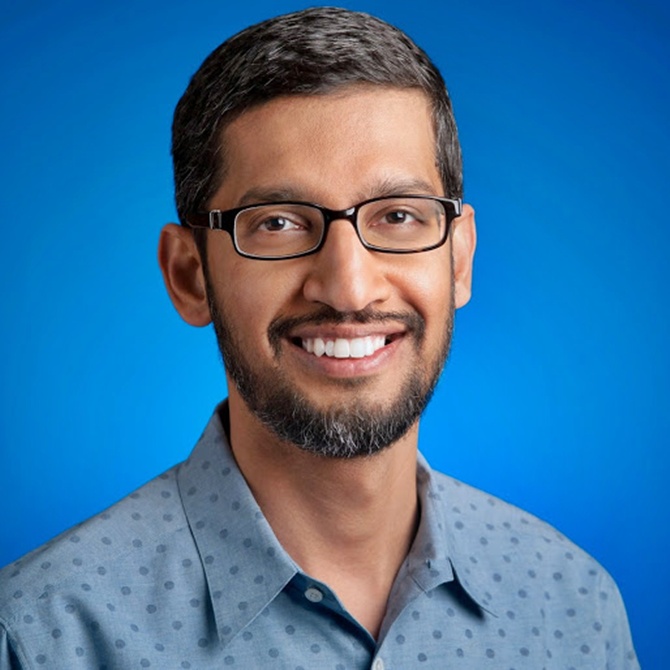
The third tier of ownership belongs to the individuals who run the company and the retail investors who buy shares through apps and brokers. This group includes current CEO Sundar Pichai and other high-level executives like CFO Ruth Porat.
Insider Ownership and Executive Incentives
Executive ownership is a vital metric for financial analysts. When the CEO and other top leaders own a significant amount of stock, their interests are “aligned” with the shareholders. Sundar Pichai, for instance, has received substantial stock awards as part of his compensation package. While his ownership percentage is small compared to the founders, it represents hundreds of millions of dollars in personal wealth tied directly to the company’s stock price. This serves as a powerful financial incentive to maintain profitability and growth.
The Rise of the Retail Investor
In the last decade, the democratization of finance has allowed individual retail investors to own a piece of Google more easily. The 2022 stock split (20-for-1) was a pivotal moment for this group. By lowering the price per share from thousands of dollars to around $100 (at the time of the split), Alphabet made its stock more accessible to the average person. This move didn’t change the company’s total valuation, but it increased liquidity and broadened the base of “owners” to include millions of small-scale investors worldwide.
Investing in Google: The Shareholder’s Perspective
For those looking to move from asking “who owns Google” to becoming an owner themselves, understanding the financial health of the company is essential. Investing in Alphabet is not just about owning a search engine; it is about owning a piece of a global advertising monopoly, a growing cloud infrastructure business, and a leader in artificial intelligence.
Market Capitalization and Valuation Metrics
Alphabet Inc. consistently ranks as one of the most valuable companies in the world by market capitalization, often fluctuating between $1.5 trillion and $2 trillion. From a business finance perspective, analysts look at the Price-to-Earnings (P/E) ratio and Free Cash Flow to determine if the “price of ownership” is fair. Unlike many high-growth tech companies, Alphabet is immensely profitable, generating tens of billions of dollars in net income every quarter, which it often uses for share buybacks.
Long-term Outlook for Alphabet Stock
The value of owning Google stock today hinges on the company’s ability to navigate the transition to AI-driven search and maintain its dominance in digital advertising. For the owner/investor, the primary risks include regulatory challenges, antitrust lawsuits, and competition from other tech giants. However, with its massive cash reserves and the strategic control held by its original founders, Alphabet remains a cornerstone of the global financial market.
In summary, “who owns Google” is a question with three answers. Legally and strategically, it is owned and controlled by Larry Page and Sergey Brin through their high-voting shares. Economically, it is largely owned by institutional giants like Vanguard and BlackRock. And practically, it is owned by millions of individual investors and employees who hold shares in one of the most successful financial engines in modern history. Understanding this tripartite structure is essential for anyone looking to grasp the intersection of technology and global finance.
aViewFromTheCave is a participant in the Amazon Services LLC Associates Program, an affiliate advertising program designed to provide a means for sites to earn advertising fees by advertising and linking to Amazon.com. Amazon, the Amazon logo, AmazonSupply, and the AmazonSupply logo are trademarks of Amazon.com, Inc. or its affiliates. As an Amazon Associate we earn affiliate commissions from qualifying purchases.