
In the world of personal finance and strategic consumerism, the ability to distinguish between “cheap” and “value” is what separates the average shopper from the financially savvy. One of the most prominent opportunities for high-value acquisition in the retail space is the “Open-Box” program at Best Buy. For many, the term “open-box” carries a vague stigma of being “used” or “damaged,” but from a wealth-management and budgeting perspective, it represents one of the most effective ways to acquire premium assets at a fraction of their market cost.
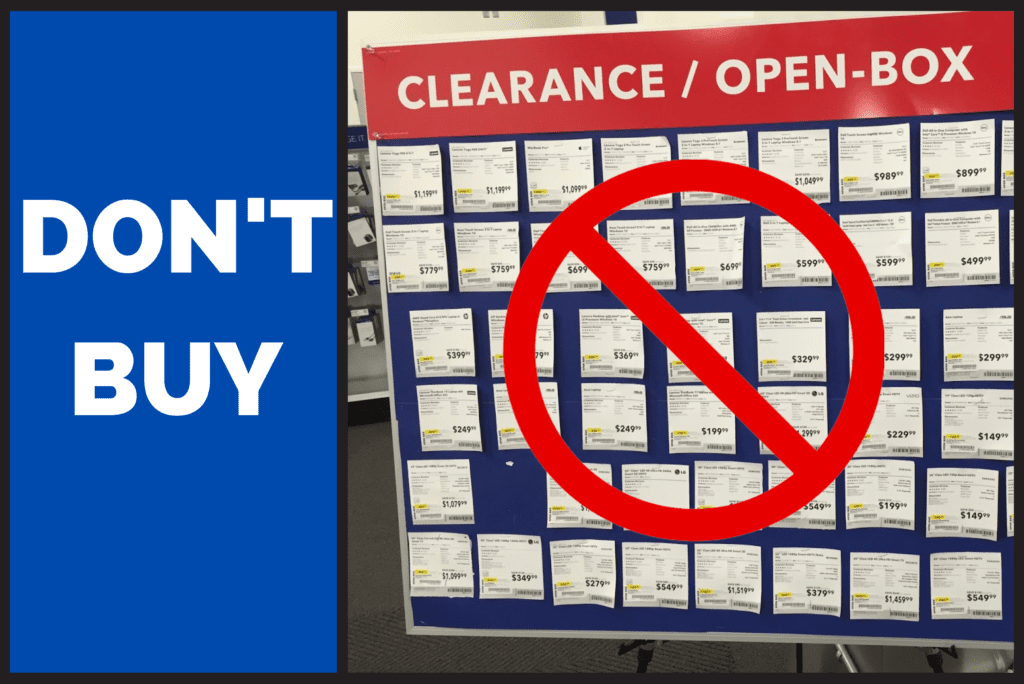
Understanding what open-box means at Best Buy is not just about knowing why a seal was broken; it is about understanding a sophisticated pricing ecosystem designed to move inventory while offering significant ROI (Return on Investment) to the consumer. This article explores the financial mechanics of open-box shopping, the tier systems that dictate pricing, and how to use these insights to optimize your personal technology budget.
Understanding the Economics of Open-Box Inventory
At its core, open-box inventory is a byproduct of a generous consumer return policy. Best Buy, as a massive corporate entity, prioritizes customer satisfaction and “frictionless” returns to maintain brand loyalty. When a customer returns a product—whether because they changed their mind, found the color unappealing, or realized it didn’t fit their desk—the item cannot, by law and policy, be sold as “New” again.
Why Items Become Open-Box
The majority of open-box items are not defective. In fact, many have never even been powered on. Financial experts often categorize these returns into “remorse returns” and “logistical returns.” A remorse return occurs when a consumer realizes the purchase doesn’t align with their current budget or needs. Logistical returns often involve minor cosmetic damage to the packaging during shipping. In both scenarios, the internal hardware remains pristine, yet the retail price must be slashed. For the buyer, this is a form of market inefficiency that can be exploited for financial gain.
The Pricing Tiers: From “Excellent-Certified” to “Fair”
Best Buy utilizes a rigorous grading system to price these items. Understanding these tiers is crucial for calculating the true value of your purchase:
- Excellent-Certified: These items have been tested and verified by Geek Squad to look and function like new. From a financial standpoint, this is the “sweet spot” where you get a brand-new experience with a guaranteed discount.
- Excellent: These are typically floor models or quick returns that lack the “certified” stamp but show no physical flaws.
- Satisfactory: These items may have minor scratches or be missing non-essential accessories (like a manual or a mounting bracket). The price drop here is usually significant, often 30% or more.
- Fair: These items have visible signs of use or significant cosmetic marks. For a consumer focused purely on utility over aesthetics, the “Fair” category offers the highest possible savings-to-utility ratio.
The Consumer Finance Perspective: Is the Discount Worth the Risk?
Every financial decision involves a trade-off between risk and reward. Buying an open-box MacBook or OLED TV involves the risk of a shorter lifespan or hidden defects. However, when you look at the “Total Cost of Ownership” (TCO), the math often favors the open-box buyer.
Calculating the Value Proposition
If a new laptop costs $2,000 and the open-box “Excellent” version costs $1,600, you are looking at a 20% immediate return on your capital. In the world of investing, a 20% guaranteed return is nearly unheard of. If that $400 saved is then diverted into a high-yield savings account or an index fund, the long-term financial benefit of choosing open-box compounded over several years becomes staggering.
Furthermore, technology is a depreciating asset. The moment you break the seal on a brand-new device, its resale value drops by 15-25%. By purchasing open-box, you are essentially letting the previous owner take the “depreciation hit.” If you decide to sell the device a year later, your delta between the purchase price and the resale price will be much smaller, effectively lowering your cost of usage per month.
Opportunity Cost and Depreciation
Choosing open-box is a lesson in managing opportunity cost. If you have a $2,500 budget for a home theater, buying new might limit you to a mid-range setup. However, by leveraging open-box prices, that same $2,500 could potentially secure a flagship-level system. From a wealth-building perspective, the goal is to maximize the utility of every dollar spent. Open-box allows you to “buy up” into a higher tier of quality that would otherwise be outside your allocated budget.
Strategic Shopping: How to Maximize Your Savings
To truly excel at the “open-box game,” one must treat shopping as a tactical exercise. It is not just about what you buy, but how and when you buy it.
Timing Your Purchase for Maximum ROI
Inventory levels for open-box items fluctuate based on retail cycles. The best times to find high-quality open-box deals are typically 15 to 30 days after major holidays (like Christmas or Black Friday) and immediately following major product launches (such as a new iPhone or Samsung release). During these windows, the volume of returns spikes, and managers are often more incentivized to move “old” open-box inventory to make room for the new, leading to deeper manual markdowns.
Leveraging Manufacturer Warranties and Credit Card Protections
One of the biggest misconceptions in personal finance is that “open-box” means “no warranty.” At Best Buy, most open-box items still carry the original manufacturer’s warranty from the date of purchase.
To further de-risk the investment, savvy shoppers use specific credit cards that offer “Purchase Protection” or “Extended Warranty” benefits. When you buy an open-box item with a card that offers these perks, you are essentially gaining a third layer of financial security:
- The Best Buy return window.
- The manufacturer’s 1-year warranty.
- The credit card’s extended protection.
This “protection stacking” makes the open-box route nearly as safe as buying new, but at a significantly lower entry price.
Risk Management in Open-Box Transactions
In finance, risk management is the process of identifying, analyzing, and mitigating uncertainty. When buying open-box, your primary risks are missing parts and functional instability.
The Importance of the Return Policy
The ultimate safety net for any open-box purchase at Best Buy is their standard return policy, which usually ranges from 15 to 60 days depending on your “My Best Buy” membership tier. This period is your “stress-test” window. A financially disciplined shopper will immediately put the device through its paces—running benchmarks on a computer, checking for dead pixels on a TV, or testing battery cycles on a smartphone. If the device underperforms, the capital can be recovered in full, ensuring no loss of principal.
Inspection Checklists to Protect Your Investment
Before leaving the store or immediately upon delivery, you should perform a “Physical Audit.”
- Check the Shutter Count: For cameras, this tells you the “mileage” on the sensor.
- Battery Health: For laptops and phones, check the cycle count in the system settings.
- Check for “Coil Whine” or Fan Noise: These are signs of internal wear that might not be visible.
By conducting a professional-level inspection, you ensure that the discount you received isn’t being offset by future repair costs.
Long-term Financial Impact: Resale Value and Asset Longevity
The final stage of the open-box financial lifecycle is the exit strategy. Most consumers keep electronics for 2-4 years. Because you started with a lower “basis” (purchase price), your “capital gains” or “capital losses” upon resale are much more manageable.
For example, if you buy a new iPad for $800 and sell it three years later for $400, your cost of ownership was $400. If you bought that same iPad open-box for $600 and sell it for $400, your cost of ownership was only $200. You enjoyed the exact same technology for half the price.

Conclusion: The Sophisticated Consumer’s Choice
Buying open-box at Best Buy is more than just a way to save a few dollars; it is a sophisticated financial strategy. It requires a shift in mindset—moving away from the “prestige” of a factory seal and toward the “utility” of the asset itself. By understanding the grading tiers, timing your purchases, and utilizing credit card protections, you can significantly lower your cost of living while maintaining a high standard of technological integration in your life. In the pursuit of financial independence, these “small” wins on large purchases are the bricks that build a solid financial foundation. Open-box isn’t just about what Best Buy means; it’s about what your money can do when it’s spent with precision.
aViewFromTheCave is a participant in the Amazon Services LLC Associates Program, an affiliate advertising program designed to provide a means for sites to earn advertising fees by advertising and linking to Amazon.com. Amazon, the Amazon logo, AmazonSupply, and the AmazonSupply logo are trademarks of Amazon.com, Inc. or its affiliates. As an Amazon Associate we earn affiliate commissions from qualifying purchases.