
In the realm of personal finance, travel is often viewed as a discretionary expense—a “want” rather than a “need.” However, for the modern professional or the savvy investor, travel is an essential investment in networking, global perspective, and mental well-being. The challenge lies in the inherent volatility of the aviation market. Unlike a standard retail product with a fixed price tag, a plane ticket is a dynamic financial asset whose value fluctuates based on complex algorithms, global demand, and inventory management.
Understanding when to buy plane tickets is not merely about finding a “deal”; it is about practicing sophisticated capital management. By approaching airfare with the same analytical rigor one might apply to a stock portfolio or a real estate acquisition, travelers can significantly reduce their overhead and increase the “dividend” of their travel experience.

The Economics of Airline Pricing: Understanding Dynamic Models
To master the timing of a purchase, one must first understand the underlying economic principles that dictate price. Airlines utilize a strategy known as “yield management” or “revenue management.” This is a variable pricing strategy based on anticipating and influencing consumer behavior to maximize profits from a fixed, time-limited inventory (the seats on a flight).
Understanding Yield Management Systems
Airlines do not sell seats; they sell “fare buckets.” On any given flight, there may be a dozen different price points for the exact same economy cabin. The first few seats are sold at a loss or break-even point to stimulate early demand. As the flight fills up and the departure date approaches, the algorithm automatically moves to higher-priced buckets.
From a financial perspective, the airline is hedging its bets. They want to ensure the plane is full (high load factor) while simultaneously ensuring that last-minute business travelers—who are typically price-insensitive—pay the highest possible premium. When you are looking for the “best time to buy,” you are essentially trying to enter the market at the moment the airline is most eager to offload inventory before the scarcity premium kicks in.
Why Last-Minute Booking is a Financial Liability
In many sectors of the economy, buying “remnant” inventory leads to deep discounts. In the airline industry, the opposite is true. This is due to the “procrastination tax.” Airlines have identified that travelers booking within 14 to 21 days of departure are usually traveling for urgent business or family emergencies. Because these travelers have low “price elasticity”—meaning their demand doesn’t change much even if the price doubles—airlines jack up the prices. For the budget-conscious individual, booking late is a catastrophic failure of financial planning that can result in paying 300% more for the same asset.
Optimal Timing for Domestic and International Travel
The “perfect” time to buy is a moving target, but data-driven analysis has identified specific windows where the probability of hitting the lowest price point is highest. This is often referred to in personal finance circles as the “Goldilocks Window.”
The “Goldilocks Window” for Maximum Savings
For domestic travel within North America or Europe, the financial sweet spot generally falls between 28 and 60 days before departure. During this window, airlines have enough data to know if a flight is underperforming, prompting them to lower prices to attract buyers. If you buy earlier than this, you may be paying a “peace of mind” premium. If you buy later, you are entering the zone of rising demand.
For international long-haul flights, the window shifts significantly earlier. Financial planners suggest looking 3 to 8 months in advance. Because international travel involves more logistics (visas, accommodation, time off), the “demand curve” peaks much earlier. Waiting for a “last-minute deal” on a flight from New York to Tokyo is a high-risk gamble that rarely pays off in the current economic climate.
Seasonal Fluctuations and the Impact of Shoulder Seasons
Just as a retail investor looks for undervalued stocks, a savvy traveler looks for “shoulder seasons.” This is the period between the peak season (high demand/high price) and the off-season (low demand/potentially poor conditions).
Financially, traveling during the shoulder season—such as visiting Europe in late September or the Caribbean in May—offers the highest return on investment. You receive 90% of the peak-season experience at 50% of the cost. By aligning your purchase timing with these cyclical market dips, you effectively increase your purchasing power without increasing your budget.
Financial Tools and Platforms for Fare Tracking
In the age of Fintech, no one should be “guessing” the right time to buy. There are sophisticated digital tools designed to aggregate data and provide predictive analytics, allowing you to make evidence-based financial decisions.
Leveraging Price Alerts and Aggregators
Platforms like Google Flights, Skyscanner, and Kayak function as the “Bloomberg Terminals” of airfare. The most effective strategy is to set “Price Alerts” for your specific routes. This allows you to monitor the market’s volatility without active manual labor.
From a personal finance standpoint, this is a form of “limit order” in the travel market. You decide what the flight is worth to you, and the technology notifies you when the market hits your target price. This removes the emotional impulse to “buy now” out of fear of prices rising, which is a common psychological trap that leads to overspending.
Using Predictive Analytics to Hedge Against Volatility
Apps like Hopper have pioneered the use of big data in travel. By analyzing trillions of historical price points, these tools can advise you with a high degree of statistical confidence whether to “Buy Now” or “Wait.”
If an algorithm tells you there is a 70% chance the price will drop in the next two weeks, “Waiting” is the mathematically correct financial move. Conversely, if the price is predicted to rise, the tool helps you lock in your costs immediately. Utilizing these tools transforms travel booking from a game of luck into a structured financial protocol.
Maximizing Travel Value Through Credit and Rewards
Buying a plane ticket is not just an outflow of cash; it is an opportunity for “arbitrage” through credit card rewards and loyalty programs. The timing of your purchase should be synchronized with your broader financial strategy.
Strategic Use of Points and Miles
In the world of “Travel Hacking,” the value of a point is often pegged at 1 to 2 cents. When you buy a ticket, you are essentially earning a rebate in the form of miles. However, the true financial mastery lies in knowing when to spend those miles versus when to spend cash.
If a flight costs $400 or 30,000 miles, the math suggests you should pay cash (as each mile is only worth 1.3 cents). If the flight jumps to $900 but remains 30,000 miles, the value of your points has tripled. Timing your “buy” with miles during periods of high cash-price volatility is one of the most effective ways to preserve your liquid capital.
The Hidden Costs of Low-Cost Carriers
When calculating the cost of a ticket, many people make the mistake of looking only at the “sticker price.” Budget airlines often present a “teaser rate” that appears financially attractive. However, once you factor in “ancillary fees”—baggage, seat selection, and even printing a boarding pass—the total cost of ownership (TCO) often exceeds that of a legacy carrier.
A professional financial approach requires looking at the “all-in” cost. Sometimes, paying $50 more for a ticket on a premium airline that includes a checked bag and a meal is the more fiscally responsible choice than being “nickeled and dimed” by a low-cost carrier.
Finalizing Your Travel Investment Strategy
Timing your airfare purchase is a micro-skill that reflects your macro-approach to money management. It requires patience, data analysis, and an understanding of market mechanics.

Developing a Personal Booking Protocol
To consistently save money, you should develop a standard operating procedure (SOP) for every trip:
- Phase 1 (Observation): Start tracking prices 6 months out.
- Phase 2 (Analysis): Use predictive tools to determine the “Goldilocks Window.”
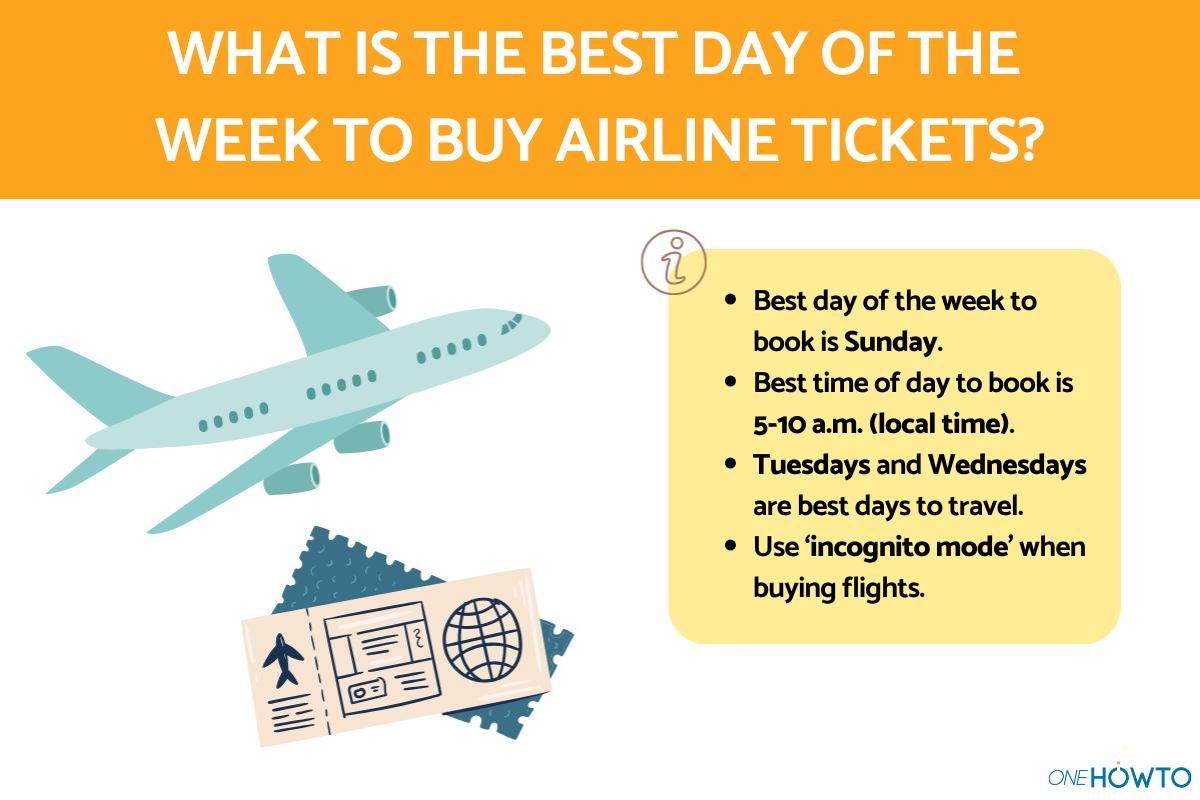
- Phase 3 (Execution): Book during a mid-week dip (usually Tuesday or Wednesday) when airlines often refresh their inventory.
- Phase 4 (Audit): Check if the price drops within 24 hours (most jurisdictions allow for a 24-hour penalty-free cancellation), allowing you to re-book at the lower rate.
By treating the “when to buy” question as a financial equation rather than a travel chore, you reclaim control over your budget. The savings generated from these strategies can then be redirected into higher-yielding assets, such as your retirement account or a business venture. In the end, the money you save on the “way there” is just as valuable as the money you earn when you arrive.
aViewFromTheCave is a participant in the Amazon Services LLC Associates Program, an affiliate advertising program designed to provide a means for sites to earn advertising fees by advertising and linking to Amazon.com. Amazon, the Amazon logo, AmazonSupply, and the AmazonSupply logo are trademarks of Amazon.com, Inc. or its affiliates. As an Amazon Associate we earn affiliate commissions from qualifying purchases.