
Closing a bank account is a significant financial move that requires more than just a simple phone call or a click of a button. Whether you are consolidating your assets, moving to a financial institution with higher interest rates, or simply simplifying your personal accounting, the process of closing a Chase savings account involves several strategic steps to ensure your transition is seamless and free of unexpected fees.
In the modern landscape of personal finance, banking relationships are fluid. As Chase is one of the “Big Four” banks in the United States, they have robust procedures for account management. However, navigating these procedures requires a clear understanding of your financial obligations and the bank’s internal policies. This guide provides an in-depth exploration of how to effectively close your Chase savings account while maintaining your overall financial health.

Phase 1: Pre-Closure Financial Auditing
Before you initiate the closure of your Chase savings account, you must conduct a thorough audit of your current financial activity. Closing an account prematurely or without proper preparation can lead to “zombie transactions,” overdraft fees in linked accounts, or missed interest payments.
Clearing Pending Transactions and Interest Accrual
Savings accounts typically accrue interest on a monthly basis. If you close your account mid-cycle, you should inquire with a Chase representative about how your final interest payment will be handled. Furthermore, ensure that all “pending” transactions have fully cleared. While savings accounts have fewer daily transactions than checking accounts, you might have automated transfers scheduled that could trigger an overdraft if the account is closed while a transfer is in progress.
Diverting Direct Deposits and Automated Transfers
One of the most common mistakes in personal finance management is forgetting to update automated systems. If you have your paycheck, Social Security benefits, or external investment dividends directed into your Chase savings account, these must be rerouted at least one to two billing cycles before you close the account. Similarly, if you use your savings account to pay for utility bills or as a backup for your Chase checking account (Overdraft Protection), you must unlink these services to avoid service interruptions.
Moving Your Capital Strategically
You should never close an account with a significant balance still inside it. While Chase can issue a cashier’s check for the remaining balance, this can sometimes lead to mail delays or additional fees. The most efficient method is to transfer your funds electronically to your new financial institution via an ACH transfer. Leave only a few dollars in the account to keep it active until you are ready to make the final closure request, ensuring you stay above any “Minimum Daily Balance” requirements to avoid a final maintenance fee.
Phase 2: Methods for Closing Your Chase Savings Account
Chase offers several channels for closing an account, catering to different preferences for digital or face-to-face interaction. Choosing the right method depends on your comfort level with digital tools and the complexity of your banking relationship.
Closing via the Digital Portal or Mobile App
For many users, the easiest way to close an account is through the Chase Secure Message Center. By logging into your online banking profile, you can send a formal request to close your savings account.
- Log in to Chase.com.
- Navigate to the “Secure Messages” section.
- Compose a new message selecting “Account Inquiry” and specify the savings account you wish to close.
- Clearly state that you wish to close the account and specify where any remaining cents should be transferred.
Note that this method may not be available if your account has a negative balance or is currently under a “hold” for security reasons.
Utilizing the Chase Customer Service Line
If you prefer a direct conversation, you can call Chase Customer Service. This is often the fastest way to get immediate confirmation of your account status. When calling, have your account number and personal identification details ready. The representative will likely ask why you are leaving—this is a standard retention tactic. Be firm but polite in your request. Ensure you ask the representative for a “service ticket number” or a confirmation code for your records.
The In-Person Branch Experience
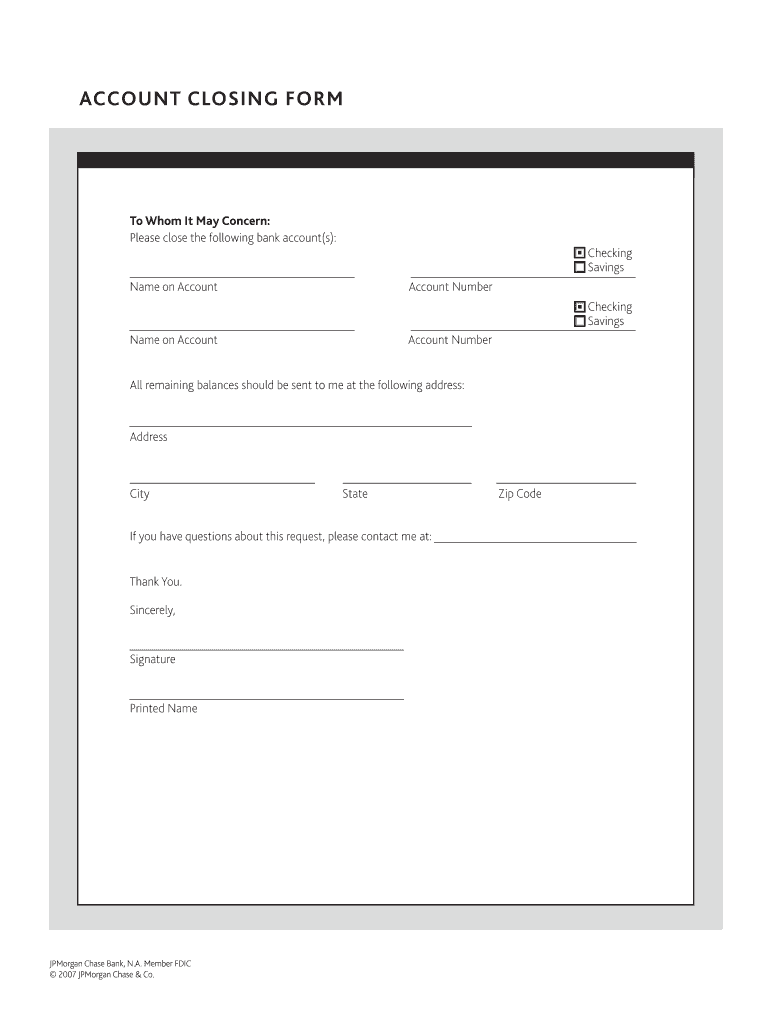
For individuals who prefer a paper trail and a handshake, visiting a Chase branch is the most definitive way to close an account. Speaking with a personal banker allows you to settle the account to the penny immediately. The banker can provide you with a printed “Account Closure Letter” on the spot. This document is vital for your personal records, serving as proof that the account was closed in good standing, which can be important if any credit reporting issues arise in the future.
Phase 3: Navigating Potential Fees and Policy Constraints
In the world of corporate finance, banks often implement policies to discourage account churn. Understanding these “fine print” items is essential to ensuring that closing your account doesn’t cost you money.
The 90-Day Early Closure Rule
Like many major financial institutions, Chase may charge an “Early Account Savings Closure Fee” if an account is closed within a certain timeframe of being opened (typically 90 days). If you opened the account to take advantage of a sign-up bonus, closing it too early might not only trigger a fee but could also lead to the bank clawing back the initial bonus. Always review the terms and conditions associated with any promotional offers before initiating a closure.
Avoiding the Final Monthly Service Fee
Chase savings accounts often carry a monthly service fee (commonly $5 for a basic Chase Savings℠ account) unless certain criteria are met, such as maintaining a minimum daily balance of $300. If you transfer all your money out on the 15th of the month but don’t officially close the account until the 30th, the bank may charge you a service fee because your balance dropped below the threshold. To avoid this, it is often best to close the account on the same day you move the final balance, or ensure the banker waives the final fee during the closure process.
Managing Negative Balances and Overdrafts
You cannot close a Chase savings account that has a negative balance. If you have incurred fees that have put your account in the red, you must first bring the balance to zero. Ignoring a negative balance will lead to the account being “charged off” and reported to ChexSystems—a consumer reporting agency that tracks banking history. A negative report here can make it difficult to open bank accounts at other institutions for several years.
Phase 4: Life After Chase – Optimizing Your Savings Strategy
Once the account is closed, your work in personal finance management continues. The goal of moving your money is usually to seek better utility or higher returns.
Verifying the Closure and Retaining Documentation
Within 7 to 10 business days of your closure request, you should receive a formal letter in the mail from Chase confirming that the account is closed. Do not discard this. Keep it in your permanent financial files. Additionally, download your last 12 months of bank statements before you lose access to the online portal. These records are necessary for tax purposes, especially if the account earned more than $10 in interest, as you will still receive a 1099-INT form at the end of the year.
Evaluating High-Yield Alternatives
If you are closing your Chase savings account because of the low interest rates (which often hover near the national average for traditional brick-and-mortar banks), look toward High-Yield Savings Accounts (HYSAs). Many online-only banks offer interest rates that are significantly higher than traditional banks. In a high-interest-rate environment, the “opportunity cost” of keeping money in a low-yield account can amount to hundreds or thousands of dollars in lost earnings over time.

Diversifying into Other Financial Vehicles
Closing a basic savings account is often the first step toward a more sophisticated investment strategy. Consider whether a portion of those funds should be moved into a Certificate of Deposit (CD) for a fixed rate of return, or a brokerage account for long-term growth in the stock market. By moving your capital out of a stagnant account and into a vehicle aligned with your long-term goals, you are transitioning from simple “banking” to proactive “wealth management.”
In conclusion, closing a Chase savings account is a straightforward process, provided you approach it with the diligence required of a savvy financial consumer. By auditing your transactions, choosing the right closure method, avoiding unnecessary fees, and strategically reinvesting your capital, you ensure that your financial journey remains on an upward trajectory. Remember, your bank is a tool for your personal economy; when that tool no longer serves your needs, it is your right—and your responsibility—to find a better one.
aViewFromTheCave is a participant in the Amazon Services LLC Associates Program, an affiliate advertising program designed to provide a means for sites to earn advertising fees by advertising and linking to Amazon.com. Amazon, the Amazon logo, AmazonSupply, and the AmazonSupply logo are trademarks of Amazon.com, Inc. or its affiliates. As an Amazon Associate we earn affiliate commissions from qualifying purchases.