
The subtle twinge, the persistent ache, the sudden sharp stab – these sensations are often the first whispers of a potential hairline fracture in the foot. While seemingly minor, these tiny cracks in bone can significantly disrupt daily life, impacting mobility and athletic performance. Understanding the nuances of how a hairline fracture feels is crucial, not just for diagnosis but also for leveraging technological advancements that can aid in early detection and management. This exploration delves into the sensory experience of such an injury, framed through the lens of modern medical technology and diagnostic tools, providing insight for athletes, active individuals, and anyone seeking a deeper understanding of this common, yet often insidious, injury.

The Nuances of Pain: Beyond a Simple Ache
A hairline fracture, also known as a stress fracture, is a tiny crack in a bone that often develops over time due to repetitive force. Unlike a full break, it’s not a dramatic event but rather a cumulative effect of overuse, insufficient recovery, or changes in activity levels. The sensation it evokes is therefore often subtle and progressive, making it challenging to pinpoint.
The Insidious Onset: When Discomfort Becomes a Constant Companion
The initial stages of a hairline fracture are frequently characterized by a dull, persistent ache. This discomfort might be mild enough to be dismissed as general fatigue or a minor strain, especially for individuals accustomed to physical exertion. The pain is often described as deep within the bone, rather than a surface-level soreness.
- Activity-Dependent Pain: A hallmark of hairline fractures is their tendency to worsen with weight-bearing activities. Walking, running, jumping, or even prolonged standing can exacerbate the ache, making these actions increasingly uncomfortable. Initially, the pain might subside with rest, providing a false sense of relief. However, as the fracture progresses, the pain may begin to linger even after periods of inactivity.
- Tenderness to Touch: While not always present, some individuals will experience localized tenderness when the fractured area is pressed. This localized sensitivity can be a key indicator, distinguishing it from broader muscular soreness. The area might feel sensitive to the touch, and even light pressure can elicit a sharp, albeit brief, pain response.
- Swelling and Bruising (Less Common but Indicative): Unlike more severe fractures, significant swelling and bruising are less common with hairline fractures. However, in some cases, mild puffiness or discoloration might appear around the affected area, particularly after periods of increased activity. This subtle swelling can contribute to a feeling of tightness or stiffness in the foot.
The Shifting Sensation: From Dull Ache to Sharp Pain
As the hairline fracture progresses and the crack widens or deepens, the nature of the pain can evolve. What began as a manageable ache can escalate into more acute and debilitating sensations.
- Sharp, Stabbing Pains: With increased stress on the fractured bone, sharp, stabbing pains can emerge, particularly during high-impact activities. These sudden bursts of intense pain can be so severe that they force an individual to stop their activity abruptly. This type of pain is often described as feeling like a “zinger” or a sudden, unexpected jolt within the bone.
- Pain that Intensifies Overnight: Some individuals report that their hairline fracture pain worsens during the night. This phenomenon is not fully understood but may be related to changes in blood flow or pressure distribution during sleep. The constant, low-level pressure on the fractured bone, even in a relaxed state, can lead to a throbbing sensation that disrupts sleep.
- A Feeling of Instability or Weakness: While not directly a pain sensation, some individuals may experience a subjective feeling of instability or weakness in the affected foot. This can manifest as a feeling that the foot is “giving way” or not as strong as usual, particularly when bearing weight or during dynamic movements. This sensation can be a consequence of the bone’s compromised integrity.
Technological Aids in Detection and Diagnosis
The subjective nature of pain associated with hairline fractures necessitates the use of advanced diagnostic technologies to confirm the diagnosis. While the “feel” of the injury is the initial trigger for concern, definitive diagnosis relies on objective medical assessments.
Imaging Modalities: Visualizing the Invisible Crack
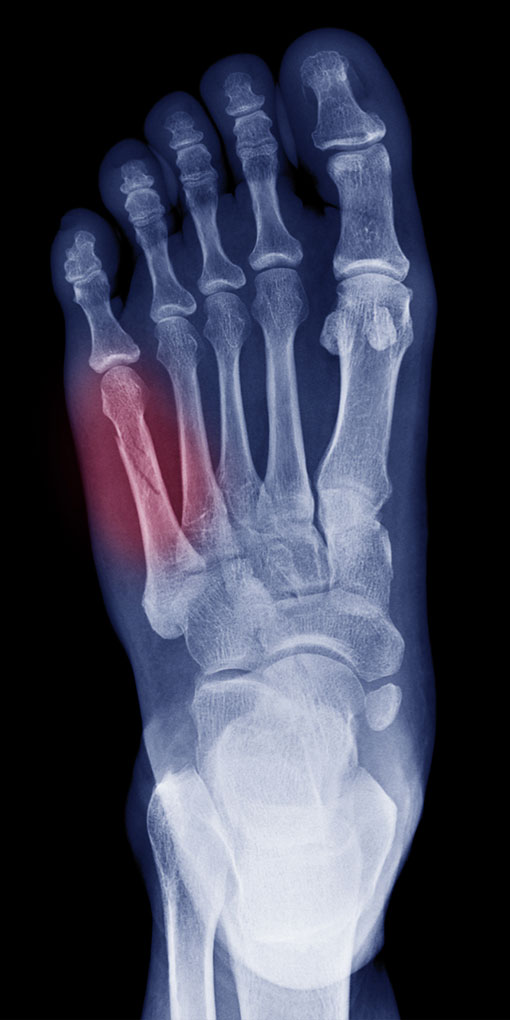
The most common and effective methods for detecting hairline fractures involve various imaging techniques that can visualize even the smallest cracks in the bone.
- X-rays: The First Line of Defense (and its Limitations): Standard X-rays are often the initial diagnostic tool employed. They are readily available and relatively inexpensive. However, early hairline fractures can be notoriously difficult to detect on X-rays, as the crack may be too fine to be visible. Often, an X-ray may appear normal in the initial stages, leading to a delayed diagnosis. Nevertheless, repeat X-rays taken after a few weeks of rest may reveal subtle signs of healing, such as callus formation, which can confirm a prior fracture.
- MRI (Magnetic Resonance Imaging): Unveiling the Subtle Details: MRI is a far more sensitive imaging modality for detecting hairline fractures, especially in their early stages. MRI can visualize bone marrow edema, which is inflammation within the bone that surrounds the fracture. This edema is often present even when the crack itself is not yet visible on X-ray. MRI offers a detailed, cross-sectional view of the bone, allowing radiologists to identify the precise location and extent of the injury. The ability of MRI to detect bone marrow edema is a significant advancement, enabling earlier diagnosis and more timely intervention.
- CT (Computed Tomography) Scans: Detailed Structural Analysis: CT scans provide even more detailed cross-sectional images than MRI and are particularly useful for visualizing the bone’s structure. While less sensitive than MRI for early bone marrow edema, CT scans are excellent at delineating the fracture line itself, especially in complex anatomical areas or when the fracture is more established. This can be helpful in assessing the severity and orientation of the crack.
Advanced Biomechanical and Diagnostic Tools: Beyond Static Images
Beyond traditional imaging, a range of technological tools can contribute to a comprehensive assessment of foot injuries, including hairline fractures.
- Pressure Mapping Systems: These advanced systems can analyze the distribution of pressure across the foot during various activities. By identifying areas of excessive or uneven pressure, these systems can highlight regions that may be at higher risk for developing stress fractures or that are symptomatic due to an existing hairline fracture. This data can inform treatment strategies, such as custom orthotics.
- Gait Analysis Technology: Sophisticated motion capture systems can analyze walking and running patterns. Abnormalities in gait, such as altered foot strike, excessive pronation, or supination, can place undue stress on specific areas of the foot, contributing to hairline fractures. Identifying these biomechanical issues can be crucial for both diagnosis and prevention.
- Ultrasound Technology (Emerging Applications): While not as widely used for definitive hairline fracture diagnosis as MRI or CT, advancements in ultrasound technology are showing promise. High-resolution ultrasound can potentially detect subtle changes in bone surface integrity and surrounding soft tissues, offering a non-invasive and portable diagnostic option. Research is ongoing to refine its accuracy and clinical application for stress fractures.
The Role of Wearable Technology and Predictive Analytics
The integration of wearable technology into our lives is extending into the realm of health and fitness, offering potential avenues for early detection and personalized management of injuries like hairline fractures.
Smart Devices: Monitoring the Invisible Stressors
Smartwatches, fitness trackers, and other wearable devices are increasingly capable of monitoring physiological metrics that can indirectly indicate an increased risk or presence of stress fractures.
- Activity Tracking and Load Management: Wearable devices provide detailed data on activity levels, including steps taken, distance covered, and intensity of workouts. For individuals prone to stress fractures, exceeding certain thresholds of cumulative load without adequate rest can be a significant risk factor. By monitoring these metrics, individuals and their healthcare providers can identify periods of excessive training that may have contributed to the development of a hairline fracture.
- Heart Rate Variability (HRV) and Sleep Tracking: Metrics like heart rate variability and sleep quality, often monitored by wearables, can offer insights into the body’s recovery status. Poor recovery, indicated by reduced HRV or disrupted sleep patterns, can signal that the body is under significant stress, potentially increasing the risk of bone stress injuries.
- Step Count and Cadence Analysis: While basic, consistent monitoring of step count and, in more advanced devices, cadence (steps per minute) can help track changes in activity patterns that might be contributing to injury. A sudden increase in mileage or a significant change in cadence without proper adaptation can place abnormal stress on the foot.
Predictive Analytics and AI: Unlocking the Potential for Prevention
The vast amounts of data collected by wearable devices, when analyzed using sophisticated algorithms and artificial intelligence (AI), hold the promise of predictive analytics for musculoskeletal injuries.
- Identifying At-Risk Individuals: By analyzing historical data from a large population, AI algorithms can identify patterns and risk factors associated with hairline fractures. This could include combinations of activity levels, biomechanical data, sleep patterns, and even demographic information. Such insights can help flag individuals who may be at a higher risk and warrant closer monitoring or preventative interventions.
- Personalized Training Recommendations: Based on an individual’s real-time data and predictive models, AI can offer personalized training recommendations. This could involve suggesting rest days, adjusting training volume, or recommending specific exercises to strengthen supporting muscles, all aimed at mitigating the risk of developing a hairline fracture.
- Early Anomaly Detection: Future applications may see AI systems analyzing wearable data in real-time to detect subtle anomalies that could indicate the early onset of a hairline fracture. For example, a slight but persistent change in gait pattern or an increased reported pain level correlated with specific activity metrics could trigger an alert, prompting an individual to seek medical attention sooner. This proactive approach, powered by technology, could revolutionize injury prevention and management.
In conclusion, understanding the subtle yet distinct ways a hairline fracture in the foot manifests is the first step towards seeking appropriate care. This awareness, coupled with the ever-advancing technological tools available for diagnosis and the burgeoning potential of wearable technology and predictive analytics, empowers individuals to not only identify injuries but also to actively participate in their prevention and management, ensuring a faster return to pain-free movement and optimal performance.
aViewFromTheCave is a participant in the Amazon Services LLC Associates Program, an affiliate advertising program designed to provide a means for sites to earn advertising fees by advertising and linking to Amazon.com. Amazon, the Amazon logo, AmazonSupply, and the AmazonSupply logo are trademarks of Amazon.com, Inc. or its affiliates. As an Amazon Associate we earn affiliate commissions from qualifying purchases.