
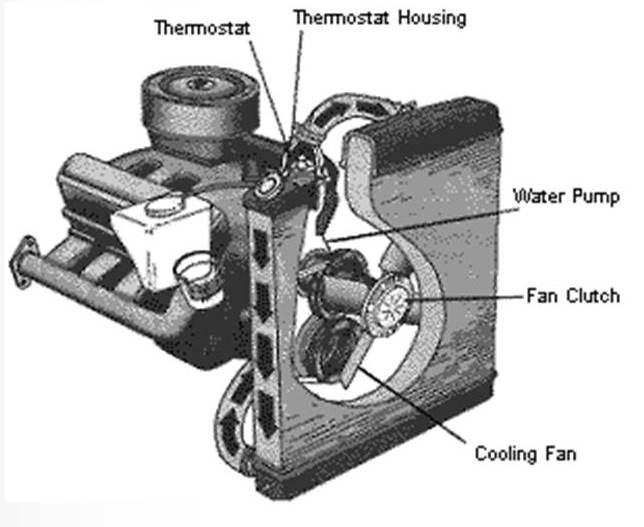
The cooling system of a vehicle is a marvel of engineering, a complex interplay of components designed to maintain optimal operating temperatures and prevent catastrophic engine damage. At the heart of this system, particularly in vehicles with belt-driven fans, lies a crucial yet often overlooked component: the fan clutch. Far from being a simple mechanical linkage, the fan clutch is an intelligent device that dynamically controls the operation of the engine’s cooling fan, directly impacting engine efficiency, fuel economy, and overall performance. Understanding its function is key to appreciating the sophistication of modern automotive technology.

The Engine’s Unsung Hero: Understanding the Role of the Fan Clutch
The primary function of the fan clutch is to engage and disengage the engine’s cooling fan based on the engine’s temperature. Without a fan clutch, the fan would be directly connected to the engine’s crankshaft, spinning at engine speed at all times. While this might seem like a constant supply of airflow, it’s actually an inefficient and often detrimental approach. Imagine a powerful electric fan running at full blast indoors, even when the room is already cool. This is analogous to a continuously engaged fan clutch. The fan clutch acts as a sophisticated thermostat for the fan itself, ensuring it only operates when necessary.
The Necessity of Variable Fan Speed
In older vehicles or those with direct-drive fans, the fan spins at a speed directly proportional to the engine’s RPM. This means that at idle, the fan spins slowly, providing minimal airflow. As engine RPM increases, so does the fan speed, offering more cooling. However, this system has significant drawbacks.
At low speeds or when the vehicle is stationary, such as in stop-and-go traffic, the engine generates heat, but the direct-drive fan provides insufficient airflow to dissipate it. This can lead to overheating. Conversely, at higher road speeds, the vehicle’s forward motion naturally pushes air through the radiator. In this scenario, a constantly spinning fan is not only unnecessary but actively counterproductive. It creates drag on the engine, consuming valuable horsepower and increasing fuel consumption. The fan clutch elegantly solves this dilemma by allowing the fan to operate at variable speeds, or even disengage entirely when full cooling is not required.
Heat as the Trigger: How the Fan Clutch Senses Temperature
The fan clutch operates on a simple yet effective principle: heat. Most fan clutches utilize a thermostatic element, often a bimetallic spring, that is sensitive to ambient air temperature passing through the radiator. This air is heated by the engine coolant flowing through the radiator.
When the engine is cold, the air passing through the radiator is also cool. In this state, the bimetallic spring is contracted, keeping the fan clutch disengaged or at a low engagement level. As the engine heats up and the coolant temperature rises, the heat is transferred to the air flowing through the radiator. This heated air causes the bimetallic spring to expand. The expansion of the spring is linked to a valve mechanism within the fan clutch.
The Viscous Coupling: The Heart of the Fan Clutch’s Operation
The internal workings of a fan clutch typically involve a viscous coupling filled with silicone fluid. This coupling consists of a series of thin plates, similar to those found in a clutch pack, but immersed in a specialized fluid.
When the bimetallic spring is contracted (low temperature), the valve inside the clutch is closed, restricting the flow of silicone fluid between the plates. This minimal fluid allows for very little slippage between the input (driven by the engine belt) and output (driving the fan) shafts, resulting in the fan spinning at a low speed or not at all.
As the bimetallic spring expands due to increasing heat, it opens the valve within the clutch. This allows the silicone fluid to flow more freely between the plates. The increased fluid acts as a medium, transferring rotational force from the input shaft to the output shaft. The more fluid that can circulate, the less slippage occurs, and the faster the fan spins, effectively increasing its cooling capacity. When the engine cools down, the bimetallic spring contracts, closing the valve, reducing fluid flow, and decreasing fan speed.
The Technical Marvels: Different Types of Fan Clutches
While the fundamental principle of temperature-based engagement remains consistent, fan clutches have evolved over time, leading to different designs and levels of sophistication. Understanding these variations provides a deeper appreciation for their technological advancements.
The Thermostatic Fan Clutch: The Traditional Workhorse
The thermostatic fan clutch is the most common type found in many vehicles. It directly incorporates the bimetallic spring and valve mechanism as described above. These clutches are designed to operate within specific temperature ranges, engaging the fan when the radiator air reaches a predetermined threshold. They are relatively simple, reliable, and cost-effective, making them a staple in automotive cooling systems for decades. Their primary limitation lies in their reliance on ambient radiator air temperature, which can sometimes lead to a slight delay in engagement compared to more advanced systems.
The Non-Thermostatic (Manual) Fan Clutch: Simplicity and Specific Applications
Less common in modern passenger vehicles but found in some heavy-duty applications or older designs is the non-thermostatic fan clutch. These clutches are either permanently engaged or designed for manual engagement, often controlled by a lever or switch. While they offer simplicity, they lack the intelligent temperature regulation of their thermostatic counterparts. This means they can be either over-cooling the engine at higher speeds, leading to wasted energy, or under-cooling it during demanding conditions if not manually adjusted. Their use is typically limited to situations where a constant and predictable cooling demand is met or where manual control is a design requirement.
The Electronic Fan Clutch: The Pinnacle of Precision Control
The most advanced form of fan clutch is the electronic fan clutch. Instead of relying on a mechanical bimetallic spring, these clutches use sensors to monitor engine coolant temperature and other operating parameters. This data is fed to an electronic control module (ECM) or engine control unit (ECU). The ECM then precisely controls an electromagnetic actuator or a solenoid valve within the fan clutch.
This electronic control allows for much finer adjustments to fan speed. The ECM can predict cooling needs based on various factors, such as engine load, vehicle speed, and ambient temperature, not just the immediate radiator air temperature. This leads to more efficient operation, potentially improving fuel economy and reducing emissions. Electronic fan clutches are increasingly common in newer vehicles, especially those with sophisticated engine management systems, and offer the highest level of responsiveness and efficiency.
Beyond Cooling: The Broader Impacts of Fan Clutch Functionality
The role of the fan clutch extends far beyond simply preventing the engine from overheating. Its efficient operation has a ripple effect on various aspects of vehicle performance, driver experience, and even environmental impact.
Fuel Efficiency: A Quiet Contributor to Savings
A fan clutch that engages only when needed significantly contributes to fuel efficiency. When the fan is not required, disengaging it reduces the load on the engine. This means the engine doesn’t have to work as hard to maintain speed, thus consuming less fuel. The drag created by a constantly spinning fan can be surprisingly substantial, especially at highway speeds. By intelligently managing fan speed, the fan clutch allows the engine to operate more freely, leading to noticeable improvements in miles per gallon (MPG). This is particularly important in modern vehicles designed for optimal fuel economy.
Engine Performance and Longevity: Maintaining the Sweet Spot
An engine operates most efficiently and reliably within a specific temperature range. Overheating can cause severe damage, leading to costly repairs and reduced engine life. Conversely, an engine that runs too cool is also inefficient, leading to poor combustion and increased wear. The fan clutch plays a vital role in maintaining this optimal operating temperature. By ensuring sufficient airflow only when necessary, it prevents both extremes. This stable operating temperature reduces stress on engine components, leading to improved performance, smoother operation, and ultimately, a longer engine lifespan.
Noise Reduction: A Quieter Driving Experience
The sound of a high-revving engine fan can be a significant source of noise, especially in older vehicles or during strenuous driving conditions. A fan clutch that effectively disengages or reduces its speed when not needed dramatically reduces this noise. This results in a quieter and more pleasant driving experience for occupants. The transition from a quiet engine to a roaring fan when the clutch engages can be noticeable, but the ability to return to quiet operation when cooling demands subside is a key benefit of a well-functioning fan clutch.
Troubleshooting and Maintenance: Ensuring Optimal Fan Clutch Performance
Like any mechanical component, fan clutches are subject to wear and tear. Recognizing the signs of a failing fan clutch and performing regular maintenance can prevent more serious issues and ensure continued optimal performance.
Symptoms of a Failing Fan Clutch: What to Look For
Several telltale signs can indicate a problem with the fan clutch. One of the most common is engine overheating, especially when the vehicle is idling or moving slowly. Conversely, in some cases, a failing clutch might remain engaged too much, leading to the engine running cooler than it should, especially in cold weather.
Other symptoms include unusual noises coming from the front of the engine, such as a persistent whirring or grinding sound, especially when the engine is cold. A fan that spins too fast or too slowly relative to engine speed, even when the engine is warm, can also point to a malfunctioning clutch. Visually inspecting the fan for excessive wobble or looseness can also reveal issues.
Diagnostic Steps: Pinpointing the Problem
Diagnosing a faulty fan clutch typically involves a combination of observation and testing. A mechanic will often start by listening for abnormal noises and observing fan speed at different engine temperatures.
A common test involves checking for slippage. With the engine off, the fan should have some resistance when spun by hand, but it shouldn’t spin freely for a long time. If it spins too easily or too rigidly, it might indicate a problem. Another test involves observing fan speed as the engine warms up. The fan should gradually increase its speed as the engine temperature rises. If it doesn’t engage or engages too slowly, the clutch is likely at fault. For electronic fan clutches, diagnostic tools can read error codes from the ECM, providing specific insights into the system’s performance.
Replacement and Best Practices: Keeping Your Cooling System Healthy
If a fan clutch is deemed faulty, replacement is usually the most effective solution. This is a job that, while possible for a DIYer with the right tools and knowledge, is often best left to experienced technicians. Improper installation can lead to further damage to the cooling system or the engine.
When replacing a fan clutch, it’s crucial to use a high-quality part that meets or exceeds the manufacturer’s specifications. This ensures proper fitment and reliable performance. It’s also a good time to inspect other components of the cooling system, such as the fan itself, the radiator, the water pump, and the drive belt, as they all work in conjunction to maintain optimal engine temperatures. Regular maintenance checks of the cooling system, including ensuring proper coolant levels, are fundamental to preventing premature failure of components like the fan clutch.
aViewFromTheCave is a participant in the Amazon Services LLC Associates Program, an affiliate advertising program designed to provide a means for sites to earn advertising fees by advertising and linking to Amazon.com. Amazon, the Amazon logo, AmazonSupply, and the AmazonSupply logo are trademarks of Amazon.com, Inc. or its affiliates. As an Amazon Associate we earn affiliate commissions from qualifying purchases.