
The Finger Lakes region of New York State is a geographically captivating area, renowned for its eleven pristine glacial lakes that stretch out like elongated fingers pointing south from Lake Ontario. While the natural beauty of these lakes is their primary draw, their names themselves often spark curiosity. Beyond the simple enumeration, understanding the origins and characteristics of each lake offers a deeper appreciation for the region’s rich history, geological formation, and the cultural tapestry woven around these significant waterways. This exploration delves into the distinct identities of each of the eleven major Finger Lakes, providing a comprehensive overview for those seeking to understand this iconic New York landscape.

Understanding the Finger Lakes: A Geological and Historical Overview
The Finger Lakes owe their distinctive shape and arrangement to the powerful forces of glaciation that sculpted the northeastern United States during the last Ice Age. As massive glaciers receded, they carved deep, north-south oriented valleys into the pre-existing bedrock. The subsequent melting of these glaciers filled these valleys with water, creating the elongated bodies of water we know today. This geological heritage has profoundly influenced the region’s development, from its early Indigenous inhabitants to its modern agricultural and tourism economies.
The Glacial Legacy: Shaping the Landscape
The sheer scale of glacial activity in shaping the Finger Lakes cannot be overstated. The ice sheets, often miles thick, exerted immense pressure and erosive power, grinding away at the land and carving out the characteristic U-shaped valleys. This process occurred over thousands of years, leaving behind a landscape that is both dramatic and serene. The depth of the lakes, a direct result of this glacial scouring, contributes to their unique ecosystems and microclimates.
Indigenous Roots and Early Nomenclature
Long before European settlement, the Finger Lakes region was home to Indigenous peoples, primarily the Haudenosaunee (Iroquois) Confederacy. These communities developed a deep spiritual and practical connection to the land and its waterways. While the exact origin of every lake name can be complex, many have roots in the languages of these original inhabitants, often reflecting natural features, animal life, or significant historical events. Understanding these early names provides a crucial link to the region’s ancestral past and acknowledges the enduring legacy of its first stewards.
The Eleven Major Finger Lakes: Names and Distinctive Characteristics
The Finger Lakes are not merely a homogenous collection of water bodies; each possesses its own unique character, size, depth, and surrounding environment. Identifying each by name is the first step in appreciating their individual contributions to the region’s allure.
Cayuga Lake: The Longest and Deepest
As the longest and second-deepest of the Finger Lakes, Cayuga Lake stretches for approximately 40 miles. Its name is derived from the Cayuga tribe, one of the six nations of the Haudenosaunee Confederacy, who were prominent inhabitants of the area. The city of Ithaca, home to Cornell University and Ithaca College, sits at its southern tip, contributing a vibrant academic and cultural presence to the lake’s shores. The northern reaches of Cayuga Lake are characterized by agricultural lands and charming lakeside communities.
Seneca Lake: The Largest and Deepest
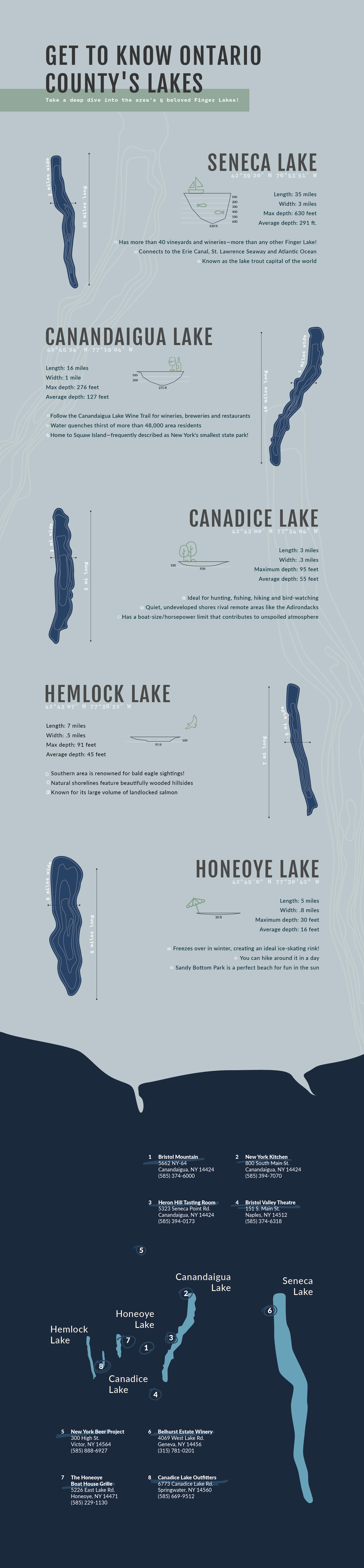
Seneca Lake holds the distinction of being the largest by surface area and the deepest of the Finger Lakes, reaching depths of over 600 feet in places. Its name honors the Seneca Nation, another significant constituent of the Haudenosaunee. Seneca Lake is renowned for its thriving wine industry, with numerous vineyards and wineries lining its eastern and western shores, taking advantage of the moderating influence of the lake on the local climate. The city of Geneva is a prominent hub on its northern end.
Keuka Lake: The “Y” Shaped Jewel
Keuka Lake stands out due to its unique “Y” shape, a result of glacial activity that carved two distinct arms. Its name is believed to be of Seneca origin, possibly meaning “canoe landing” or “lake where the loon calls.” Unlike many of the other Finger Lakes, Keuka Lake is characterized by its steep, rolling hills and a picturesque landscape dotted with vineyards and charming villages like Hammondsport, a historic hub for aviation.
Canandaigua Lake: The “Chosen Spot”
Canandaigua Lake, stretching for about 15 miles, is named after the Seneca word “Kan-an-daigua,” often translated as “the chosen spot.” This reflects the historical significance of the area to Indigenous peoples. The city of Canandaigua, situated at its northern end, is a historic town with a rich past. The lake is known for its clear waters and its popularity for recreational activities.
Skaneateles Lake: The Pristine Water Source
Skaneateles Lake is often lauded for its exceptional water quality, serving as a primary source of drinking water for the city of Syracuse. Its name is derived from the Onondaga word “Ska-ne-a-tel-us,” meaning “long lake.” The lake is characterized by its pristine beauty, with limited development along its shores, preserving its natural charm and ecological integrity.
Owasco Lake: The Smallest and Shallower
Owasco Lake is the smallest and shallowest of the major Finger Lakes. Its name is thought to be of Cayuga or Onondaga origin, possibly related to “crossing waters.” The city of Auburn, a historically significant industrial center, is located at its northern end. Owasco Lake is a popular destination for fishing and boating.
Otisco Lake: The Easternmost Expanse
Otisco Lake is the easternmost of the major Finger Lakes and is somewhat narrower and more irregular in shape than its neighbors. Its name is believed to be of Onondaga origin. While not as widely known for tourism as some of the larger lakes, Otisco Lake offers a more tranquil experience and is valued for its natural setting.
Cazenovia Lake: The Gem of Madison County
Cazenovia Lake, located in Madison County, is often referred to as the “gem of Madison County.” Its name honors Theophilus Cazenove, an agent for a Dutch land company. The village of Cazenovia, situated on its eastern shore, is a picturesque community with a strong historical presence, including Cazenovia College.
Honeoye Lake: The “Sunken Sun”
Honeoye Lake, situated to the west of Canandaigua Lake, is known for its shallow depth and is often considered a prime location for fishing. Its name is believed to be derived from the Seneca word “Hah-nen-yoo-int,” which can be interpreted as “where the sun sets” or “place of the sunken sun,” perhaps referencing its western orientation and the beautiful sunset views it offers.
Conesus Lake: The Westernmost Finger
Conesus Lake is the westernmost of the eleven major Finger Lakes. Its name is thought to be of Seneca origin, with various interpretations, including “place of the wild grapes” or “the creek that overflows.” Conesus Lake is popular for its recreational opportunities, including swimming, boating, and fishing, and is surrounded by a mix of residential communities and natural areas.
Hemlock Lake: The Protected Waterway
Hemlock Lake, located southwest of Canandaigua Lake, is known for its relatively undeveloped shoreline and its role as a significant water source. Its name, like many in the region, likely relates to the natural vegetation. Much of its watershed is protected, contributing to its pristine condition and making it a vital resource.
The Economic and Cultural Significance of the Finger Lakes
The names of the Finger Lakes are more than just labels; they are woven into the economic and cultural fabric of the region. The historical Indigenous connections, the legacy of early European settlers, and the ongoing development of industries all contribute to the identity and prosperity of the communities surrounding these iconic waterways.
The Wine Country Connection: A Global Reputation
The Finger Lakes are internationally recognized for their burgeoning wine industry, particularly for cool-climate varietals like Riesling and Cabernet Franc. The unique microclimates created by the lakes, which temper extreme temperatures, provide ideal conditions for grape cultivation. The names of the lakes, often appearing on wine labels, are intrinsically linked to this successful and growing agricultural sector, drawing tourists and wine enthusiasts from around the globe.
Tourism and Recreation: A Natural Playground
The natural beauty of the Finger Lakes makes them a premier tourist destination. From boating and fishing on the lakes themselves to hiking and exploring the surrounding state parks, the region offers a wealth of recreational activities. The names of the lakes are synonymous with these experiences, attracting visitors seeking outdoor adventures and a respite from urban life. The economic impact of tourism is substantial, supporting local businesses and communities.
Preserving the Legacy: Conservation and Future Development
As the region continues to evolve, the preservation of the Finger Lakes’ natural beauty and cultural heritage remains paramount. Understanding the origins of their names, appreciating their geological history, and recognizing their ecological importance are all crucial for informed conservation efforts and sustainable future development. The ongoing stewardship of these vital waterways ensures that their allure will continue to captivate generations to come.
aViewFromTheCave is a participant in the Amazon Services LLC Associates Program, an affiliate advertising program designed to provide a means for sites to earn advertising fees by advertising and linking to Amazon.com. Amazon, the Amazon logo, AmazonSupply, and the AmazonSupply logo are trademarks of Amazon.com, Inc. or its affiliates. As an Amazon Associate we earn affiliate commissions from qualifying purchases.