
The enduring narrative of the Three Wise Men, also known as the Magi, is a cornerstone of the Christmas story. Their journey, guided by a star to the infant Jesus, is a powerful testament to faith, discovery, and the recognition of something profoundly significant. While their story is steeped in religious tradition, the names attributed to these figures have a fascinating history and have evolved over centuries, becoming as recognizable as their gift-bearing act. Exploring their names reveals layers of cultural interpretation and theological development, offering a richer understanding of their place in Christian lore.
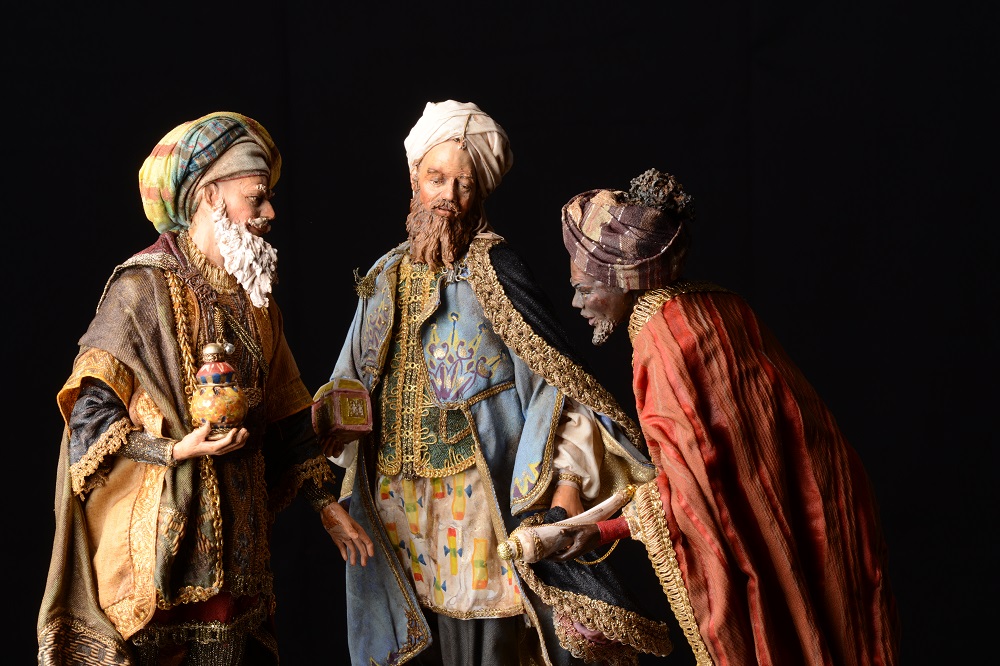
The exact number and identities of the Magi are not explicitly stated in the Gospel of Matthew, the sole biblical source that mentions them. Matthew simply states that “wise men from the east” came to Jerusalem. This ambiguity has allowed for centuries of tradition, speculation, and interpretation to fill the void. It is through these subsequent traditions, rather than direct scriptural decree, that the figures of Melchior, Caspar, and Balthazar have emerged as the universally accepted names of the Three Wise Men. Their story, and the details surrounding their identities, have become integral to how the Nativity is understood and depicted across the globe.
This exploration delves into the origins of the Magi, the scriptural basis for their existence, and the traditional attributions of their names. We will also consider the symbolic significance of these names and the gifts they brought, connecting their ancient journey to broader themes of divine revelation and universal salvation.
The Biblical Genesis of the Magi
The narrative of the Wise Men is found exclusively in the Gospel of Matthew, chapter 2. This account is pivotal, introducing figures from beyond the immediate Jewish community who recognize the newborn King of the Jews. The text itself provides no names, nor does it specify their number beyond the implication of “wise men” (plural). However, it does offer crucial details about their origin and their purpose.
Matthew’s Account: A Silent Foundation
Matthew’s Gospel states, “After Jesus was born in Bethlehem in Judea, during the time of King Herod, Magi from the east came to Jerusalem and asked, ‘Where is the one who has been born king of the Jews? We saw his star when it rose and have come to worship him.'” (Matthew 2:1-2). This foundational passage is remarkably concise, offering the essential elements of their arrival and motivation. The term “Magi” itself is significant. It refers to a priestly and scholarly caste of the ancient Persian and Median civilizations, often associated with astrology, divination, and the interpretation of dreams. Their presence in the Nativity story signals a recognition of Jesus’ significance by individuals from outside the familiar religious and cultural sphere of Judaism.
The emphasis in Matthew’s account is on their status as learned individuals who could interpret celestial signs. The “star” they observed is a central element, interpreted as a divine harbinger of a king’s birth. This celestial event, according to their understanding, pointed to a momentous occasion, prompting their arduous journey. The act of coming to “worship him” underscores their reverence and acknowledgment of Jesus’ royal and divine status, even at his infancy.
The Unspecified Number: Seeds of Tradition
The lack of a specific number in Matthew’s Gospel is the primary reason for the later tradition that there were three Wise Men. Several factors likely contributed to this development. Firstly, the Magi brought three distinct gifts: gold, frankincense, and myrrh. It became a natural and symbolically resonant conclusion for many early Christian interpreters that each gift was presented by a separate individual, thus establishing the number three.
Secondly, the number three itself holds significant theological weight within Christianity, often representing completeness, divinity, or the Holy Trinity (Father, Son, and Holy Spirit). This existing symbolic resonance likely made the idea of three Wise Men a particularly appealing and thematically rich interpretation. Over time, this assumption solidified into a widely accepted part of the Nativity narrative, influencing art, literature, and popular understanding of the Christmas story.
The Evolution of Names: From Anonymity to Identity
The journey from anonymous “Magi from the east” to the named individuals Melchior, Caspar, and Balthazar is a testament to the human desire to give concrete form and personality to foundational figures. This process of naming was not a sudden event but a gradual development, occurring over several centuries through the writings of early Church Fathers and the burgeoning tradition of Christian hagiography.
Early Christian Interpretations and the Birth of Names
The earliest Christian writings that elaborated on the Magi’s story, such as those by Origen in the 3rd century, began to discuss their number and potential identities. Origen, for instance, interpreted the gifts as symbolic of Christ’s kingship (gold), divinity (frankincense), and humanity/mortality (myrrh), thus indirectly supporting the idea of multiple individuals.
It wasn’t until the 6th century that specific names began to appear consistently in theological and historical texts. A Latin manuscript known as the Excerpta Latina Barbari (Latin Excerpts of the Barbarian) from around 500 AD is often cited as one of the earliest sources to list the names: Melchior, Caspar, and Balthazar. This manuscript, though of uncertain provenance, circulated widely and played a significant role in popularizing these names.
Other early traditions offered variations. Some texts proposed different names or assigned different origins and ages to the Magi. For example, one tradition suggested they were kings from Persia, India, and Arabia. However, the triumvirate of Melchior, Caspar, and Balthazar gradually gained the most widespread acceptance and has remained the dominant tradition.
Symbolic Significance of the Names and Their Origins
The names themselves, Melchior, Caspar, and Balthazar, are believed to have Semitic or Persian origins, reflecting the broad geographical and cultural scope of the Magi’s supposed origins. Each name is thought to carry symbolic meaning, further enriching their theological interpretation:

- Melchior: Often interpreted as meaning “my king is light” or “king of the world,” this name is frequently associated with an older, bearded figure, representing the Eurasian lineage, and bringing the gift of gold, symbolizing Christ’s kingship.
- Caspar: This name is sometimes understood as “treasurer” or “emissary of God.” He is often depicted as a younger man, perhaps from India, bringing frankincense, a fragrant incense used in worship, symbolizing Christ’s divinity and priestly role.
- Balthazar: This name can be translated as “king of the lord” or “king of justice.” He is typically portrayed as a dark-skinned or African figure, representing Africa or Ethiopia, and bringing myrrh, a bitter aromatic substance used in embalming and medicine, symbolizing Christ’s humanity, suffering, and eventual death.
This assignment of characteristics and origins, though not scriptural, became a powerful symbolic framework. It suggested that Christ’s birth was recognized and celebrated by representatives of all known races and continents of the ancient world, thus emphasizing the universality of his salvation. This inclusivity became a key aspect of their theological significance.
The Gifts of the Magi: More Than Just Presents
The presentation of three specific gifts – gold, frankincense, and myrrh – is a crucial element of the Nativity narrative, as recounted in Matthew. These were not casual offerings but valuable commodities with profound symbolic meanings that have been extensively interpreted throughout Christian history. The association of each gift with a specific Wise Man further solidifies their individual identities and roles.
Gold: The Offering to a King
The gift of gold is straightforward in its symbolism: it is the traditional offering to royalty. For the Magi to bring gold to the infant Jesus was a clear acknowledgment of his claim to be the King of the Jews. This gift underscores the Messianic prophecy of a royal lineage and a reigning monarch. In the context of the Wise Men’s journey from the East, it signifies their recognition of Jesus’ kingly authority, a status that would later be challenged by earthly rulers like Herod.
The economic value of gold in ancient times was immense, and its presentation as a gift to a newborn further amplified the significance of their proclamation. It was a material testament to their belief in Jesus’ supreme position, a declaration of his rightful inheritance of a throne.
Frankincense: The Acknowledgment of Divinity
Frankincense, a fragrant resin derived from trees, was highly prized in ancient times and was primarily used in religious rituals and temple worship. It was burned as incense to honor deities and signify reverence. Therefore, the gift of frankincense to Jesus was interpreted as an acknowledgment of his divine nature. It was an offering befitting God.
This gift highlights the spiritual dimension of the Magi’s recognition. They saw not just a king, but a divine being, worthy of the same reverence given to the Almighty. The burning of incense in sacred rites mirrored the spiritual adoration the Wise Men offered to the infant Christ, signifying his unique relationship with God and his role as a divine mediator.
Myrrh: The Foreshadowing of Sacrifice
Myrrh, another aromatic resin, was also used in religious ceremonies, but it also had significant medicinal properties and was commonly used in embalming and anointing the dead. This aspect of myrrh makes it a particularly poignant and foreshadowing gift. Its inclusion signifies the Magi’s implicit understanding or divine inspiration regarding Jesus’ future suffering, death, and humanity.
The gift of myrrh speaks to Christ’s mortal destiny and his ultimate sacrifice for humanity. It is a tangible representation of his human suffering and the redemptive power of his death. While the Magi might not have fully comprehended the entirety of Christ’s salvific mission at this early stage, the inclusion of myrrh in their gifts, as interpreted by later theology, points towards the culmination of his earthly journey and the profound impact it would have.
The Enduring Legacy of the Three Wise Men
The story of the Three Wise Men, despite its sparse biblical origins, has resonated through the centuries, shaping Christian tradition, art, and popular culture. Their journey, their gifts, and their names have become inextricably linked with the celebration of Christmas, offering a narrative of hope, universal salvation, and the recognition of divine significance by those who seek it.
Theological and Cultural Impact
Theologically, the Magi represent the Gentile world coming to acknowledge and worship Jesus, underscoring the universality of Christ’s mission. They symbolize the fulfillment of prophecy and the dawning of a new covenant accessible to all nations. Their story is a powerful reminder that faith and divine revelation are not confined to specific groups or cultures.
Culturally, the Magi have inspired countless works of art, from early Christian mosaics to Renaissance paintings and contemporary depictions. Their figures are iconic, symbolizing wisdom, pilgrimage, and the spirit of giving. The tradition of the three kings, often depicted with diverse skin tones and attires, reflects an evolving understanding of their global representation. Their journey is a metaphor for the search for truth and the transformative power of encountering the divine.

The Names as Symbols of Tradition and Belief
While the names Melchior, Caspar, and Balthazar are not found in scripture, they have become powerful mnemonic devices and symbols of faith. They provide a tangible identity to figures who might otherwise remain abstract. The enduring popularity of these names reflects the deep-seated human need to personify the sacred and to connect with the historical and spiritual narrative of Christianity.
The continued fascination with the names of the Three Wise Men speaks to their enduring significance. They are not merely historical characters but archetypes of seekers, witnesses, and early adherents of a revolutionary faith. Their story, enriched by the tradition of their names and their symbolic gifts, continues to illuminate the heart of the Christmas message, reminding us of the profound gift of divine love made manifest in the world.
aViewFromTheCave is a participant in the Amazon Services LLC Associates Program, an affiliate advertising program designed to provide a means for sites to earn advertising fees by advertising and linking to Amazon.com. Amazon, the Amazon logo, AmazonSupply, and the AmazonSupply logo are trademarks of Amazon.com, Inc. or its affiliates. As an Amazon Associate we earn affiliate commissions from qualifying purchases.