
When the word “chainsaw” conjures images of lumberjacks felling massive trees or, more recently, of horror movie villains, it’s easy to assume its invention was solely for aggressive timber processing. However, the story behind the chainsaw’s origin is far more nuanced, rooted not in the wilderness, but in the sterile environment of the medical field. Its initial purpose was remarkably delicate, focused on easing human suffering rather than conquering nature. This divergence from its present-day association highlights a fascinating evolution of technology, where tools designed for one specific, often surprising, application can morph into instruments that reshape entirely different industries.
The Unexpected Genesis: A Surgical Innovation
The chainsaw’s journey begins not with the roar of an engine, but with the quiet desperation of childbirth. The inventors of the early chainsaw were physicians grappling with challenging and prolonged labor cases. Their motivation was to create a more efficient and less traumatic way to perform procedures that were, at the time, incredibly difficult and often resulted in dire outcomes for both mother and child.
Addressing Obstetric Complications
In the late 18th and early 19th centuries, medical understanding and surgical tools were significantly less advanced than today. When a baby was too large to pass through the birth canal naturally, or when labor became dangerously prolonged, physicians were often forced to resort to manual manipulation or, in extreme cases, invasive surgical interventions. One of the most critical procedures in such scenarios was a symphysiotomy, a surgical operation to widen the pelvis by cutting through the pubic symphysis (the joint in the front of the pelvis). This was a procedure fraught with risk, requiring considerable time and often resulting in significant blood loss and infection for the mother.
The Osteotome: A Precursor to the Chainsaw
The direct precursor to the chainsaw, and indeed the inspiration for its cutting mechanism, was a surgical instrument known as the osteotome. Developed by two Scottish physicians, John Aitken and James Jeffray, in the late 1700s, the osteotome was essentially a hand-cranked saw designed for cutting bone. While rudimentary by modern standards, it represented a significant advancement in surgical capabilities, offering a more controlled and efficient method for bone division compared to chisels and mallets. These early osteotomes were driven by a chain loop with cutting teeth, rotated by a hand crank. This chain-and-tooth mechanism is the direct ancestor of the modern chainsaw’s cutting bar and chain.
The Medical Chainsaw: A Tool for Life, Not Destruction
The early iterations of the “chainsaw” were not the powerful, engine-driven machines we recognize today. They were much smaller, hand-powered instruments, meticulously crafted for precision and control within the human body. Their purpose was singular: to facilitate birth and alleviate suffering during complex obstetric emergencies.
The Hand-Cranked Symphysiotomy Saw
The first true “chainsaws” in a recognizable form were developed in the early 19th century. Scottish doctors John Aitken and James Jeffray are credited with creating a hand-cranked saw with a continuous chain of cutting teeth that could be guided through bone. This instrument was specifically designed to perform symphysiotomy. It was a far cry from the deafening roar of a modern chainsaw; these were quieter, more deliberate tools used in the controlled environment of a surgical theater. The ingenuity lay in the looped chain, which allowed for a continuous cutting motion without the need to reposition a reciprocating blade. This made the procedure faster and potentially less traumatic.
Evolution and Refinement

Over time, these medical chainsaws saw further refinements. Doctors sought ways to improve their efficiency and reduce the effort required by the surgeon. Innovations included variations in chain design, handle mechanisms, and the overall construction of the instrument. However, their core application remained firmly within the realm of obstetrics and other bone-cutting surgeries. While their use was limited to specific medical circumstances, their underlying mechanical principle proved to be remarkably robust and adaptable.
The Transition: From Medicine to the Masses
The critical innovation that propelled the chainsaw from a niche medical instrument to a tool with broader industrial applications was the introduction of a power source. This transition was not immediate but rather a gradual evolution, driven by the inherent efficiency of the cutting chain mechanism.
The Advent of the Motorized Saw
The concept of a powered saw had been explored for centuries, but it wasn’t until the early 20th century that significant advancements in engine technology made a practical motorized chainsaw a reality. The initial attempts at motorized saws were often cumbersome and impractical, but the fundamental cutting action of the chain remained the core of their design. The real breakthrough came with the development of lightweight, powerful gasoline engines and the refinement of the cutting chain itself.
Early Applications Beyond Medicine
As motorized chainsaws became more viable, their potential applications began to expand beyond their original medical purpose. Early adopters recognized the efficiency of the chain-driven cutting mechanism for tasks that required rapid and powerful wood processing. While the transition wasn’t without its challenges, the inherent advantages of a powered, continuous cutting action quickly became apparent. These early motorized saws, though still relatively primitive, laid the groundwork for the machines that would eventually revolutionize industries like logging and construction.
The Modern Chainsaw: A Legacy of Diverse Utility
Today, the chainsaw is synonymous with forestry, construction, and even landscaping. Its ability to efficiently cut through wood has made it an indispensable tool across numerous sectors. However, understanding its surprising medical origins provides a valuable perspective on technological evolution and the often-unforeseen paths innovation can take.
Impact on Forestry and Timber Industries
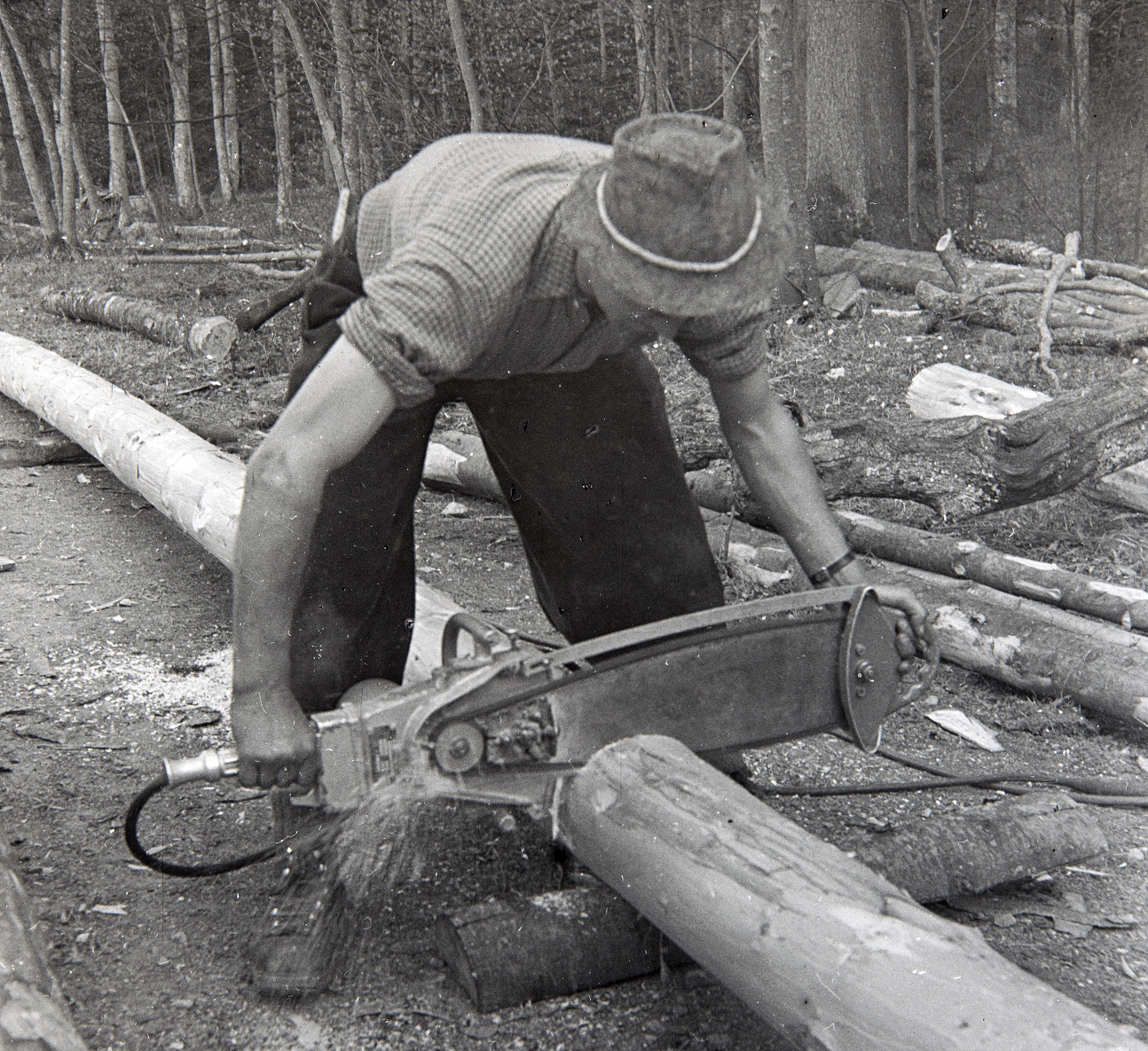
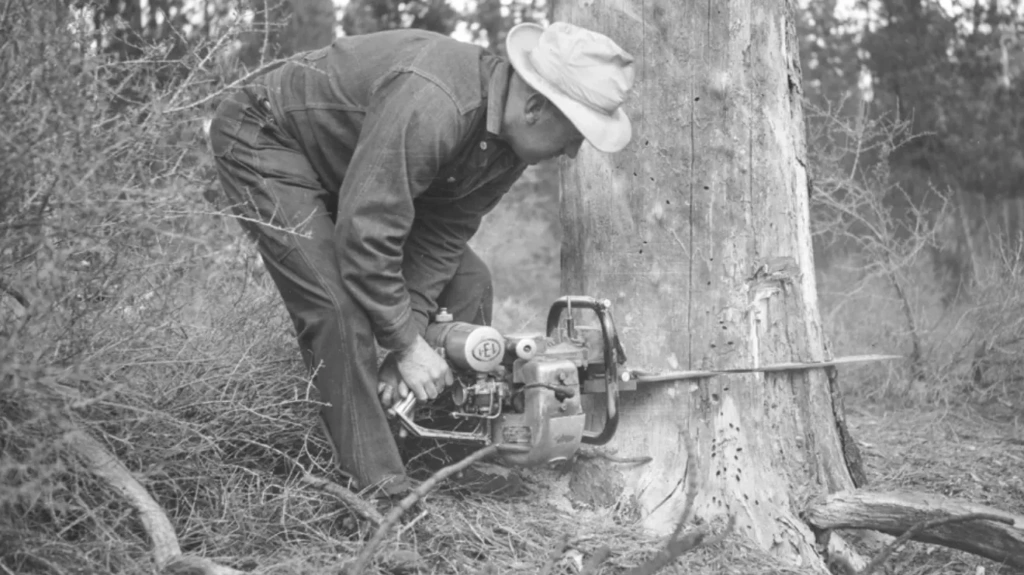
The widespread adoption of the gasoline-powered chainsaw irrevocably changed the forestry and timber industries. Before the chainsaw, felling large trees was a labor-intensive and time-consuming process, often relying on manual saws, axes, and brute strength. The chainsaw dramatically increased efficiency, allowing for faster harvesting of timber and the development of more sophisticated lumber operations. This had a profound impact on construction, furniture making, and the broader economy.
Chainsaws in Construction, Landscaping, and Art
Beyond forestry, chainsaws found their way into a multitude of other applications. In construction, they are used for cutting lumber, shaping materials, and even demolition. Landscapers utilize them for pruning large branches, removing trees, and shaping hedges. More recently, chainsaws have even entered the realm of art, with chainsaw carving becoming a popular and impressive form of sculpture. This diversification underscores the versatility of the chainsaw’s design, a testament to its evolution from a life-saving medical device to a powerful tool for creation and transformation across a vast spectrum of human endeavor. The humble beginnings of this often-intimidating machine offer a compelling reminder that innovation can emerge from the most unexpected places, and that the true potential of a technology may only be revealed over time, through adaptation and ingenuity.
aViewFromTheCave is a participant in the Amazon Services LLC Associates Program, an affiliate advertising program designed to provide a means for sites to earn advertising fees by advertising and linking to Amazon.com. Amazon, the Amazon logo, AmazonSupply, and the AmazonSupply logo are trademarks of Amazon.com, Inc. or its affiliates. As an Amazon Associate we earn affiliate commissions from qualifying purchases.