
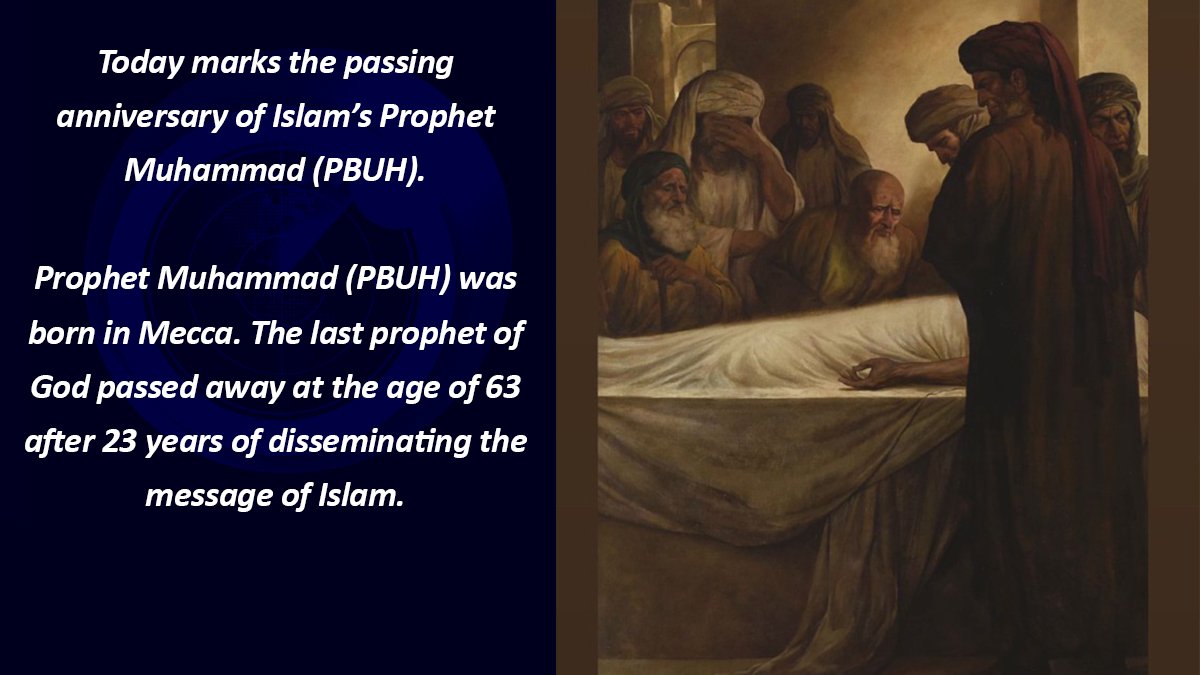
The inquiry into the precise year of the Prophet Muhammad’s passing is more than a simple date retrieval; it is a testament to the human drive for historical accuracy and the ever-evolving methods by which we seek and verify knowledge. In an age saturated with instant information, the ability to pinpoint such a critical historical event relies not just on ancient texts but also on the sophisticated digital tools and methodologies that have transformed historical research. While the question itself appears straightforward, its answer is woven into a rich tapestry of historical scholarship, textual analysis, and, increasingly, the application of technological advancements that allow us to cross-reference, authenticate, and understand historical data with unprecedented clarity. This exploration delves into the methods, both historical and technological, that converge to answer this pivotal question, highlighting the enduring relevance of meticulous research in the digital era.
The Foundations of Historical Inquiry: Textual Evidence and Early Scholarship
The journey to determine the year of Prophet Muhammad’s death begins with the foundational sources of Islamic history. These are the earliest written records and oral traditions that have been painstakingly preserved and transmitted through generations. Understanding these sources is crucial, as they form the bedrock upon which all subsequent historical analysis is built.
Primary Sources: The Quran and Hadith
The primary sources for understanding the life and times of Prophet Muhammad are the Quran and the Hadith. The Quran, believed by Muslims to be the literal word of God revealed to Muhammad, provides a divine framework and historical context for the events of his life. While it does not offer a chronological biography in the modern sense, it alludes to significant periods and interactions that help anchor historical timelines.
The Hadith, on the other hand, are the sayings, actions, and approvals of the Prophet Muhammad, collected and compiled by his companions and later scholars. These collections, such as Sahih al-Bukhari and Sahih Muslim, are indispensable for reconstructing the Prophet’s biography, including the chronology of his life and ministry. The meticulous process of isnad (chain of transmission) and matn (content) authentication undertaken by early Muslim scholars was a form of rigorous peer review, ensuring the reliability of the information passed down. This system, developed centuries before modern academic historiography, laid the groundwork for historical accountability.
Early Islamic Historians and Biographers
Following the era of the companions, a lineage of Muslim historians and biographers emerged, dedicated to compiling and analyzing the available information. Figures like Ibn Ishaq (d. 767 CE), whose work was later refined and edited by Ibn Hisham (d. 833 CE) in the Sirat Rasul Allah (The Life of the Messenger of God), are seminal. These scholars sifted through oral accounts, cross-referenced reports, and attempted to establish chronological order. Their painstaking efforts, often involving extensive travel to gather testimonies, represent the earliest forms of historical research. They meticulously documented events, battles, treaties, and the Prophet’s passing, providing the raw material for future generations.
The consensus among these early scholars, based on the available evidence, pointed towards a specific period for the Prophet’s death. Their interpretations, though arrived at through methods vastly different from modern scientific approaches, have demonstrated remarkable consistency over centuries, forming the basis of the accepted date. This consistency is a testament to the shared methodologies and the reliance on a common corpus of transmitted knowledge.
The Digital Age of Historical Verification: Tools and Methodologies
The advent of digital technology has revolutionized the way historical research is conducted, making previously inaccessible or cumbersome information readily available and enabling new forms of analysis and verification. The question of the year of Muhammad’s death, like countless other historical inquiries, benefits immensely from these advancements.
Digitized Archives and Scholarly Databases
The digitization of ancient manuscripts, historical texts, and scholarly journals has created vast online repositories of historical information. Libraries and academic institutions worldwide have invested heavily in making their collections accessible digitally. This means that primary sources, such as the earliest compilations of Hadith and early historical chronicles, are now often available in high-resolution images or searchable text formats. Scholars, regardless of their geographical location, can access and compare different versions of texts, identify variations, and conduct in-depth textual criticism with unprecedented ease.
Scholarly databases and digital libraries, such as JSTOR, Project MUSE, and specialized Islamic studies archives, offer access to a wealth of secondary literature. Researchers can quickly survey the existing body of scholarship on the Prophet’s life and death, trace the evolution of interpretations, and identify points of consensus or scholarly debate. This capability significantly accelerates the research process and fosters a more comprehensive understanding of the historical discourse surrounding specific events.
Computational Linguistics and Text Analysis
Advanced computational tools, including natural language processing (NLP) and machine learning, are increasingly being applied to historical texts. These technologies can assist in:
- Textual Comparison and Authentication: Algorithms can compare different manuscript versions of the same text to identify discrepancies, potential interpolations, or areas of variation, aiding in the authentication of authentic historical records.
- Dating and Chronological Reconstruction: By analyzing linguistic patterns, stylistic evolution, and recurring themes within texts, computational methods can offer new insights into the dating of documents and the reconstruction of historical timelines, potentially corroborating or refining existing chronological frameworks.
- Network Analysis of Transmitters: In the context of Hadith studies, computational tools can be used to analyze the complex chains of transmission, mapping relationships between narrators and identifying potential points of strength or weakness in the transmission lines, thereby contributing to the assessment of historical reliability.
While these technologies are still evolving in their application to ancient historical research, they offer powerful new avenues for verifying and cross-referencing information derived from traditional scholarly methods.
The Internet as a Global Research Hub
The internet has transformed the research landscape, serving as a global hub for academic discourse, resource sharing, and collaborative research. Online forums, academic social networks, and digital encyclopedias provide platforms for scholars to discuss findings, share newly discovered information, and engage in real-time debates. For a specific query like the year of Muhammad’s death, searching academic databases or specialized historical websites can yield a wealth of information, often citing the original primary sources and the scholarly works that have analyzed them.
The ease of access to digitized maps, archaeological data, and comparative historical records also allows for a more holistic understanding of the context in which the Prophet lived. This interconnectedness, facilitated by technology, allows for a more robust and multi-faceted approach to historical verification.
Synthesizing Evidence: The Consensus on the Year of Passing
The convergence of traditional scholarship and modern technological tools allows for a clear and consistent answer to the question of when Prophet Muhammad died. The rigorous efforts of early Muslim scholars, combined with the analytical power of contemporary technology, solidify a particular historical consensus.
The Accepted Timeline: Hijri and Gregorian Calendars
The overwhelming consensus among historians, both Muslim and non-Muslim, is that Prophet Muhammad passed away in the year 632 CE. This date is often presented in relation to the Islamic calendar as well. His death occurred on a Monday, the 12th day of Rabi’ al-Awwal, in the 11th year of the Hijri calendar (11 AH).
The Hijri calendar, which begins with the Prophet’s migration from Mecca to Medina (the Hijra) in 622 CE, is a lunar calendar. Converting between the lunar Hijri calendar and the solar Gregorian calendar involves a consistent, though not one-to-one, conversion factor. The year 11 AH, therefore, corresponds to the Gregorian year 632 CE. This conversion has been meticulously calculated and is widely accepted within historical and Islamic studies.
Cross-Referencing and Corroboration
The reliability of this date is reinforced by the consistent reporting across a multitude of early sources. The foundational historical works, such as those by Ibn Ishaq, Ibn Sa’d (d. 845 CE) in his Kitab al-Tabaqat al-Kabir (The Book of the Major Classes), and Tabari (d. 923 CE) in his Tarikh al-Rusul wa al-Muluk (History of Prophets and Kings), all place the Prophet’s death within this period.
Modern scholars, employing the digital tools discussed earlier, can now readily access and compare these different accounts. They can analyze the linguistic similarities and differences between various reports of the Prophet’s final illness and death, the events that followed, and the mourning periods described. The consistency in these reports, when subjected to rigorous textual analysis, provides strong corroboration for the established date. Furthermore, the understanding of the political and social landscape of Arabia at that time, as reconstructed through historical and archaeological research (often facilitated by digital mapping and data analysis), further supports the timeline of events leading up to and immediately following the Prophet’s passing.
The Enduring Relevance of Historical Accuracy
The question “what year did Muhammad die” serves as a microcosm for the broader endeavor of historical inquiry. It highlights how:
- Foundational sources are paramount: The integrity and careful preservation of primary documents are essential for any historical reconstruction.
- Scholarly tradition matters: Centuries of dedicated scholarship, even with limited tools, have established robust frameworks for understanding the past.
- Technology enhances, not replaces: Digital tools amplify our ability to analyze, compare, and verify the information gathered through traditional means, making research more efficient and comprehensive.
Ultimately, the year of Prophet Muhammad’s passing is not merely a date but a convergence point of textual evidence, meticulous scholarship, and the powerful analytical capabilities that technology affords us. It underscores the enduring human quest to understand our history with clarity and precision, a quest that continues to be refined and empowered by technological innovation.
aViewFromTheCave is a participant in the Amazon Services LLC Associates Program, an affiliate advertising program designed to provide a means for sites to earn advertising fees by advertising and linking to Amazon.com. Amazon, the Amazon logo, AmazonSupply, and the AmazonSupply logo are trademarks of Amazon.com, Inc. or its affiliates. As an Amazon Associate we earn affiliate commissions from qualifying purchases.