
For over four decades, the character of Starscream has served as the ultimate intersection between popular culture and cutting-edge aerospace engineering. As the high-ranking Air Commander of the Decepticons in the Transformers franchise, Starscream is defined by his alt-mode: a high-performance fighter jet. However, the question of “what jet is Starscream” is not answered by a single airframe. Instead, his evolution mirrors the real-world advancements in aviation technology, from the fourth-generation air superiority fighters of the 1980s to the fifth-generation stealth platforms of the 21st century.
By examining the technical specifications of the aircraft Starscream has inhabited, we gain a unique perspective on the trajectory of modern military tech, avionics, and the digital engineering required to bring these complex machines to life.
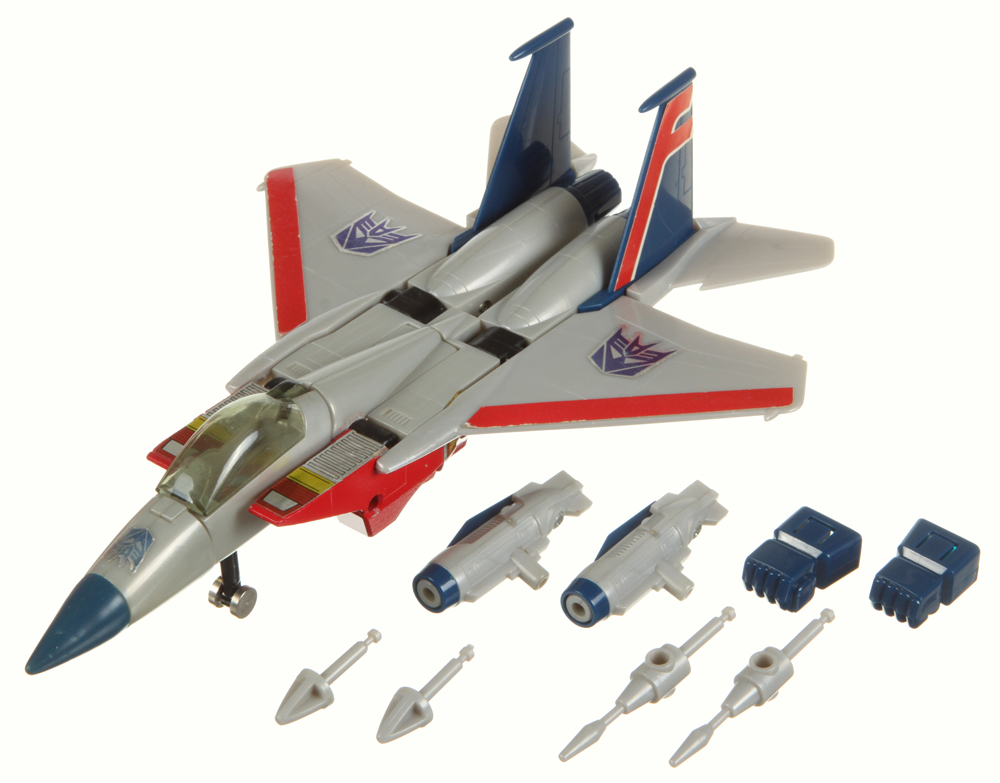
The F-15 Eagle: The Gold Standard of Air Superiority
In the original 1984 “Generation 1” (G1) series, Starscream was famously modeled after the McDonnell Douglas (now Boeing) F-15 Eagle. At the time of the show’s debut, the F-15 was the undisputed king of the skies, representing the pinnacle of Cold War aerospace technology.
Avionics and Radar Systems
The F-15 Eagle was designed around the concept of “look-down/shoot-down” capability. Its APG-63/70 radar systems were revolutionary, allowing pilots to detect and track small, high-speed targets at long ranges, even against the cluttered background of the earth. For a character like Starscream, whose narrative role involves seeking tactical advantages and “backstabbing” from a distance, the F-15’s long-range engagement capabilities were a perfect tech-match. The integration of a Head-Up Display (HUD) and the Hands-On Throttle-and-Stick (HOTAS) system allowed the pilot (or the sentient robot) to manage weapons systems without ever taking their eyes off the horizon—a crucial tech leap in 1980s dogfighting.
Performance Metrics and Propulsion
The sheer power of the F-15 is driven by two Pratt & Whitney F100-PW-220 turbofan engines. These engines provide a thrust-to-weight ratio exceeding 1:1, meaning the aircraft can accelerate while in a vertical climb. With a top speed of Mach 2.5 (approximately 1,650 mph), the F-15 provided the fictional Starscream with the ability to traverse global distances in minutes. The engineering of the F-15’s “variable-geometry” air intakes—which move to optimize airflow at different speeds—remains a marvel of mechanical engineering, ensuring the engines never “choke” during high-alpha maneuvers.
The F-22 Raptor: Transitioning to the Stealth Era
When the Transformers franchise was rebooted for the 2007 live-action film directed by Michael Bay, Starscream underwent a radical technological upgrade. He transitioned from the F-15 to the Lockheed Martin F-22 Raptor. This shift reflected the real-world transition of the U.S. Air Force into the era of “Low Observability” (LO) or stealth technology.
Low Observability and Radar Cross-Section (RCS)
The F-22 Raptor is the quintessential fifth-generation fighter. Unlike the F-15, which is highly visible on radar due to its vertical stabilizers and external weapon pylons, the F-22 is engineered for “stealth.” The airframe uses radar-absorbent materials (RAM) and a specific geometric alignment to deflect radar waves away from the source. In the context of Starscream, this technological shift changed his tactical profile from a loud, intimidating presence to a ghost-like predator. The F-22’s internal weapons bays are a key engineering feature; by carrying missiles inside the fuselage, the jet maintains its smooth, stealthy profile, only exposing its “teeth” at the moment of engagement.
Thrust Vectoring and Supercruise
Perhaps the most impressive tech feature of the F-22—and by extension, the modern Starscream—is 2D thrust vectoring. The engine nozzles can tilt up or down by 20 degrees, allowing the aircraft to perform maneuvers that defy traditional physics, such as the “Post-Stall” maneuver. Additionally, the F-22 possesses “Supercruise” capability, the ability to fly at supersonic speeds (Mach 1.8+) without the use of fuel-hungry afterburners. This technological leap represents a massive gain in fuel efficiency and thermal management, as afterburners create a massive heat signature that is easily tracked by infrared sensors.

Digital Evolution: The Tech Behind the Transformation
Beyond the real-world aircraft, the question of “what jet is Starscream” also involves the digital technology used to render him. The process of “transforming” a high-fidelity jet model into a complex robotic entity involves some of the most advanced software engineering in the visual effects industry.
CAD and 3D Modeling in Modern Production
To create the live-action Starscream, Industrial Light & Magic (ILM) utilized Computer-Aided Design (CAD) data provided by aerospace manufacturers. However, converting a functional jet into a bipedal robot requires “geometry management” on a massive scale. Each wing flap, turbine blade, and fuselage panel must be rigged with thousands of digital “bones.” The tech used here involves sophisticated physics engines that simulate the weight and torque of titanium and carbon-fiber components. Modern rendering engines like Pixar’s RenderMan or NVIDIA’s Omniverse allow for ray-tracing, ensuring that the light glinting off Starscream’s wings matches the exact refractive index of the F-22’s specialized stealth coating.
The Complexity of “Mass Shifting” Logic
A perennial challenge in the tech-design of Transformers is “mass shifting.” In the original animation, characters would often shrink or grow during transformation—a physical impossibility. Modern digital engineering for the character focuses on “logical transformation.” This means that every cubic inch of the F-22’s volume must be accounted for in the robot mode. Software developers use algorithmic folding sequences to ensure that the jet’s engines become the robot’s thrusters and the cockpit remains protected within the torso. This level of mechanical logic bridges the gap between science fiction and structural engineering.
Future Horizons: Experimental Designs and the Su-47 Berkut
While the F-15 and F-22 are his most famous incarnations, Starscream has occasionally adopted experimental or “black project” airframes in various media, most notably the Sukhoi Su-47 Berkut. This highlights a different branch of aerospace tech: Forward-Swept Wing (FSW) design.
Forward-Swept Wing Technology
The Su-47 Berkut is recognizable by its wings, which angle forward toward the nose rather than backward. This design offers extreme maneuverability and higher lift-to-drag ratios at subsonic speeds. However, it presents a massive engineering hurdle: aeroelastic instability. Without advanced carbon-fiber composites and high-speed digital flight control systems (Fly-By-Wire), the wings would literally snap off due to the immense twisting forces. Starscream’s use of this airframe in series like Transformers: Prime emphasizes a tech-profile focused on agility and “unstable” flight dynamics, which require a powerful onboard computer to maintain level flight.
The Role of AI and Sensor Fusion
As we look toward sixth-generation fighter technology, the “Starscream jet” concept begins to incorporate AI and Sensor Fusion. Modern jets act as “data nodes,” collecting information from satellites, ground radar, and other aircraft to create a unified battlefield picture. The technology integrated into Starscream’s persona has evolved from simple radio communication to complex electronic warfare (EW) suites. These systems are designed to jam enemy sensors, spoof incoming missiles, and hack into rival data links—tech that aligns perfectly with Starscream’s manipulative and calculating character traits.
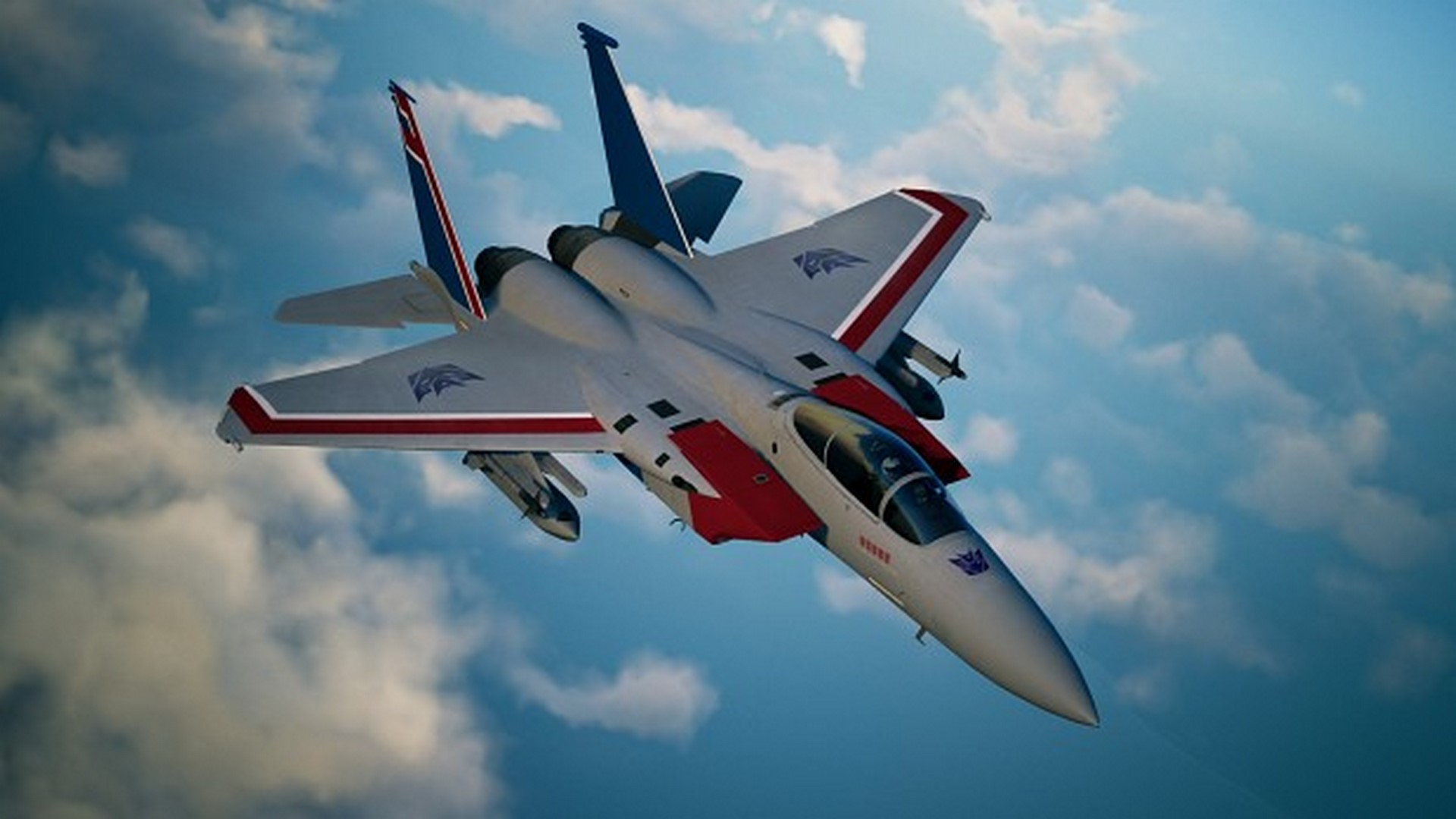
Conclusion: The Jet as a Living Laboratory
To ask “what jet is Starscream” is to trace the history of the last 50 years of aviation. He is the rugged, invincible F-15 Eagle; he is the silent, lethal F-22 Raptor; and he is the experimental, forward-thinking Su-47 Berkut.
From an engineering perspective, Starscream serves as a “living laboratory” that mirrors the evolution of aerospace materials, propulsion systems, and digital modeling. Whether it is the move from mechanical gauges to glass cockpits or the transition from aluminum skins to radar-absorbent composites, the technology behind Starscream remains at the absolute cutting edge. As aerospace companies begin to develop sixth-generation “Next Generation Air Dominance” (NGAD) fighters, we can expect the next iteration of Starscream to follow suit, likely incorporating unmanned “loyal wingman” drones and directed-energy weapons into his ever-evolving technological arsenal.
aViewFromTheCave is a participant in the Amazon Services LLC Associates Program, an affiliate advertising program designed to provide a means for sites to earn advertising fees by advertising and linking to Amazon.com. Amazon, the Amazon logo, AmazonSupply, and the AmazonSupply logo are trademarks of Amazon.com, Inc. or its affiliates. As an Amazon Associate we earn affiliate commissions from qualifying purchases.