
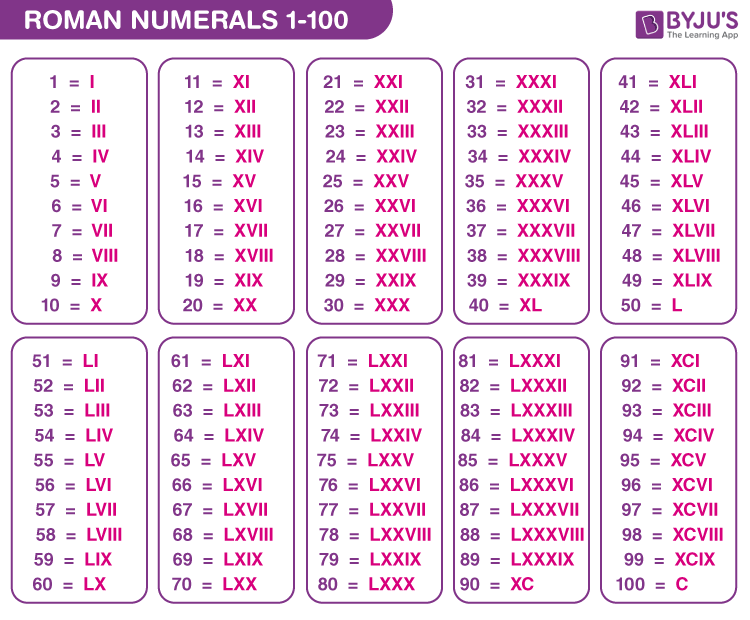
While a schoolchild might identify “XIV” simply as the Roman numeral for 14, to a seasoned financial professional or a retail investor active in the late 2010s, those three letters represent something far more complex. In the lexicon of modern finance, XIV was not just a number; it was the ticker symbol for one of the most popular, and eventually most notorious, exchange-traded products in history: the VelocityShares Daily Inverse VIX Short-Term ETN.
The story of XIV serves as a definitive case study in the intersection of financial engineering, market psychology, and the inherent risks of leveraged instruments. To understand what XIV is—and why it remains a cautionary tale in the world of money—we must look beyond the ancient numbering system and into the mechanics of volatility, liquidity, and the pursuit of alpha in a low-yield environment.

The Financial Identity of XIV: Beyond the Number 14
In the realm of personal finance and institutional investing, names and tickers often take on a life of their own. XIV was designed to provide investors with a way to profit from “tranquil” markets. Specifically, it was an Inverse VIX Exchange-Traded Note (ETN). To understand its value proposition, one must first understand the VIX, often referred to as the market’s “fear gauge.”
Understanding ETNs and Synthetic Assets
Unlike an Exchange-Traded Fund (ETF), which typically holds a basket of underlying assets like stocks or bonds, an ETN like XIV is a senior, unsecured debt security issued by a financial institution—in this case, Credit Suisse. When you bought XIV, you weren’t buying a piece of a company; you were buying a promise from the bank to pay you a return based on the performance of a specific index.
XIV tracked the S&P 500 VIX Short-Term Futures Index. However, it did so inversely. If the index went down (meaning market volatility was decreasing), XIV went up. During the long bull market that followed the 2008 financial crisis, this was an incredibly lucrative trade.
The Allure of Inverse Volatility
For years, the “short vol” trade was considered “easy money.” Because the market spends the majority of its time in a state of relative calm, the VIX futures curve is often in a state called “contango.” In this state, long-term futures are more expensive than short-term futures. An inverse product like XIV benefitted from the “roll yield”—essentially collecting a premium every month as it sold expensive futures to buy cheaper ones.
For the savvy investor, XIV wasn’t just a speculative tool; it was a way to harvest risk premium. At its peak, XIV had billions of dollars in assets, as both retail “side hustlers” and institutional hedge funds flocked to the steady gains produced by a world that seemed to have forgotten how to be volatile.
The Anatomy of a Market Event: When XIV Met “Volmageddon”
The history of XIV changed forever on February 5, 2018, an event now etched in financial history as “Volmageddon.” This day demonstrated the terrifying speed at which sophisticated financial tools can collapse when the underlying assumptions of the market are challenged.
The Mechanism of the Crash
On that fateful Monday, the S&P 500 dropped approximately 4%. While a 4% drop is significant, it is not historically unprecedented. However, the reaction in the volatility markets was explosive. The VIX saw its largest single-day jump in history, nearly doubling in value within hours.
Because XIV was an inverse product, a 100% jump in the VIX meant, mathematically, that the value of XIV should head toward zero. As the market closed, the “rebalancing” act required by the ETN’s formula forced the fund managers to buy massive amounts of VIX futures to hedge their positions. This created a feedback loop: the buying of futures pushed the VIX higher, which forced even more buying, further decimating the value of XIV.

Lessons in Liquidity and Leveraged Products
By the time the dust settled, XIV had lost more than 90% of its value in a single after-hours session. Credit Suisse, following the rules laid out in the product’s prospectus, triggered an “acceleration event,” effectively terminating the note. Investors who had treated XIV as a steady wealth-builder saw their capital evaporate overnight.
The primary lesson here for any modern investor is the difference between “perceived liquidity” and “structural liquidity.” XIV was easy to buy and sell on an exchange, but the underlying futures market it relied on could not handle the sheer volume of the “exit” all at once. When everyone tries to run through a narrow door at the same time, the structure collapses.
Portfolio Management in the Post-XIV Era
The demise of XIV did not end volatility trading, but it fundamentally changed how financial advisors and sophisticated investors approach “black swan” risks. If you are looking to build a resilient financial future, the “XIV incident” offers several pillars for modern portfolio management.
Risk Mitigation Strategies for Modern Investors
One of the most important takeaways from the XIV era is the danger of “picking up pennies in front of a steamroller.” While the returns were consistent for years, the “tail risk”—the chance of a catastrophic outlier event—was always present.
- Position Sizing: No matter how “sure” a trade seems, never over-allocate to a single synthetic instrument. Many investors lost their entire net worth because they treated a speculative ETN like a diversified savings account.
- Reading the Prospectus: XIV’s downfall was not a “glitch.” The “acceleration clause” was written clearly in the legal documents. Professional wealth management requires a deep dive into the “what ifs” of a financial product’s legal structure.
- Diversification Beyond Correlation: Many investors thought they were diversified, but because so many assets are now tied to “volatility,” when XIV broke, it caused a ripple effect across other sectors.
The Evolution of VIX-Linked Instruments
Today, the market still offers ways to trade volatility, such as the VIXY or UVXY, but the “inverse” space has become much more regulated and cautious. Newer products often have “caps” or different rebalancing schedules to prevent the kind of death spiral that claimed XIV. For those looking for online income through active trading, these tools remain available, but they are now approached with a level of sobriety that was lacking in 2017.
The Legacy of XIV on Modern Financial Regulation
The impact of XIV reached far beyond individual portfolios; it reached the halls of the SEC and the boardrooms of major investment banks. The “Roman number XIV” is now a permanent fixture in the history of financial regulation and product design.
Transparency and Investor Education
Following the crash, there was a massive push for better “Plain English” disclosures. Regulators realized that many retail investors did not understand that an ETN is a debt instrument, nor did they understand the mechanics of “path dependency” (how the daily rebalancing affects long-term returns).
Financial literacy initiatives now place a much higher emphasis on the difference between “Buy and Hold” assets and “Tactical Trading” instruments. XIV was never meant to be a long-term investment, yet its steady upward chart deceived many into treating it as one. Modern platforms are now often required to provide “Complex Product” warnings before an investor can execute a trade on a volatility-linked note.
The Future of Exotic Financial Tools
As we move further into a digital-first financial world—with the rise of crypto-volatility products and 0DTE (Zero Days to Expiration) options—the ghost of XIV looms large. The financial industry continues to innovate, creating ever-more complex ways to slice and dice risk. However, the XIV story remains the ultimate reminder that in the world of money, there is no such thing as a “free lunch.”
When an investment strategy offers high returns with seemingly low risk, it is usually because you are being paid to take on a risk that you simply haven’t seen manifest yet. XIV was the perfect investment—until the day it wasn’t.
In conclusion, “What is the Roman number XIV?” To a mathematician, it is 10 plus 4. To a historian, it might evoke the reign of Louis XIV. But to the world of finance, XIV is a symbol of the fragile boundary between genius and catastrophe. It represents the moment the market reminded everyone that volatility can be suppressed, but it can never be truly destroyed. As you manage your own personal finances or business capital, remember the lesson of the fourteenth Roman numeral: respect the “tail risk,” understand your instruments, and never mistake a calm sea for an absence of storms.
aViewFromTheCave is a participant in the Amazon Services LLC Associates Program, an affiliate advertising program designed to provide a means for sites to earn advertising fees by advertising and linking to Amazon.com. Amazon, the Amazon logo, AmazonSupply, and the AmazonSupply logo are trademarks of Amazon.com, Inc. or its affiliates. As an Amazon Associate we earn affiliate commissions from qualifying purchases.