
The question “what is the newest strain of COVID-19?” is no longer just a medical inquiry; it is a data-driven technological challenge. In the early days of the pandemic, identifying a new variant was a laborious, months-long process of manual laboratory culture and basic genetic mapping. Today, the identification of the latest subvariants—such as the “FLiRT” variants (KP.2 and KP.3) or the JN.1 lineage—happens in near real-time, powered by a sophisticated ecosystem of high-throughput hardware, artificial intelligence, and global cloud-computing networks.
To understand the newest strain is to understand the cutting-edge technology that tracks it. We are currently witnessing a revolution in bioinformatics and digital surveillance that allows scientists to “see” mutations before they even become dominant in the population.
The Revolution of Next-Generation Sequencing (NGS)
At the heart of identifying any new COVID-19 strain lies Next-Generation Sequencing (NGS). This technology has transitioned from a specialized research tool to the backbone of global public health infrastructure. Unlike traditional sequencing, which reads DNA one fragment at a time, NGS allows for the massive parallel sequencing of millions of DNA or RNA fragments simultaneously.
From Lab to Cloud: Real-Time Genomic Surveillance
When a patient tests positive for COVID-19, the diagnostic process is just the beginning. In advanced labs, the viral RNA is extracted and fed into NGS platforms like those developed by Illumina or Oxford Nanopore. These machines translate biological material into digital data—gigabytes of A, U, G, and C nucleotides.
The real tech magic happens in the cloud. Software pipelines automatically assemble these raw reads into a complete viral genome, comparing it against a reference sequence. Automated algorithms flag any deviations—mutations in the spike protein, for instance—that might suggest the emergence of a new strain. This digital pipeline has reduced the time to identify a new variant from weeks to hours.
Portability and Speed: The Rise of Nanopore Sequencing
One of the most significant tech trends in strain identification is the miniaturization of sequencing hardware. Devices like the MinION, a portable sequencer roughly the size of a smartphone, allow for “in-the-field” genomic surveillance. This technology uses nanopores—tiny holes in a membrane—to measure electrical changes as a strand of RNA passes through. This allows researchers in remote areas to identify the newest strains without shipping samples to centralized mega-labs, ensuring that the global digital map of the virus remains comprehensive and up-to-the-minute.
Artificial Intelligence and Predictive Modeling
Identifying a strain once it exists is one thing; predicting how it will evolve is another. The latest iterations of COVID-19 are being monitored through the lens of Artificial Intelligence (AI) and Machine Learning (ML), which have become indispensable in the “tech-vs-virus” arms race.
Machine Learning in Variant Forecasting
Data scientists now use ML models to analyze the vast repositories of genomic data. By training algorithms on the mutational history of the SARS-CoV-2 virus, these models can identify “mutational hotspots.” These are areas of the viral genome that are most likely to change to evade human immunity.
For example, when the JN.1 strain emerged, AI tools were able to quickly calculate its growth advantage over previous variants by simulating its transmission dynamics in virtual environments. This predictive tech allows health organizations to update their digital tracking dashboards and alert the public to the “newest strain” before it even reaches a peak in clinical cases.
AI-Driven Protein Folding and Mutation Analysis
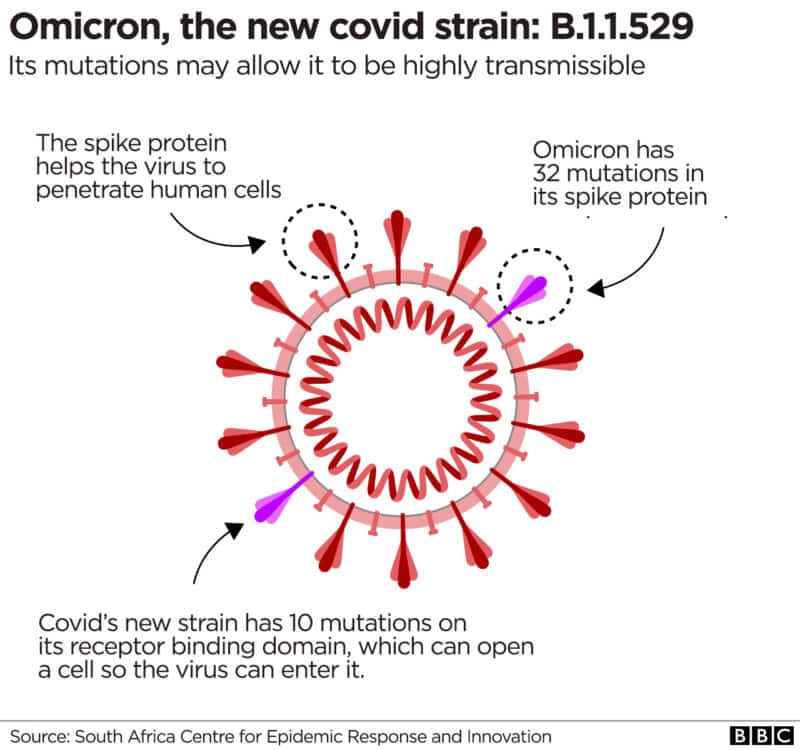
A key technology in understanding new strains is AI-powered protein structure prediction, most notably exemplified by Google DeepMind’s AlphaFold. When a new mutation is detected in a strain’s spike protein, researchers use AI to model how that mutation changes the protein’s physical shape.
This is critical because the shape determines how effectively the virus can latch onto human cells. By virtually “folding” the mutated proteins of the newest strain, tech platforms can predict whether current vaccines or monoclonal antibodies will remain effective, providing a digital blueprint for pharmaceutical adjustments long before traditional “wet lab” testing is completed.
Data Infrastructure and Global Interoperability
The identification of the newest COVID-19 strain is a global collaborative effort that relies on robust data infrastructure and open-source software principles. The virus does not respect borders, and neither can the technology used to track it.
GISAID and the Open-Source Data Movement
The most critical software platform in this niche is GISAID (Global Initiative on Sharing All Influenza Data). This digital repository acts as a global “clearinghouse” for viral genomic data. When a lab in Singapore or South Africa sequences a new subvariant, they upload the digital sequence to GISAID.
This interoperability allows developers and bioinformaticians worldwide to download the data and run their own diagnostic algorithms. The tech infrastructure behind GISAID ensures data integrity, security, and rapid access, making it the “GitHub of Virology.” Without this centralized, high-speed data exchange, our understanding of the newest strain would be fragmented and localized.
Cybersecurity in Global Health Tech Networks
As genomic data becomes a strategic national asset, the security of the tech networks carrying this information has become a priority. Digital security protocols, including end-to-end encryption and multi-factor authentication for database access, are now standard in the bio-tech world. Protecting the integrity of the data ensures that the information we have about the newest strain is accurate and hasn’t been tampered with, preventing “digital misinformation” at the source level.
The Role of Digital Health Tools in Public Monitoring
While NGS and AI work in the background, consumer-facing technology provides the “boots-on-the-ground” data that alerts scientists to a potential new strain’s arrival in a specific community.
Smart Wastewater Surveillance: The IoT of Public Health
One of the most innovative tech trends in identifying new strains is the Internet of Things (IoT) applied to municipal sewage systems. Automated samplers equipped with sensors can detect viral fragments in wastewater. This data is transmitted to a central dashboard, providing a “early warning system.”
Because people shed the virus in their waste before they even show symptoms or take a clinical test, wastewater tech often detects the presence of a newest strain 1–2 weeks before it shows up in hospital data. This digital surveillance provides a non-invasive, tech-driven look at the viral landscape of entire cities in real-time.
Consumer Tech: Wearables and Symptom Tracking Apps
Wearable devices, such as the Oura Ring or Apple Watch, are increasingly being used in tech studies to identify physiological markers of new COVID-19 strains. By analyzing heart rate variability (HRV), respiratory rate, and sleep patterns, proprietary algorithms can detect subtle shifts in how a new strain affects the human body compared to previous ones.
Furthermore, symptom-tracking apps utilize crowdsourced data to map the “phenotype” of the newest strain. If the data shows a sudden spike in a specific symptom (like the loss of taste or high fever) that wasn’t common in the previous variant, the software flags this as a potential shift in the virus’s biology, prompting immediate genomic investigation.
Future-Proofing with Tech: The Path to “Variant-Proof” Innovation
As we continue to ask “what is the newest strain,” the technology industry is shifting its focus from reactive tracking to proactive prevention. The goal is to move toward a “variant-proof” technological ecosystem.
mRNA 2.0 and Computational Vaccinology
The technology that brought us the first mRNA vaccines is evolving. “Computational vaccinology” uses high-performance computing to design synthetic sequences that could potentially cover all future mutations of a virus. By using software to simulate millions of possible viral evolutions, tech companies are working on vaccines that target the “highly conserved” parts of the virus—the parts that cannot change without the virus breaking.
The Integration of Bio-Tech and Info-Tech
We are entering an era where the boundary between biology and information technology is blurring. The identification of the newest COVID-19 strain is no longer just the domain of doctors; it belongs to the software engineers, data scientists, and hardware developers who build the tools to map the invisible.
From the silicon chips that power genomic sequencers to the neural networks that predict viral behavior, technology is the lens through which we view the evolution of the pandemic. As long as the virus continues to mutate, the tech niche will continue to innovate, ensuring that the answer to “what is the newest strain” is always just a few clicks—and a few billion calculations—away.
aViewFromTheCave is a participant in the Amazon Services LLC Associates Program, an affiliate advertising program designed to provide a means for sites to earn advertising fees by advertising and linking to Amazon.com. Amazon, the Amazon logo, AmazonSupply, and the AmazonSupply logo are trademarks of Amazon.com, Inc. or its affiliates. As an Amazon Associate we earn affiliate commissions from qualifying purchases.