
For most individuals, a vehicle is the second-largest financial asset they own, trailing only behind their primary residence. However, unlike real estate, which generally appreciates over time, a car is a depreciating asset that requires a sophisticated exit strategy to ensure you aren’t leaving money on the table. When you ask, “How can I sell my car?” you are not just looking for a buyer; you are looking for a way to liquidate a significant investment with the highest possible Return on Investment (ROI).

In the world of personal finance, selling a vehicle is a balancing act between time and capital. Whether you are looking to clear debt, upgrade to a more efficient model, or simply liquidate an underutilized asset, understanding the financial mechanics of the used car market is essential.
1. Understanding Market Valuation and the Mechanics of Depreciation
Before listing your vehicle, you must understand the financial landscape it occupies. Every month a car sits in your driveway, it undergoes “silent” costs: depreciation, insurance premiums, and potential maintenance liabilities.
Analyzing the Current Market Value
The first step in any financial transaction is a proper valuation. You cannot rely on what you think the car is worth or what you paid for it three years ago. Use industry-standard tools like Kelly Blue Book (KBB), NADA Guides, and Edmunds to establish a baseline. However, these are merely aggregates. To find the “True Market Value,” look at localized data. What are similar makes and models selling for within a 50-mile radius? In a high-inflation environment, used car prices can fluctuate wildly, sometimes turning a depreciating asset into a temporary store of value.
The Impact of Macroeconomic Factors on Resale
Timing the market is often discouraged in stock investing, but it is a critical component of car sales. Interest rates set by the Federal Reserve directly impact the affordability of car loans. When rates are high, the pool of buyers for expensive used cars shrinks, driving prices down. Conversely, during periods of supply chain disruptions—such as the recent semiconductor shortage—the value of existing used inventory skyrockets. Selling when supply is low and demand is high is the most basic principle of maximizing your financial return.
2. Comparing Sales Channels: Efficiency vs. Profitability
One of the most significant financial decisions you will make is choosing where to sell. This decision represents a direct trade-off between your time (labor) and the final sale price (capital).
Private Sale vs. Dealer Trade-In: The Math
A private sale is almost always the most profitable route, often netting 15% to 25% more than a dealership trade-in. This is because you are capturing the “retail” margin that a dealer would otherwise take to cover their overhead and profit. However, a private sale requires a significant investment of time in marketing, vetting buyers, and handling paperwork.
On the other hand, a dealer trade-in offers convenience and potential tax advantages. In many jurisdictions, if you trade in a car for $20,000 to buy a $30,000 car, you only pay sales tax on the $10,000 difference. Depending on your local tax rate, this “tax shield” can bridge the gap between a low trade-in offer and a higher private sale price.
The Rise of Instant Cash Offers and Online Marketplaces
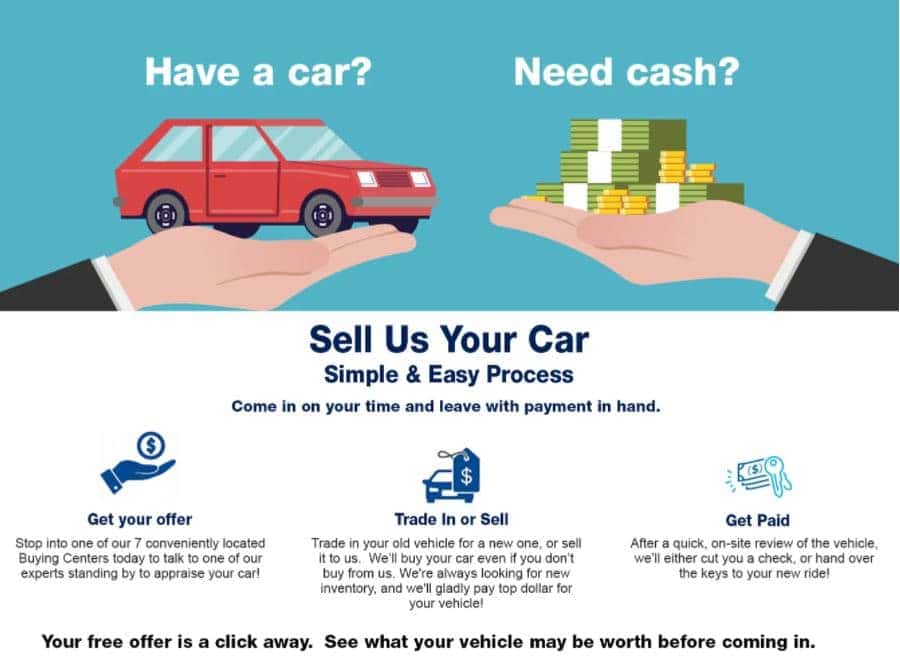
In the modern financial landscape, tech-driven platforms have introduced a third “hybrid” option. Services that provide instant cash offers allow you to bypass the low-ball offers of traditional dealerships while avoiding the safety risks and delays of private sales. While these platforms rarely match the top-tier price of a private sale, they provide “guaranteed liquidity,” which is a valuable financial tool if you need to move capital quickly for another investment opportunity.
3. Financial Preparation and Liability Management
Selling a car is a legal transfer of a high-value asset, and failing to manage the financial paperwork can lead to long-term liabilities.
Clearing Liens and Navigating Negative Equity
If you still owe money on your car, the bank holds the title, and you have a “lien” on the asset. Selling a car with a loan requires a specific financial maneuver: the payoff. You must contact your lender to get a “10-day payoff quote.”
A common financial hurdle is “negative equity,” or being “underwater” on your loan. This occurs when the car’s market value is less than the remaining loan balance. To sell the car, you must be prepared to pay the difference to the lender out of pocket to clear the title. From a personal finance perspective, this is often a painful but necessary step to stop the “bleeding” of high-interest debt on a declining asset.
Mitigating Post-Sale Financial Risks
To protect your net worth, you must ensure that all financial and legal ties to the vehicle are severed the moment the money changes hands. This includes:
- Notice of Transfer: Filing this with your local DMV ensures you aren’t liable for future tickets or accidents.
- Insurance Cancellation: Pro-rating your insurance refund can put a few extra dollars back in your pocket immediately.
- Documenting the Bill of Sale: This is your “receipt” for the transaction, serving as proof of the price paid, which may be necessary for your tax filings or when applying for future credit.
4. Negotiation Strategies to Protect Your Bottom Line
Negotiation is where most sellers lose their potential profit. In any financial transaction, the person with the most information and the least emotional attachment wins.
Setting a Competitive Anchor Price
In behavioral economics, “anchoring” is the tendency to rely heavily on the first piece of information offered. By setting a high but justifiable asking price, you set the “anchor” for the negotiation. If your research suggests the car is worth $15,000, listing it at $16,500 gives you a $1,500 “buffer” for negotiation while still remaining within a range that attracts serious buyers.
The Psychology of Professional Appraisals
If you are selling to a dealership or an online wholesaler, remember that their goal is to buy your asset for as little as possible to maximize their resale margin. Never walk into a dealership without a “competing offer” in writing. Having a printed quote from a rival dealer or an online service forces the buyer to compete for your asset, shifting the power dynamic in your favor.
5. Reinvesting the Proceeds: Wealth Management After the Sale
The transaction doesn’t end when you receive the check. From a wealth management perspective, what you do with the proceeds is just as important as the sale itself.
Allocating Capital to New Assets
If the sale was intended to fund a new vehicle purchase, consider the “Total Cost of Ownership” (TCO) of the replacement. A car with a lower purchase price but higher maintenance and fuel costs may be a poorer financial move than a slightly more expensive, more efficient model. Calculate the “opportunity cost” of your down payment; would that money serve you better in a high-yield savings account or an index fund while you take advantage of low-interest dealer financing?
Debt Reduction and Side Hustle Capital
For many, selling a car is a strategic move to free up monthly cash flow. If you sold a car that had a $500 monthly payment and high insurance costs, you have effectively given yourself a $6,000-plus annual raise.
Consider using the lump sum from the sale to:
- Eliminate High-Interest Debt: Paying off a credit card with 20% APR provides a “guaranteed return” that far exceeds most investments.
- Emergency Fund Boosting: Strengthening your liquidity prevents you from needing high-interest loans in the future.
- Investing in a Side Hustle: If you are moving toward a remote work lifestyle and don’t need a vehicle, that capital can be the “seed money” for an online business or a digital portfolio.

Conclusion
Selling a car is more than a simple exchange of keys for cash; it is a complex exercise in asset management. By understanding market cycles, choosing the right sales channel, managing your liabilities, and negotiating with a data-driven mindset, you can transform a routine task into a significant financial win.
In the realm of personal finance, every dollar saved or earned in the liquidation of an asset is a dollar that can be put to work in your broader investment strategy. When you approach the question “How can I sell my car?” with the discipline of a CFO, you ensure that your vehicle remains a tool for your financial freedom rather than a drain on your net worth.
aViewFromTheCave is a participant in the Amazon Services LLC Associates Program, an affiliate advertising program designed to provide a means for sites to earn advertising fees by advertising and linking to Amazon.com. Amazon, the Amazon logo, AmazonSupply, and the AmazonSupply logo are trademarks of Amazon.com, Inc. or its affiliates. As an Amazon Associate we earn affiliate commissions from qualifying purchases.