
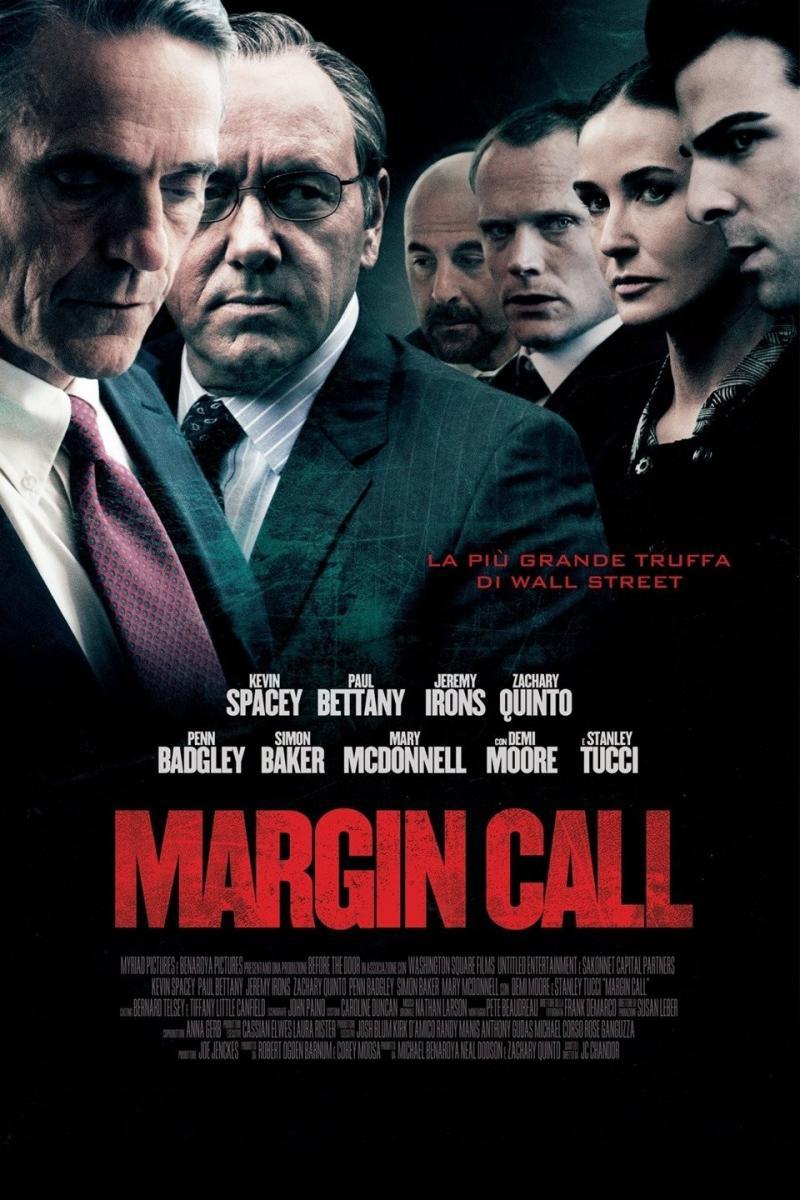
The 2011 film Margin Call remains one of the most accurate and chilling portrayals of the inner workings of a high-stakes investment bank on the brink of collapse. Unlike other Wall Street films that focus on the excess, glamour, or individual greed of traders, Margin Call is a claustrophobic, 24-hour procedural that explores the structural fragility of the global financial system. To understand what Margin Call is about is to understand the mechanics of risk, the ethical bankruptcy of “survival of the fittest” economics, and the mathematical triggers that led to the 2008 financial crisis.

At its core, the movie is a dramatization of the moment a Tier-1 investment bank realizes that its portfolio of mortgage-backed securities (MBS) is no longer a source of profit, but a catastrophic liability that could bankrupt the firm. It serves as a masterclass in business finance, risk management, and the brutal reality of corporate decision-making under extreme pressure.
Anatomy of a Financial Collapse: The Plot and Its Mechanics
The narrative begins with a massive round of layoffs at an unnamed, century-old investment firm. Among those let go is Eric Dale, the Head of Risk Management. Before being escorted out, he hands a USB drive to a junior analyst, Peter Sullivan, telling him to “be careful.” Sullivan, a former rocket scientist who transitioned to finance for the higher pay, stays late to finish Dale’s work. He discovers that the firm’s volatility models have been breached.
The Discovery of the Toxic Assets
The technical catalyst of the movie is the “Value at Risk” (VaR) model. Sullivan realizes that the historical volatility of the firm’s mortgage-backed securities has exceeded the levels allowed by their internal risk models. Because the firm is highly leveraged—meaning they have borrowed massive amounts of money to hold these assets—even a small dip in the value of these securities would wipe out the firm’s entire equity.
In financial terms, the firm had become “over-leveraged.” For every dollar of their own money, they had borrowed dozens more to invest in the housing market. When the underlying assets (the mortgages) began to default, the losses were magnified exponentially. Sullivan’s calculation showed that if the market dropped just 25%, the firm’s losses would exceed its total market capitalization.
The Ethical Dilemma of the Fire Sale
Once the senior leadership, including CEO John Tuld, realizes the magnitude of the disaster, they face a harrowing choice: wait and hope the market recovers, or sell the assets immediately. The problem is that once they start selling these “toxic” assets, the market will realize they are worthless.
The film’s tension peaks during a 2:00 AM boardroom meeting where the decision is made to liquidate the entire portfolio in a single day. This is a “fire sale.” By dumping these assets on their unsuspecting clients and counterparties, the firm saves itself but destroys the market in the process. This highlights the “Money” niche’s most brutal aspect: in a liquidity crisis, the first one out the door survives, even if they have to trample everyone else to get there.
Understanding the Financial Terms Behind the Screenplay
To fully grasp what Margin Call is about, one must understand the financial instruments and concepts that drive the characters’ panic. The film does an excellent job of simplifying these concepts, but their real-world implications are vast.
What is a Margin Call in Real Life?
While the movie focuses on a firm-wide systemic failure, the title refers to a specific financial mechanism. A “margin call” occurs when an investor’s account value falls below the broker’s required amount. This usually happens when an investor uses “margin”—borrowed money—to purchase securities. To cover the shortfall, the investor must either deposit more cash or sell their assets at a loss.
In the context of the film, the entire firm is facing a metaphorical margin call. Their lenders and counterparties are beginning to doubt the value of the collateral (the mortgage bonds) they are holding. If the value drops too low, the firm will be forced to liquidate everything to pay back its debts. The tragedy of the film is that they choose to preemptively “call” themselves out, transferring their losses to the rest of the world before the world realizes what is happening.
Leveraged Assets and Risk Management Failure
Leverage is a double-edged sword in finance. It allows firms to generate massive returns on small amounts of capital, but it also removes any margin for error. The firm in Margin Call was operating on the assumption that house prices would never fall significantly. Their risk models were built on historical data that didn’t account for a systemic housing bubble.
This reflects a common theme in business finance: “Model Risk.” When a business relies too heavily on mathematical simulations without considering “Black Swan” events (unpredictable, high-impact occurrences), the results are often catastrophic. The film serves as a cautionary tale for any investor who believes that a computer model can perfectly predict human behavior or market volatility.
Leadership and Corporate Culture in High-Stakes Finance
Margin Call is as much about the people who manage money as it is about the money itself. It explores the hierarchy of a global bank and how information—and blame—is filtered from the bottom to the top.
The Hierarchy of Knowledge
One of the most revealing aspects of the film is how the complexity of the financial products is handled at different levels of the organization. As the problem moves up the chain of command—from the analysts to the heads of trading, and finally to the CEO—the technical details are stripped away.
John Tuld, the CEO, famously asks Peter Sullivan to “speak as you might to a young child or a Golden Retriever.” This illustrates a profound truth in corporate finance: the people at the top are often not the technical experts. Their job is not to understand the math, but to manage the risk and make the hard decisions. Tuld’s role is not to be a mathematician, but to be a shark who knows when it is time to eat and when it is time to flee.
Survival vs. Integrity in Investment Banking
The film poses a haunting question: What is your soul worth? The traders are offered massive bonuses—millions of dollars—to sell assets they know are worthless to clients they have worked with for years. They know that by doing this, they are effectively ending their careers and potentially crashing the global economy.
Most of them choose the money. This reflects a “short-termism” culture that often plagues the financial sector. The incentive structures are designed to reward immediate results and survival, rather than long-term stability or ethical behavior. In the world of Margin Call, “doing the right thing” is a luxury that no one can afford when their own survival is at stake.
Lessons for Modern Investors and Business Leaders
While Margin Call is a fictionalized version of events similar to the collapse of Lehman Brothers or the fire sale of Bear Stearns, its lessons are evergreen for anyone involved in personal finance or business management.
The Importance of Liquidity and Diversification
The firm’s downfall was its lack of liquidity. They were “long” on a single asset class—subprime mortgages—and had no way to exit those positions without crashing the price. For a modern investor, this emphasizes the need for diversification. If your entire net worth is tied up in a single sector, you are vulnerable to the same “cascading failure” depicted in the film.
Furthermore, the movie teaches the importance of liquidity. In a crisis, “cash is king.” The firm survived (in a diminished state) only because they were the first to turn their illiquid, toxic assets into cash. Investors should always maintain a liquidity buffer to survive market downturns without being forced to sell at the bottom.
Recognizing the Warning Signs of Market Volatility
The film underscores that the signs of the 2008 crash were there for anyone who looked closely at the data. Eric Dale and Peter Sullivan saw the “edge of the cliff” before anyone else because they were looking at the volatility metrics rather than the marketing brochures.
In today’s financial landscape, characterized by high-frequency trading and AI-driven markets, the speed at which a “margin call” scenario can unfold has only increased. Business leaders must prioritize robust risk management and encourage a culture where “bad news” is allowed to travel up the chain of command quickly. As the film shows, by the time the CEO hears about the problem, it might already be too late to do anything but burn the house down to save the foundation.

Conclusion: A Cautionary Tale of Math and Money
Margin Call is a definitive look at the intersection of high finance and human fallibility. It strips away the jargon to show that at the end of the day, the global economy is driven by people making decisions under pressure with imperfect information.
For those in the world of money—whether you are a retail investor, a corporate CFO, or a student of economics—the movie serves as a vital reminder that markets are not just numbers on a screen. They are ecosystems built on trust, and when that trust evaporates, the resulting “margin call” can be devastating. The film’s final message is clear: in the world of big money, there are no permanent friends, only permanent interests—and the most important interest is being the first one to the exit.
aViewFromTheCave is a participant in the Amazon Services LLC Associates Program, an affiliate advertising program designed to provide a means for sites to earn advertising fees by advertising and linking to Amazon.com. Amazon, the Amazon logo, AmazonSupply, and the AmazonSupply logo are trademarks of Amazon.com, Inc. or its affiliates. As an Amazon Associate we earn affiliate commissions from qualifying purchases.