
In the world of alternative investments, few assets combine historical prestige, artistic beauty, and raw financial power quite like rare coins. For the uninitiated, a coin is simply a medium of exchange with a fixed face value. However, for the seasoned investor and numismatist, certain coins represent “portable wealth” that transcends their denomination. The question of what the most expensive coin is worth is not merely a trivia point; it is a window into a high-stakes market where a single ounce of gold or silver can command a price tag higher than a Manhattan penthouse or a fleet of supercars.
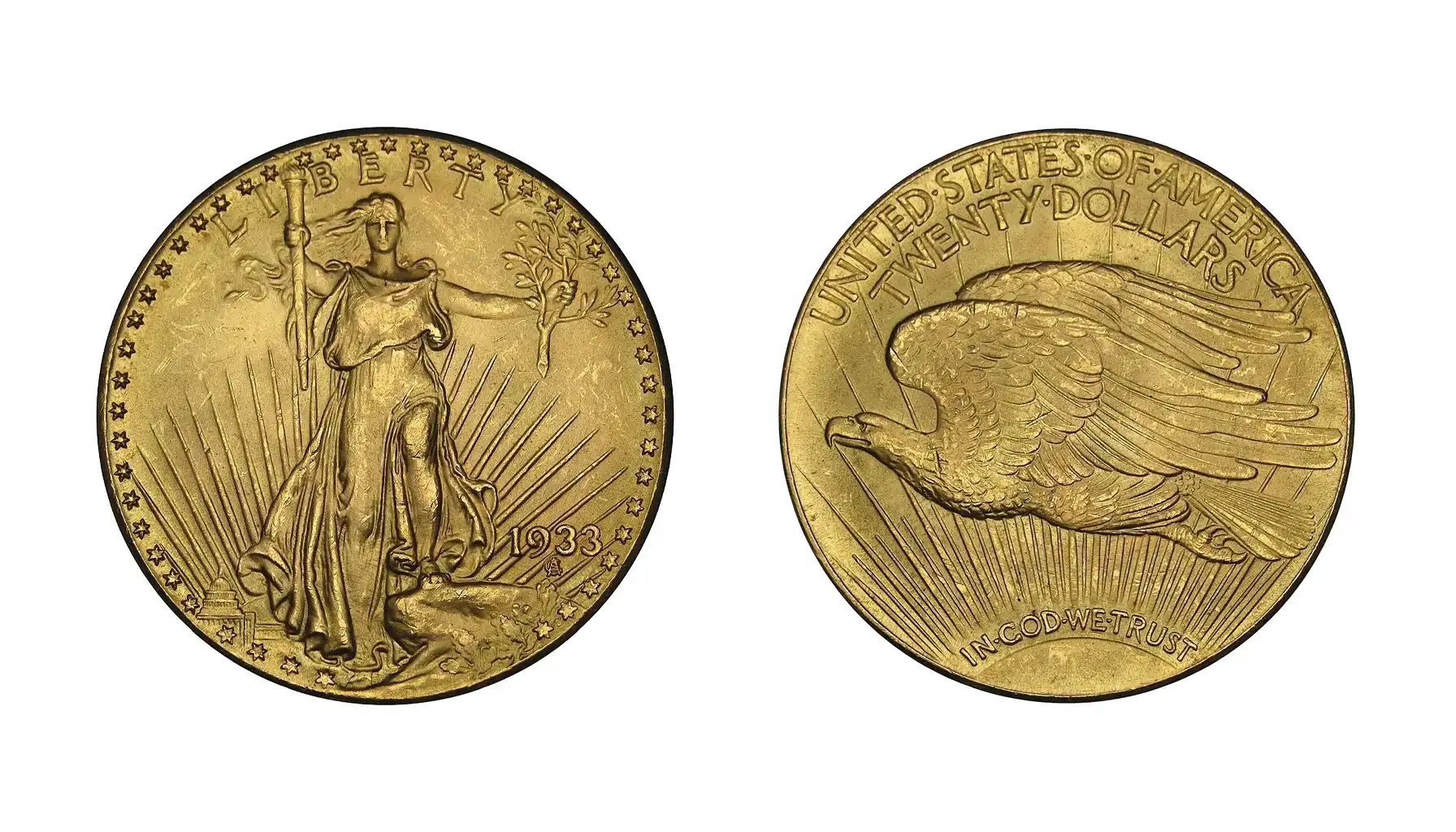
As of the current market standing, the most expensive coin ever sold is the 1933 Saint-Gaudens Double Eagle, which fetched a staggering $18,872,250 at a Sotheby’s auction in 2021. To understand why a twenty-dollar gold piece is worth nearly $19 million, one must look past the metal and into the mechanics of scarcity, legality, and historical narrative that drive the “Money” category of investing.
The Pinnacle of Numismatic Value: The $18.9 Million Record
The record-breaking sale of the 1933 Double Eagle redefined the ceiling for the numismatic market. While many rare coins trade in the six and seven-figure range, breaking the eight-figure barrier requires a “perfect storm” of investment factors.
The Legend of the 1933 Saint-Gaudens Double Eagle
The story of the 1933 Double Eagle is one of the most dramatic in financial history. Originally minted as a standard $20 gold piece, these coins were never officially released into circulation. In 1933, amidst the Great Depression, President Franklin D. Roosevelt issued Executive Order 6102, which effectively took the United States off the gold standard and ordered the melting of these coins.
However, a small handful of specimens escaped the furnace. Because they were never legally issued, the U.S. Secret Service spent decades tracking down and confiscating them. The specimen that sold for $18.9 million is the only 1933 Double Eagle that the United States government has ever legally authorized for private ownership. This “legal rarity” creates a monopoly on the supply side, driving the price to astronomical heights.
Legal Rarity and the Stuart Weitzman Connection
The provenance—or ownership history—of a high-value coin significantly impacts its market price. The record-breaking coin was previously owned by the renowned shoe designer and prolific collector Stuart Weitzman. When a coin is part of a famous collection, it carries a “pedigree” that adds a premium to its value. For investors, buying a coin with a documented history of elite ownership reduces the risk of forgery and increases the asset’s prestige.
Understanding the Drivers of Rare Coin Valuation
In the realm of personal finance and investing, rare coins are classified as “tangible assets.” Unlike stocks or bonds, their value is not derived from corporate earnings but from a specific set of economic drivers unique to the numismatic market.
Scarcity vs. Rarity: The Supply Mechanics
Investors must distinguish between “mintage” and “survival rate.” A coin might have had a mintage of millions, but if a historical event (like a government melt-down or a shipwreck) destroyed most of them, the survival rate becomes the true metric of scarcity. The most expensive coins are often “condition rarities”—meaning that while the coin type might be common, finding one in a “Mint State” (uncirculated) condition is nearly impossible.
The Impact of Professional Grading (PCGS and NGC)
In the modern money market, the value of a coin is validated by third-party grading services, primarily the Professional Coin Grading Service (PCGS) and the Numismatic Guaranty Company (NGC). These organizations use the Sheldon Scale, which ranges from 1 to 70.
- MS-60 to MS-70: Represents Mint State (uncirculated) coins.
- Proof (PR): Coins struck specifically for collectors with high-polish finishes.
A single point on this scale can mean a difference of hundreds of thousands of dollars. For example, a coin graded MS-64 might be worth $10,000, while the same coin graded MS-65 (just one point higher) could be worth $50,000 because it is the “finest known” specimen.
Provenance and Historical Narrative
The “story” behind a coin is a powerful economic driver. Coins recovered from famous shipwrecks, such as the SS Central America (the “Ship of Gold”), carry a premium because they represent a tangible link to a specific historical tragedy or era. For the high-net-worth investor, these assets offer a “historical hedge,” maintaining value because their story remains relevant regardless of current stock market volatility.
Top Contenders in the Multi-Million Dollar Club
While the 1933 Double Eagle holds the crown, several other coins represent the “blue-chip” stocks of the numismatic world. These coins consistently appreciate in value and serve as benchmarks for the health of the high-end coin market.
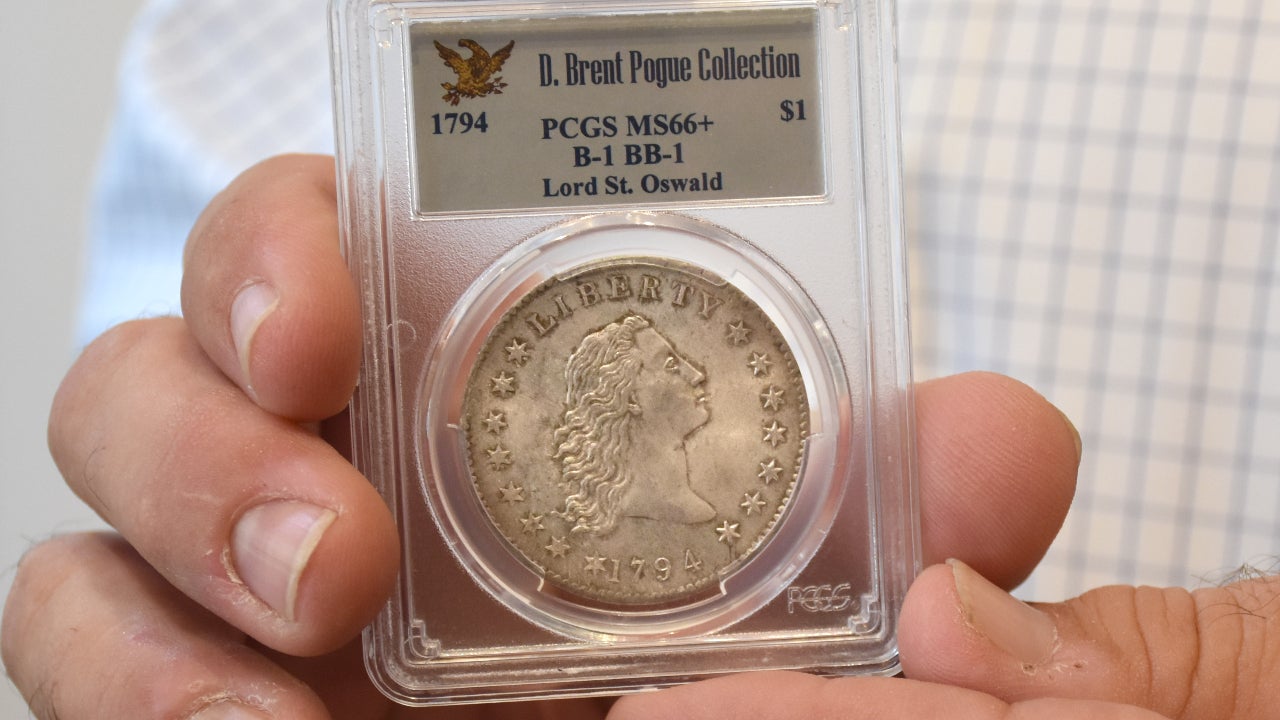
The 1794 Flowing Hair Silver Dollar
Before the 1933 Double Eagle took the top spot, the 1794 Flowing Hair Silver Dollar held the record, selling for over $10 million in 2013. This coin is believed to be the very first silver dollar ever struck by the United States Mint. For an investor, this coin represents “Point Zero” of American currency. Its value is derived from its status as a foundational artifact of the U.S. financial system.
The 1787 Brasher Doubloon
The Brasher Doubloon is a legendary gold coin minted privately by Ephraim Brasher, a goldsmith and neighbor to George Washington. Because the early U.S. government struggled to produce enough official coinage, private mints filled the gap. In 2021, a “EB” wing-stamped Brasher Doubloon sold for $9.36 million. This coin appeals to investors interested in the “pre-federal” era of American money, where rarity is absolute and historical significance is unmatched.
Numismatics as a Financial Asset Class
For those looking to diversify their portfolio beyond traditional equities and real estate, rare coins offer a unique set of advantages and challenges. Treating coin collecting as a business finance strategy requires a disciplined approach to capital allocation.
Diversification and Inflation Hedging
Rare coins have historically shown a low correlation with the S&P 500. When the dollar weakens or inflation rises, tangible assets like gold coins often retain or increase their purchasing power. High-value coins offer a “double hedge”: they benefit from the intrinsic value of their precious metal content (gold or silver bullion) and the numismatic premium of their rarity. Even if the price of gold drops, a rare coin’s value may remain stable due to collector demand.
Market Liquidity and Transaction Costs
One of the primary considerations for a financial investor is liquidity. Unlike a stock that can be sold instantly on an exchange, a multi-million dollar coin often requires an auction house or a specialized broker to sell.
- Buyer’s Premium: Auction houses typically charge a fee (often 15-20%) on top of the hammer price.
- Time to Exit: It may take months to prepare a high-value coin for a major auction to ensure it reaches the right pool of global investors.
Therefore, rare coins should be viewed as long-term capital appreciation assets rather than short-term trading vehicles.
Risks and Due Diligence for Modern Investors
The barrier to entry for high-level numismatics is expertise. The “Money” side of this niche is fraught with risks, including over-graded coins, cleaned specimens (which drastically reduces value), and sophisticated counterfeits.
- Certification is Mandatory: Never invest significant capital in a coin that is not “slabbed” (encapsulated) by PCGS or NGC.
- Market Cycles: Like any asset, the coin market has cycles. The “bull market” for rare coins often coincides with periods of high wealth creation in the tech or finance sectors, as new millionaires look for trophy assets.
- Specialization: Successful investors often focus on a specific niche, such as “Early American Copper” or “Morgan Silver Dollars,” to become experts in the price fluctuations of those specific series.
The Future of the High-Value Coin Market
As we move further into a digital economy, the tangible nature of rare coins seems to be gaining, rather than losing, appeal. The most expensive coins are no longer just hobbyist items; they are recognized as “sovereign wealth” assets. With the emergence of fractional ownership platforms, even retail investors are beginning to buy “shares” of $10 million coins, further increasing the liquidity and visibility of the market.
Whether a coin is worth $18.9 million or $10,000, its value is a reflection of human history, government policy, and the eternal laws of supply and demand. For the investor who understands the intersection of history and finance, the most expensive coins in the world represent some of the most stable and prestigious ways to preserve and grow wealth over generations. In the end, the value of the most expensive coin is not just in the gold it contains, but in the impossibility of ever replacing it.
aViewFromTheCave is a participant in the Amazon Services LLC Associates Program, an affiliate advertising program designed to provide a means for sites to earn advertising fees by advertising and linking to Amazon.com. Amazon, the Amazon logo, AmazonSupply, and the AmazonSupply logo are trademarks of Amazon.com, Inc. or its affiliates. As an Amazon Associate we earn affiliate commissions from qualifying purchases.