
In the world of business finance and investing, few phrases are uttered with as much gravity as “the bottom line.” Whether you are an entrepreneur managing a startup, a corporate executive reporting to a board of directors, or a retail investor analyzing a stock, the bottom line serves as the ultimate barometer of a company’s success. While the term is often used colloquially to refer to the “final point” or the “crucial factor” in any situation, its origins and primary application are rooted deeply in accounting and financial reporting.
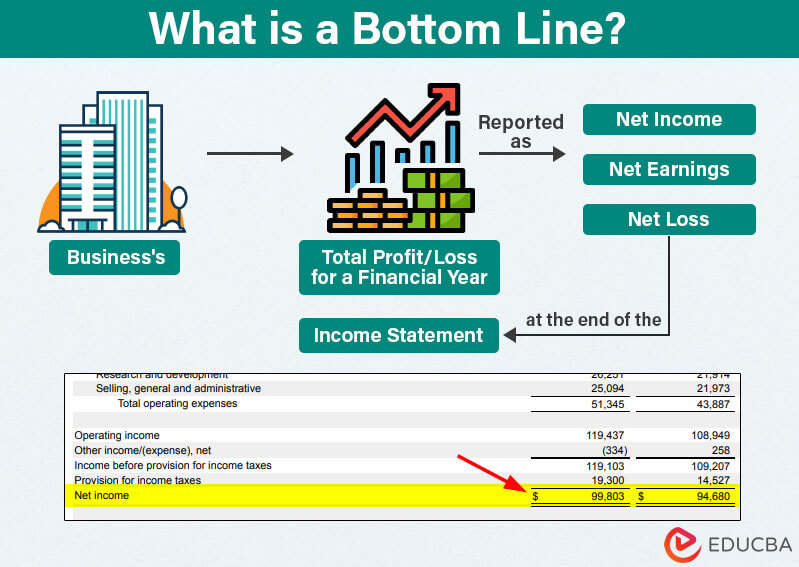
Strictly speaking, a company’s bottom line is its net income or net profit. It is the figure that remains after all expenses, taxes, interest, and costs have been subtracted from the total revenue. Understanding the nuances of this figure is essential for anyone looking to master the mechanics of money and business.
Defining the Bottom Line: Understanding Net Income
To understand the bottom line, one must first understand its position within the broader context of an income statement. The income statement—one of the three core financial statements—is designed to show a company’s financial performance over a specific period.
Why It’s Called the “Bottom Line”
The term is literal. At the top of an income statement, you find “Gross Sales” or “Revenue.” This is often referred to as the “top line.” As you move down the document, various costs are deducted. The very last line of the report, after every possible deduction has been accounted for, shows the net income. Because it resides at the physical bottom of the statement, it became known as the bottom line.
Net Income vs. Gross Profit
It is a common mistake among novice investors to confuse gross profit with the bottom line. Gross profit is simply the revenue minus the Cost of Goods Sold (COGS). It measures the efficiency of production but ignores the costs of management, marketing, debt, and taxes. The bottom line is far more comprehensive. It represents the actual earnings that a company can either reinvest in its growth or distribute to shareholders as dividends.
Earnings Per Share (EPS)
For public companies, the bottom line is often translated into Earnings Per Share (EPS). By dividing the net income by the total number of outstanding shares, investors can see how much profit is attributed to each unit of ownership. This makes the bottom line a primary driver of stock market valuations and investor sentiment.
How Companies Calculate the Bottom Line
Calculating the bottom line is a systematic process of subtraction. It requires a meticulous accounting of every dollar that enters and leaves the business. To arrive at this figure, a company must navigate through several layers of financial data.
The Income Statement Structure
The journey from the top line to the bottom line follows a standardized path:
- Total Revenue: The total amount of money generated from sales.
- Cost of Goods Sold (COGS): The direct costs of producing the goods or services sold.
- Gross Profit: Revenue minus COGS.
- Operating Expenses: Costs required to run the business that aren’t tied to production (rent, salaries, marketing, R&D).
- Operating Income (EBIT): Gross profit minus operating expenses. This is also known as Earnings Before Interest and Taxes.
Deductions: Interest and Taxes
Once the operating income is established, the company must account for its financial obligations. This includes interest payments on any debt the company holds. In a high-interest-rate environment, these costs can significantly erode the bottom line. After interest, the company must subtract corporate income taxes. Only after the government and the lenders have been paid can the final net income be declared.
The Role of Non-Operating Income
Sometimes, a company’s bottom line is bolstered or hindered by “non-operating” items. This might include the one-time sale of an asset, a legal settlement, or gains from investments. While these impact the final figure, professional analysts often look for “normalized” net income to understand how the core business is actually performing without these one-off distractions.
Strategies to Improve the Bottom Line
For a business to remain sustainable and attractive to investors, it must find ways to either maintain or grow its bottom line. Generally, there are two primary levers a company can pull to achieve this: increasing revenue or decreasing expenses.

Revenue Growth vs. Cost Cutting
The most obvious way to improve the bottom line is to increase the top line. If a company can sell more products or raise its prices without a proportional increase in costs, its net income will naturally rise. However, increasing revenue is often expensive, requiring more marketing spend or product development.
Conversely, cost-cutting is a direct route to profit. By reducing “waste”—whether through layoffs, renegotiating vendor contracts, or downsizing office space—a company can increase its bottom line even if sales remain stagnant. This is often seen in mature industries where market share is hard to gain, forcing companies to focus on internal efficiency.
Operational Efficiency and Automation
In the modern financial landscape, improving the bottom line often involves investing in efficiency. This might include adopting new financial tools that automate accounts payable or using data analytics to optimize supply chains. By reducing the “per-unit” cost of doing business, a company improves its margins. A higher profit margin means that a larger percentage of every dollar of revenue eventually trickles down to the bottom line.
The Impact of Scale and Pricing Power
Companies with significant “pricing power” can improve their bottom line by raising prices without losing customers. This is common among premium brands or companies with a monopoly on a specific technology. Additionally, “economies of scale” allow large companies to reduce their average costs as they grow, ensuring that as the top line expands, the bottom line expands even faster.
The Bottom Line vs. Cash Flow: Why Profit Isn’t Always Cash
One of the most dangerous misconceptions in business finance is that the bottom line represents the amount of cash a company has in the bank. In reality, a company can report a healthy bottom line and still go bankrupt due to a lack of liquidity.
Accrual Accounting Nuances
Most large companies use accrual accounting, which records revenue and expenses when they are incurred, not necessarily when cash changes hands. For example, if a company sells $1 million worth of equipment on credit, that $1 million is added to the top line, and the resulting profit is added to the bottom line immediately. However, if the customer doesn’t pay for 90 days, the company has “profit” but no “cash.”
The Difference Between Profitability and Liquidity
The bottom line is a measure of profitability, while the Cash Flow Statement measures liquidity. A company might have a high net income but be spending heavily on new factories or inventory, leaving it “cash poor.” For investors, it is vital to compare the bottom line with “Cash Flow from Operations.” If the bottom line is consistently higher than the actual cash coming in, it may be a red flag regarding the quality of the company’s earnings.
The Evolution of the “Triple Bottom Line”
While the traditional definition of the bottom line focuses exclusively on financial profit, the 21st-century business world has introduced the concept of the “Triple Bottom Line” (TBL). This framework suggests that a company’s ultimate success should be measured by more than just its net income.
People, Planet, and Profit
The Triple Bottom Line expands the focus to include social and environmental impact:
- Profit: The traditional financial bottom line.
- People: How the company treats its employees, ensures safety, and impacts the community.
- Planet: The environmental footprint, including carbon emissions and resource management.
How Investors View Long-Term Sustainability
From a strictly financial perspective, why does this matter? Many modern investors believe that ignoring the “People” and “Planet” aspects eventually hurts the “Profit” aspect. Legal fees from environmental disasters, high employee turnover, or a tarnished brand reputation can all lead to a devastating impact on the traditional financial bottom line. Consequently, Environmental, Social, and Governance (ESG) metrics are now being integrated into the financial analysis of a company’s long-term health.

Conclusion: The Ultimate Metric of Success
In summary, the bottom line is the definitive marker of a company’s financial viability. It tells the story of how effectively a company manages its resources, controls its costs, and serves its market. While top-line revenue growth is exciting, it is the bottom line that determines whether a company can pay its debts, reward its owners, and invest in its future.
For anyone navigating the world of money—whether you are managing your own business or building a portfolio—mastering the bottom line is non-negotiable. It requires looking past the surface-level sales figures and diving into the costs, taxes, and accounting methods that define true profitability. In the end, a company’s ability to generate a consistent and growing bottom line is what separates a fleeting trend from a lasting financial powerhouse.
aViewFromTheCave is a participant in the Amazon Services LLC Associates Program, an affiliate advertising program designed to provide a means for sites to earn advertising fees by advertising and linking to Amazon.com. Amazon, the Amazon logo, AmazonSupply, and the AmazonSupply logo are trademarks of Amazon.com, Inc. or its affiliates. As an Amazon Associate we earn affiliate commissions from qualifying purchases.