
For decades, one of the most significant challenges in the scientific community wasn’t found in outer space or the depths of the ocean, but within the microscopic architecture of our own cells. The “protein folding problem”—the quest to predict the three-dimensional tertiary structure of a protein from its linear amino acid sequence—remained an enigma for over fifty years. Today, this biological puzzle has transitioned from the realm of traditional biochemistry into the heart of the technology sector. By leveraging Artificial Intelligence (AI), high-performance computing, and advanced software modeling, the tech industry is revolutionizing our understanding of protein tertiary structures, turning biological blueprints into actionable digital data.
The Architecture of Life: Understanding Tertiary Structure in a Digital Age
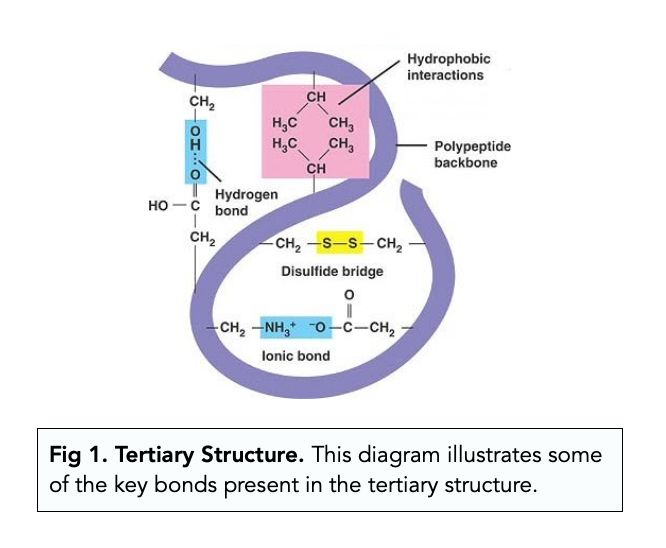
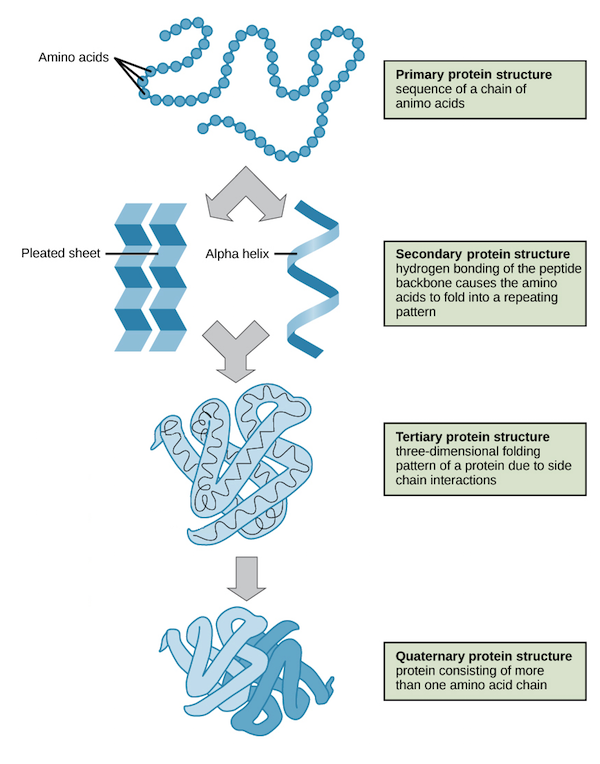
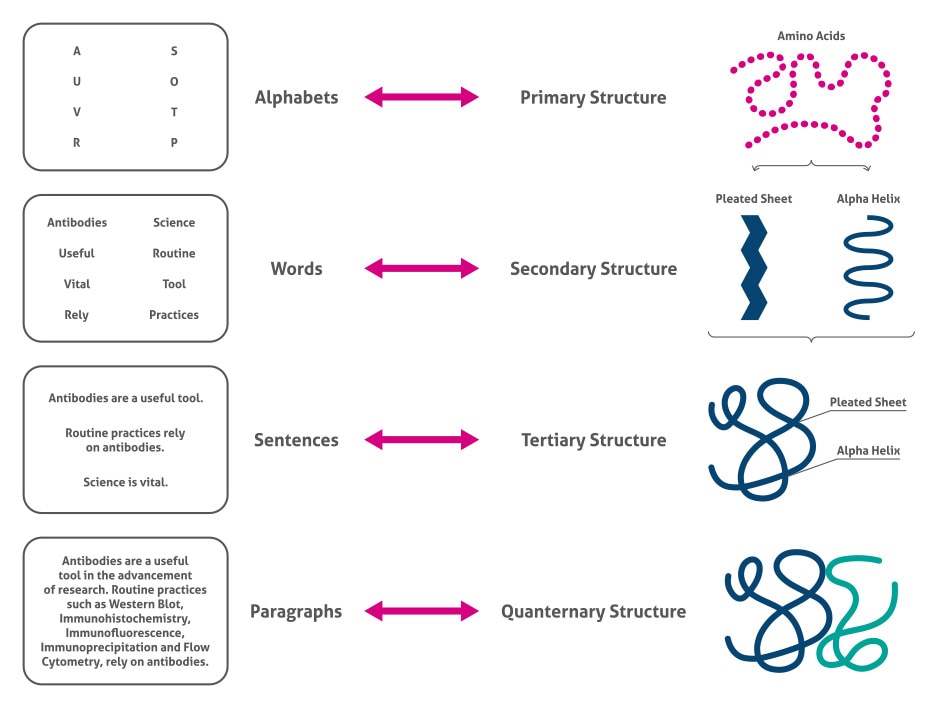
To understand why tertiary structure is a “tech” problem, we must first define what it is through the lens of structural informatics. A protein’s tertiary structure is its complete three-dimensional shape. While the primary structure is a simple string of amino acids (data input) and the secondary structure refers to local folds like helices (sub-routines), the tertiary structure is the final, functional “hardware” of the molecule.
Defining the Three-Dimensional Blueprint
In computational terms, the tertiary structure represents a complex coordinate system. It is the result of intricate interactions between R-groups (side chains) of the amino acids that make up the protein. These interactions—including hydrogen bonding, ionic bonding, dipole-dipole interactions, and London dispersion forces—dictate how a protein folds in a three-dimensional space. From a technology perspective, predicting this fold is an optimization problem of astronomical proportions. A single protein can theoretically fold into an almost infinite number of configurations, yet in nature, it settles into its “native state” in microseconds.
From Linear Sequences to Functional Foldings
The transition from a linear sequence to a 3D structure is where “Bio-Tech” truly begins. In the digital world, we view the primary sequence as a code. If the code is written correctly but the tertiary structure (the “compiled” version) is warped, the protein fails to function, leading to diseases like Alzheimer’s or cystic fibrosis. Technologists are now treating these folding patterns as complex algorithms that can be simulated, mapped, and manipulated using massive datasets of known structures stored in the Protein Data Bank (PDB).
The AI Revolution: How Machine Learning Solved the Folding Problem
The most significant tech breakthrough in recent history regarding protein structures came not from a biology lab, but from DeepMind, a subsidiary of Alphabet. The introduction of AlphaFold marked a paradigm shift in how we approach tertiary structures, moving away from slow, expensive physical experiments toward rapid, predictive AI modeling.
DeepMind and the AlphaFold Breakthrough
AlphaFold represented a massive leap in deep learning application. By training neural networks on the sequences and structures of approximately 100,000 known proteins, the AI learned to predict the distances between pairs of amino acids and the angles between the bonds connecting them. In the CASP (Critical Assessment of Structure Prediction) competitions, AlphaFold achieved accuracy levels comparable to experimental methods like X-ray crystallography and Cryo-electron microscopy. This is a monumental achievement for the tech industry, as it provides a digital shortcut to understanding the physical world.
Neural Networks and Spatial Geometry
The “tech” behind these predictions involves sophisticated transformer-based neural networks. These models treat the protein sequence like a language and the 3D structure like a physical map. By using “attention” mechanisms—similar to those used in Large Language Models (LLMs) like GPT-4—the AI can determine which amino acids in a sequence are likely to interact even if they are far apart in the linear chain. This ability to compute spatial geometry at scale is what allows researchers to predict the tertiary structure of millions of proteins in a fraction of the time it previously took to map a single one.
Tools of the Trade: Software and Simulations for Protein Modeling
Beyond AI, the study of tertiary structures relies on a robust ecosystem of software tools and computational frameworks. These tools allow researchers to visualize, simulate, and stress-test protein models in virtual environments before ever stepping into a wet lab.
Molecular Dynamics (MD) Simulations
Software packages like GROMACS, AMBER, and CHARMM are the workhorses of the industry. These tools utilize Molecular Dynamics (MD) simulations to predict how a tertiary structure moves over time. By applying the laws of classical physics to every atom in a protein model, these programs can simulate how a protein interacts with a potential drug molecule. This “in silico” testing requires immense processing power, often utilizing GPU acceleration to handle the billions of calculations required to simulate just a few nanoseconds of molecular motion.
Cloud Computing and Distributed Research Networks
The sheer scale of data involved in tertiary structure analysis has pushed the boundaries of cloud computing. Platforms like AWS and Google Cloud offer specialized instances optimized for high-performance computing (HPC) tasks. Furthermore, projects like Rosetta@home have pioneered distributed computing, where volunteers donate their idle computer processing power to help calculate protein folds. This democratization of tech allows for large-scale “folding” experiments that would be too costly for any single institution to run independently.
Digital Security and the Bio-Data Frontier
As protein structures become increasingly digitized, they move into the realm of digital security and data ethics. The tertiary structure of a protein is essentially proprietary information—a blueprint for a vaccine, an enzyme, or a therapeutic. Protecting this data is a burgeoning field within cybersecurity.
Protecting Intellectual Property in Synthetic Biology
In the hands of a biotech firm, a specific tertiary structure is a multi-billion dollar asset. As we move toward “generative biology,” where AI is used to design entirely new proteins that do not exist in nature, the digital files containing these structures must be protected with the same rigor as financial data or military secrets. We are seeing the rise of encrypted biological databases and blockchain-based verification systems to ensure the integrity and provenance of structural data.
The Ethical Framework of Algorithmic Protein Design
The ability to predict and design tertiary structures also brings significant security risks. If an AI can design a helpful enzyme, it could theoretically be used to design a harmful toxin. The tech industry is currently working with global regulators to implement “biosecurity screening” for protein synthesis orders. Software tools are being developed to scan requested DNA sequences against known pathogens to ensure that the power of 3D protein modeling is used for beneficial purposes.
Future Trends: The Convergence of Quantum Computing and Proteomics
The final frontier for protein tertiary structure research lies in the integration of quantum computing. While current AI and classical supercomputers are powerful, they still rely on approximations when dealing with the quantum mechanical forces that truly govern protein folding.
Speeding Up Folding Calculations
Quantum computers, by their very nature, are better suited to simulate the subatomic interactions that dictate tertiary structure. Unlike classical bits (0 or 1), qubits can represent a superposition of states, allowing a quantum computer to explore millions of folding possibilities simultaneously. Companies like IBM and Google are already exploring how quantum algorithms can optimize the energy landscapes of proteins, potentially solving the folding problem with absolute precision rather than high-probability prediction.
Personalized Medicine through Algorithmic Insights
In the near future, the intersection of tech and protein science will lead to truly personalized medicine. By sequencing an individual’s genome and using AI to predict the specific tertiary structures of their unique proteins, doctors will be able to identify “misfolded” proteins specific to that patient. This will allow for the design of custom-tailored drugs—digital keys designed for the specific physical locks of an individual’s proteome.
The journey from a simple biological question—”How does this protein fold?”—to a high-tech computational revolution is a testament to the power of digital innovation. As we continue to refine our ability to map and simulate the tertiary structure of proteins, we are not just solving a biology problem; we are unlocking a new era of software-driven discovery that will redefine medicine, security, and the very fabric of biotechnology.
aViewFromTheCave is a participant in the Amazon Services LLC Associates Program, an affiliate advertising program designed to provide a means for sites to earn advertising fees by advertising and linking to Amazon.com. Amazon, the Amazon logo, AmazonSupply, and the AmazonSupply logo are trademarks of Amazon.com, Inc. or its affiliates. As an Amazon Associate we earn affiliate commissions from qualifying purchases.