
For decades, the question of what defines humanity was the exclusive domain of philosophers, theologians, and biologists. We pointed to our capacity for language, our ability to use complex tools, our self-awareness, and our creative spirit as the definitive markers of our species. However, as we move deeper into the twenty-first century, the line between biological intelligence and synthetic processing has blurred. With the advent of Large Language Models (LLMs), generative art, and sophisticated robotics, the traditional definitions of “human” are being stress-tested by the very technology we created.

In a world where software can compose symphonies, write legal briefs, and offer emotional support, we are forced to look closer at the silicon mirror. To understand what makes us human today, we must explore the technological frontier where algorithms end and the “ghost in the machine” begins.
The Silicon Mirror: How AI Challenges Our Identity
The rise of Artificial Intelligence has acted as a mirror, reflecting our own cognitive processes back at us in digital form. For years, we believed that logical reasoning and the synthesis of information were the pinnacle of human uniqueness. Yet, today’s AI tools can process petabytes of data in seconds, identifying patterns that would take a human lifetime to uncover.
The Mimicry of Generative Models
Generative AI, such as GPT-4 or Claude, has mastered the art of mimicry. By training on the vast repository of human knowledge available on the internet, these tools can simulate conversation, humor, and even philosophical debate. When a machine can produce a poem that moves a reader to tears, we are forced to ask: is the “human” quality in the creation of the work, or in the perception of the audience?
The technological reality is that AI operates through statistical probability—predicting the next token in a sequence based on historical data. While this produces an output that feels human, it lacks the underlying “why.” This distinction is a cornerstone of our modern identity; humans speak to convey an internal state, whereas machines speak to fulfill a computational objective.
From Logic to Intuition: The Gap That Remains
Despite the staggering speed of modern processors, there remains a fundamental gap between algorithmic logic and human intuition. Technology is built on binary foundations—zeroes and ones, yes and no, true and false. Human thought, however, thrives in the “gray.”
Our ability to make “gut decisions”—instinctive leaps based on incomplete information and lived experience—is something that current technology cannot replicate. AI requires a dataset to learn; humans require an experience to grow. This evolutionary “hard-coding” of intuition is a biological tech stack that software has yet to emulate.
Emotional Intelligence and the Nuance of Empathy
If logic is no longer our exclusive domain, many point to emotion as the final fortress of humanity. In the tech sector, the development of “Affective Computing” aims to allow machines to recognize and simulate human emotions. We see this in digital assistants that adjust their tone based on a user’s frustration or healthcare bots designed to provide companionship to the elderly.
Simulating Emotion vs. Experiencing Consciousness
There is a profound technological difference between simulating empathy and experiencing it. A software program can be coded to identify the frequency of a trembling voice or the visual patterns of a frown. It can then trigger a pre-programmed response: “I’m sorry you’re feeling this way.”
However, this is a reactive loop, not a shared experience. Humanity is defined by biological resonance—the mirror neurons in our brains that allow us to literally “feel” the pain of another. Tech, at its current stage, lacks consciousness; it has no “self” to relate to the “self” of another. This absence of a subjective internal world means that while a machine can be polite, it cannot truly be compassionate.
The Ethical Weight of Human Decision-Making
In the world of digital security and automated systems, we are increasingly delegating decisions to algorithms. From credit scoring to autonomous vehicles, machines are making choices that affect human lives. Yet, what makes us human is our capacity for moral accountability.
An algorithm cannot feel the weight of a wrong decision. It does not suffer from guilt, nor does it have a moral compass beyond the parameters set by its developers. Our humanity is tied to our status as moral agents. In the tech landscape, this means that the “human-in-the-loop” remains a critical requirement, not just for accuracy, but for the preservation of ethics that a machine cannot fundamentally comprehend.
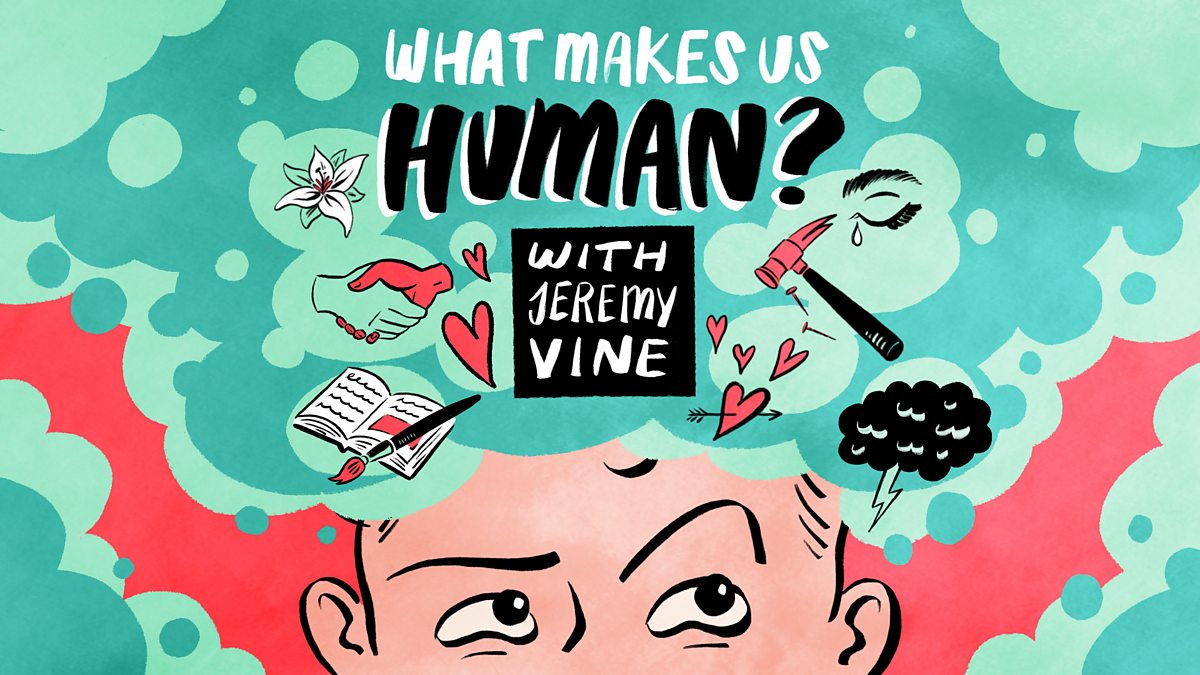
Creativity, Flaws, and the “Ghost in the Machine”
In the tech industry, we often strive for optimization, efficiency, and perfection. We want bug-free code and seamless user interfaces. Ironically, what makes us human is often the exact opposite: our tendency toward error, our irrationality, and our beautiful imperfections.
The Art of the Imperfect: Why Humans Create Differently
When an AI generates an image, it is a composite of every image it has ever “seen.” It is a mathematical average of excellence. Human creativity, however, often stems from our limitations and our mistakes. A guitarist’s unique sound might come from a slight tremor in their hand; a painter’s style might be born from a specific way they perceive light due to a biological quirk.
Our “bugs” are our features. In a world of AI-generated content, we are beginning to see a “premium on the physical” and a “valuation of the flawed.” We find value in human-made objects because they represent a specific moment in time and a specific struggle of the creator. The struggle is something technology, by its very nature, is designed to eliminate.
Context, Culture, and the Lived Experience
Technology is often “context-blind.” While an AI can be fed the history of a culture, it hasn’t lived through the socio-economic shifts, the family traditions, or the sensory details of a specific upbringing. Human intelligence is situated; it is grounded in a body and a culture.
What makes us human is the “unstructured data” of our lives—the smell of rain on asphalt, the specific nostalgia of a childhood song, or the complex social dynamics of a dinner party. Tech can record these things, but it cannot synthesize them into a “soul.” Our ability to draw from a lifetime of sensory and social context to create something new is a feat of biological engineering that exceeds current synthetic capabilities.
The Future of Human-Augmented Technology
As we look toward the future, the question shifts from “What makes us human?” to “How do we remain human while integrated with technology?” We are entering an era of transhumanism and cybernetic enhancement, where the boundaries between our biological selves and our digital tools are dissolving.
Collaboration Over Replacement
The most insightful tech leaders argue that the goal should not be to build a machine that is human, but to build machines that augment human potential. This “Centaur” model—the combination of human intuition and AI processing power—suggests that our humanity is best expressed when we use tools to transcend our biological limits.
By offloading the mundane, repetitive, and purely logical tasks to software, we free the human mind to focus on what it does best: high-level strategy, creative synthesis, and deep emotional connection. In this sense, technology doesn’t diminish our humanity; it provides a canvas for us to express it more fully.
Safeguarding the Human Element in Digital Ecosystems
As our lives are increasingly mediated through apps and algorithms, we must be intentional about preserving human-centric design. This involves creating digital security that respects human privacy, building social platforms that foster genuine connection rather than just engagement, and ensuring that AI tools are transparent and subservient to human intent.
The defining characteristic of our species has always been our ability to adapt our tools to our needs, rather than adapting ourselves to our tools. In the age of AI, being human means maintaining that hierarchy. It means recognizing that while a machine can process the “what” and the “how,” only a human can determine the “why.”

Conclusion: The Unquantifiable Essence
Ultimately, what makes us human is the one thing that cannot be coded: the spark of consciousness that allows us to wonder why we are here. A computer will never ask itself if it has a soul; it will never look at a sunset and feel a sense of existential awe; it will never fear its own obsolescence.
Technology is an incredible extension of our will, a testament to our ingenuity, and a tool for our survival. But it remains just that—a tool. As we continue to develop smarter apps, faster processors, and more capable AI, we find that the essence of humanity is not found in our intelligence, but in our awareness, our empathy, and our capacity for irrational, beautiful, and creative love. In the final analysis, it is our very limitations, and our drive to overcome them, that make us truly human.
aViewFromTheCave is a participant in the Amazon Services LLC Associates Program, an affiliate advertising program designed to provide a means for sites to earn advertising fees by advertising and linking to Amazon.com. Amazon, the Amazon logo, AmazonSupply, and the AmazonSupply logo are trademarks of Amazon.com, Inc. or its affiliates. As an Amazon Associate we earn affiliate commissions from qualifying purchases.