
In the world of personal finance, corporate accounting, and stock market analysis, the most powerful tools at an investor’s disposal are often the simplest mathematical constructs. While we are introduced to the concepts of the numerator and denominator in elementary arithmetic, these two components form the bedrock of financial literacy. Understanding what is a numerator and a denominator—and more importantly, how they interact—is essential for anyone looking to navigate the complexities of wealth management, business valuation, and fiscal health.
At its most basic level, a fraction represents a relationship between two numbers. In the context of “Money,” these fractions are known as financial ratios. They tell us how much profit we are making relative to our investment, how much debt we carry relative to our assets, and whether a stock is priced fairly relative to its earnings. To master your finances, you must first master the fraction.
Understanding the Core: The Mathematical Foundation of Finance
Before diving into complex market analysis, we must establish a clear definition of our terms within a financial framework. Every ratio used by Wall Street analysts or small business owners is composed of these two parts.
Defining the Numerator in a Financial Context
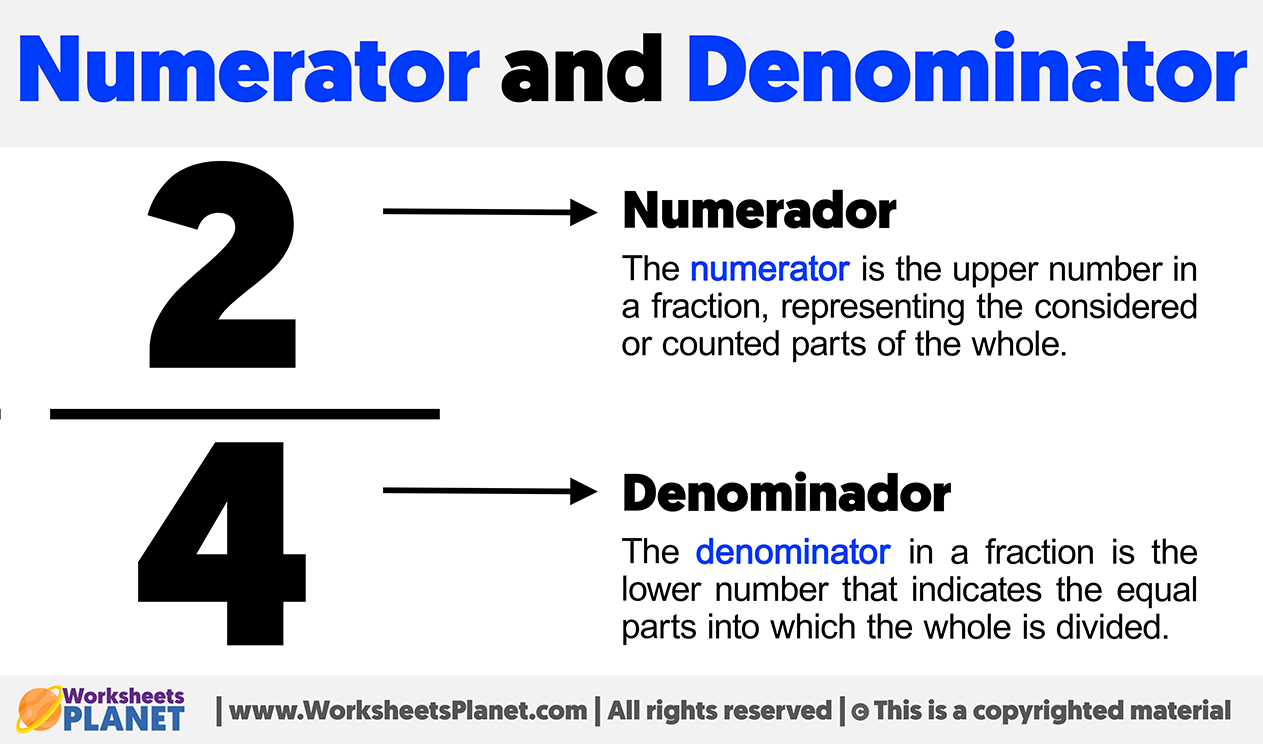
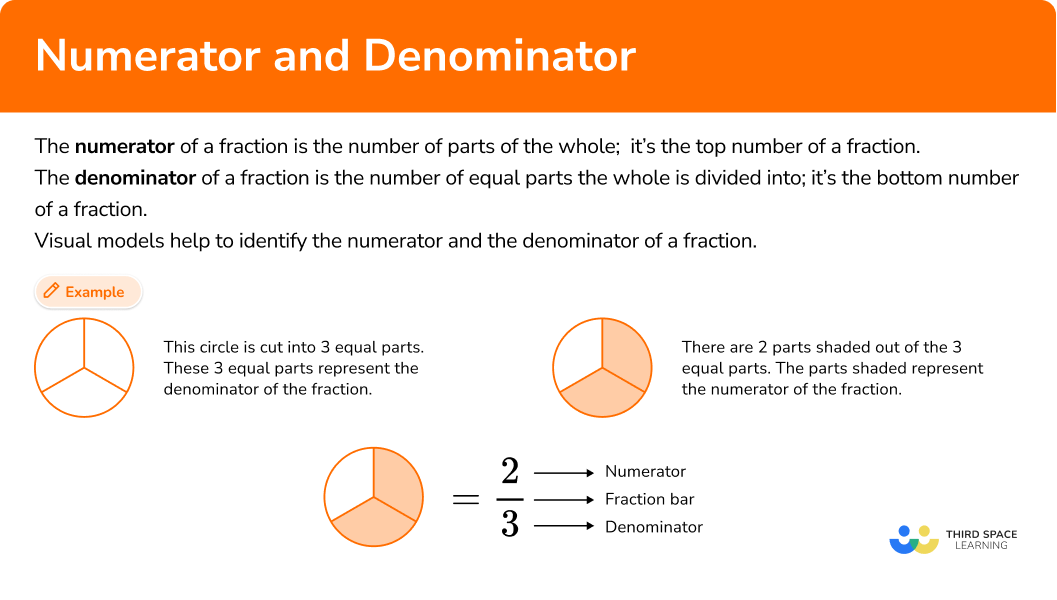
In a fraction, the numerator is the top number. It represents a specific “part” or the “result” we are measuring. In finance, the numerator is almost always the variable we want to grow. For example, in a profit margin calculation, the numerator is “Net Income.” When we look at a company’s performance, we are checking to see if the numerator is expanding. A rising numerator generally indicates growth, increased efficiency, or higher returns. It is the “output” of a financial equation.
Defining the Denominator in a Financial Context
The denominator is the bottom number in a fraction. It represents the “whole,” the “base,” or the “input.” In finance, the denominator often represents the resources used to achieve the numerator, such as total assets, shareholder equity, or the initial capital invested. The denominator provides the necessary context for the numerator. Without it, a number like “$1 million in profit” is meaningless. If it took $1 billion in capital to generate that $1 million (a massive denominator), the performance is poor. If it took only $2 million (a small denominator), the performance is stellar.
Key Profitability Ratios: Where Numerators Drive Success
Profitability is the primary goal of any commercial venture. By examining the relationship between the numerator and denominator in profitability ratios, investors can discern which companies are truly efficient and which are merely “large” without being “productive.”
Return on Investment (ROI)
ROI is perhaps the most ubiquitous ratio in the financial world. The formula is:
(Net Profit / Cost of Investment) x 100
Here, the numerator is the Net Profit (the money you made), and the denominator is the Cost of Investment (the money you spent). To improve your ROI, you have two levers: you can increase the numerator by generating more income, or you can decrease the denominator by finding ways to lower your initial costs. Professional investors prioritize high-ROI opportunities because they indicate that the denominator is working hard to produce a significant numerator.
Net Profit Margin
Net Profit Margin measures how much out of every dollar of sales a company actually keeps in earnings. The formula is:
(Net Income / Total Revenue)
In this scenario, the numerator is Net Income, while the denominator is Total Revenue. This ratio is vital for understanding business “leaniness.” A company with a high numerator relative to its denominator is efficient at controlling its operating expenses. For example, software companies often have high profit margins because their denominators (the cost to distribute one more unit of software) are very low compared to their numerators (the price of the software).
Valuation and Market Metrics: Analyzing the Denominator Effect
When it comes to the stock market, the relationship between the numerator and denominator determines the “value” of a company. Investors use these ratios to decide if a stock is overvalued or a bargain.

The Price-to-Earnings (P/E) Ratio
The P/E ratio is the most common metric for valuing a company. It is calculated as:
(Market Value per Share / Earnings per Share)
In this case, the numerator is the current price of the stock, and the denominator is the earnings (profit). The P/E ratio is a classic example of how a shifting denominator can change an investor’s perspective. If a company’s earnings (denominator) drop while the stock price (numerator) stays the same, the P/E ratio rises, making the stock appear “expensive.” Conversely, if the company grows its earnings significantly, the denominator increases, which lowers the P/E ratio and makes the stock look like a better value, even if the price hasn’t changed.
Earnings Per Share (EPS)
EPS is a direct indicator of a company’s profitability on a per-share basis. The formula is:
(Net Income / Number of Outstanding Shares)
Here, the numerator is the total profit, and the denominator is the total number of shares owned by the public. This ratio highlights a common corporate strategy: “Share Buybacks.” When a company buys back its own stock, it is intentionally shrinking the denominator (the number of shares). Even if the numerator (profit) stays exactly the same, the EPS will rise because the profit is being divided by a smaller number. This is a sophisticated way for companies to increase perceived value for shareholders by manipulating the denominator.
Risk Assessment and Liquidity: Balancing the Equation
While profitability focuses on the “upstairs” of the fraction, risk assessment often focuses on the “downstairs.” To understand if a business or a personal household is financially stable, we must look at what they owe versus what they own.
Debt-to-Equity Ratio
The Debt-to-Equity (D/E) ratio is used to evaluate a company’s financial leverage. The formula is:
(Total Liabilities / Shareholders’ Equity)
In this ratio, the numerator is Debt, and the denominator is Equity. A high numerator in this equation is often a red flag, indicating that the company is funded heavily by debt rather than its own capital. However, the interpretation depends on the industry. For capital-intensive industries like utilities or manufacturing, a larger numerator might be standard. For a tech startup, a high numerator relative to the denominator could signal an imminent liquidity crisis.
Current Ratio and Quick Ratio
Liquidity ratios measure a company’s ability to pay off its short-term debts. The Current Ratio formula is:
(Current Assets / Current Liabilities)
To be considered healthy, the numerator (Assets) should generally be larger than the denominator (Liabilities), resulting in a ratio greater than 1.0. If the denominator starts to outweigh the numerator, it suggests that the entity may not have enough liquid cash to cover its upcoming bills. Monitoring the growth of the denominator in this specific equation is a primary task for risk managers and conservative investors.
Strategic Decision Making: Optimizing the Fraction for Business Growth
Understanding the “why” behind the numerator and denominator allows business owners and individuals to make better strategic decisions. Growth is not always about making the top number bigger; sometimes, it is about making the bottom number smaller or more efficient.
Increasing the Numerator vs. Decreasing the Denominator
In personal finance, if you want to increase your savings rate (Savings / Income), you have two choices. You can increase the numerator by finding a side hustle or getting a raise to save more money. Alternatively, you can decrease the denominator—your total expenses—to ensure that the “part” of your income you keep is a larger percentage of the whole.
Corporations face the same dilemma. “Top-line growth” refers to increasing the numerator (Revenue). “Bottom-line optimization” refers to decreasing the denominator (Costs/Expenses). The most successful financial entities are those that can simultaneously expand the numerator while keeping the denominator under strict control. This creates “operating leverage,” where profits grow much faster than expenses.
The Importance of Context in Financial Fractions
The most critical takeaway for any financial enthusiast is that a numerator or a denominator never exists in a vacuum. A $10,000 profit (numerator) sounds excellent for a lemonade stand, but it is a disaster for a multinational bank.
When you ask “what is a numerator and denominator” in a financial context, you are really asking: “How does this result relate to the resources used?” By constantly evaluating these ratios, you develop a “financial intuition.” You stop looking at raw numbers and start looking at relationships. Whether you are analyzing a balance sheet, choosing a mutual fund, or calculating your own net worth, the mastery of the fraction is the first step toward true financial independence. Understanding the interplay between these two numbers allows you to see the reality behind the marketing and make decisions based on the cold, hard logic of mathematics.
aViewFromTheCave is a participant in the Amazon Services LLC Associates Program, an affiliate advertising program designed to provide a means for sites to earn advertising fees by advertising and linking to Amazon.com. Amazon, the Amazon logo, AmazonSupply, and the AmazonSupply logo are trademarks of Amazon.com, Inc. or its affiliates. As an Amazon Associate we earn affiliate commissions from qualifying purchases.