
Social inequality is a multifaceted phenomenon that defines the uneven distribution of resources, opportunities, and rewards within a society. While the term is often discussed in sociological circles, its most profound implications are found within the realms of personal finance, business economics, and global markets. At its core, social inequality is a structural barrier that dictates who has access to capital, who can participate in wealth-building activities, and how financial mobility is achieved—or stifled—across different demographic segments.
In the context of money and finance, social inequality is not merely a reflection of individual effort but is the result of systemic mechanisms that govern the flow of capital. To understand what social inequality truly is, one must look past the surface-level disparities in lifestyle and examine the underlying economic engines that create a widening chasm between different socioeconomic classes.
The Economic Foundations: Income vs. Wealth Inequality
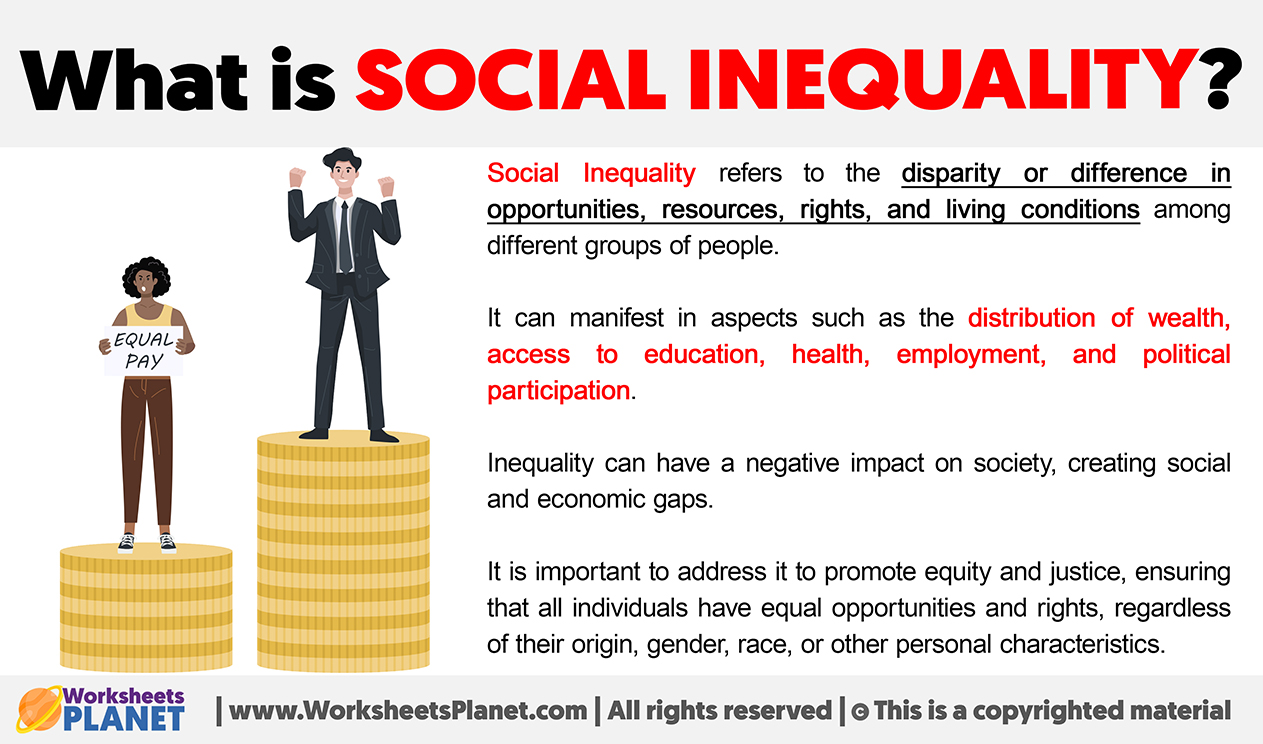
When discussing social inequality from a financial perspective, it is essential to distinguish between income and wealth. While they are often used interchangeably in casual conversation, they represent two distinct pillars of economic standing that contribute differently to social stratification.
The Mechanism of Income Disparity
Income inequality refers to the uneven distribution of annual earnings among individuals or households. This includes wages, salaries, and government transfers. In a healthy economy, income disparity can serve as an incentive for innovation and skill acquisition. However, when the gap becomes extreme, it creates a “hollowed-out” middle class. The primary drivers of income inequality often include technological shifts that favor high-skilled labor, the decline of collective bargaining power, and the stagnation of the minimum wage relative to inflation. When the cost of living outpaces income growth for the bottom 60% of earners, the ability to save and invest becomes nearly impossible, cementing social inequality.
The Compounding Power of Wealth Inequality
Wealth inequality is far more resilient and impactful than income inequality. Wealth—or net worth—is the total value of assets (homes, stocks, savings) minus debts. Unlike income, which is a flow of money, wealth is a stock of resources that can be passed down through generations. Social inequality is deeply rooted in the fact that wealth generates more wealth through compounding interest and capital gains. Those with existing capital can invest in the stock market or real estate, while those without it are forced to spend the majority of their income on immediate survival. This “wealth gap” creates a cycle where the affluent see their net worth grow exponentially, while the working class remains stagnant regardless of their productivity.
Systemic Barriers to Financial Inclusion and Mobility
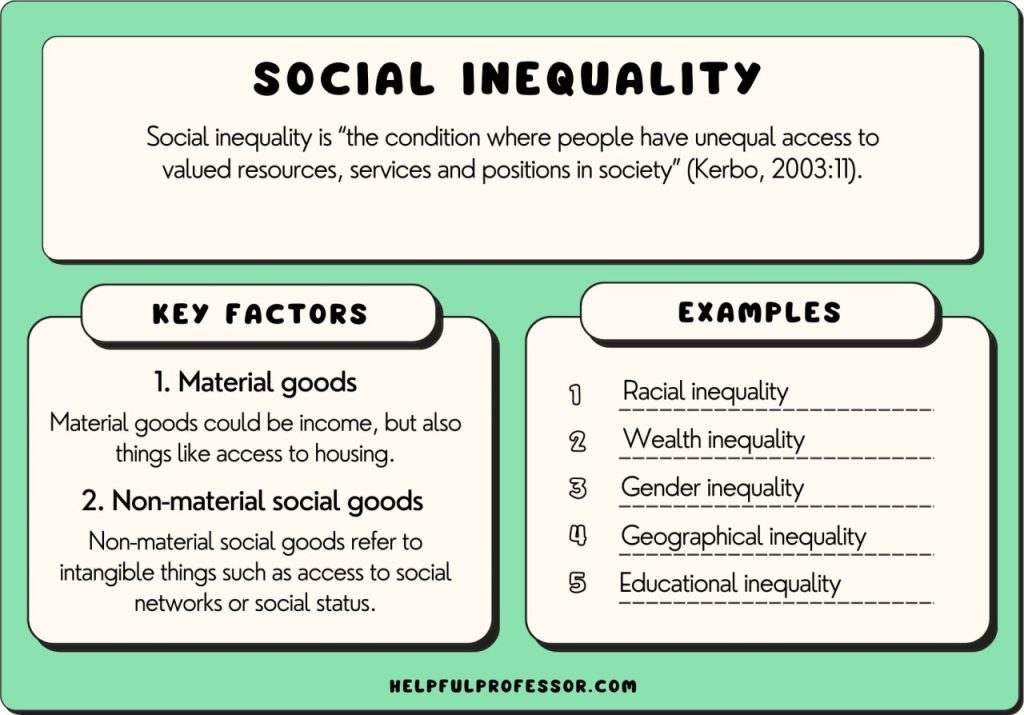
Social inequality is maintained through various systemic barriers that prevent marginalized groups from accessing the same financial tools and opportunities as the wealthy. These barriers act as a “poverty trap,” making it more expensive to be poor than it is to be rich.
Banking Deserts and the Cost of Credit
One of the most visible manifestations of social inequality is the prevalence of banking deserts—areas where traditional financial institutions are absent. In these regions, individuals often rely on “alternative financial services” such as payday lenders and check-cashing stores. These services charge exorbitant interest rates and fees, stripping wealth from low-income communities. Furthermore, credit scoring models often penalize those without traditional credit histories, making it difficult for them to secure low-interest mortgages or business loans. This lack of access to affordable credit is a primary driver of the persistent wealth gap, as it prevents the acquisition of appreciating assets.
The Impact of Educational Funding on Earning Potential
In many economies, the quality of education is directly tied to the local tax base, which is a function of property values. This creates a feedback loop of social inequality: wealthy neighborhoods fund high-quality schools that prepare students for high-paying careers in finance, tech, and law, while lower-income neighborhoods struggle with underfunded institutions. The result is a disparity in “human capital.” When a significant portion of the population enters the workforce without the technical or financial literacy required to navigate modern markets, the overall economic output of the nation suffers, and the cycle of inequality is reinforced for another generation.
The Macroeconomic and Business Impact of Inequality
Social inequality is not just a concern for those at the bottom of the economic ladder; it has significant implications for market efficiency, business growth, and long-term economic stability. From a business finance perspective, extreme inequality can be a major headwind for sustainable development.
Market Efficiency and Consumer Purchasing Power
An economy driven by consumer spending requires a broad base of people with discretionary income. When wealth is concentrated in the hands of a small percentage of the population, the overall velocity of money—the rate at which money is exchanged in an economy—tends to slow down. High-net-worth individuals have a lower “marginal propensity to consume” than middle- and low-income individuals. This means that a dollar given to a billionaire is likely to be saved or invested in existing assets, whereas a dollar given to a worker is likely to be spent on goods and services, driving business revenue and job creation. Thus, extreme social inequality can lead to stagnant demand and slower GDP growth.
Human Capital Development and Innovation
Innovation is the primary driver of long-term economic prosperity. However, social inequality acts as a filter that restricts who can participate in the innovation economy. When financial barriers prevent talented individuals from pursuing higher education or starting businesses, the economy loses out on potential breakthroughs. Venture capital, for instance, is notoriously concentrated among certain demographics and geographic hubs. This lack of diversity in “who gets funded” means that many problems faced by marginalized communities remain unsolved by the market, further enticing a cycle of economic exclusion.
Strategies for Closing the Wealth Gap and Promoting Equity
Addressing social inequality requires a multi-pronged approach that focuses on democratizing access to financial tools, improving financial literacy, and restructuring the incentives within the corporate and tax systems.
Financial Literacy as a Tool for Empowerment
While systemic change is necessary, individual financial literacy serves as a critical first line of defense against social inequality. Understanding the power of compound interest, the nuances of tax-advantaged accounts (like 401(k)s or IRAs), and the basics of asset allocation can empower individuals to maximize the resources they do have. However, financial literacy programs must be paired with actual access to capital. Teaching a person how to invest is only effective if they have a livable wage that allows for a surplus at the end of the month.
Impact Investing and Social Entrepreneurship
The rise of Environmental, Social, and Governance (ESG) criteria in investing marks a shift in how capital is deployed. Impact investing—investments made with the intention to generate positive, measurable social and environmental impact alongside a financial return—is becoming a powerful tool to combat inequality. By directing capital toward affordable housing, community development banks, and minority-owned businesses, investors can help bridge the gap. Similarly, social entrepreneurship focuses on building business models that solve social problems profitably, creating a more inclusive form of capitalism that prioritizes stakeholders over just shareholders.
Policy Reforms in Business and Taxation
On a broader level, reducing social inequality involves re-evaluating tax structures and corporate governance. Progressive taxation, which places a higher burden on capital gains and high estates, can provide the revenue needed to fund public goods like infrastructure and education. Additionally, businesses that adopt “living wage” policies and profit-sharing models help ensure that the value created by a company is distributed more equitably among those who produced it. These measures do not just “redistribute” wealth; they “pre-distribute” it by ensuring the market works more fairly from the outset.
In conclusion, social inequality is a profound economic challenge that limits the potential of individuals, businesses, and entire nations. By understanding the mechanisms of wealth accumulation, the barriers to financial inclusion, and the macroeconomic consequences of disparity, we can begin to build a more resilient and equitable financial future. True economic progress is not measured by the heights of the stock market alone, but by the breadth of the population that can participate in its growth.
aViewFromTheCave is a participant in the Amazon Services LLC Associates Program, an affiliate advertising program designed to provide a means for sites to earn advertising fees by advertising and linking to Amazon.com. Amazon, the Amazon logo, AmazonSupply, and the AmazonSupply logo are trademarks of Amazon.com, Inc. or its affiliates. As an Amazon Associate we earn affiliate commissions from qualifying purchases.