
In the fast-paced world of equity trading, the difference between a profitable investment and a costly mistake often comes down to a matter of cents. For the novice investor, the “Buy” button on a brokerage app seems straightforward. However, seasoned market participants know that hitting that button without specifying a price can lead to unexpected results. This is where the concept of a “Limit Price” becomes an essential tool in your financial arsenal.
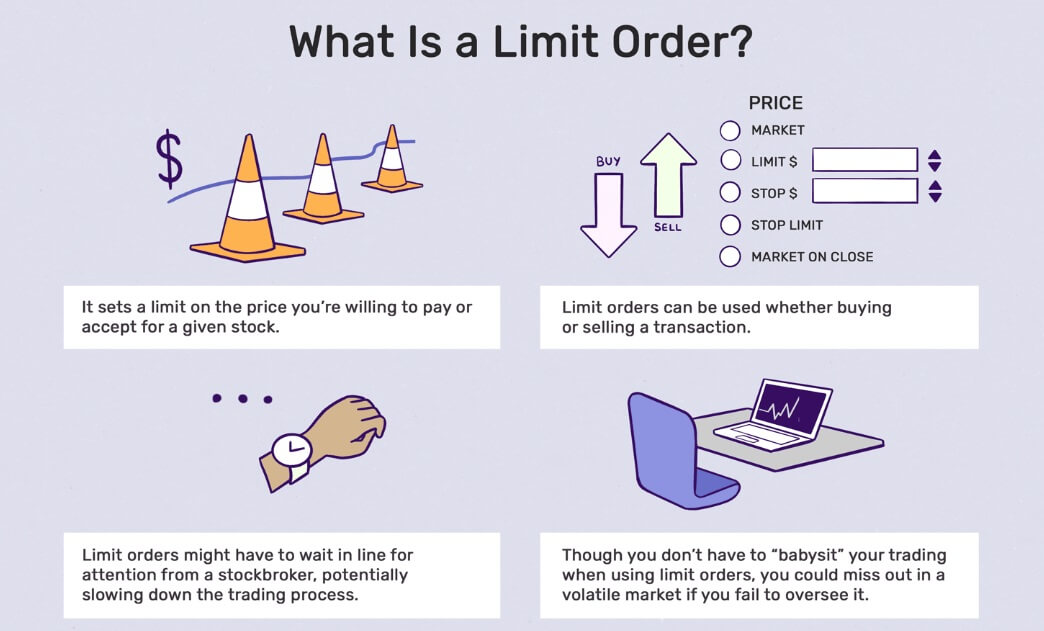
A limit price is an instruction given to a broker to buy or sell a stock at a specific price or better. Unlike a market order, which prioritizes speed and guarantees execution at the current prevailing price, a limit order prioritizes price control. In an era of high-frequency trading and sudden market swings, understanding how to use limit prices is not just a technical skill—it is a fundamental strategy for capital preservation and disciplined investing.
The Mechanics of Limit Prices: How Control Replaces Convenience
When you place a limit order, you are essentially drawing a line in the sand. You are telling the market exactly what your capital is worth and refusing to settle for less. To master this tool, one must understand the two primary applications: the Buy Limit and the Sell Limit.
Buy Limit Orders: Protecting Your Entry Point
A buy limit order is set below the current market price. Investors use this when they believe a stock is currently overvalued or when they are waiting for a “dip” to enter a position. For example, if Stock A is trading at $105, but your analysis suggests it is only a “buy” at $100, you place a limit order at $100. Your order will only be executed if the stock price touches $100 or falls lower. This ensures you never overpay for an asset, preserving your profit margins from the very start.
Sell Limit Orders: Maximizing Your Exit Strategy
Conversely, a sell limit order is placed above the current market price. This is often used to lock in profits. If you own a stock trading at $50 and your target profit is $60, a sell limit order at $60 ensures that as soon as the market reaches that peak, your shares are sold. You don’t have to be glued to your monitor; the order sits on the “order book” waiting for the market to meet your demands. This prevents the common psychological trap of “greed,” where an investor waits too long and misses the peak.
The Order Book and Market Depth
To truly understand the limit price, one must visualize the “Order Book.” This is a real-time ledger of all pending limit orders. When you place a limit order, you are providing “liquidity” to the market. You become a “maker” rather than a “taker.” Your order sits there until someone else—usually someone placing a market order—comes along and matches your price. Understanding this flow helps investors realize why limit orders might take time to fill, especially in stocks with low trading volume.
Limit Orders vs. Market Orders: Choosing the Right Strategy
The most common question for individual investors is when to use a limit order versus a market order. The answer depends on your primary goal: are you more concerned with getting into the trade or getting the right price?
The Case for Price Certainty
The primary advantage of a limit price is certainty. In volatile markets, the “quoted” price you see on your screen might be seconds old. If a stock is moving rapidly, a market order could execute $2.00 or $3.00 away from where you intended to buy. This is known as “slippage.” Limit orders eliminate slippage entirely. If you set a limit of $50.00, you will pay $50.00 or less—never $50.01. For investors managing a tight budget or trading large blocks of shares, this precision is non-negotiable.
The Risk of Non-Execution
The “cost” of using a limit price is the risk that your trade never happens. If you set a buy limit at $100 and the stock drops to $100.05 before skyrocketing to $150, you have missed out on massive gains for the sake of five cents. This is the trade-off: market orders guarantee execution but not price; limit orders guarantee price but not execution. Investors must weigh the “opportunity cost” of a missed trade against the “financial cost” of a poor entry price.

Dealing with Partial Fills
Another nuance of the limit order is the “partial fill.” Because you are specifying a price, there might not be enough sellers at that exact price to fulfill your entire order. If you want to buy 1,000 shares at $20.00, but only 400 shares are available at that price, your broker may only buy those 400. You are then left with a “resting order” for the remaining 600. This is rarely an issue for small retail traders, but for those managing significant personal portfolios, it requires active monitoring to ensure the strategy remains intact.
Tactical Advantages: Why Professionals Prefer Limit Prices
Beyond the basic mechanics, using limit prices offers several tactical advantages that align with a professional investing mindset. It transforms trading from a reactive activity into a proactive strategy.
Mitigating the Impact of Volatility
During earnings seasons or major economic announcements, stock prices can swing wildly in milliseconds. Market orders during these windows are dangerous because the “bid-ask spread” (the gap between what buyers offer and sellers ask) can widen significantly. A limit price acts as a safety net, ensuring you don’t get “swept” into a bad price during a momentary spike or crash.
Removing Emotional Bias
Investing is as much about psychology as it is about mathematics. It is easy to get caught up in the “FOMO” (Fear Of Missing Out) when a stock is rising. Placing a limit order allows you to make decisions during “cold” hours—when the market is closed or when you are thinking rationally—rather than in the heat of a trading session. By setting your price in advance, you commit to a disciplined valuation and avoid the temptation to chase a stock at inflated prices.
Precision in Low-Liquidity Assets
If you are investing in “penny stocks,” small-cap companies, or certain Exchange Traded Funds (ETFs) with low daily volume, limit orders are mandatory. In these assets, the gap between the buy and sell price can be huge. A market order in a low-liquidity stock can inadvertently move the price of the stock itself, leading to a disastrously high entry point. Limit orders protect the investor from these “thin” markets by ensuring they only participate at a fair valuation.
Advanced Execution: Time-in-Force and Conditions
A limit price does not exist in a vacuum. To use it effectively, investors must also understand “Time-in-Force” instructions, which tell the broker how long the limit order should remain active.
Day Orders vs. Good ‘Til Canceled (GTC)
A standard limit order is typically a “Day Order,” meaning if it isn’t filled by the end of the trading day, it expires. This is useful for short-term traders. However, for long-term investors waiting for a specific price target, the “Good ‘Til Canceled” (GTC) instruction is more common. A GTC limit order stays active (usually for 60 to 90 days) until the price is hit or the investor manually cancels it. This allows for a “set it and forget it” approach to portfolio rebalancing.
All-or-None and Immediate-or-Cancel
For those who want to avoid the aforementioned partial fills, the “All-or-None” (AON) restriction can be added to a limit order. This ensures the trade only executes if the entire quantity can be filled at the limit price. Similarly, “Immediate-or-Cancel” (IOC) requires that whatever portion of the order can be filled immediately at the limit price be done so, with the rest being canceled. These tools offer granular control over how your capital enters the market.

Conclusion: Building a Disciplined Investment Framework
The limit price is more than just a button on a trading platform; it is a manifestation of an investor’s valuation of a company. By using limit orders, you transition from being a passive participant who accepts whatever price the market dictates to an active strategist who demands value for every dollar invested.
While market orders have their place—specifically when you must exit a failing position immediately or when trading highly liquid blue-chip stocks where the spread is negligible—the limit order remains the gold standard for disciplined personal finance. It protects you from the hidden costs of slippage, the dangers of market volatility, and the internal pressure of emotional trading. As you continue to build your portfolio, remember that in the world of investing, patience is often rewarded, and the limit price is the primary tool that allows that patience to pay off. Master it, and you master one of the most vital components of long-term financial success.
aViewFromTheCave is a participant in the Amazon Services LLC Associates Program, an affiliate advertising program designed to provide a means for sites to earn advertising fees by advertising and linking to Amazon.com. Amazon, the Amazon logo, AmazonSupply, and the AmazonSupply logo are trademarks of Amazon.com, Inc. or its affiliates. As an Amazon Associate we earn affiliate commissions from qualifying purchases.