
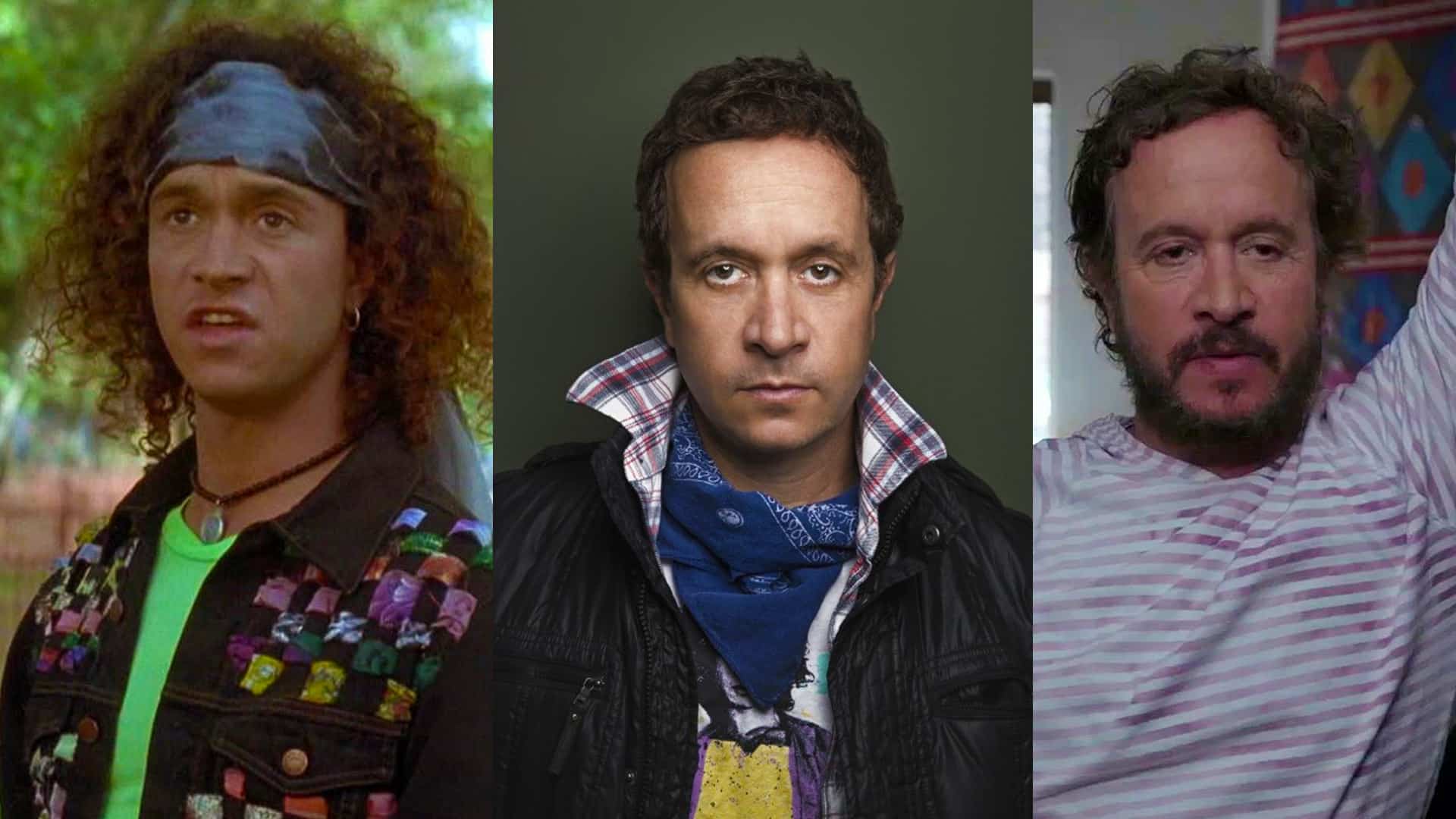
In the landscape of entertainment and marketing, few case studies offer as much insight into the lifecycle of a niche persona as the career of Pauly Shore. Often dismissed by critics as a relic of 1990s counterculture, Shore’s trajectory provides a masterclass in brand architecture, the dangers of market saturation, and the sophisticated art of the mid-career pivot. To understand “what happened to Pauly Shore” is to understand how a personal brand can transition from a dominant market force to a specialized legacy asset.

The Architecture of a Niche Brand: Creating “The Weasel”
The ascent of Pauly Shore in the late 1980s and early 1990s was not an accident of fame; it was the result of a highly specific brand identity known as “The Weasel.” In an era before digital influencers, Shore managed to create a recognizable archetype that resonated with a specific demographic: the MTV generation.
Defining the Brand DNA
The “Weasel” brand was built on three pillars: linguistic innovation, aesthetic consistency, and a “controlled rebellion” persona. Shore developed a unique lexicon—terms like “grindage” and “bu-uddy”—that functioned similarly to modern brand taglines. This linguistic branding created an “in-group” feeling among his audience, a powerful tool in community building. Aesthetically, his long hair, neon clothing, and surfer-stoner hybrid vibe made him instantly recognizable in a crowded marketplace.
Market Fit and the MTV Catalyst
Timing is a critical component of brand strategy. Shore’s brand hit the market exactly when MTV was transitioning from a music-only channel to a lifestyle brand. By securing a role as a VJ (Video Jockey) and the host of Totally Pauly, Shore leveraged a powerful platform to distribute his brand persona directly to his target demographic. This was an early example of “platform-native” branding, where the personality is inseparable from the medium.
Market Saturation and the Risk of Typecasting
Every brand faces the risk of overexposure, and Shore’s career in the mid-to-late 90s serves as a cautionary tale for brand managers. When a persona is built on a specific trend or age demographic, the brand’s lifespan is tied to the expiration date of that trend.
The Problem of Static Branding
While Shore saw massive commercial success with films like Encino Man and Son in Law, the brand remained static. In business terms, the “product” did not iterate. While the audience grew older and their tastes evolved, Shore continued to deliver “The Weasel.” This led to a disconnect between the brand and its maturing market. When a brand fails to evolve alongside its consumer base, it risks becoming a caricature of itself.
Negative Brand Equity and Critical Backlash
By the time Bio-Dome and The Curse of Pauly Shore were released, the “Weasel” brand had accumulated significant negative equity among critics and mainstream audiences. The very features that once made the brand unique—the slang and the high-energy antics—were now perceived as irritants. This highlights the “Novelty Trap”: a brand built on a gimmick has a high barrier to entry when attempting to pivot into more “serious” or diversified market segments.
The Strategic Pivot: Authentic Storytelling and Self-Deprecation
What happened next is perhaps the most interesting phase of Shore’s brand lifecycle. Rather than fading into obscurity, Shore leaned into the “meta-narrative” of his own decline. This is a sophisticated branding move often referred to as “Radical Transparency.”
“Pauly Shore is Dead”: The Mockumentary as Brand Reset
In 2003, Shore wrote, directed, and starred in Pauly Shore is Dead. This project was a deliberate attempt to dismantle his previous persona. By satirizing his own career “death,” Shore regained control of the narrative. In the world of branding, when a product is failing, sometimes the best strategy is to “kill” it and relaunch. This film allowed Shore to transition from a persona-led brand to a personality-led brand, showcasing his skills as a filmmaker and storyteller.
Leveraging Heritage and Legacy
Shore’s brand also benefits from “Heritage Equity.” As the son of Mitzi Shore, the legendary founder of The Comedy Store, Pauly’s brand is deeply rooted in the history of American stand-up comedy. In the 2010s, he began to emphasize this connection, pivoting his brand from “90s Movie Star” to “Guardian of Comedy History.” This move successfully shifted his brand authority from a transient pop-culture icon to a respected industry veteran.

The Digital Resurgence: Modern Brand Management in the Attention Economy
In the contemporary digital era, Pauly Shore has effectively utilized social media and podcasting to maintain brand relevance. This phase of his career demonstrates how legacy brands can adapt to the “Attention Economy” by diversifying their content delivery.
Embracing the Podcast Ecosystem
Shore’s entry into the podcasting world—both as a guest on major shows like The Joe Rogan Experience and as a host of his own projects—allowed him to present a more nuanced, humanized version of himself. Podcasts are an intimacy-driven medium. For a brand that was once perceived as “cartoonish,” the long-form conversational format provided the necessary space to build “Authenticity Equity.”
TikTok, Nostalgia, and the Richard Simmons Campaign
Recent years have seen a massive resurgence in Shore’s visibility, driven largely by the power of social media virality and the “Nostalgia Cycle.” When fans on TikTok began pointing out his physical resemblance to fitness icon Richard Simmons, Shore did something brilliant: he listened to the market.
Instead of ignoring the memes, he leaned into them, producing a short film (The Court Jester) and expressing a public desire to play Simmons in a biopic. This is an example of “User-Generated Brand Direction.” By allowing the audience to suggest his next move, Shore has created a participatory brand experience that has generated more mainstream buzz than he has seen in decades.
Lessons in Brand Resilience: Key Takeaways for Modern Creators
The narrative of Pauly Shore is not one of a “washed-up” celebrity, but of a resilient brand that has survived multiple market shifts. His journey offers several vital lessons for personal branding and corporate identity.
1. Diversification is Mandatory
A brand cannot rely on a single “product” or persona indefinitely. Shore’s struggle to move past “The Weasel” in the 90s proves that diversification must happen during the peak of success, not after the decline.
2. Control the Narrative
When the market turned against him, Shore didn’t wait for a PR firm to fix it. He created content (Pauly Shore is Dead) that addressed the elephant in the room. In crisis management, the first party to tell the story usually wins.
3. Authenticity Scales
Shore’s most successful recent endeavors have been those where he shows the “man behind the mask.” In the modern economy, consumers are cynical of highly polished personas; they crave the vulnerability and transparency of the person behind the brand.
4. Harness the Power of Nostalgia
Nostalgia is a powerful economic driver. By acknowledging his 90s roots while simultaneously pursuing new projects, Shore has managed to capture both his original aging audience and a new, curious Gen Z demographic.
Conclusion: The Endurance of a Specialized Identity
What happened to Pauly Shore? He evolved. He transitioned from a mass-market commodity to a niche, high-value legacy brand. While he may no longer command the $20 million movie deals of the mid-90s, he has achieved something arguably more difficult: brand longevity in a fickle industry.
By navigating the peaks of fame, the valleys of irrelevance, and the complex terrain of a digital comeback, Shore has proven that a personal brand is not a static asset, but a living entity that requires constant pruning, pivoting, and a deep understanding of market sentiment. His career serves as a reminder that even when the “Weasel” stops being the primary product, the strategist behind the brand can still find a way to stay in the spotlight.
aViewFromTheCave is a participant in the Amazon Services LLC Associates Program, an affiliate advertising program designed to provide a means for sites to earn advertising fees by advertising and linking to Amazon.com. Amazon, the Amazon logo, AmazonSupply, and the AmazonSupply logo are trademarks of Amazon.com, Inc. or its affiliates. As an Amazon Associate we earn affiliate commissions from qualifying purchases.