
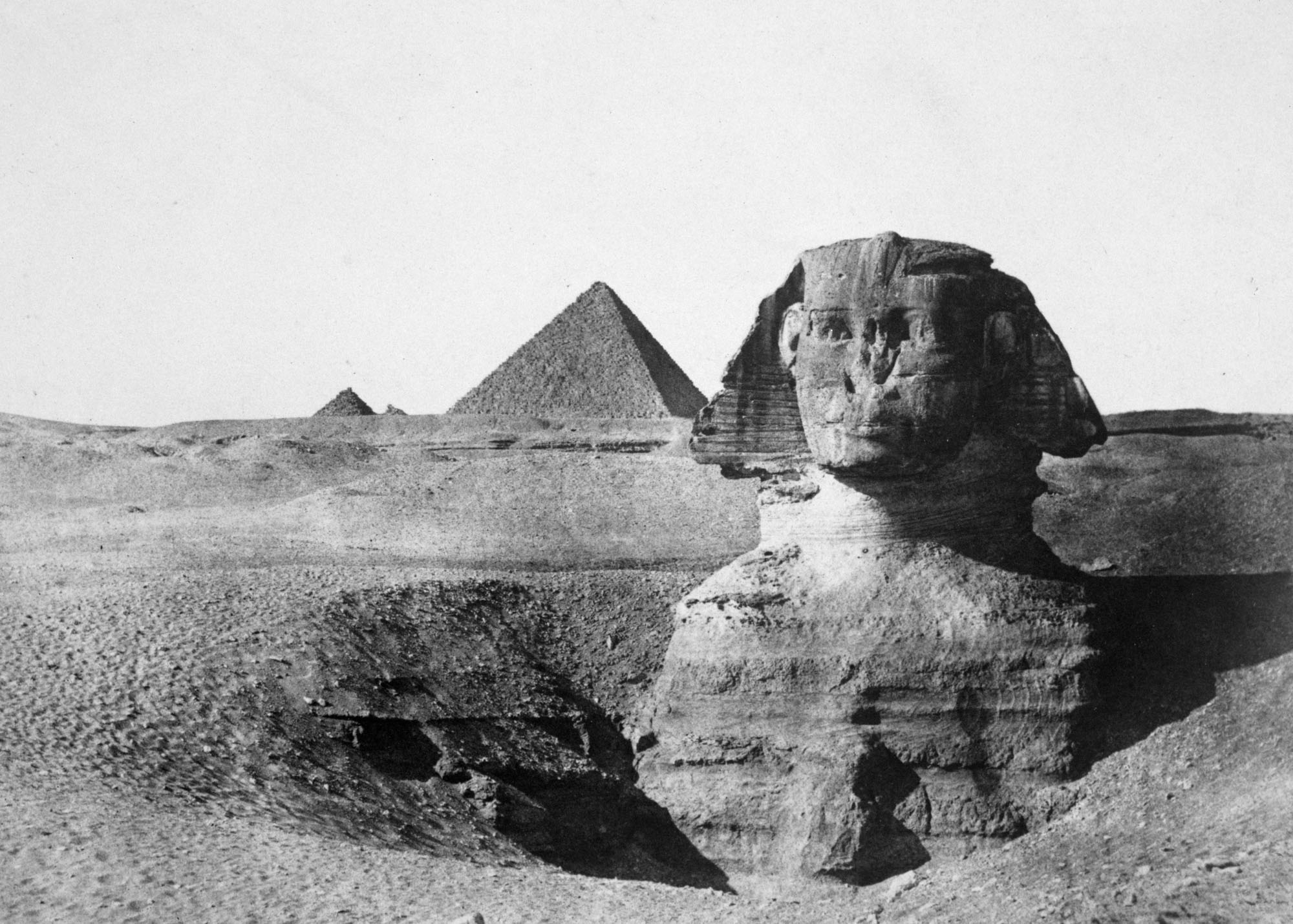
For centuries, the Great Sphinx of Giza has stood as a silent sentinel on the plateau, its weathered features and missing nose fueling endless speculation. While traditional archaeology has provided the foundation for our understanding, the question of what the Sphinx originally looked like is now being answered through the lens of high-end technology. From AI-driven generative modeling to sub-surface LiDAR scanning, the intersection of technology and Egyptology is providing a digital resurrection of this ancient wonder.
In this deep dive, we explore the cutting-edge software, hardware, and methodologies currently being deployed to peel back the layers of geological erosion and human intervention, revealing the most scientifically accurate portrait of the Sphinx in its prime.

1. The Digital Resurrection: How AI and Machine Learning Re-envision Antiquity
The most significant leap in visualizing the original Sphinx comes from the field of Artificial Intelligence. Unlike traditional artists’ impressions, AI-driven reconstructions rely on massive datasets and predictive algorithms to “de-age” the monument.
Neural Networks and Comparative Morphology
Modern researchers utilize Generative Adversarial Networks (GANs) to analyze the existing structure of the Sphinx. By feeding these networks data from other contemporary statues from the Old Kingdom—specifically those of Pharaoh Khafre and Khufu—AI can fill in the “missing pixels” of the Sphinx’s face. The software identifies patterns in 4th Dynasty sculpture, such as the specific curvature of the nemes headdress and the exact proportions of royal facial features, to propose a high-fidelity digital restoration.
Reversing Geological Erosion Through Algorithmic Modeling
One of the Sphinx’s greatest mysteries is the extent of water and wind erosion on its body. Advanced simulation software, often used in civil engineering and climate modeling, is now being applied to historical sites. By inputting the geological composition of the Giza limestone and simulating 4,500 years of environmental stressors, tech teams can run the clock in reverse. These algorithms “add back” the limestone lost to exfoliation, revealing a much bulkier, more defined lion’s body that aligns with the original quarrying marks.
Chromatic Restoration: Recovering the Original Palette
Perhaps the most startling revelation from digital analysis is the color. Using multispectral imaging—a technology originally developed for satellite reconnaissance—scientists have identified microscopic traces of pigment invisible to the naked eye. Digital tools can then map these findings across a 3D model, showing that the Sphinx was once a vibrant monument, likely sporting a red-painted face and a blue and gold striped headdress, a far cry from the monochromatic sand-colored icon we see today.
2. Precision Mapping: LiDAR and Photogrammetry Techniques
To understand the original form, one must first possess a perfect record of the current state. Technology has moved beyond the measuring tape to sub-millimeter precision mapping.
Terrestrial LiDAR Scanning (TLS)
Light Detection and Ranging (LiDAR) has revolutionized how we document the Sphinx. By firing millions of laser pulses at the monument, tech teams create a “point cloud”—a dense 3D coordinate system that captures every crack, fissure, and tool mark. This digital twin allows researchers to examine the monument from angles impossible to achieve in person. More importantly, it reveals “ghost” lines—faint indentations that suggest where original masonry blocks once sat before they were scavenged for later construction.
Drone-Based Photogrammetry
While LiDAR provides the skeleton, photogrammetry provides the skin. High-resolution drones equipped with 45-megapixel cameras capture thousands of overlapping images. Specialized software like Agisoft Metashape or RealityCapture then stitches these images together to create a photorealistic 3D model. This tech is crucial for analyzing the top of the Sphinx’s head and the back of the monument, areas that are physically inaccessible but hold vital clues about how the original royal headdress was shaped and attached.

Sub-Surface Sensing and Ground Penetrating Radar (GPR)
To know what the Sphinx looked like, we must also know what lies beneath and within it. GPR technology allows tech-archaeologists to see “inside” the monument. This has been instrumental in identifying the different phases of ancient “restoration” tech. By differentiating between the core limestone and the various layers of protective masonry added by the Romans and the New Kingdom Egyptians, digital models can strip away these “non-original” additions to reveal the core 4th Dynasty silhouette.
3. The Great Debate: Digital Analysis of the “Head-to-Body” Disproportion
A long-standing theory in Egyptology is that the Sphinx was originally a lion or the god Anubis, and the head was later re-carved into a human face. Modern tech is finally providing the data to test these hypotheses.
Volumetric Analysis Software
Using CAD (Computer-Aided Design) software, researchers have conducted volumetric studies comparing the Sphinx’s head to its body. In almost all other Egyptian statuary, the proportions are mathematically perfect. However, the Sphinx’s head is significantly smaller relative to its torso. By using 3D modeling to “superimpose” a correctly proportioned lion’s head onto the current body, technologists have demonstrated that a larger, original head would have fit perfectly within the geological footprint of the monument.
Identifying Recarving Markers via Macro-Imaging
High-definition macro-imaging allows for the analysis of tool marks at a microscopic level. Tech experts have used this to identify a “stratigraphy of carving.” By comparing the weathering patterns on the face to those on the body through digital texture analysis, software can highlight discrepancies. If the face shows significantly less erosion than the body—as recent digital assessments suggest—it provides technological evidence that the face we see today was carved much later than the original structure.
Acoustic Tomography
Similar to medical ultrasounds, acoustic tomography uses sound waves to measure the density of the limestone. This tech has identified “anomalies” within the Sphinx’s neck. Digital visualization of this data suggests structural reinforcement that would only be necessary if the head had been significantly altered or reduced in size from a previous iteration, lending weight to the “re-carved” theory via hard data.
4. Virtual Reality (VR) and the UX of Ancient History
The final stage of visualizing the original Sphinx is not just seeing a picture, but experiencing the space. This is where User Experience (UX) design and immersive tech take center stage.
Creating High-Fidelity 4D Environments
Using game engines like Unreal Engine 5, developers are creating “4D” environments where the Sphinx is placed back into its original architectural context. This includes the Sphinx Temple and the Valley Temple as they appeared in 2500 BCE. By utilizing Lumen (dynamic lighting) and Nanite (virtualized geometry), these simulations show how the Sphinx would have looked during the summer solstice, revealing that the monument was part of a giant solar clock—a technical feat of ancient engineering visualized through modern software.
Augmented Reality (AR) Overlay Apps
For the modern traveler, AR technology is closing the gap between the ruin and its original glory. Mobile apps now allow users to point their smartphone at the Sphinx and see a real-time digital overlay of the original paint, the missing nose, and the ceremonial beard. This tech relies on sophisticated spatial anchoring and image recognition to ensure the digital “original” stays perfectly aligned with the physical “weathered” monument.
Digital Preservation and Global Access
The ultimate goal of this technological suite is preservation. As the Sphinx continues to deteriorate due to rising groundwater and pollution, the “Original Look” preserved in these digital vaults becomes the only permanent record. Through Open Access initiatives, these 1300-word-equivalent datasets and 3D models are being shared with global research institutions, ensuring that even if the physical monument crumbles, its original digital form remains accessible for future analysis.
In conclusion, the question of what the Sphinx originally looked like is no longer a matter of artistic guesswork. It is a technical puzzle being solved by a symphony of AI, laser scanning, and forensic software. We are moving toward a definitive digital reconstruction—one that honors the architectural genius of the Old Kingdom while utilizing the most advanced tools of the 21st century. The Sphinx is finally speaking, not through a mouth of stone, but through the language of data.
aViewFromTheCave is a participant in the Amazon Services LLC Associates Program, an affiliate advertising program designed to provide a means for sites to earn advertising fees by advertising and linking to Amazon.com. Amazon, the Amazon logo, AmazonSupply, and the AmazonSupply logo are trademarks of Amazon.com, Inc. or its affiliates. As an Amazon Associate we earn affiliate commissions from qualifying purchases.