
For millions of workers, Social Security represents the cornerstone of retirement planning. It is the only source of inflation-protected, guaranteed lifetime income that most Americans will ever receive. However, despite its importance, the system remains a “black box” for many. Predicting exactly how much you will receive involves more than just a cursory glance at your last paycheck. It requires an understanding of how the Social Security Administration (SSA) indexes your earnings, how they calculate your average monthly income over decades, and how the timing of your claim can permanently alter your financial trajectory.
Understanding the mechanics of Social Security is not just an academic exercise; it is a critical component of personal finance. Whether you are decades away from retirement or standing on the threshold of your final working years, knowing your expected benefit allows you to bridge the gap between Social Security and your total retirement income needs.
Understanding the Formula: How Your Social Security Benefit is Calculated
The Social Security Administration does not simply look at your final salary to determine your benefit. Instead, they use a complex, multi-step process designed to replace a percentage of your career-average earnings. To get an accurate estimate, you must first understand the building blocks of the calculation.
The Importance of Your 35 Highest-Earning Years
The SSA bases your retirement benefit on your Average Indexed Monthly Earnings (AIME). To calculate this, the agency looks at your entire work history and selects the 35 years in which you earned the most, adjusted for inflation (indexing).
If you have worked for fewer than 35 years, the SSA enters a “zero” for every missing year. These zeros can drastically pull down your average, resulting in a significantly lower monthly check. Conversely, if you have worked for 40 years, only the top 35 are counted, allowing you to drop lower-earning years from your youth. For those looking to maximize their benefit, working a few extra years in your 60s—often the highest-earning years of a career—can “bump out” low-earning years from your early 20s.
Primary Insurance Amount (PIA) and Bend Points
Once your AIME is calculated, the SSA applies a formula to determine your Primary Insurance Amount (PIA). The PIA is the base amount you would receive if you retired exactly at your Full Retirement Age (FRA).
The formula is “progressive,” meaning it is designed to help lower-income earners more than higher-income earners. The SSA uses “bend points” to calculate the PIA:
- They take 90% of the first portion of your average monthly earnings.
- They take 32% of the next portion.
- They take 15% of any earnings above the final bend point.
Because of this structure, high earners receive more total dollars, but lower earners receive a higher “replacement rate” relative to their previous income.
The Impact of Timing: When You File Matters
While your earnings history sets the base for your benefit, the age at which you choose to start receiving checks is the single most significant factor you can control. You can choose to start as early as age 62, as late as age 70, or anywhere in between.
Filing at 62: The Cost of Early Retirement
Age 62 is the earliest point at which you can claim Social Security retirement benefits. However, doing so comes with a permanent penalty. If your Full Retirement Age is 67 and you file at 62, your monthly benefit will be reduced by approximately 30%.
Many people choose to file early because they need the cash flow or are concerned about the longevity of the Social Security trust fund. However, from a financial planning perspective, filing at 62 is often a “lock-in” of a lower standard of living. This reduction is permanent and will also affect any future Cost-of-Living Adjustments (COLA), as those percentages will be applied to a smaller base number.
Full Retirement Age (FRA): Your Baseline
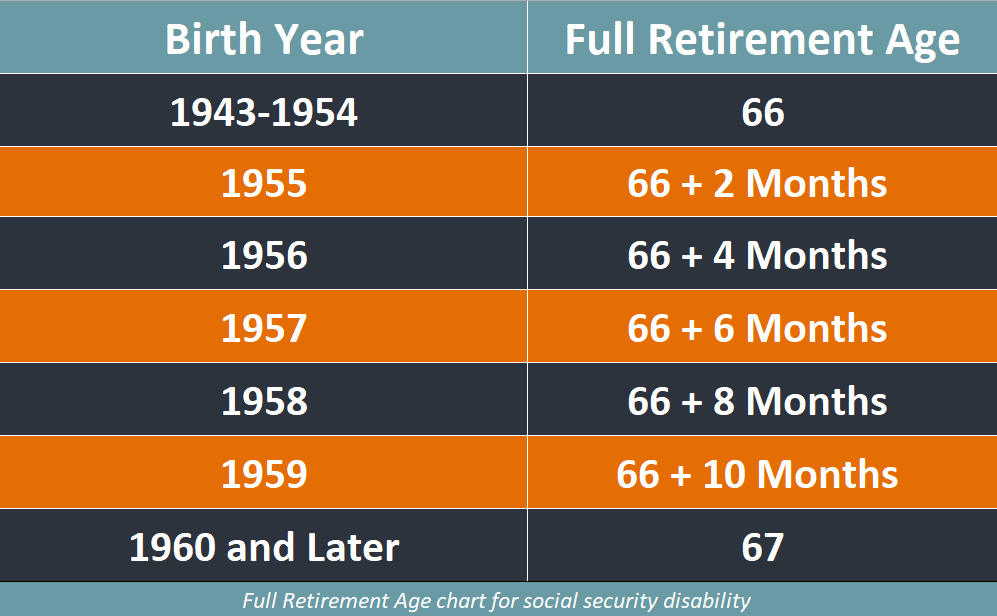
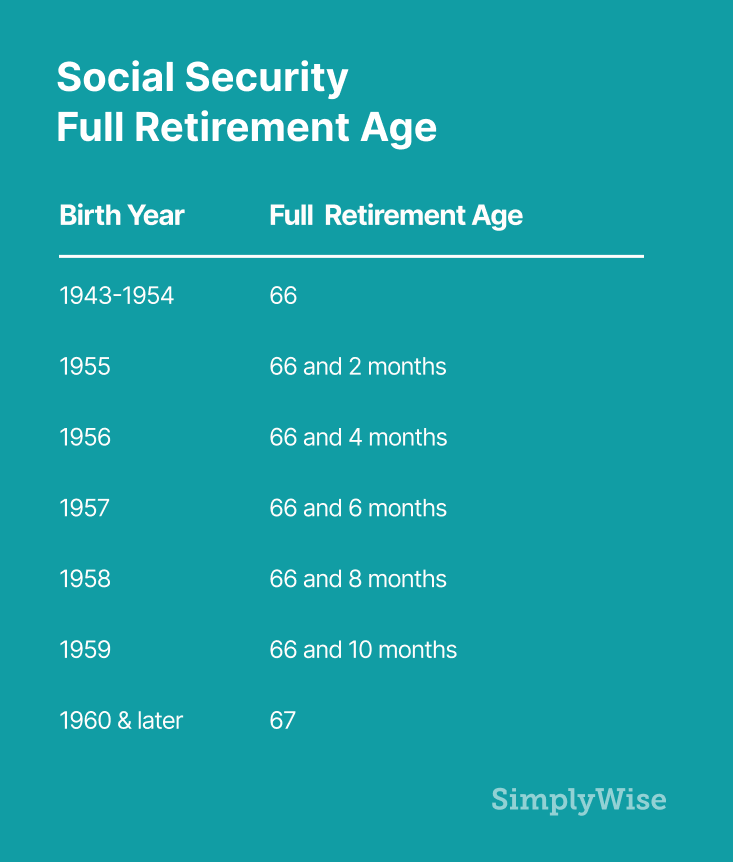
Your Full Retirement Age is the age at which you are entitled to 100% of your Primary Insurance Amount. For anyone born in 1960 or later, the FRA is 67. For those born earlier, it may be 66 and a few months. Filing at exactly your FRA ensures you receive the full amount the formula intended for you, without penalties for early filing or credits for delaying.
Delayed Retirement Credits: The Reward for Waiting Until 70
For every month you delay claiming Social Security past your FRA, your benefit increases by about 0.66%, which equates to an 8% simple interest increase per year. This continues until you reach age 70.
There is no financial benefit to waiting past age 70, but the jump from age 67 to age 70 is substantial. A person with an FRA of 67 who waits until 70 will receive 124% of their PIA. In an era of low-interest rates and market volatility, an 8% guaranteed annual increase is one of the best “returns on investment” available in the financial world. For those in good health with a family history of longevity, waiting until 70 is often the most mathematically sound decision.
Factors That Can Reduce or Increase Your Monthly Check
Calculating your benefit is not just about earnings and age; several external factors can fluctuate the amount of money that actually hits your bank account each month.
The Retirement Earnings Test
If you choose to claim Social Security before your Full Retirement Age while you are still working, you may be subject to the Social Security Earnings Test. In 2024, if you earn more than $22,320, the SSA will withhold $1 in benefits for every $2 you earn above that limit.
It is important to note that these benefits are not “lost” forever. Once you reach your FRA, the SSA recalculates your benefit upward to account for the months they withheld. However, in the short term, working while claiming early can result in $0 checks for several months of the year.
Taxation of Benefits and Medicare Premiums
Many retirees are surprised to find that their Social Security benefits are taxable. If your “provisional income” (your adjusted gross income + tax-exempt interest + half of your Social Security benefits) exceeds $25,000 as an individual or $32,000 as a couple, you will pay federal income tax on up to 50% to 85% of your benefits.
Additionally, if you are enrolled in Medicare, your Part B premiums are typically deducted directly from your Social Security check. As Medicare premiums rise, your net Social Security payout may decrease, even if the gross amount remains the same.
Cost-of-Living Adjustments (COLA)
To ensure that inflation doesn’t erode the purchasing power of retirees, the SSA implements a Cost-of-Living Adjustment (COLA) most years. These adjustments are based on the Consumer Price Index for Urban Wage Earners and Clerical Workers (CPI-W). While COLA helps, it often lags behind the actual inflation experienced by seniors, particularly in healthcare and housing costs.
Strategic Planning for Your Retirement Income
Now that you understand how the numbers are crunched, how do you use this information to plan your future?
Using the “my Social Security” Account Tools
The most accurate way to see where you stand is to create a “my Social Security” account on the official SSA.gov website. This portal provides your “Social Security Statement,” which shows your complete earnings history and provides personalized estimates for your benefits at age 62, your FRA, and age 70.
Reviewing this statement annually is vital for catching errors. If an employer failed to report your income correctly twenty years ago, it could be lowering your projected benefit today. Correcting these errors early is much easier than doing so once you have already retired.
Spousal and Survivor Benefit Considerations
For married couples, Social Security planning becomes a joint strategy. A lower-earning spouse is entitled to either their own benefit or 50% of their higher-earning spouse’s benefit, whichever is higher.
Furthermore, survivor benefits are a critical component of life insurance planning. When one spouse passes away, the survivor can switch to the higher of the two checks, but the smaller check disappears. If the higher earner delays filing until 70, they are effectively “buying” a larger life insurance policy for their spouse, as the survivor benefit will be based on that higher, delayed amount.
Integrating Social Security into Your Broader Financial Portfolio
Social Security was never intended to be a person’s sole source of income. On average, it replaces about 40% of a worker’s pre-retirement earnings. To maintain your lifestyle, you must view Social Security as one “leg” of a multi-legged stool.

Bridging the Gap with Private Savings
The gap between your Social Security check and your total monthly expenses must be filled by personal savings, such as 401(k)s, IRAs, and brokerage accounts. When you know your projected Social Security amount, you can calculate your “burn rate” on your other assets.
For example, if you need $5,000 a month to live and Social Security provides $2,500, you know your portfolio must generate the remaining $2,500. Some retirees choose to spend down their IRA or 401(k) between the ages of 65 and 70 to allow their Social Security benefit to grow to its maximum at age 70. This “bridge strategy” uses liquid assets to secure a higher, inflation-protected floor for the rest of their lives.
Ultimately, the answer to “how much will I get” is a moving target. By maximizing your 35 years of earnings, carefully choosing your filing age, and accounting for taxes and Medicare, you can turn a complex government program into a reliable engine for financial independence. Social Security is a powerful tool, but like any tool, it works best when you understand exactly how to operate it.
aViewFromTheCave is a participant in the Amazon Services LLC Associates Program, an affiliate advertising program designed to provide a means for sites to earn advertising fees by advertising and linking to Amazon.com. Amazon, the Amazon logo, AmazonSupply, and the AmazonSupply logo are trademarks of Amazon.com, Inc. or its affiliates. As an Amazon Associate we earn affiliate commissions from qualifying purchases.