
The cost of higher education is one of the most significant financial investments an individual or family will ever make. As tuition rates continue to climb, understanding the fiscal tools available to mitigate these costs is essential for sound personal finance management. One of the most critical documents in this endeavor is the IRS Form 1098-T, also known as the Tuition Statement.
While it may appear to be just another piece of tax paperwork, Form 1098-T is a gateway to substantial tax credits that can lower your tax liability or even increase your refund. For students, parents, and financial planners, mastering the nuances of this form is a vital component of a comprehensive wealth-management strategy.
Understanding the Basics of Form 1098-T
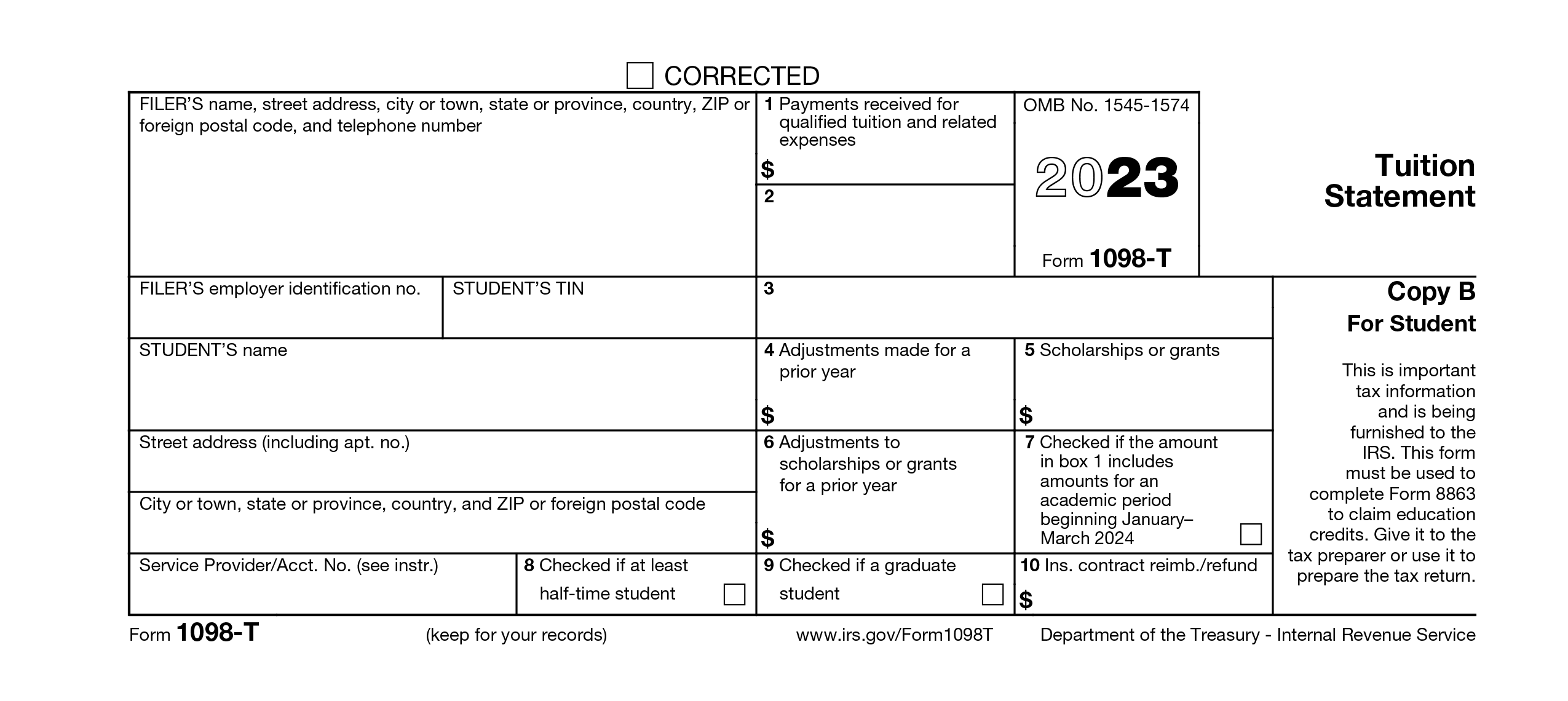
Form 1098-T is an information return that colleges, universities, and vocational schools are required to issue to students who paid “qualified tuition and related expenses” during the preceding tax year. Its primary purpose is to help the IRS and the taxpayer determine if the student (or the person claiming the student as a dependent) is eligible for federal education tax credits.
What Exactly is Form 1098-T?
At its core, Form 1098-T serves as a report card of your educational spending from a tax perspective. Every eligible educational institution must provide this form to any student for whom it received payments for “qualified tuition and related expenses” (QTRE). The form acts as a standardized verification tool, ensuring that the amounts claimed on a tax return match the records held by the educational institution.
For the taxpayer, the form is not just a record of spending; it is a roadmap for tax optimization. Without this form, claiming major credits like the American Opportunity Tax Credit (AOTC) or the Lifetime Learning Credit (LLC) becomes significantly more difficult, if not impossible, in the eyes of the IRS.
Who Receives This Form and When?
Generally, any student enrolled at an eligible educational institution during the calendar year should receive a 1098-T. “Eligible institutions” include almost all accredited public, nonprofit, and proprietary post-secondary institutions.
Schools are mandated to send these forms to students by January 31st of the following year. In the modern era of digital finance, most institutions provide these forms through an online student portal, though they are still required to mail a hard copy unless the student has consented to electronic delivery. It is important to note that if your tuition was entirely covered by scholarships or if you are a non-resident alien, you might not automatically receive a form, although you can often request one.
Decoding the Boxes: How to Read Your Tuition Statement
To use Form 1098-T effectively for financial planning, one must understand how to interpret the data within its various boxes. The IRS uses these specific data points to calculate the “net” cost of education.
Box 1 vs. Box 2: Payments Received vs. Amounts Billed
Historically, schools had the option to report either the payments received (Box 1) or the amounts billed (Box 2). However, federal regulations changed recently, and now almost all institutions are required to report using Box 1.
Box 1 shows the total amount of payments received by the school for qualified tuition and related expenses during the calendar year. This is the figure that most tax software and accountants use to calculate your credit. It is important to reconcile this with your own bank statements, as Box 1 only includes “qualified” expenses—meaning it excludes room, board, insurance, and student activity fees that are not required for enrollment.
The Significance of Box 5: Scholarships and Grants
Box 5 is perhaps the most critical section for determining your actual tax benefit. It reports the total amount of all scholarships or grants administered and processed by the eligible educational institution.
From a personal finance perspective, this represents “free money.” However, for tax purposes, scholarship totals in Box 5 are subtracted from the tuition payments in Box 1 to determine your “out-of-pocket” qualified expenses. If your Box 5 amount exceeds your Box 1 amount, you may actually have taxable income to report, as the excess scholarship funds used for non-qualified expenses (like room and board) are generally considered taxable income.
Box 7, 8, and 9: Identifying Student Status and Timing
These checkboxes provide context to the IRS regarding the student’s academic status:
- Box 7: Indicates if the payments in Box 1 include amounts for an academic period beginning in the first three months of the following year. This is vital for “pre-payment” strategies where a taxpayer pays the spring semester tuition in December to capture the tax credit in the current year.
- Box 8: Indicates if the student is considered at least half-time. This is a requirement for the American Opportunity Tax Credit.
- Box 9: Indicates if the student is a graduate student. This typically shifts the eligibility from the AOTC to the Lifetime Learning Credit.
Maximizing Your Tax Savings: The AOTC and the LLC
The primary reason to care about Form 1098-T is the ability to claim one of two major federal tax credits. Credits are more valuable than deductions because they reduce your tax bill dollar-for-dollar.

The American Opportunity Tax Credit (AOTC)
The AOTC is the most lucrative education credit available. It is worth a maximum of $2,500 per eligible student per year. It covers 100% of the first $2,000 of qualified expenses and 25% of the next $2,000.
A unique feature of the AOTC is that it is 40% refundable (up to $1,000). This means that even if you owe zero taxes, you can still receive a check for up to $1,000 from the government. However, the AOTC is limited to the first four years of post-secondary education and requires the student to be pursuing a degree at least half-time.
The Lifetime Learning Credit (LLC)
For those who have already completed four years of higher education, or for those taking just a single course to improve job skills, the LLC is the go-to financial tool. It provides a credit of 20% of up to $10,000 in qualified expenses, for a maximum credit of $2,000 per tax return.
Unlike the AOTC, the LLC is not refundable, and there is no limit on the number of years you can claim it. This makes it an excellent resource for graduate students, medical students, or professionals pursuing continuing education to increase their earning potential.
Income Limits and Phase-Outs
Personal finance is always subject to income thresholds. Both the AOTC and the LLC have Modified Adjusted Gross Income (MAGI) limits. If your income exceeds a certain level, the credit begins to phase out until it is eliminated entirely. For high-earning households, strategic moves—such as having a student file as an independent (if they provide more than half of their own support)—can sometimes be used to capture credits that would otherwise be lost to income phase-outs, though this requires careful calculation.
Strategic Financial Planning and Educational Expenses
Form 1098-T should not be viewed in a vacuum. It is a piece of a larger puzzle involving 529 plans, student loans, and cash-flow management.
Qualified vs. Non-Qualified Expenses
One of the most common mistakes in education finance is misidentifying what counts as a “qualified” expense. For the purposes of Form 1098-T and the resulting tax credits, qualified expenses include tuition and fees required for enrollment. Books, supplies, and equipment are also qualified for the AOTC, even if they aren’t paid directly to the school (and thus won’t appear on the 1098-T).
Crucially, room and board are not qualified expenses for tax credits. When planning your annual budget, you must account for the fact that a large portion of your university bill will not contribute to your tax credit calculation.
Coordinating 529 Plan Withdrawals with Tax Credits
Taxpayers often use 529 Plans (tax-advantaged savings accounts) to pay for college. However, a “double-dipping” rule exists: you cannot use the same dollar of expense to justify both a tax-free 529 withdrawal and an education tax credit.
A savvy financial strategy involves “carving out” $4,000 in tuition expenses to be paid with cash or loans (not 529 funds) to maximize the $2,500 AOTC, while using 529 funds for the remaining tuition and room and board. This coordination ensures you are utilizing every tax-advantaged dollar to its maximum potential.
The Role of Form 1098-T in Personal Wealth Management
By effectively managing the information on Form 1098-T, families can save upwards of $10,000 over a four-year degree per student. In the context of compounding interest, a $2,500 annual tax refund invested in a diversified index fund could grow significantly over a decade. Viewing the 1098-T not as a chore, but as an annual “investment dividend” from the government, changes the perspective on educational costs.
Common Pitfalls and Troubleshooting Your 1098-T
Despite its importance, Form 1098-T can be prone to errors or administrative delays. Being proactive is key to ensuring your personal finances remain on track during tax season.
What to Do if You Don’t Receive Your Form
If January 31st passes and you haven’t received your form, the first step is to check the school’s online student account portal under “Financials” or “Tax Forms.” Many students overlook the electronic delivery consent they signed during registration. If it is not there, contact the school’s Bursar or Registrar’s office immediately. Filing a tax return without the 1098-T when one was issued can trigger an IRS audit or a delay in your refund.
Correcting Discrepancies and Reporting Errors
Occasionally, a school might report an incorrect amount in Box 1 or Box 5. This often happens due to timing differences—such as a payment made in late December that the school didn’t process until January.
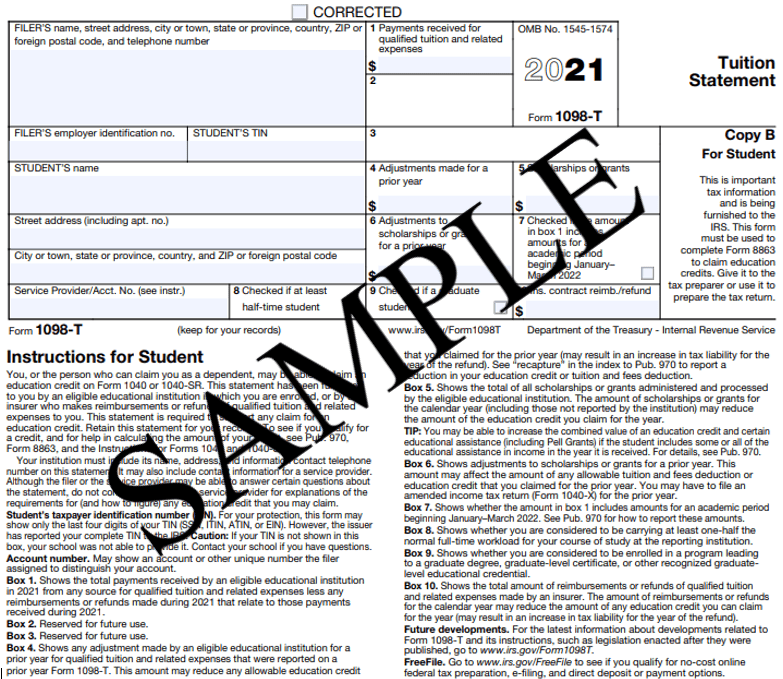
If you find an error, you should first contact the institution to request a corrected Form 1098-T (which will have the “Corrected” box checked at the top). If the school is unable to change the form, you are permitted to claim the amount you actually paid, provided you have the bank statements, cancelled checks, and receipts to prove it to the IRS in the event of an inquiry.
In conclusion, Form 1098-T is far more than a simple tuition statement; it is a vital document for navigating the complexities of education-related personal finance. By understanding how to decode its boxes, maximize the associated tax credits, and coordinate it with other financial tools like 529 plans, you can significantly reduce the effective cost of higher education and strengthen your overall financial position.
aViewFromTheCave is a participant in the Amazon Services LLC Associates Program, an affiliate advertising program designed to provide a means for sites to earn advertising fees by advertising and linking to Amazon.com. Amazon, the Amazon logo, AmazonSupply, and the AmazonSupply logo are trademarks of Amazon.com, Inc. or its affiliates. As an Amazon Associate we earn affiliate commissions from qualifying purchases.