
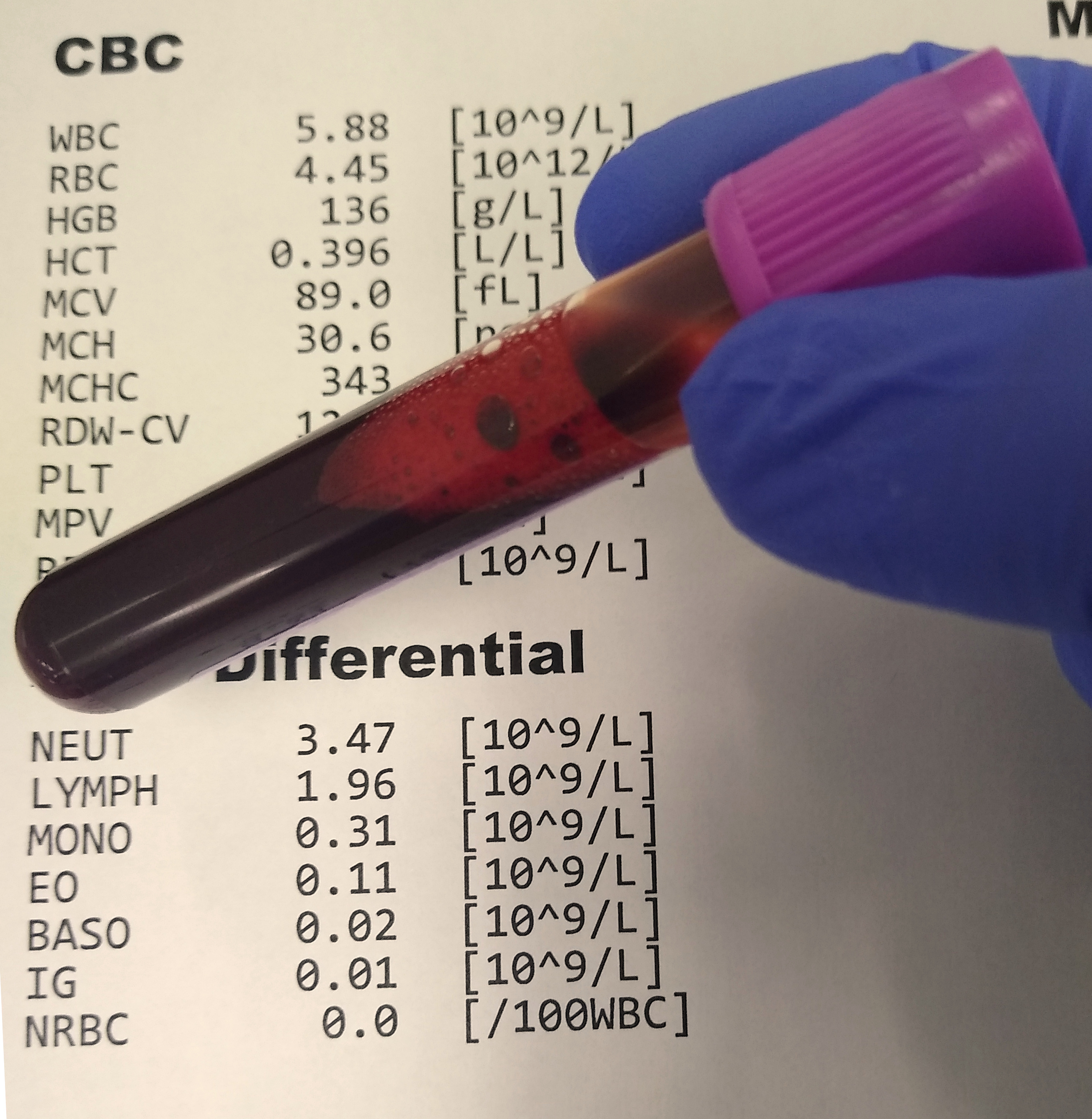
The landscape of modern healthcare is being fundamentally reshaped by the integration of advanced hardware and sophisticated software. At the heart of this transformation is the “CBC with Auto Diff”—a Complete Blood Count with an Automated Differential. While the term sounds clinical, it represents one of the most significant achievements in laboratory technology and automation. By transitioning from manual microscopic observation to high-speed digital analysis, the medical tech industry has unlocked a level of diagnostic precision and speed that was once unthinkable.
The Technological Framework of the CBC with Auto Diff
To understand the technological significance of a CBC with Auto Diff, one must first look at the legacy systems it replaced. For decades, a “differential” (the breakdown of white blood cell types) required a laboratory technician to manually smear blood on a glass slide, stain it, and count cells one by one under a microscope. This process was prone to human error, subjective interpretation, and massive bottlenecks in data throughput.
From Manual Counting to Automated Algorithms
The “Auto Diff” component refers to the automated classification of white blood cells (neutrophils, lymphocytes, monocytes, eosinophils, and basophils). Modern hematology analyzers utilize complex algorithms to categorize these cells based on their physical and chemical properties. This shift from manual to digital allows for the analysis of thousands of cells in seconds, rather than a hundred cells in several minutes. This throughput is powered by robust processing units that translate physical signals into digital data points.
The Role of Flow Cytometry and Impedance Technology
The hardware driving these tests is a marvel of engineering. Most modern analyzers utilize two primary technologies: Electrical Impedance (the Coulter Principle) and Flow Cytometry.
- Electrical Impedance: This tech measures the change in electrical resistance as a cell passes through a tiny aperture. Since different cells have different volumes, the software can map these pulses to specific cell types.
- Flow Cytometry/Laser Scatter: This is where high-tech optics come into play. A laser beam is directed at a stream of fluid containing the blood cells. As each cell passes through the beam, the light is scattered in various directions. Forward-scattered light indicates cell size, while side-scattered light provides information about the cell’s internal complexity or granularity. The sensor captures these light patterns and converts them into digital signals for the software to interpret.
Software Integration and Data Processing in Hematology Analyzers
The “Auto” in Auto Diff is only as good as the software governing the hardware. In the tech-heavy environment of a modern diagnostic lab, the analyzer acts as a sophisticated edge-computing device, processing massive amounts of raw data before sending it to a centralized system.
Real-Time Data Analytics in the Lab
When the laser hits a cell, the resulting data is plotted on a “scattergram”—a multi-dimensional digital map. The analyzer’s software uses sophisticated clustering algorithms to define boundaries (gates) around different cell populations. If a cell falls outside these digital gates, the software identifies it as an “anomaly” or a “flag.” This real-time analytics capability allows the system to differentiate between a healthy sample and one that requires human intervention, such as the presence of immature or malignant cells.
Middleware and Laboratory Information Systems (LIS)
The CBC with Auto Diff does not exist in a vacuum. It is part of a larger ecosystem of Laboratory Information Systems (LIS) and middleware. Middleware acts as the “brain” between the analyzer hardware and the medical record software. It allows for “autoverification”—a process where the software automatically validates and releases results that meet specific, pre-programmed tech parameters. This reduces the cognitive load on lab professionals and ensures that data moves from the machine to the doctor’s screen with minimal latency.
The AI Revolution: Enhancing Automated Differentials

The most recent leap in CBC technology involves the integration of Artificial Intelligence (AI) and Machine Learning (ML). While traditional Auto Diff relies on pre-set thresholds, AI-driven systems are capable of learning from vast datasets to recognize subtle morphological changes that traditional algorithms might miss.
Machine Learning in Morphological Recognition
Newer generations of hematology analyzers are being equipped with digital imaging modules. These modules take high-resolution photos of cells and use neural networks to classify them. By training on millions of validated images, these AI tools can identify rare cell types with a high degree of accuracy. This technology, often referred to as “Digital Morphology,” bridges the gap between the speed of automation and the descriptive detail of manual microscopy.
Reducing Human Error through Pattern Recognition
AI excels at finding patterns in “noisy” data. In a CBC with Auto Diff, interference from things like platelet clumps or cold agglutinins can sometimes confuse traditional sensors. Advanced software now uses pattern recognition to identify these interferences and digitally subtract them from the count, or at the very least, provide a high-confidence “flag” that explains the technical nature of the interference. This reduces the number of “false positives” that lead to unnecessary manual reviews, thereby streamlining the entire diagnostic pipeline.
The Impact of Automation on Clinical Efficiency and Scalability
In the world of tech, scalability is the ultimate goal. The transition to CBC with Auto Diff has allowed diagnostic labs to scale their operations to handle the growing demands of modern populations.
High-Throughput Processing and Speed
In a large-scale diagnostic facility, time is the most valuable resource. Automated analyzers can process upwards of 100 to 150 samples per hour. This high-throughput capability is a direct result of the “Auto Diff” tech, which eliminates the need for manual intervention in approximately 80-90% of cases. For clinicians, this means “STAT” (urgent) results can be delivered in under ten minutes, a feat that would be impossible in a manual environment.
Remote Diagnostics and Tele-Hematology
The digitization of blood analysis has also paved the way for remote diagnostics. Because the CBC with Auto Diff generates digital scattergrams and, in some cases, digital images, this data can be transmitted across the globe instantly. A technician in a rural clinic can run an automated test, and if the software flags an abnormality, a specialist in a major metropolitan hospital can review the digital data or images via a cloud-based platform. This “tele-hematology” is a direct byproduct of the shift toward automated, data-driven diagnostic tools.
Future Frontiers in Automated Blood Analysis
As we look toward the future of HealthTech, the CBC with Auto Diff is poised to become even more integrated and intelligent. We are moving toward a “Lab-on-a-Chip” era where the complex fluidics and laser systems of a room-sized analyzer are shrunk down to the size of a handheld device.
Point-of-Care Testing (POCT)
The goal of many tech startups is to bring CBC with Auto Diff to the point of care—such as a doctor’s office or even a patient’s home. This requires extreme miniaturization of the sensors and the development of “lightweight” algorithms that can run on mobile processors without sacrificing accuracy. This shift would represent the ultimate democratization of diagnostic technology.

Predictive Health via Big Data
As billions of CBC with Auto Diff results are stored in secure, anonymized clouds, we are entering the era of predictive health. By applying Big Data analytics to routine blood work, software may soon be able to detect “micro-trends” in an individual’s blood profile over several years. This could allow the tech to flag the very early stages of chronic illness or inflammatory conditions long before a human doctor—or even a traditional “flag” on a lab report—would notice.
In conclusion, the CBC with Auto Diff is far more than a routine medical test; it is a sophisticated intersection of fluid dynamics, laser optics, and advanced data science. By automating the delicate task of cellular differentiation, technology has not only increased the efficiency of healthcare systems but has also set the stage for a future where diagnostic data is more accessible, accurate, and predictive than ever before. As AI and sensor tech continue to evolve, the “Auto Diff” will remain a cornerstone of the digital revolution in medicine.
aViewFromTheCave is a participant in the Amazon Services LLC Associates Program, an affiliate advertising program designed to provide a means for sites to earn advertising fees by advertising and linking to Amazon.com. Amazon, the Amazon logo, AmazonSupply, and the AmazonSupply logo are trademarks of Amazon.com, Inc. or its affiliates. As an Amazon Associate we earn affiliate commissions from qualifying purchases.