
In the modern digital landscape, the volume of data generated and stored is staggering. From the vast databases of global search engines to the simple contact list on a smartphone, the ability to retrieve specific information quickly is not just a luxury—it is a fundamental requirement of software engineering. At the heart of this efficiency lies one of the most elegant and essential algorithms in computer science: binary searching.
Binary search is more than just a programming technique; it is a mathematical strategy that exemplifies the “divide and conquer” paradigm. While a simple linear scan might suffice for a list of ten items, it becomes catastrophically slow when dealing with millions or billions of records. Binary search solves this scalability problem by drastically reducing the number of comparisons required to find a target value.
The Mechanics of Binary Search: How It Works
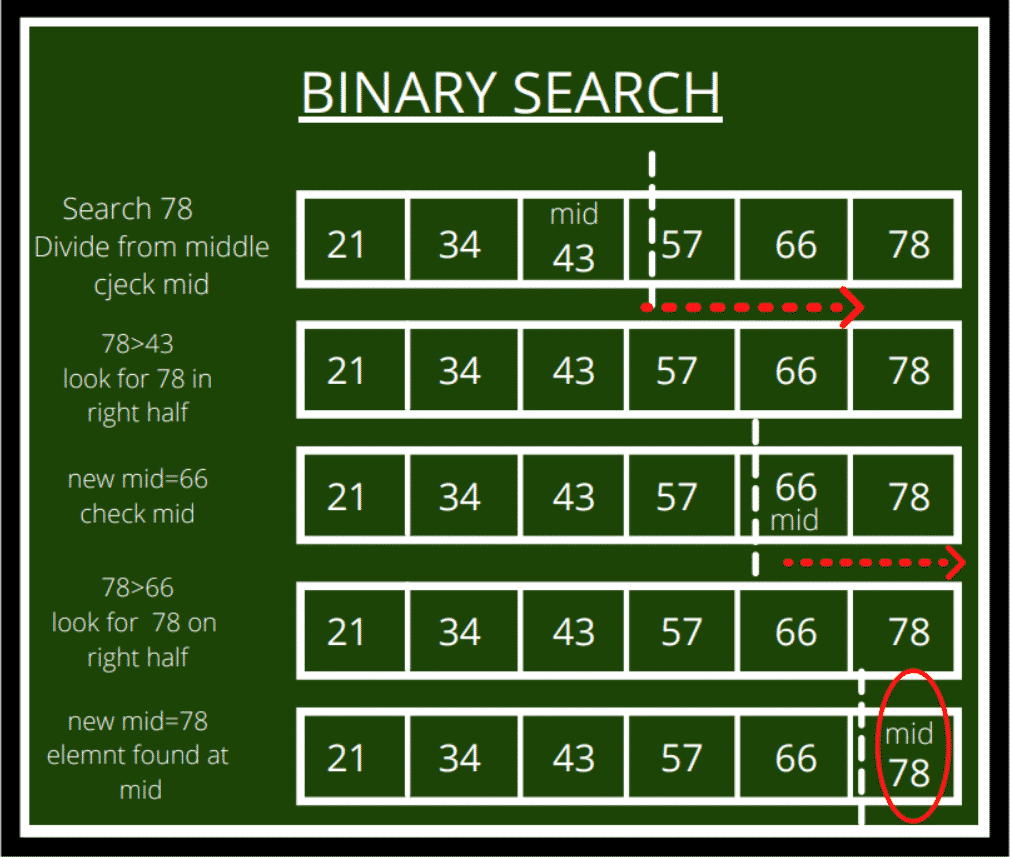
To understand binary searching, one must first grasp the logic of elimination. Unlike a linear search, which checks every element sequentially from the beginning to the end, binary search works by repeatedly halving the search space.
The Divide and Conquer Philosophy
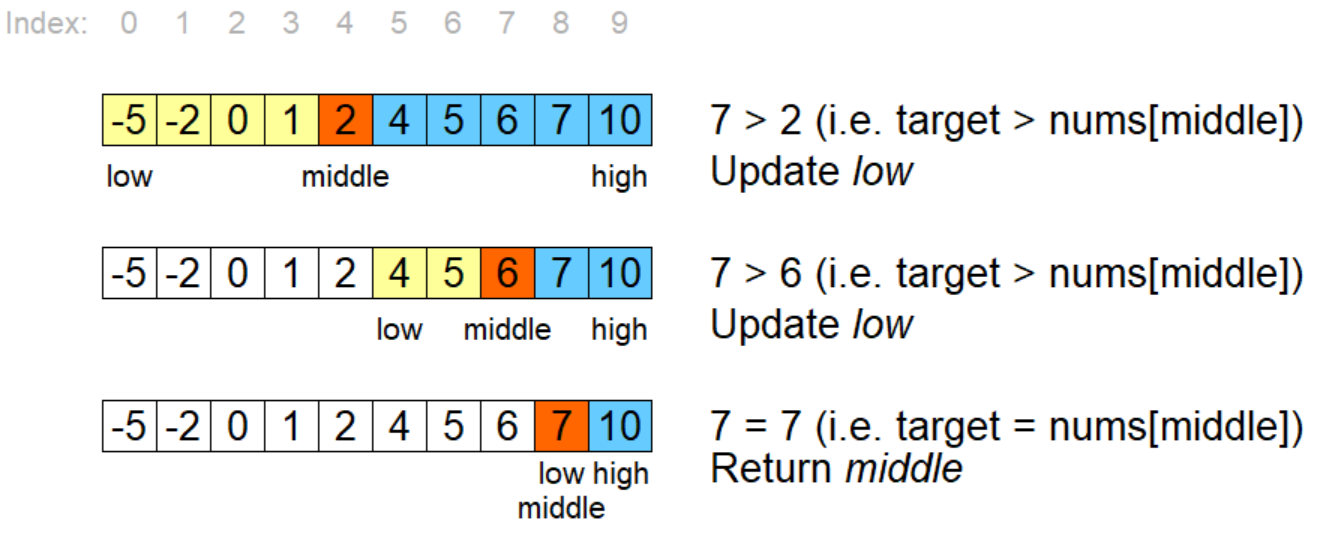
The core principle of binary searching is “divide and conquer.” The algorithm begins by looking at the middle element of a collection. If that element matches the target value, the search is complete. If the target is smaller than the middle element, the algorithm discards the entire upper half of the list and repeats the process on the lower half. Conversely, if the target is larger, the lower half is discarded. By cutting the remaining data in half with every single step, the algorithm narrows down the possibilities at an exponential rate.
Pre-requisites: Why Sorting Matters
The most critical requirement for a binary search is that the data must be sorted. Whether the data is numerical, alphabetical, or organized by timestamps, the elements must follow a predictable order. Without a sorted array, the algorithm cannot make an informed decision about which half of the data to discard. This is why sorting algorithms and binary searching are often taught together; the efficiency of the search is entirely dependent on the structural integrity of the data provided.
A Step-by-Step Walkthrough
Imagine searching for the number 72 in a sorted list of 100 numbers.
- The algorithm first checks the 50th element. If the 50th element is 40, the algorithm knows that 72 must be in the upper half.
- It then checks the midpoint between 51 and 100 (which is 75). If the 75th element is 80, it knows 72 must be between 51 and 74.
- It continues this process—halving the range—until it either finds the number 72 or determines that the number is not present in the list. This process typically takes no more than seven steps for 100 items.
Computational Complexity and Efficiency
In the world of technology, performance is measured using Big O notation, a mathematical representation of how an algorithm’s execution time or space requirements grow as the input size increases. Binary search is the gold standard for search efficiency because of its logarithmic time complexity.
Big O Notation: O(log n) vs. O(n)
A linear search has a time complexity of O(n), meaning that if the number of elements doubles, the time taken to search doubles as well. In contrast, binary search operates at O(log n). Logarithmic growth is incredibly slow, which, in the context of search speed, is a massive advantage. For example, in a list of 1,024 elements, a linear search might take 1,024 operations in the worst case. A binary search will take at most 10 operations ($2^{10} = 1024$).
Real-World Performance Comparisons
To put the power of O(log n) into perspective, consider a database containing 1 billion records.
- A Linear Search would require up to 1 billion comparisons. On a standard processor, this could take seconds or even minutes depending on the complexity of the data.
- A Binary Search would require a maximum of only 30 comparisons. The difference between 1,000,000,000 and 30 is the difference between a system that feels broken and a system that feels instantaneous. This efficiency is why binary search is the backbone of high-performance computing.

Space Complexity Considerations
Beyond time, software architects must consider memory usage. The iterative version of binary search is highly space-efficient, operating with a space complexity of O(1). This means it requires a constant amount of memory regardless of how large the dataset is. While recursive implementations of binary search may use O(log n) space due to the call stack, modern compilers often optimize these through tail-call optimization, ensuring that binary search remains one of the leanest algorithms in a developer’s toolkit.
Practical Implementation in Modern Programming
Implementing a binary search is a rite of passage for software developers. While the logic seems simple, the implementation requires precision to avoid common bugs that have historically plagued even experienced engineers.
Iterative vs. Recursive Approaches
Developers generally choose between two implementation styles. The iterative approach uses a loop (while or for) to adjust the low and high bounds of the search range. It is generally preferred in systems where memory overhead is a concern. The recursive approach involves a function that calls itself with updated bounds. Recursion is often considered more “elegant” and easier to read, though it carries a slight overhead in languages that do not optimize recursive calls efficiently.
Standard Libraries and Built-in Functions
In professional software development, engineers rarely write binary search from scratch for standard tasks. Most modern programming languages provide highly optimized versions within their standard libraries.
- In Python, the
bisectmodule provides support for maintaining a list in sorted order without having to sort the list after every insertion. - In C++, the Standard Template Library (STL) offers
std::binary_search,std::lower_bound, andstd::upper_bound. - In Java,
java.util.Arrays.binarySearchis the go-to method for primitives and objects.
Utilizing these built-in tools is a best practice, as they are tested against edge cases and optimized for the specific architecture of the language.
Common Pitfalls: Handling Overflows and Middle Indices
A famous bug in binary search implementation involved the calculation of the middle index. For years, many developers used the formula mid = (low + high) / 2. However, in languages with fixed-size integers (like Java or C++), if low and high are very large, their sum can exceed the maximum value of an integer, leading to an “overflow” and causing the program to crash or behave erratically. The professional fix is to use mid = low + (high - low) / 2, a small but vital nuance that distinguishes a robust implementation from a fragile one.
Applications in the Tech Ecosystem
The utility of binary searching extends far beyond looking up a name in a list. It is a foundational building block for many of the technologies we interact with daily.
Database Indexing and Search Engines
When you query a SQL database or search for a product on an e-commerce platform, you aren’t waiting for the server to scan every row of data. Databases use “Indexes” to speed up retrieval. Many of these indexes are structured as B-Trees or similar balanced tree structures. These structures are essentially multi-way extensions of the binary search principle, allowing the system to discard massive swaths of irrelevant data in a single operation.
Debugging with Git Bisect
One of the most practical applications of binary search for software engineers is in version control. If a bug is discovered in a large codebase, but it is unknown which specific commit introduced it, developers use a tool called git bisect. This tool performs a binary search through the commit history. By checking a commit in the middle of the history and marking it as “good” or “bad,” the developer can find the exact source of a bug in a history of thousands of commits in just a dozen steps.
Version Control and Numerical Analysis
Binary search is also used in numerical analysis to find the roots of equations (often called the Bisection Method). If a function changes sign over an interval, binary search can be used to pinpoint the exact value where the function equals zero. Furthermore, in computer graphics and game development, binary searching is used in collision detection and ray tracing to quickly determine where an object or a light ray intersects with a complex environment.
Conclusion
Binary searching is a testament to the power of algorithmic thinking. It transforms the impossible task of searching through “Big Data” into a trivial series of comparisons. By understanding the mechanics of the “divide and conquer” strategy, the mathematical elegance of logarithmic time complexity, and the practical nuances of implementation, tech professionals can build systems that are not only functional but exceptionally fast. Whether it’s powering a global search engine or helping a developer find a bug in a sea of code, binary search remains one of the most vital tools in the evolution of technology.
aViewFromTheCave is a participant in the Amazon Services LLC Associates Program, an affiliate advertising program designed to provide a means for sites to earn advertising fees by advertising and linking to Amazon.com. Amazon, the Amazon logo, AmazonSupply, and the AmazonSupply logo are trademarks of Amazon.com, Inc. or its affiliates. As an Amazon Associate we earn affiliate commissions from qualifying purchases.