
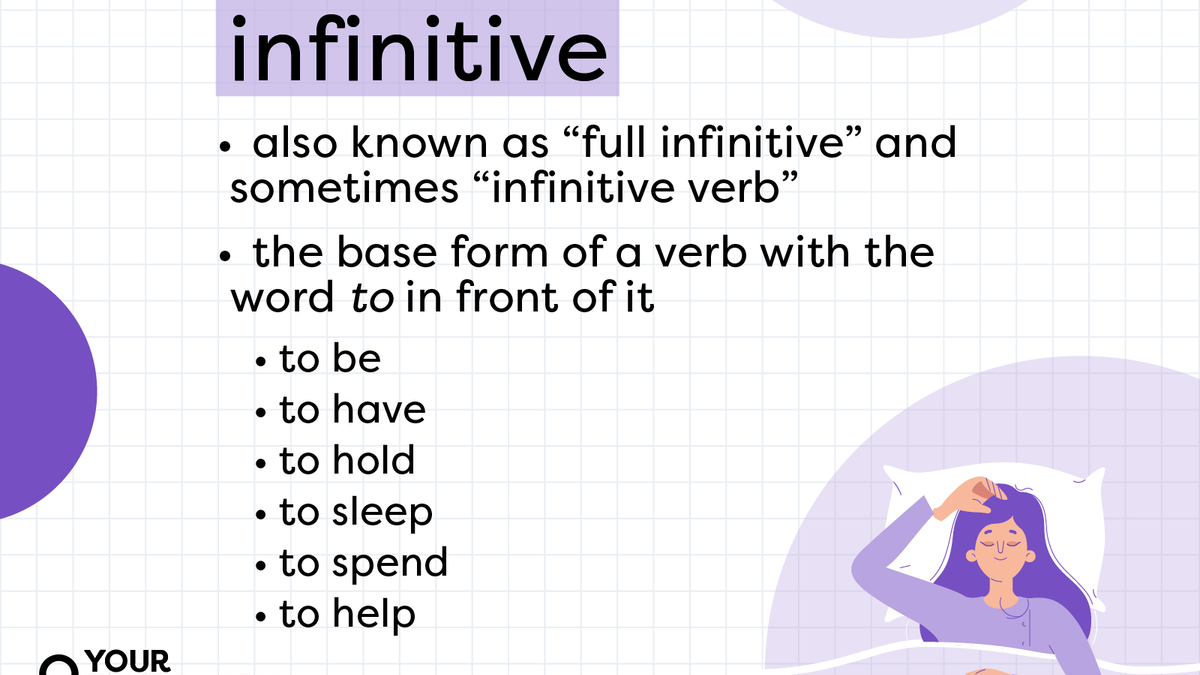
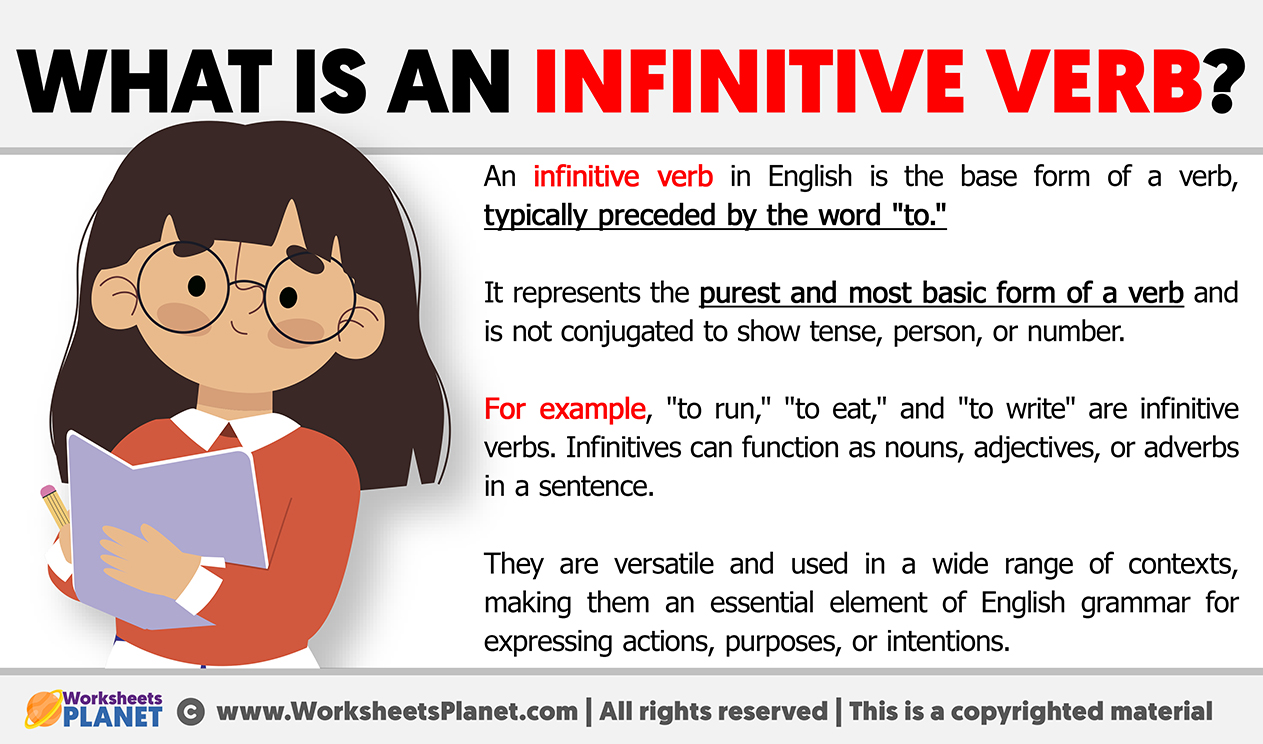
At first glance, the question “What is an infinitive?” belongs in a third-grade grammar classroom. We are taught that an infinitive is the most basic form of a verb, usually preceded by the word “to”—as in to eat, to sleep, or to code. However, in the rapidly evolving landscape of technology, particularly within Natural Language Processing (NLP) and Artificial Intelligence (AI), the infinitive represents something far more complex. It is the foundational unit of intent, the “ground truth” of a verb that allows machines to categorize human action, understand goals, and process vast amounts of unstructured data.
In the realm of software engineering and computational linguistics, the infinitive is not just a part of speech; it is a critical component of “lemmatization” and “tokenization.” As we move deeper into the era of Large Language Models (LLMs) like GPT-4 and Claude, understanding how technology interprets the infinitive is essential for anyone involved in digital strategy, software development, or AI prompt engineering.
The Architecture of Language: From Grammar to Computational Syntax
In traditional linguistics, the infinitive is known as a “non-finite” verb. This means it is not bound by a subject or a specific tense. It exists in a state of pure potentiality. For a software developer or a data scientist, this lack of specific “state” makes the infinitive the perfect anchor for data normalization.
The “To + Verb” Structure in Logical Commands
In programming, we often deal with functions and methods. While a programming language like Python or C++ doesn’t use “to” as a prefix for its commands, the naming conventions often mirror the infinitive form. When a developer writes a function named calculate_total(), they are essentially invoking the infinitive to calculate.
This logic is mirrored in the way modern AI interprets user prompts. When a user asks an AI “to summarize this document,” the machine recognizes the infinitive to summarize as the primary directive. In technical terms, the AI identifies the infinitive as the “head” of the verb phrase, which dictates the operational logic the software must follow.
Infinitive vs. Imperative in Programming Syntax
There is a subtle but vital difference between an infinitive and an imperative in technology. An imperative is a direct command (Run the script), while an infinitive often describes the purpose of an action or the action itself as a concept (The goal is to run the script).
In the backend of search engine algorithms, the distinction is crucial. If a user searches for “to buy a laptop,” the algorithm identifies the infinitive to buy as a high-intent keyword. This signals a commercial objective, triggering a different set of results (e-commerce links) compared to a search for “buying a laptop” (which might return reviews or articles). Understanding the weight of the infinitive allows tech companies to fine-tune their search intent models.
Infinitives in Natural Language Processing (NLP)
To understand how a computer reads “to walk,” “walking,” and “walked” as the same core concept, we must look at the technology of Natural Language Processing. This is where the grammatical infinitive meets the technical “lemma.”
The Role of Lemmatization: Reducing to the Root
One of the most significant challenges in tech is “noise reduction” in data. If an AI is analyzing a million customer reviews, it doesn’t want to treat “works,” “working,” and “worked” as three entirely different concepts. Instead, it uses a process called lemmatization.
Lemmatization is the algorithmic process of reducing a word to its “lemma,” which is almost always the infinitive form (minus the “to”). By reducing words to their infinitive roots, the software can accurately map sentiment and frequency. For example:
- Input: “The software is working perfectly.”
- Process: The NLP engine identifies “working” and maps it back to the infinitive work.
- Output: The system records a positive sentiment associated with the core function of the product.
Contextual Understanding in Large Language Models (LLMs)
While early NLP relied on simple root-matching, modern LLMs use “transformers” to understand the infinitive in context. In the sentence “I want to record a record,” the machine must distinguish between the infinitive to record (a verb/action) and the noun record (an object).

This is achieved through “embeddings,” where words are converted into high-dimensional vectors. The infinitive form serves as a central point in this vector space. Tech leaders and AI researchers focus on these forms because they represent the “purest” version of a concept, allowing the AI to branch out into more complex grammatical variations while maintaining the original logic of the user’s intent.
Bridging the Gap: How Tech Interprets Intent through Verb Forms
As we transition from graphical user interfaces (GUIs) to voice and chat-based interfaces, the “infinitive” has become the primary bridge between human desire and machine execution. Whether you are talking to Alexa, Siri, or a custom-built enterprise AI, your “infinitive” usage defines your user experience.
Prompt Engineering and the Use of Infinitives
The burgeoning field of prompt engineering relies heavily on the linguistic precision of the infinitive. Professional “prompt crafters” have discovered that using the infinitive form often yields more stable and predictable results from AI.
When you tell an AI “to analyze” versus “analyzing,” you are providing a clearer boundary for the task. The infinitive to analyze sets a specific objective. This is because the training data for these models often links infinitives to tutorials, documentation, and task-oriented instructions. By speaking to the AI in infinitives, you are essentially speaking the language of its training manual.
Semantic Search and Goal-Oriented Queries
Modern search engines like Google have moved away from simple keyword matching toward “semantic search.” This means the engine tries to understand the why behind the query. Infinitives are the keys to the “why.”
If you type “to learn Python” into a search bar, the engine recognizes a “learning intent.” The infinitive to learn acts as a metadata tag for your query. Tech companies invest billions into “syntactic parsing”—a technology that breaks down sentences to find these infinitives—to ensure that when you express a desire to act, the software provides the specific tool to fulfill that action.
The Future of Linguistics in Software Development
As we look toward the future of technology, the intersection of grammar and code will only grow tighter. We are entering an era of “Natural Language Programming,” where the goal is to write software simply by describing it in English.
Syntactic Parsing and Human-Machine Interface
In the near future, the “compiler”—the tool that turns human-readable code into machine-executable binary—might be replaced or augmented by an LLM that understands linguistic nuances. In this scenario, the “infinitive” becomes a functional operator.
Imagine a world where you tell a computer: “I need you to build a database and to sync it with my cloud.” The infinitives to build and to sync will be parsed as primary functions. The tech stack of tomorrow is being built on the grammatical structures of today. By mastering how we define and use the infinitive, developers can create more intuitive AI that feels less like a tool and more like a collaborator.
Conclusion: Why the Infinitive Matters to Tech Professionals
What is an infinitive? In a classroom, it’s a verb. In the tech industry, it is a primitive. It is the most basic, irreducible unit of action that can be programmed, indexed, and executed.
For the tech enthusiast, the software engineer, or the digital strategist, the infinitive is the key to understanding how machines bridge the gap between human language and digital logic. As AI continues to democratize access to coding and data analysis, the “to” in “to do” becomes the spark that sets a billion lines of code into motion. Understanding this linguistic anchor isn’t just about grammar; it’s about mastering the interface through which we will interact with the digital world for decades to come.
By recognizing the power of the infinitive in lemmatization, prompt engineering, and semantic search, we gain a deeper insight into the “mind” of the machine. The next time you see a verb in its simplest form, remember that to the AI, that word is a command, a destination, and a fundamental building block of the digital age.
aViewFromTheCave is a participant in the Amazon Services LLC Associates Program, an affiliate advertising program designed to provide a means for sites to earn advertising fees by advertising and linking to Amazon.com. Amazon, the Amazon logo, AmazonSupply, and the AmazonSupply logo are trademarks of Amazon.com, Inc. or its affiliates. As an Amazon Associate we earn affiliate commissions from qualifying purchases.