
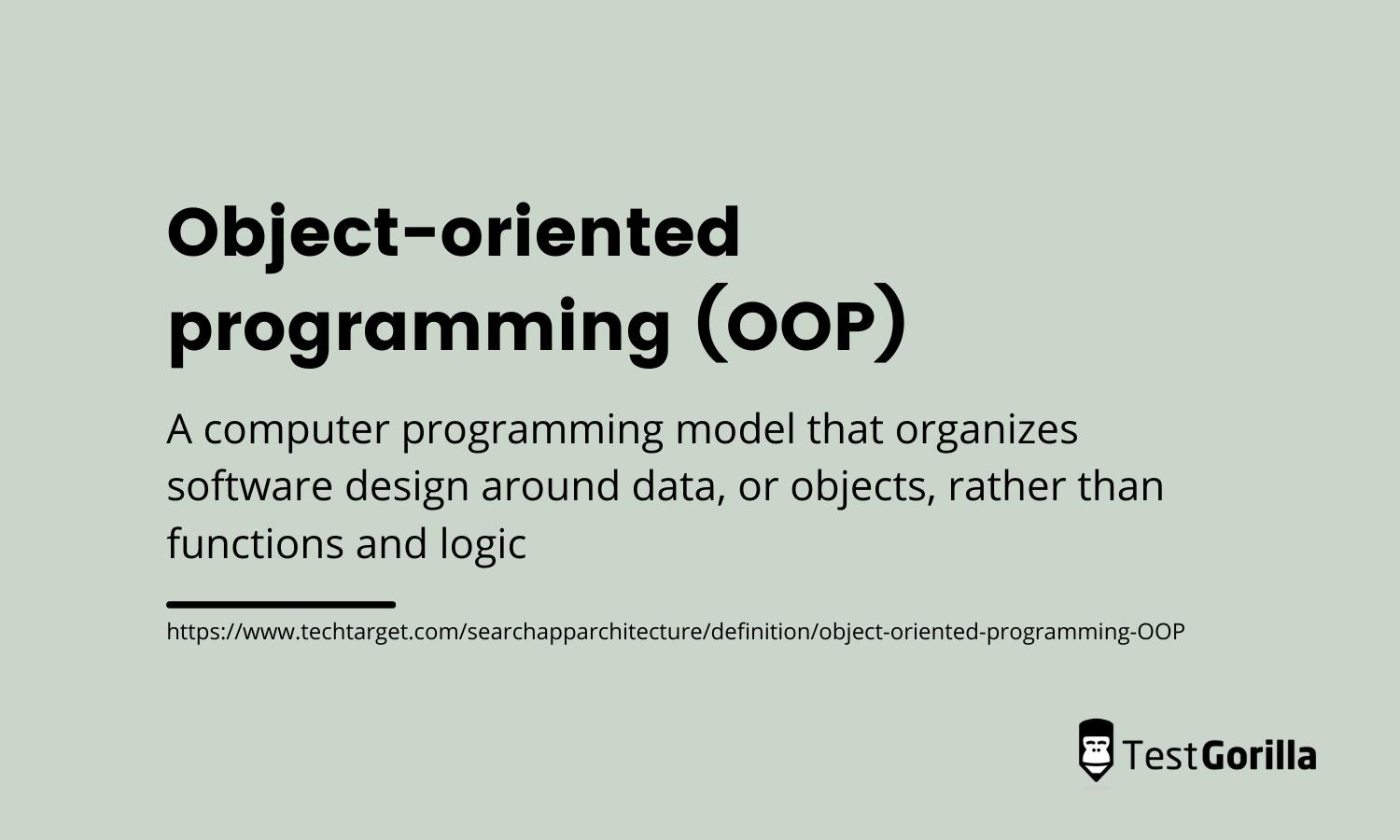
The digital landscape is built on code, and at the heart of much of modern software development lies a powerful and pervasive programming paradigm: Object-Oriented Programming, or OOP. While the acronym is ubiquitous in tech circles, its full meaning and implications can be elusive to those just starting out or those in adjacent fields. This article aims to demystify OOP, exploring its fundamental concepts, its benefits, and its crucial role in creating robust, scalable, and maintainable software.
OOP is not merely a technical jargon; it represents a shift in how we conceptualize and structure software. Instead of focusing on a sequence of instructions, OOP centers on the idea of “objects” that contain both data and behavior. This object-centric approach has revolutionized software design, enabling developers to build complex systems more efficiently and effectively.
The Core Pillars of Object-Oriented Programming
At its foundation, OOP is built upon a set of key principles that define how objects interact and how code is organized. Understanding these pillars is essential to grasping the essence of OOP.
Encapsulation: Bundling Data and Behavior
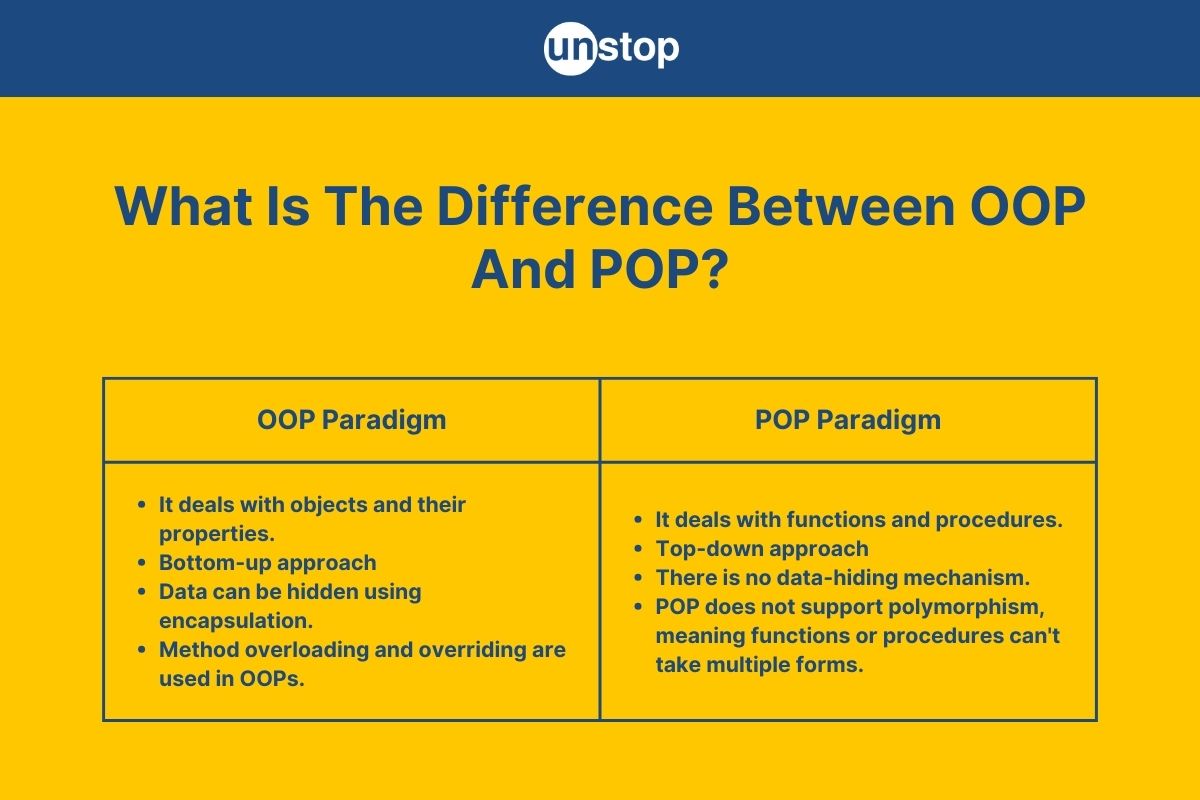
Encapsulation is arguably the most fundamental concept in OOP. It refers to the practice of bundling data (attributes or properties) and the methods (functions or behaviors) that operate on that data within a single unit, known as an object. Think of it like a capsule containing both the medicine and the instructions on how to take it.
Data Hiding and Abstraction: A critical aspect of encapsulation is data hiding. This means that the internal state of an object is protected and can only be accessed or modified through the object’s own methods. This principle, known as abstraction, allows us to interact with objects at a higher level without needing to know the intricate details of their internal workings. For instance, when you drive a car, you use the steering wheel, accelerator, and brakes without needing to understand the complex mechanics of the engine or transmission. The car object abstracts these complexities away.
Benefits of Encapsulation:
- Modularity: Encapsulation promotes modularity by creating self-contained units. This makes code easier to understand, manage, and debug.
- Maintainability: Changes to an object’s internal implementation can be made without affecting other parts of the program, as long as the public interface (how other objects interact with it) remains consistent. This significantly reduces the ripple effect of modifications.
- Reusability: Encapsulated objects can be easily reused in different parts of the same application or in entirely new projects, saving development time and effort.
Inheritance: Building Upon Existing Structures
Inheritance is a powerful mechanism that allows new classes (blueprints for objects) to inherit properties and behaviors from existing classes. This promotes code reusability and establishes a clear hierarchical relationship between classes. In OOP, a class that inherits from another is called a “subclass” or “derived class,” while the class it inherits from is known as the “superclass” or “base class.”
The “Is-A” Relationship: Inheritance models an “is-a” relationship. For example, a “Dog” class might inherit from an “Animal” class. A dog is an animal, and therefore it possesses all the general characteristics of an animal (like breathing, eating) while also having its own specific traits (like barking, wagging its tail).
Types of Inheritance: While the core concept is consistent, different programming languages implement inheritance in slightly varying ways.
- Single Inheritance: A subclass can inherit from only one superclass. This is common in languages like Java.
- Multiple Inheritance: A subclass can inherit from multiple superclasses. This offers greater flexibility but can sometimes lead to complexity, known as the “diamond problem,” which languages like Python handle through specific mechanisms.
Advantages of Inheritance:
- Code Reusability: Avoids redundant code by allowing common attributes and methods to be defined in a base class and inherited by multiple subclasses.
- Extensibility: New functionalities can be added to existing classes by creating subclasses without altering the original code.
- Polymorphism Support: Inheritance is a prerequisite for polymorphism, a concept we will explore later.
Polymorphism: Many Forms, One Interface
Polymorphism, derived from Greek words meaning “many forms,” is a cornerstone of OOP that allows objects of different classes to be treated as objects of a common superclass. This means that a single method call can behave differently depending on the actual type of the object it’s invoked on.
Method Overriding: A common way to achieve polymorphism is through method overriding. When a subclass provides a specific implementation of a method that is already defined in its superclass, it’s called overriding. For instance, an “Animal” class might have a “makeSound” method. A “Dog” subclass could override this method to bark, while a “Cat” subclass could override it to meow. When you call makeSound() on an “Animal” object, the specific sound produced depends on whether the object is actually a “Dog” or a “Cat.”
Method Overloading: Another form of polymorphism, often found in languages like Java and C++, is method overloading. This occurs when multiple methods in the same class share the same name but have different parameter lists (different types or numbers of arguments). The compiler determines which method to call based on the arguments provided.
The Power of Polymorphism:
- Flexibility and Extensibility: Polymorphism allows for highly flexible and extensible code. You can add new subclasses without modifying existing code that uses the common interface.
- Simplified Code: It reduces the need for long, complex conditional statements (e.g.,
if-else ifblocks) to determine object types and execute appropriate actions. Instead, you can simply call a method, and polymorphism handles the rest. - Easier Maintenance: When new object types are introduced, the code that interacts with them can remain largely unchanged, simplifying maintenance and updates.
Abstraction: Focusing on Essentials, Hiding Complexity
While abstraction is mentioned as part of encapsulation, it’s a concept so vital it warrants its own dedicated discussion. Abstraction in OOP is about simplifying complex systems by modeling them in terms of classes and objects, and then exposing only the essential features while hiding the internal implementation details.
Abstract Classes and Interfaces: Many OOP languages provide explicit constructs for abstraction, such as abstract classes and interfaces.
- Abstract Classes: These are classes that cannot be instantiated directly. They serve as base classes for other classes and can contain both abstract methods (methods without an implementation) and concrete methods (methods with an implementation).
- Interfaces: These are pure contracts that define a set of methods that a class must implement. They specify “what” a class should do, but not “how.” An interface can be implemented by multiple classes, ensuring they adhere to a common behavioral contract.

Benefits of Abstraction:
- Reduced Complexity: By hiding unnecessary details, abstraction makes it easier for developers to understand and work with complex systems.
- Focus on What Matters: Developers can focus on the essential functionalities of an object without getting bogged down in the minutiae of its implementation.
- Design Improvement: It encourages developers to think about the high-level design of their applications, leading to more organized and well-structured code.
Why is OOP So Important in Software Development?
The principles of OOP are not just theoretical constructs; they translate into tangible benefits that drive the efficiency, reliability, and scalability of software development projects.
Enhanced Code Reusability and Maintainability
One of the most significant advantages of OOP is its emphasis on code reusability. Inheritance allows developers to build upon existing code, eliminating the need to write the same logic multiple times. This not only speeds up development but also reduces the potential for errors. When code is reused, it’s also typically more thoroughly tested.
Moreover, the modular nature of OOP, facilitated by encapsulation and abstraction, makes code significantly easier to maintain. If a bug is found in a specific module, developers can isolate and fix it within that module without impacting other parts of the system. Similarly, adding new features or modifying existing ones is a more manageable task because changes are often confined to specific objects or classes. This leads to lower maintenance costs and a more agile development process.
Improved Scalability and Flexibility
As software systems grow in complexity, their ability to scale becomes paramount. OOP’s object-centric design naturally lends itself to scalability. By breaking down a large system into smaller, independent objects, developers can more easily add new functionalities or handle increased loads. If a particular object becomes a bottleneck, it can be optimized or replicated independently of the rest of the system.
Polymorphism plays a crucial role in this flexibility. Because code can interact with objects through a common interface, new types of objects can be introduced without requiring extensive modifications to existing code. This adaptability is essential in today’s rapidly evolving technological landscape, where software often needs to evolve to meet new demands.
Better Collaboration and Teamwork
OOP’s structured approach greatly benefits collaborative development. When teams work on a large project, clear definitions of objects, their responsibilities, and their interactions through well-defined interfaces make it easier for team members to understand each other’s code. Encapsulation ensures that one developer’s changes to an object’s internal workings are less likely to break another developer’s code, fostering a more harmonious and productive environment.
Well-designed OOP systems promote a clear division of labor. Different developers or teams can be assigned responsibility for specific classes or modules, confident that they can work on their components without disrupting others, as long as they adhere to the agreed-upon interfaces.
OOP in Action: Common Applications and Languages
The influence of OOP is pervasive across virtually all areas of software development. From desktop applications and web services to mobile apps and game development, OOP principles are fundamental.
Popular OOP Languages
Many of the most widely used programming languages today are object-oriented or support object-oriented paradigms. These include:
- Java: A class-based, object-oriented language known for its “write once, run anywhere” philosophy, widely used in enterprise applications, Android development, and web services.
- Python: A versatile, high-level language that supports multiple programming paradigms, including OOP. Its readability and extensive libraries make it popular for web development, data science, AI, and scripting.
- C++: An extension of the C language, C++ is a powerful, high-performance language that is heavily used in game development, operating systems, and performance-critical applications.
- C#: Developed by Microsoft, C# is a modern, object-oriented language primarily used for developing Windows applications, games with the Unity engine, and web services.
- JavaScript: While initially known for its procedural nature, modern JavaScript extensively uses OOP concepts, particularly with the introduction of classes and its prototype-based inheritance model. It’s the cornerstone of front-end web development and increasingly used on the back-end with Node.js.
- Swift: Apple’s modern programming language for iOS, macOS, watchOS, and tvOS development, Swift is a powerful, object-oriented language.
Real-World Examples
- User Interfaces (UIs): When you interact with a graphical user interface, each element – a button, a text box, a window – can be represented as an object. These objects have properties (like color, size, text content) and behaviors (like being clicked, being displayed, being hidden).
- Game Development: In games, characters, enemies, items, and even the game world itself are often modeled as objects. A “Player” object might have attributes like health, score, and inventory, and methods like “move,” “attack,” and “useItem.”
- Web Applications: The components of a web application, such as user profiles, shopping carts, and database records, are frequently represented as objects. This allows for structured data management and interaction.
- Operating Systems: Many components of modern operating systems, from file managers to process schedulers, are built using OOP principles to manage complexity and resource allocation.
Conclusion: The Enduring Relevance of OOP
Object-Oriented Programming is more than just a set of technical concepts; it’s a philosophy of software design that has profoundly shaped the way we build digital systems. By focusing on modularity, reusability, and the logical organization of code into objects, OOP empowers developers to tackle increasingly complex challenges with greater efficiency and confidence.
While other programming paradigms exist, and modern software development often employs a blend of approaches, the fundamental principles of encapsulation, inheritance, polymorphism, and abstraction remain invaluable. For anyone aspiring to a career in software development, or seeking to understand the inner workings of the technologies that power our world, a firm grasp of what OOP means is not just beneficial – it’s essential. It provides a robust framework for creating software that is not only functional but also maintainable, scalable, and adaptable to the ever-evolving demands of the digital age.
aViewFromTheCave is a participant in the Amazon Services LLC Associates Program, an affiliate advertising program designed to provide a means for sites to earn advertising fees by advertising and linking to Amazon.com. Amazon, the Amazon logo, AmazonSupply, and the AmazonSupply logo are trademarks of Amazon.com, Inc. or its affiliates. As an Amazon Associate we earn affiliate commissions from qualifying purchases.