
In the world of personal and corporate finance, the ability to calculate and interpret percentages is more than just a mathematical skill—it is a fundamental pillar of financial literacy. Whether you are calculating the interest on a high-yield savings account, determining the return on a stock market investment, or analyzing the growth of a business venture, percentages provide a universal language for measuring performance and risk.
Understanding how to find a percentage allows an individual to move beyond raw numbers and see the “big picture.” A $1,000 gain is impressive if the initial investment was $2,000 (a 50% gain), but significantly less impactful if the initial investment was $1,000,000 (a 0.1% gain). This guide explores the diverse applications of percentage calculations within the “Money” niche, providing you with the tools to manage your wealth with precision.
1. The Core Mechanics of Percentage in Personal Finance
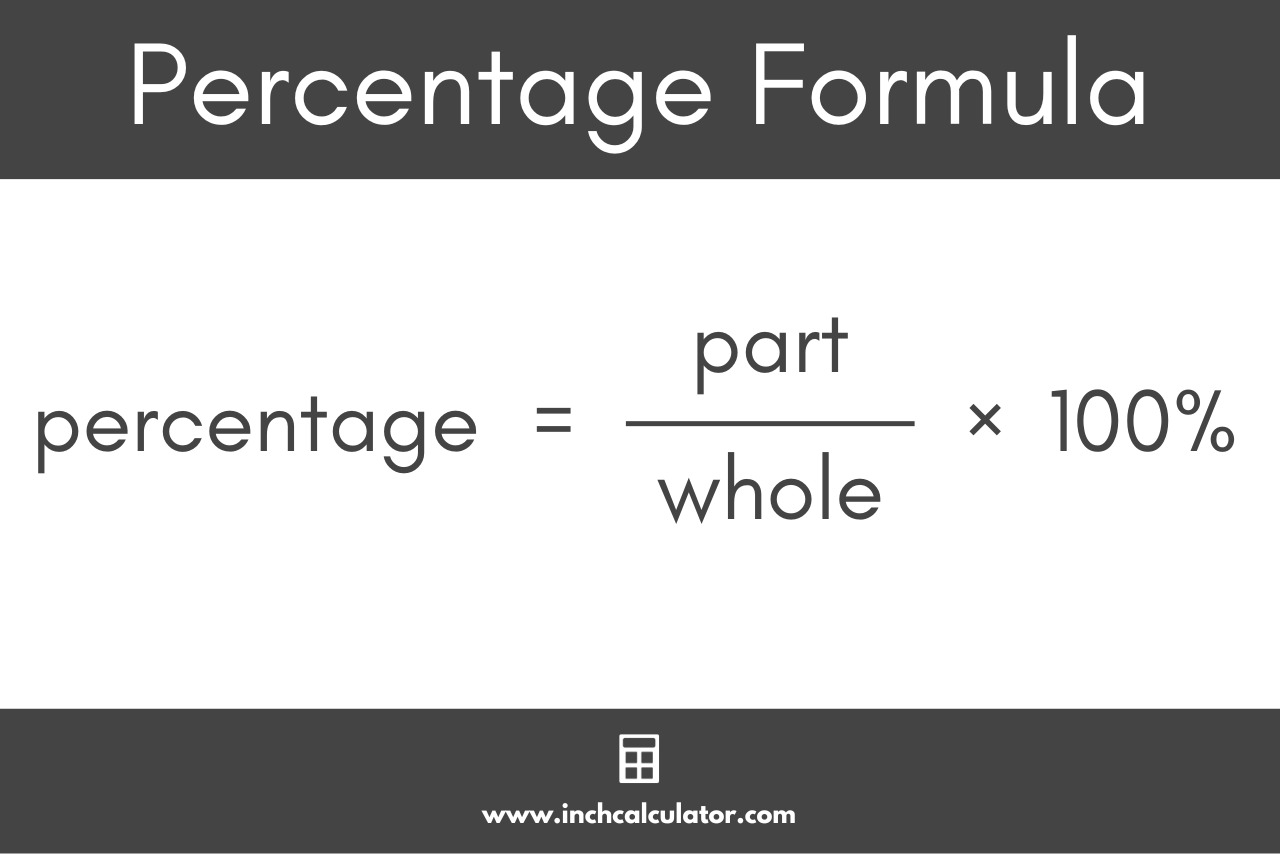
Before diving into complex investment strategies, one must master the basic formula for finding a percentage within a financial context. At its simplest, a percentage represents a part of a whole, expressed as a fraction of 100. In finance, this “whole” is often your principal investment, your total income, or the total cost of a loan.
Understanding the Basic Percentage Formula
To find the percentage of a specific financial value, the standard formula is:
(Part / Whole) × 100 = Percentage
For example, if you decide to set aside $500 from a monthly paycheck of $4,000 for your retirement fund, you find the percentage by dividing 500 by 4,000 (0.125) and multiplying by 100 to get 12.5%. This simple calculation is the starting point for all budgeting and wealth-building activities.
The Power of Percentage Increases and Decreases
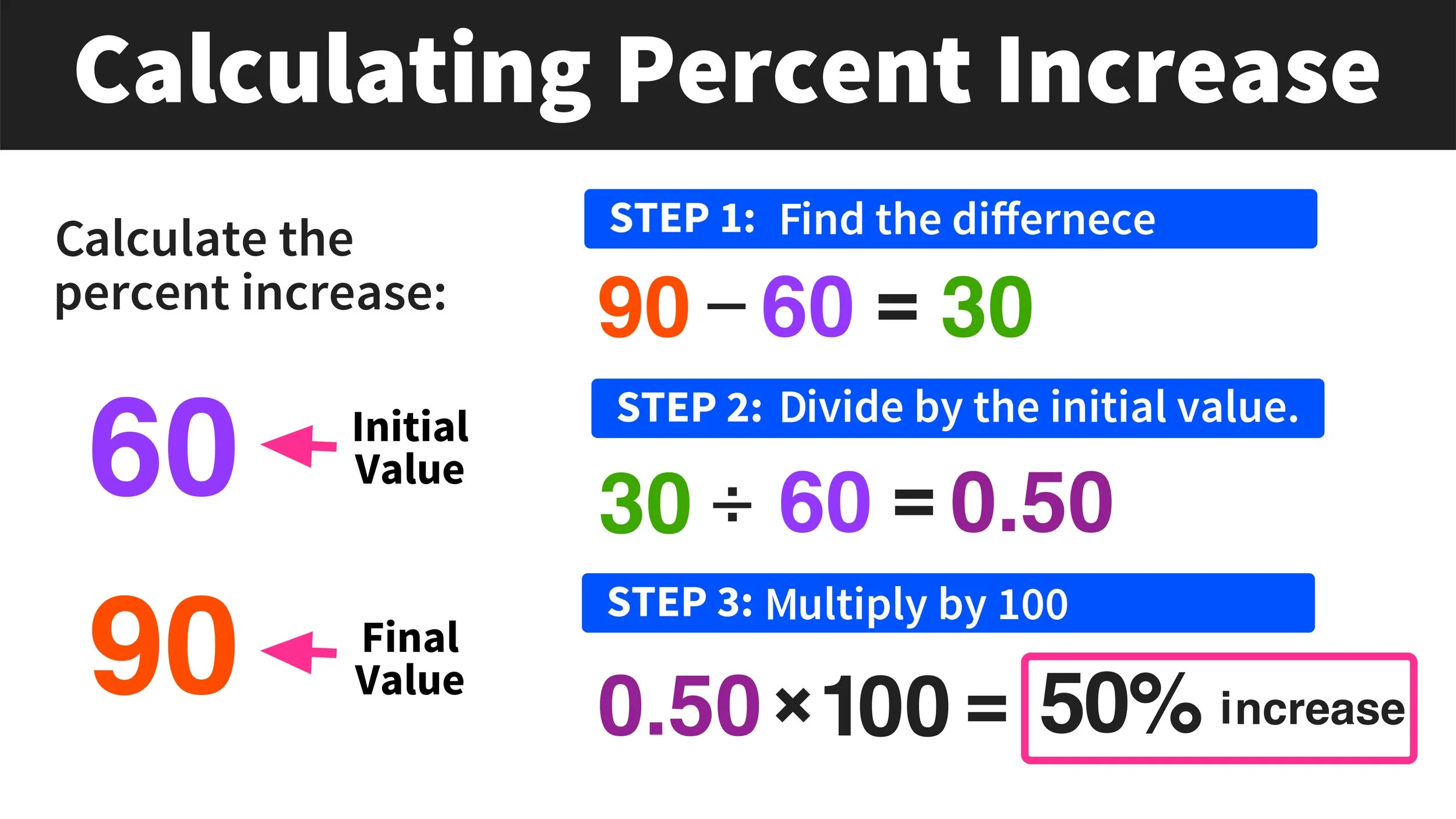
In the financial markets, values are rarely static. Understanding how to find the percentage increase or decrease is vital for tracking asset growth. The formula for percentage change is:
[(New Value – Old Value) / Old Value] × 100
If a share of stock rises from $150 to $180, the $30 gain represents a 20% increase. Conversely, if it drops to $120, that $30 loss represents a 20% decrease. Mastering these shifts helps investors remove emotion from the equation and focus on objective data.
Calculating Compound Interest Percentages
Unlike simple interest, which is calculated only on the principal, compound interest is calculated on the principal plus the accumulated interest of previous periods. Understanding the percentage-based growth of your wealth over time requires familiarity with the compound interest formula:
A = P (1 + r/n)^(nt)
Where r is the annual interest rate (as a decimal). Even a small percentage difference in an interest rate—such as the difference between a 0.5% standard savings account and a 4.5% high-yield account—can result in tens of thousands of dollars in difference over a 20-year period.
2. Strategic Budgeting: Using Percentages to Optimize Cash Flow
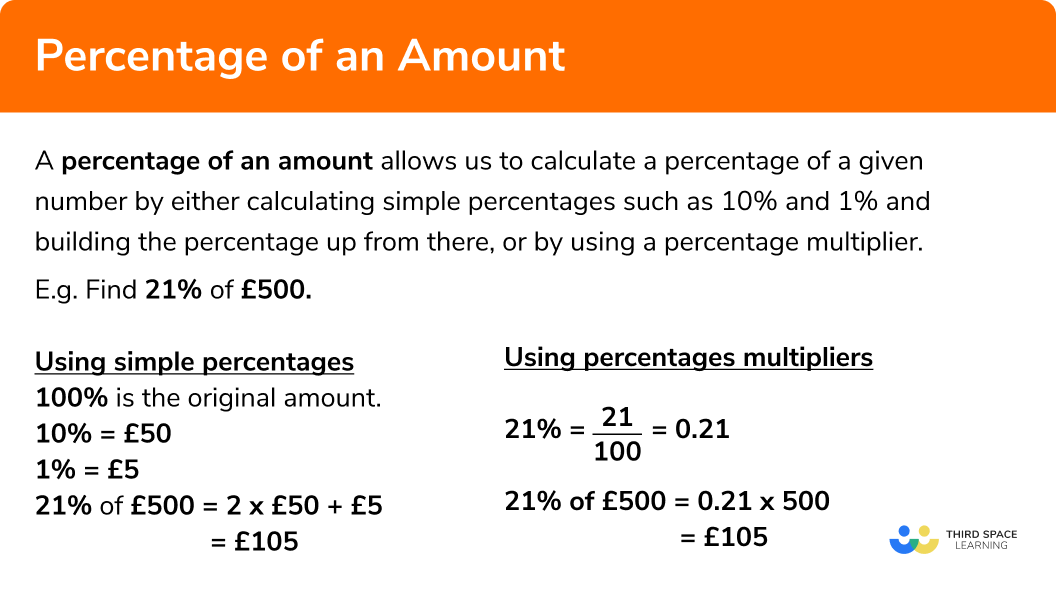
Professional financial planners rarely look at dollar amounts in isolation; instead, they look at the percentage of income allocated to specific categories. This allows for a scalable financial plan that works whether you earn $50,000 or $500,000 a year.
The 50/30/20 Rule of Thumb
One of the most effective ways to find the “right” percentage for your spending is the 50/30/20 rule. This framework suggests allocating:
- 50% to Needs: Housing, groceries, utilities, and insurance.
- 30% to Wants: Dining out, travel, and hobbies.
- 20% to Financial Goals: Debt repayment, emergency funds, and retirement investments.
By converting your spending into percentages, you can quickly identify where your “money leaks” are occurring. If your “Needs” are taking up 70% of your income, you know you are “house poor” or over-leveraged on a vehicle, regardless of the total dollar amount spent.
Finding Your Savings Rate
Your savings rate is perhaps the single most important percentage in your financial life. To find it, divide your total monthly savings by your take-home pay. A 15–20% savings rate is generally considered the benchmark for a comfortable retirement. By focusing on increasing this percentage rather than just increasing your salary, you ensure that you are avoiding “lifestyle creep”—the tendency for spending to rise alongside income.
Debt-to-Income (DTI) Ratio
Lenders use percentages to determine your creditworthiness. The Debt-to-Income ratio is found by dividing your total monthly debt payments by your gross monthly income. Most mortgage lenders look for a DTI of 36% or lower. Knowing how to find this percentage before applying for a loan can save you from rejection or unfavorable interest rates.
3. Investment Analysis: Measuring ROI and Portfolio Allocation
In the world of investing, “how to find percentage” is synonymous with “how to find performance.” Investors use percentages to compare the efficiency of different assets, from real estate to cryptocurrencies.
Calculating Return on Investment (ROI)
ROI is the ultimate metric for any business or personal investment. It tells you how much profit you’ve made relative to the cost of the investment.
ROI = (Current Value of Investment – Cost of Investment) / Cost of Investment
If you flip a house and make a $50,000 profit on a $250,000 investment, your ROI is 20%. If you make that same $50,000 profit on a $500,000 investment, your ROI is only 10%. By finding the percentage, you can see that the first investment was twice as efficient as the second.
The Importance of Asset Allocation Percentages
Diversification is the only “free lunch” in finance. Investors must decide what percentage of their portfolio should be in equities (stocks), fixed income (bonds), and cash. A classic “60/40” portfolio allocates 60% to stocks and 40% to bonds. As the market fluctuates, these percentages will shift. If stocks perform exceptionally well, they might grow to represent 75% of your portfolio. Finding these new percentages allows you to “rebalance”—selling high-performing assets to return to your original percentage targets.
Yield and Dividend Percentages
For income-focused investors, the “Dividend Yield” is a critical percentage. It is calculated by dividing the annual dividends paid by the share price. If a stock costs $100 and pays $4 in annual dividends, the yield is 4%. Finding this percentage allows you to compare the income potential of a stock against the interest rate of a government bond or a CD.
4. Business Finance: Margins and Markups
For entrepreneurs and business owners, finding percentages is the key to maintaining a profitable operation. Understanding the difference between margin and markup is one of the most common hurdles in business finance.
Finding Gross and Net Profit Margins
A profit margin tells you what percentage of every dollar earned is kept as profit.
- Gross Profit Margin: (Revenue – Cost of Goods Sold) / Revenue. This shows the efficiency of production.
- Net Profit Margin: (Total Revenue – Total Expenses) / Total Revenue. This shows the overall health of the business after all taxes, interest, and overhead are paid.
A company with $1 million in revenue and $100,000 in net profit has a 10% net margin. If the industry average is 15%, the owner knows they need to find ways to reduce costs or increase prices.
Markup vs. Margin: Avoiding the Common Trap
Many new business owners confuse markup with margin. Markup is the percentage added to the cost to get the selling price, while margin is the percentage of the selling price that is profit. If an item costs $70 and you sell it for $100, your markup is 42.8% ($30/$70), but your margin is only 30% ($30/$100). Miscalculating these percentages can lead to selling products at a loss after overhead is considered.
Break-Even Analysis in Percentages
Businesses often calculate the “contribution margin ratio” to find their break-even point. By determining what percentage of each sale contributes to covering fixed costs, a business can calculate exactly how much revenue is needed to stop losing money and start making a profit.
5. Tax Efficiency and the Effective Tax Rate
Finally, no discussion on money and percentages is complete without addressing taxes. Many people are confused by “tax brackets,” which are marginal percentages.
Marginal vs. Effective Tax Rates
Your marginal tax rate is the percentage of tax applied only to the last dollar you earned. However, your Effective Tax Rate is the actual percentage of your total income that goes to the government.
Effective Tax Rate = (Total Tax Paid / Total Taxable Income) × 100
Because of deductions and progressive tax brackets, someone in a 24% marginal bracket might only have an effective tax rate of 15%. Finding this percentage is essential for accurate annual budgeting and long-term wealth planning.
Calculating the Impact of Inflation
Inflation is a percentage that represents the “hidden tax” on your purchasing power. If inflation is 3%, your money loses 3% of its value every year. To find your “Real Rate of Return” on an investment, you must subtract the inflation percentage from your nominal percentage return. If your savings account pays 4% but inflation is 3%, your real growth is only 1%.
Conclusion: Percentage as a Tool for Financial Freedom
Learning how to find a percentage is not merely a classroom exercise; it is the fundamental mechanism for making informed financial decisions. Whether you are optimizing your monthly budget, evaluating the risk of a new investment, or scaling a business, the ability to think in percentages allows for clarity, comparison, and strategic growth. By applying these formulas and frameworks, you transition from a passive observer of your finances to an active manager of your wealth, ensuring that every dollar—and every percentage point—is working toward your future.
aViewFromTheCave is a participant in the Amazon Services LLC Associates Program, an affiliate advertising program designed to provide a means for sites to earn advertising fees by advertising and linking to Amazon.com. Amazon, the Amazon logo, AmazonSupply, and the AmazonSupply logo are trademarks of Amazon.com, Inc. or its affiliates. As an Amazon Associate we earn affiliate commissions from qualifying purchases.