
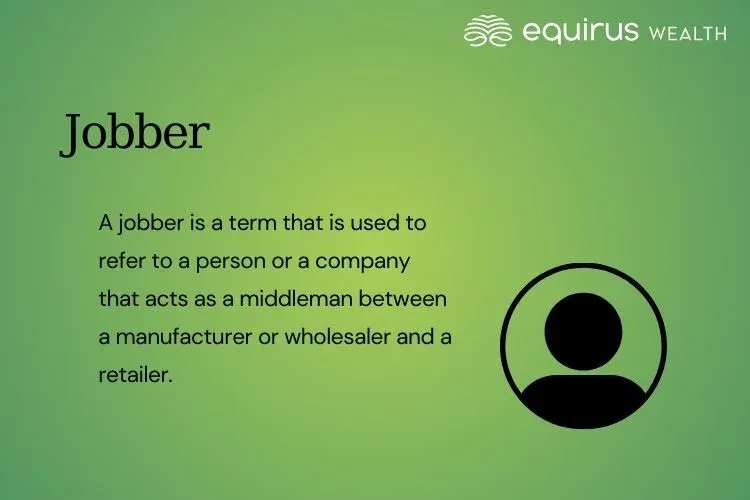
In the evolving landscape of commerce and personal finance, the term “jobber” has transformed from a niche professional designation to a foundational concept in business operations and wealth creation. Whether you are an aspiring entrepreneur looking for a side hustle or a seasoned business owner refining your financial strategy, understanding the role of a jobber is essential. At its core, a jobber is a middleman—a bridge between production and consumption—who plays a critical role in market liquidity and supply chain efficiency.
In this exploration, we will dissect the financial mechanics of being a jobber, the evolution of the role in the digital age, and how modern financial tools are empowering individuals to turn “jobbing” into high-growth business ventures.
The Evolution of the Jobber: From Market Makers to Middlemen
The historical roots of the jobber are firmly planted in the world of high-stakes finance and bulk trade. To understand the modern opportunity, one must first understand the financial function these individuals have traditionally served.
The Historical Wholesaler and the “Jobbing” System
Traditionally, a jobber was a merchant who purchased goods in bulk from manufacturers and sold them to retailers in smaller, manageable quantities. In a financial sense, they provided “time and place utility.” By taking on the capital risk of holding inventory, they allowed manufacturers to maintain cash flow and retailers to avoid the prohibitive costs of large-scale storage. This model is the bedrock of the “arbitrage” strategy—buying low in bulk and selling at a premium to those who need convenience.
The Financial Market Maker (Stock Jobbers)
In the context of the London Stock Exchange prior to 1986, “jobbers” were the original market makers. Unlike brokers, who acted on behalf of clients, jobbers traded on their own accounts. They provided liquidity to the market by being ready to buy or sell shares at any time. Their income was derived from the “jobber’s spread”—the difference between the price they paid for a security and the price at which they sold it. This concept remains vital in modern personal finance and investing; understanding the “spread” is the first step toward understanding how profit is extracted from any financial transaction.
The Modern Jobber: Fueling the Side Hustle and Gig Economy
As the economy shifted toward services and digital platforms, the term “jobber” found a new home in the world of independent contracting and side hustles. Today, a jobber is often synonymous with a service provider who manages multiple “jobs” or “gigs,” using specialized knowledge and financial discipline to create a sustainable income stream outside of traditional 9-to-5 employment.
Moving from Employee to Independent Operator
The transition from a salaried employee to an independent jobber is a significant financial pivot. It involves moving from a guaranteed paycheck to a revenue-based model. For those in the trades—plumbing, landscaping, electrical work, or HVAC—the term refers to the professional who manages the end-to-end financial cycle of a project. The financial allure of this model lies in the “uncapped” nature of the income; whereas an employee has a ceiling, a jobber’s income is limited only by their efficiency and their ability to secure high-margin contracts.
Understanding Unit Economics: Profit Margins and COGS
For a modern jobber, financial success is dictated by a mastery of unit economics. Every “job” must be treated as a mini-profit and loss statement.
- Revenue: The total amount billed to the client.
- Cost of Goods Sold (COGS): The direct costs associated with the job, including materials and labor.
- Gross Profit: Revenue minus COGS.
To build wealth, the jobber must maintain a gross profit margin that covers not only their living expenses but also the overhead of running a business (insurance, tools, vehicle maintenance) and a surplus for reinvestment. Many service-based entrepreneurs fail because they focus on revenue rather than the net margin after all hidden costs are accounted for.

Financial Management and Operational Efficiency for Service-Based Jobbers
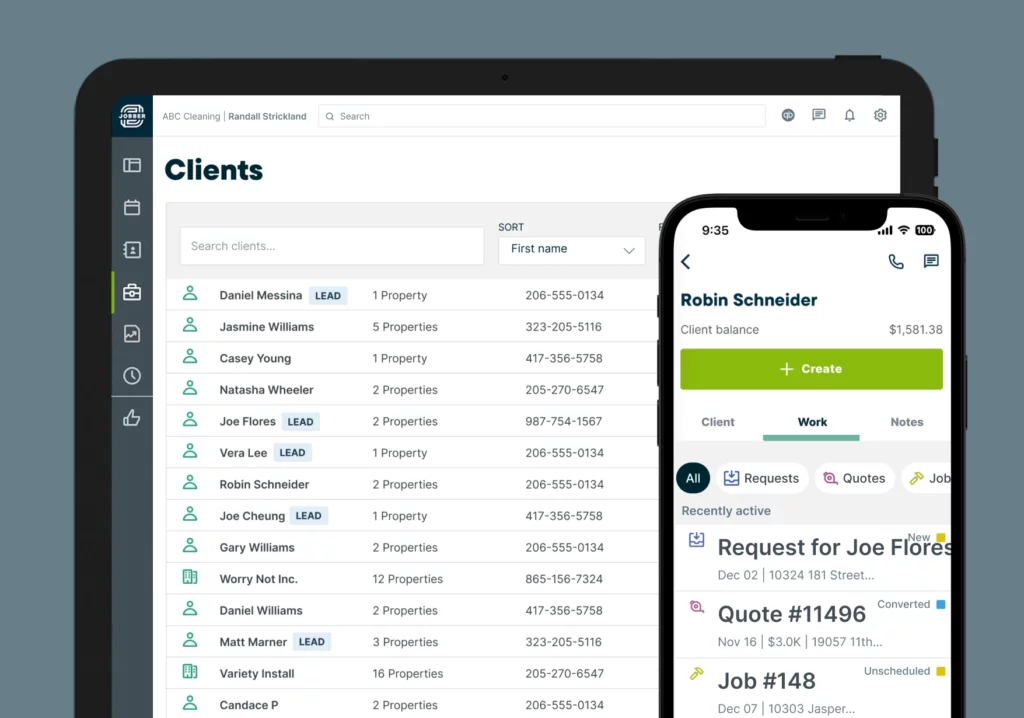
In the “Money” niche, the difference between a struggling freelancer and a successful business owner often comes down to the tools used to manage the flow of capital. The “Jobber” concept has even spawned specialized software designed to handle the financial complexities of service-based businesses.
Automating Cash Flow and Invoicing
Cash flow is the lifeblood of any business, but for a jobber, it is often the greatest challenge. Traditional “jobbing” involves a gap between performing the work and receiving payment. This gap can lead to “overtrading,” where a business has plenty of work but no cash to pay its bills. Modern financial tools allow jobbers to automate invoicing and accept deposits upfront. By reducing the “Days Sales Outstanding” (DSO), jobbers can ensure they have the liquidity needed to take on larger, more profitable projects.
Managing Business Expenses and Tax Efficiency
When you operate as a jobber, every mile driven and every tool purchased has a financial implication. Successful jobbers utilize dedicated business finance accounts to separate personal and professional expenses. This is not just for organizational purposes; it is a strategic move for tax efficiency. By meticulously tracking deductible expenses, a jobber can significantly reduce their taxable income, effectively increasing their “net” pay without needing to raise their prices. In the world of personal finance, what you keep is often more important than what you make.
Scaling the “Jobber” Model into a Profitable Business Entity
The ultimate goal of many who enter the world of jobbing is to move from being “the person doing the work” to “the person owning the system.” This is where the true wealth-building potential of the jobber model is realized.
Leveraging Technology for Financial Growth
To scale, a jobber must transition from manual labor to systems management. This involves leveraging technology to handle lead generation, quoting, and customer relationship management (CRM). By using data-driven insights, a business owner can identify which “jobs” are the most profitable and which are “time sinks.” For instance, a landscaping jobber might find that while tree removal has a high sticker price, lawn maintenance has better recurring revenue and higher net margins. Financial growth is found by doubling down on the high-margin, high-frequency services.
Strategic Reinvestment and Wealth Building
Once a jobber business achieves a consistent surplus, the focus shifts to wealth building. This involves two paths:
- Internal Reinvestment: Buying better equipment, hiring staff, or expanding into new territories to increase the business’s valuation.
- External Diversification: Taking the profits from the “jobbing” business and moving them into traditional investment vehicles like index funds, real estate, or retirement accounts (such as a SEP IRA or Solo 401(k) for the self-employed).
The “jobber” lifestyle provides the high-octane cash flow that can fuel a robust investment portfolio. By viewing the business as a “cash cow” rather than just a job, an entrepreneur can use the high margins of specialized trade work to achieve financial independence far faster than through traditional employment.
Conclusion: The Financial Future of Jobbing
Whether you are looking at the term through the lens of a historical market maker or a modern service entrepreneur, the “jobber” represents a proactive approach to finance. It is about identifying a gap in the market, providing a necessary service or product, and extracting a profit through efficiency and arbitrage.
In an era where the traditional career path is increasingly volatile, the ability to operate as a jobber—managing your own “jobs,” your own finances, and your own growth—is one of the most powerful skills you can develop. By mastering the financial tools of the trade, maintaining a rigorous focus on profit margins, and strategically reinvesting your earnings, you can transform the concept of “jobbing” into a lifelong engine for wealth creation. The modern jobber isn’t just someone who does a task; they are the architects of their own financial destiny.
aViewFromTheCave is a participant in the Amazon Services LLC Associates Program, an affiliate advertising program designed to provide a means for sites to earn advertising fees by advertising and linking to Amazon.com. Amazon, the Amazon logo, AmazonSupply, and the AmazonSupply logo are trademarks of Amazon.com, Inc. or its affiliates. As an Amazon Associate we earn affiliate commissions from qualifying purchases.