
In the competitive landscape of global publishing, few sectors are as saturated or as loyalty-driven as the Bible market. When a publisher decides to launch or update a translation, they aren’t just releasing a book; they are managing a high-stakes brand identity that must balance ancient tradition with modern consumer expectations. The Christian Standard Bible (CSB) serves as a premier example of how strategic rebranding, clear value propositions, and targeted market positioning can carve out a significant niche in a space dominated by legacy giants.
To understand “what is a CSB Bible” from a brand perspective, one must look beyond the text and examine the corporate strategy of its publisher, B&H Publishing Group (a division of Lifeway Christian Resources). The transition from the Holman Christian Standard Bible (HCSB) to the simplified CSB represents one of the most successful linguistic and corporate identity pivots in the 21st-century publishing world.

Understanding the Product: Defining the CSB Brand
At its core, a brand is a promise of a specific experience. For the CSB, that promise is centered on a concept the publishers call “Optimal Equivalence.” In the world of translation—whether it is marketing copy for a global tech firm or a historical text—there is a constant tension between literal accuracy and functional readability.
From HCSB to CSB: The Evolution of a Corporate Identity
The predecessor to the CSB was the Holman Christian Standard Bible (HCSB), first released in full in 2004. While the HCSB gained a dedicated following, it faced a “brand friction” issue. The inclusion of the name “Holman” (the name of the original parent company) made the product feel like a proprietary brand associated strictly with one denomination or one historical publisher.
In 2017, the decision was made to drop “Holman” and move to “Christian Standard Bible.” This move was a masterclass in brand simplification. By removing a specific corporate name, the brand became more accessible to a broader, global audience. The “CSB” acronym is punchy, modern, and fits seamlessly alongside other industry leaders like the NIV (New International Version) and the ESV (English Standard Version). This evolution signaled a shift from being a “niche product” to a “universal standard.”
The “Optimal Equivalence” Value Proposition
In marketing terms, a Unique Selling Proposition (USP) is what sets a product apart from its competitors. The CSB’s USP is its translation philosophy: Optimal Equivalence.
The Bible market is traditionally bifurcated. On one end, you have “Formal Equivalence” (word-for-word) brands like the NASB or ESV, which prioritize technical accuracy but can feel clunky to a modern reader. On the other end, you have “Functional Equivalence” (thought-for-thought) brands like the NLT, which prioritize ease of reading but are often criticized for lack of precision. The CSB brand positions itself as the “Goldilocks” of translations—accurate enough for serious study but fluent enough for daily use. By occupying this middle ground, the CSB effectively captures market share from both ends of the spectrum.
Brand Strategy: Navigating a Saturated Marketplace
Launching a brand in a market where consumers have multi-generational loyalties (such as the King James Version) requires a sophisticated entry strategy. The CSB did not attempt to replace these legacy brands overnight; instead, it utilized a “substitution and adoption” strategy.
Identifying the Target Demographic
The CSB brand is strategically marketed toward the “engaged modern user.” This demographic includes young professionals, digital-native students, and church leaders who require a text that performs well across multiple platforms—from high-end calfskin physical editions to mobile apps.
By focusing on the “readability” aspect, the CSB team targeted the friction point many readers feel with older translations: the “linguistic lag.” When a brand can solve a user’s pain point—in this case, the difficulty of understanding archaic sentence structures—without sacrificing the perceived quality (accuracy), it gains immediate brand equity.
Competitive Analysis: CSB vs. NIV and ESV
To understand the CSB’s market position, one must look at its primary competitors. The NIV has long held the lion’s share of the market due to its high readability and massive distribution network. However, some segments of the market felt it moved too far toward functional equivalence. Meanwhile, the ESV captured the “intellectual” and “academic” brand space.
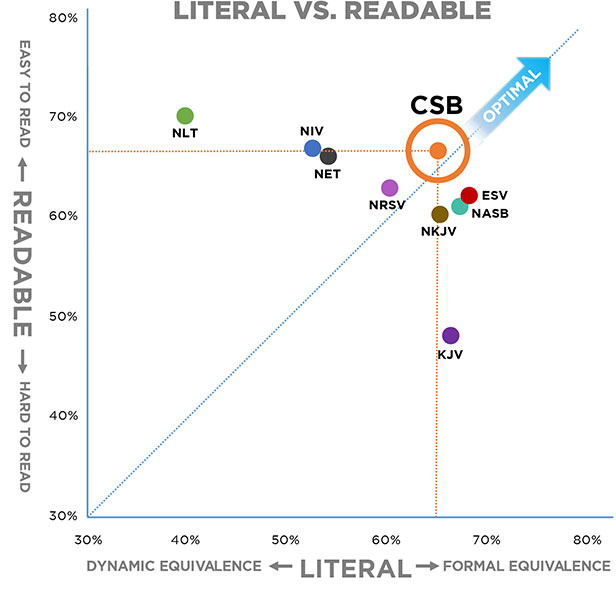
The CSB brand was engineered to bridge this gap. In its marketing collateral, the CSB often uses comparison charts—a classic brand tactic—to show where it sits on the spectrum of literal vs. idiomatic. This visual positioning helps consumers categorize the brand quickly, reducing the “paradox of choice” that often occurs in bookstores.
Design and Aesthetic: The Visual Language of the CSB
A brand is not just what it says, but how it looks. The CSB has invested heavily in the “UI/UX” of the physical page. In the world of high-end publishing, this is known as “typesetting” and “interior design.”
Typography and Layout as Brand Differentiation
One of the most significant contributors to the CSB’s brand growth was the introduction of the “CSB Verse-by-Verse” and “CSB Reader’s” layouts. By utilizing custom fonts (such as the Bible Serif) designed specifically for legibility, the CSB created a distinct visual identity.
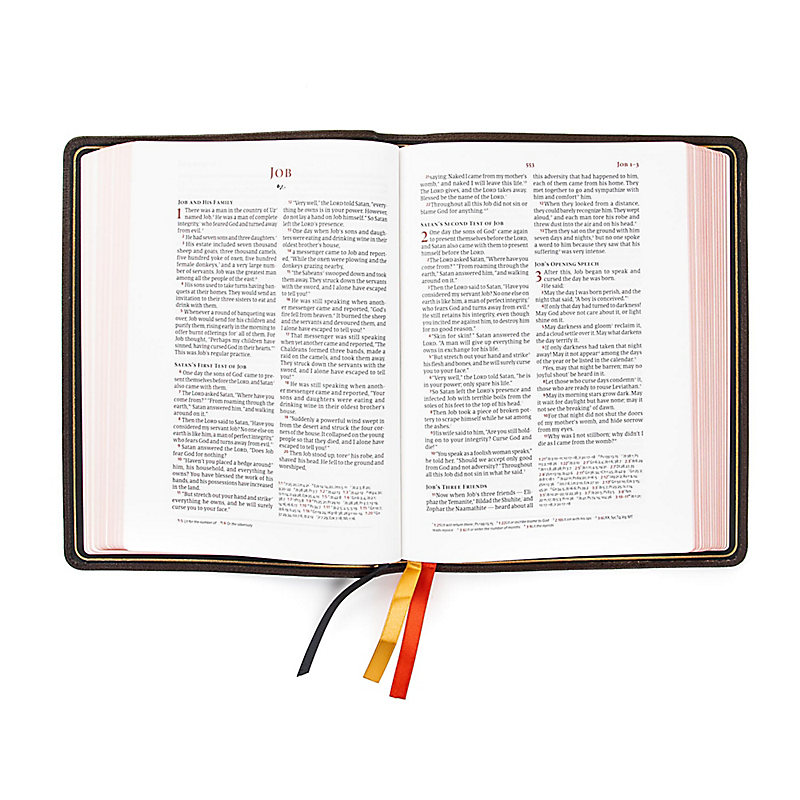
In a digital age, the “analog” experience of a book has become a luxury brand statement. The CSB’s use of high-quality materials—Smyth-sewn bindings, edge-lining, and premium papers—positions the physical product as a durable good rather than a disposable paperback. This commitment to design excellence reinforces the brand’s message of “Standard” and “Quality.”
Digital Integration and Multi-Platform Presence
The CSB brand understands that modern consumption is omnichannel. A user might start their morning reading a physical “Study Bible,” use an app on the train, and listen to an audio version at the gym.
The brand’s strategy included making the CSB text “open” and accessible for digital developers. By ensuring the CSB was the default or a highly promoted option on platforms like YouVersion, Logos Bible Software, and Olive Tree, the publishers ensured that the brand stayed top-of-mind in the digital ecosystem. This “ubiquity strategy” is essential for any modern brand looking to maintain relevance.
Marketing the Message: Distribution and Licensing Models
A product’s success is often tied to its distribution network. The CSB brand benefits from the massive infrastructure of Lifeway, but it has also utilized clever licensing strategies to expand its reach.
Strategic Partnerships and Endorsements
In brand strategy, social proof is a powerful motivator. The CSB successfully secured endorsements from a diverse range of influencers, scholars, and pastors across different denominations. By showing that the brand was “trusted” by experts, the publishers bypassed the skepticism that often greets new translations.
Furthermore, the CSB entered into licensing agreements with other publishers. When a different brand (like Baker Books or Zondervan) publishes a specialized Bible using the CSB text, it serves as a “B2B” (Business to Business) win for the CSB brand. It increases the “total addressable market” (TAM) without the primary publisher having to carry all the production costs for every niche iteration.
The Impact of Brand Consistency on Long-term Growth
The success of the CSB “Standard” lies in its consistency. Every touchpoint—from the social media graphics to the design of the “CSB She Reads Truth” editions—maintains a cohesive brand voice. It is a voice that is professional, academic yet accessible, and deeply rooted in quality.
Since the 2017 rebrand, the CSB has consistently hovered near the top of the CBA (Christian Book Award) best-seller lists. This isn’t accidental; it is the result of a deliberate shift from a “publisher-centric” brand (Holman) to a “user-centric” brand (CSB). By identifying the market’s need for a bridge between the literal and the readable, and packaging that solution in a modern, aesthetically pleasing format, the CSB has defined what it means to be a modern powerhouse in the world of religious intellectual property.
In conclusion, “What is a CSB Bible?” It is a case study in successful brand evolution. It is a product that identifies a gap in the market, leverages design and typography to solve user friction, and employs a sophisticated multi-channel marketing strategy to turn a new translation into a global household name. For professionals in brand strategy and marketing, the CSB provides a roadmap for how to refresh a legacy product line for a new generation without losing the “soul” of the original mission.
aViewFromTheCave is a participant in the Amazon Services LLC Associates Program, an affiliate advertising program designed to provide a means for sites to earn advertising fees by advertising and linking to Amazon.com. Amazon, the Amazon logo, AmazonSupply, and the AmazonSupply logo are trademarks of Amazon.com, Inc. or its affiliates. As an Amazon Associate we earn affiliate commissions from qualifying purchases.