
Interest rates are often described as the “price of money.” Whether you are a borrower looking for a mortgage, a saver searching for a high-yield certificate of deposit, or a business owner evaluating a capital investment, understanding how interest rates are determined is fundamental to financial literacy. In the world of personal and business finance, these rates are not arbitrary figures plucked from thin air. Instead, they are the result of a complex interplay between macroeconomic policies, market psychology, risk assessment, and the inherent value of time.

To navigate the financial landscape effectively, one must look beyond the percentage sign. Determining an interest rate requires an analysis of both the global economic environment and the specific risk profile of the individual or entity involved. This article explores the mechanisms behind rate setting, from central bank influence to the granular details of credit risk.
The Macroeconomic Foundation: How Central Banks Set the Floor
At the highest level, interest rates are steered by a country’s central bank—such as the Federal Reserve in the United States. These institutions use interest rates as a primary lever to control economic growth and manage inflation. When you ask how an interest rate is determined, the answer almost always begins with the “Base Rate” or “Discount Rate.”
The Role of Monetary Policy and Inflation
Central banks have a dual mandate: to promote maximum employment and maintain stable prices. When inflation rises above a target level (typically around 2%), central banks increase interest rates to “cool down” the economy. Higher rates make borrowing more expensive, which reduces consumer spending and business investment, eventually slowing the pace of price increases. Conversely, in a stagnant economy, central banks lower rates to encourage borrowing and stimulate activity. Therefore, the first step in determining any interest rate is looking at the current trajectory of the Consumer Price Index (CPI) and the central bank’s response to it.
Supply and Demand for Credit
Like any other commodity, the price of money is influenced by supply and demand. If there is a high demand for loans from businesses and consumers but a limited supply of loanable funds from savers, interest rates will naturally rise. On the other hand, if the economy is flush with cash and few people are looking to borrow, lenders must lower their rates to attract customers. This “Market Rate” often fluctuates around the base rate set by the government, reflecting the immediate liquidity needs of the financial system.
The Impact of Global Bond Markets
The yields on government bonds, particularly the 10-year Treasury note, serve as a benchmark for many long-term interest rates, including mortgages. Investors move money between stocks and bonds based on their outlook for the economy. When investors are nervous, they flock to the safety of government bonds, driving prices up and yields (interest rates) down. Because lenders use these bond yields as a reference point, the fluctuations in the global bond market directly dictate the rates offered to the general public.
The Risk-Reward Spectrum: Calculating Individual Interest Rates
While central banks set the baseline, the specific rate you receive as an individual or business is heavily influenced by your personal “risk profile.” Lenders are in the business of managing risk; the interest rate they charge is essentially a premium to compensate them for the possibility that the borrower might default.
Credit Scores and Financial History
The most significant factor in determining a personal interest rate is the borrower’s credit score. This numerical representation of creditworthiness tells a lender how likely you are to repay a debt based on your past behavior. A high credit score suggests low risk, allowing the lender to offer a lower interest rate. A low score suggests higher risk, requiring a higher interest rate to offset the potential loss. Lenders also look at the Debt-to-Income (DTI) ratio to ensure the borrower isn’t overextended, which further refines the rate calculation.
The Time Value of Money (TVM)
The duration of a loan is a critical component in determining the interest rate. This concept is known as the “Time Value of Money.” Generally, the longer the term of the loan, the higher the interest rate. This is because a longer duration increases the “uncertainty risk.” Over twenty or thirty years, many things could go wrong: inflation could spike, the borrower’s income could drop, or the economy could enter a depression. Lenders demand a higher rate for long-term commitments to protect against these long-range unknowns.

Collateral and the Nature of the Debt
Interest rates are also determined by whether a loan is “secured” or “unsecured.” A secured loan, such as an auto loan or a mortgage, is backed by an asset (the car or the house). If the borrower fails to pay, the lender can seize the asset to recover their losses. Because the risk is lower, the interest rate is lower. Unsecured debt, such as credit cards or personal signatures loans, carries no collateral. Because the lender has no recourse other than legal action, they charge significantly higher interest rates to cover the increased risk of total loss.
Understanding Different Rate Structures and Formulas
To truly determine an interest rate’s impact, one must understand how it is structured. A 5% rate can mean very different things depending on how it is calculated and applied over time.
Fixed vs. Variable Interest Rates
When determining a rate, one must choose between a fixed or variable (floating) structure. A fixed rate remains constant throughout the life of the loan, providing predictability for the borrower. A variable rate, however, is pegged to an index, such as the Prime Rate or the Secured Overnight Financing Rate (SOFR). If market rates rise, the borrower’s interest rate increases; if they fall, the rate decreases. Choosing between these involves predicting future economic trends and determining how much volatility a borrower can personally afford.
Nominal vs. Effective Interest Rates (APR)
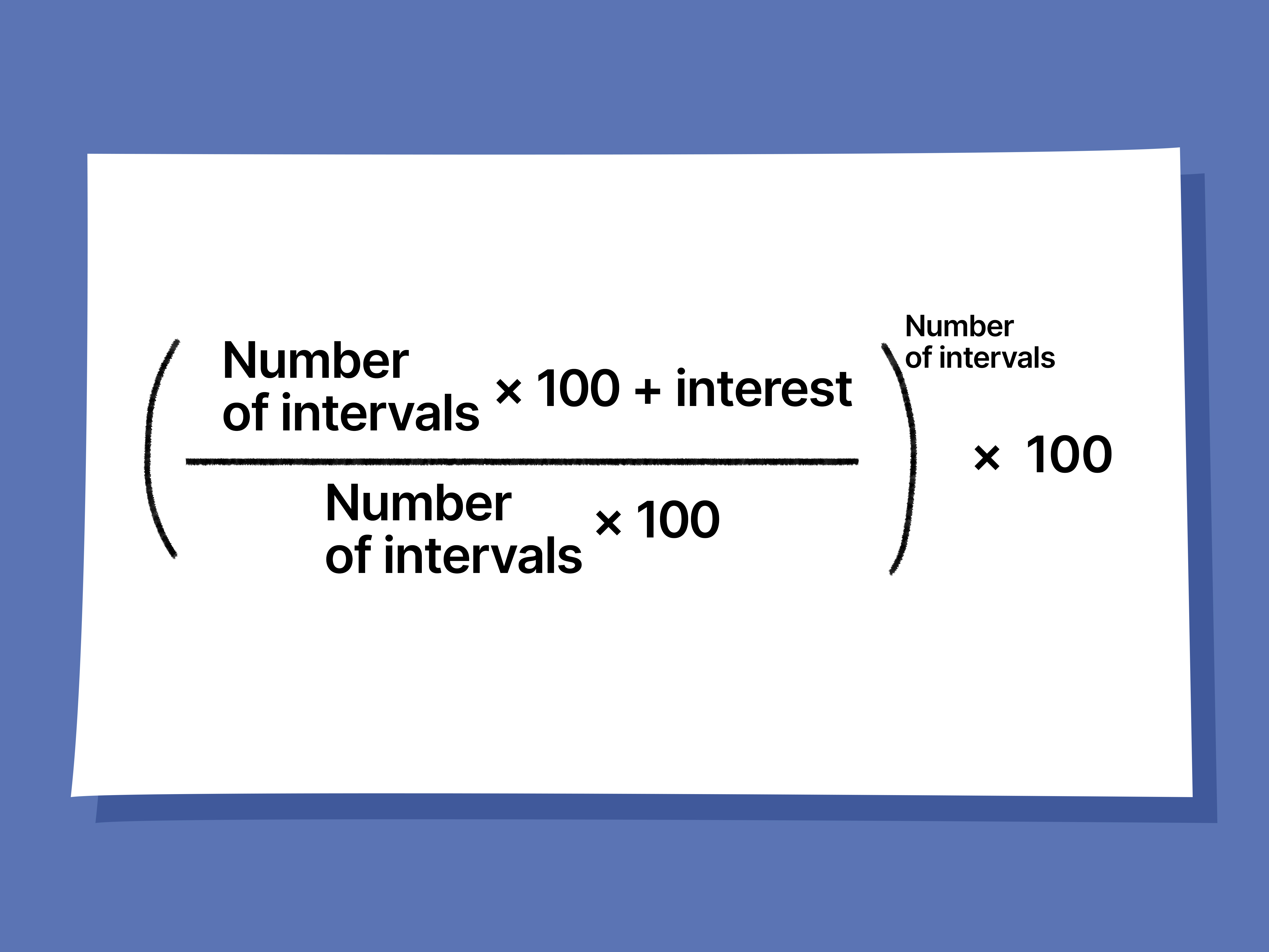
There is often a discrepancy between the “sticker price” of an interest rate and the actual cost of the loan. The Nominal Rate is the stated interest rate without taking into account fees or compounding. The Annual Percentage Rate (APR), however, includes both interest and any lender fees or points. To determine the true cost of credit, savvy financial planners always look at the APR. Furthermore, the “Effective Interest Rate” takes compounding into account—the process where interest is calculated on the principal plus any accumulated interest. The more frequently interest compounds (daily vs. annually), the higher the effective rate becomes.
The “Spread” in Business Finance
In business finance, interest rates are often determined by a “spread” over a benchmark. For example, a business loan might be quoted as “LIBOR + 2%.” The benchmark represents the lender’s cost of obtaining the money, and the “plus 2%” represents the lender’s profit margin and a premium for the specific company’s risk. As the benchmark moves, the total interest rate moves with it, but the spread usually remains constant for the duration of the agreement.
Practical Tools and Methods for Personal Rate Determination
If you are trying to determine what a “fair” interest rate looks like for your current financial situation, you don’t have to guess. There are several professional methods used to benchmark and calculate these figures.
Benchmarking Against the Prime Rate
For most consumer loans, the “Prime Rate” is the gold standard. The Prime Rate is the interest rate that commercial banks charge their most creditworthy corporate customers. It is typically 3% higher than the federal funds rate. By looking up the current Prime Rate, you can determine if the offer you’ve received is competitive. For instance, if the Prime Rate is 8% and you are being offered a personal loan at 9%, you are receiving a “Prime + 1” rate, which is generally excellent for an individual borrower.
Using the Rule of 72 for Investment Returns
From an investment perspective, determining an interest rate is often about calculating the required rate of return. The “Rule of 72” is a quick financial tool used to determine how long it will take for an investment to double at a given interest rate. By dividing 72 by the interest rate, you get the number of years. Conversely, if you know you need your money to double in 10 years, you can determine that you need an interest rate (or return) of approximately 7.2%. This helps in back-solving for the interest rate required to meet specific financial goals.
The Importance of Shopping and Comparison
Finally, because different financial institutions have different levels of liquidity and different “appetites” for risk, interest rates can vary significantly from one bank to another. Determining the best rate for your situation requires active market participation. This involves obtaining multiple quotes (Pre-Approvals) within a short window to ensure your credit score isn’t penalized while you compare the “yield spread” offered by various lenders.
In conclusion, determining an interest rate is a multi-faceted process that balances global economic indicators with individual financial health. By understanding the role of central banks, the impact of credit scores, and the technicalities of APR and compounding, you can move from being a passive observer of your finances to an active, informed participant. Whether you are paying interest or earning it, knowing how that percentage is derived is the key to making sound, long-term financial decisions.
aViewFromTheCave is a participant in the Amazon Services LLC Associates Program, an affiliate advertising program designed to provide a means for sites to earn advertising fees by advertising and linking to Amazon.com. Amazon, the Amazon logo, AmazonSupply, and the AmazonSupply logo are trademarks of Amazon.com, Inc. or its affiliates. As an Amazon Associate we earn affiliate commissions from qualifying purchases.