
In the world of brand strategy, few narratives are as compelling, volatile, or educational as the rise and fall of Anne Boleyn. While historians view her through the lens of Tudor politics and religious reformation, a modern brand consultant sees something else entirely: a disruptive force who executed one of the most successful—and eventually catastrophic—personal branding campaigns in history.
To ask “what happened to Anne Boleyn” is to examine the lifecycle of a brand that reached the absolute pinnacle of market share before suffering a total institutional collapse. Her story provides vital lessons for modern corporate identity, personal branding, and the precarious nature of reputation management.
1. The Disruptive Entry: Crafting a Unique Selling Proposition (USP)
When Anne Boleyn returned to the English court from France, she entered a “market” that was saturated with a specific type of influencer. The traditional expectation for women at court was passivity and quiet adherence to the status quo. Anne, however, understood the power of differentiation.
The French “Import” Aesthetic
Anne’s brand was built on a unique cultural fusion. By adopting French fashion, speech, and intellectual rigor, she positioned herself as an “imported luxury” brand. In marketing terms, she utilized a “blue ocean strategy,” creating a space for herself that did not previously exist in the English court. She wasn’t competing with the existing ladies-in-waiting; she was redefining the criteria for what a powerful woman looked like.
Intentional Scarcity and Brand Value
Perhaps her most famous strategic move was the implementation of brand scarcity. Unlike her predecessors, Anne refused to become a mere mistress to Henry VIII. By withholding “product access,” she exponentially increased her perceived value. This maneuver transformed her from a temporary commodity into a long-term strategic partner. In modern branding, this is akin to a luxury brand maintaining high price points and limited availability to ensure that the desire for the brand remains white-hot.
Symbolic Identity: The “B” Necklace and the Falcon
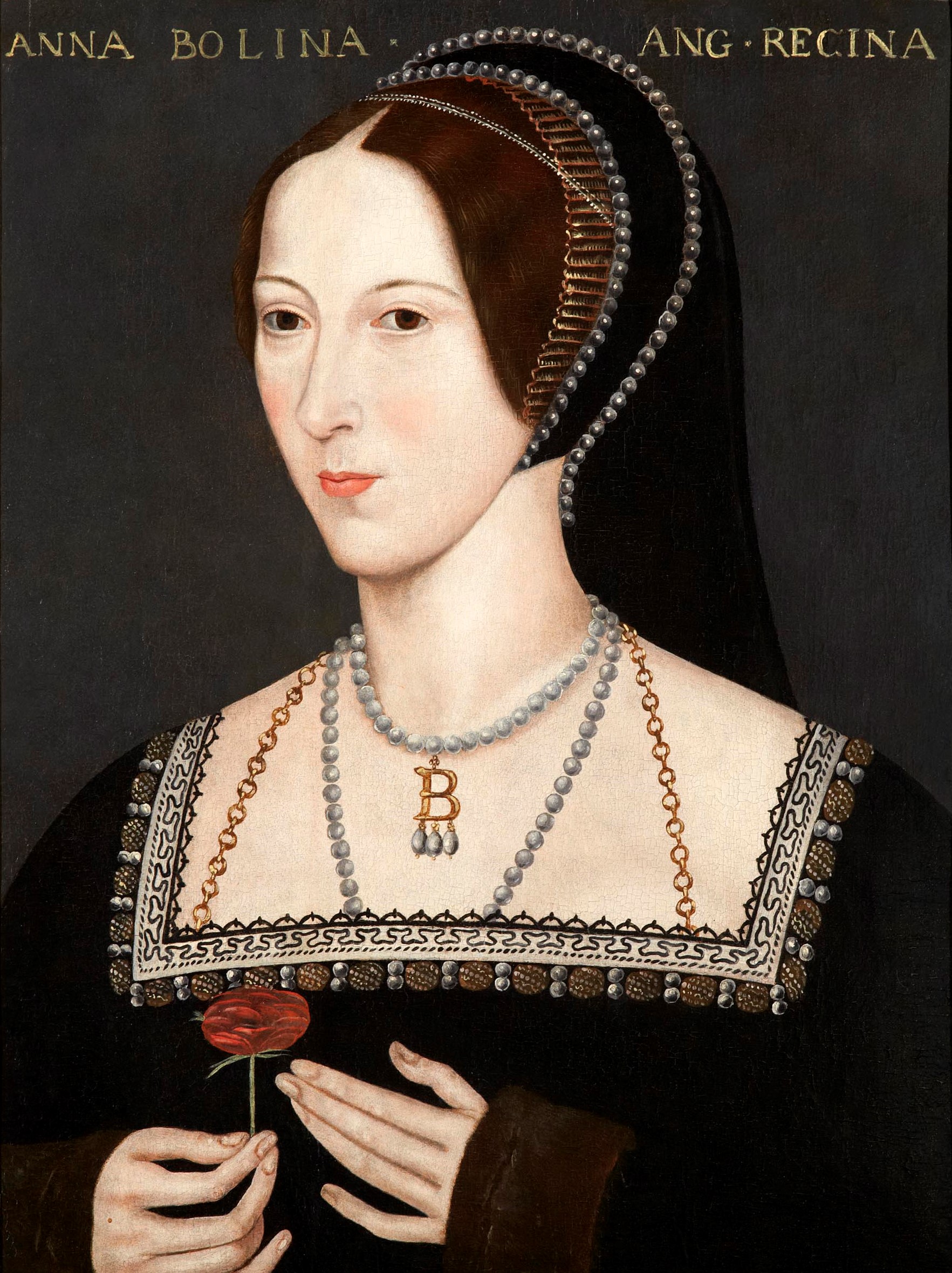
Anne understood the importance of visual identity. Her famous “B” necklace was an early example of personal logo usage, a literal branding of her identity. Later, as she ascended, her adoption of the white falcon as her badge served as a corporate logo that signaled her intent to soar above her rivals. Every aesthetic choice was a calculated piece of brand collateral designed to communicate power, grace, and exclusivity.
2. Strategic Positioning: The Shift from Influencer to Queen Consort
Transitioning from a disruptive outsider to a core institutional pillar is one of the most difficult pivots any brand can make. This phase of Anne’s life represents a massive rebranding effort—moving from the “King’s obsession” to the “Queen of England.”
Realigning the Corporate Culture
Anne did not just want a title; she wanted to change the organization. She became a key advocate for the New Learning and the Reformation. This was a strategic alignment with a burgeoning “market trend”—Protestantism. By tethering her brand to a powerful ideological movement, she ensured that her personal success was inextricably linked to the success of a national cultural shift.
Stakeholder Management and its Failures
Every successful brand requires the buy-in of key stakeholders. For Anne, these included the nobility, the common people, and the international diplomatic community. While she had the King’s (the CEO’s) absolute support, she struggled with “internal comms.” Her brand was perceived as abrasive and elitist by the general public, who remained loyal to the “legacy brand”—Catherine of Aragon. Anne’s inability to win over the “mass market” created a vulnerability that her competitors would eventually exploit.
The Power of Narrative Control
During her ascent, Anne was a master of narrative. She framed herself as the catalyst for a new, modern England. She used her court as a hub for artists, poets, and thinkers, effectively creating a “content engine” that pumped out favorable representations of her circle. In today’s terms, she was curating her social proof and building a community of loyal brand advocates who benefited from her proximity to power.
3. The Crisis Management Failure: Identifying the Fault Lines
The question of “what happened to Anne Boleyn” is ultimately a question of how a brand fails to handle a PR crisis. In 1536, the Boleyn brand suffered a series of “product failures” and “market shifts” that led to its ultimate liquidation.
The Single Point of Failure: The Succession Plan
In the corporate world, a brand is often only as good as its last quarterly report. For Anne, the “product” the King demanded was a male heir. When she failed to deliver this specific outcome, her brand equity plummeted. She had built her entire value proposition on a single deliverable. When that deliverable failed to materialize, the brand had no “buffer” or alternative value to fall back on. This is a cautionary tale for any brand that relies too heavily on one specific feature or market condition.
Competitive Displacement: The Rise of Jane Seymour
As Anne’s brand became associated with conflict, volatility, and “non-delivery,” a competitor emerged with an entirely different brand architecture. Jane Seymour was positioned as the “anti-Anne.” Where Anne was loud, intellectual, and challenging, Jane was quiet, submissive, and traditional. This was a classic “repositioning” move by Anne’s enemies. They identified the market fatigue surrounding the Boleyn brand and introduced a “remedy brand” that appealed to the King’s desire for stability.
The Total Brand Assassination
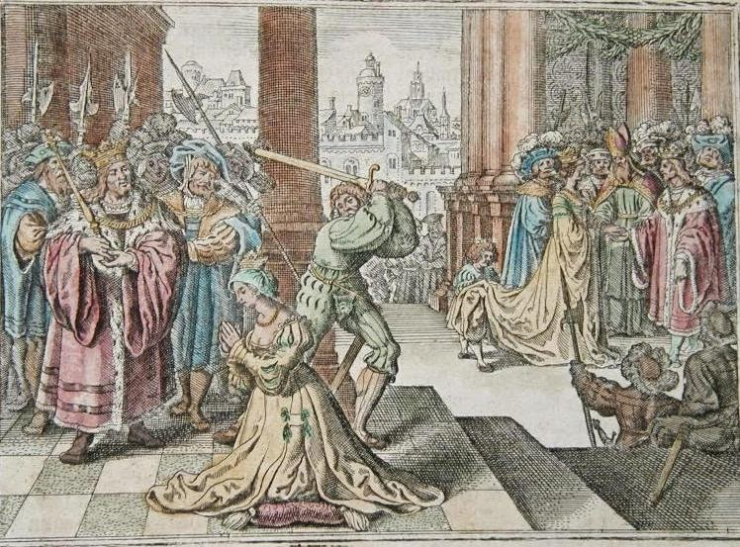
What happened to Anne Boleyn in her final days was not just a legal trial; it was a total brand assassination. Thomas Cromwell, acting as a ruthless opposition strategist, systematically dismantled her reputation. By accusing her of adultery and treason, he targeted the one thing she had left: her moral legitimacy. In the absence of a robust crisis management plan or a base of popular support, the Boleyn brand was isolated and destroyed. The execution was the final, literal “de-branding” of a woman who had once redefined the English throne.
4. Posthumous Rebranding: How History Recovers a Damaged Identity
The final chapter of the Anne Boleyn story is perhaps the most interesting from a brand strategy perspective. It deals with brand legacy and the “long-tail” of reputation. While the brand was “discontinued” in 1536, it underwent a massive restoration in the decades that followed.
The Elizabeth I Effect: Brand Restoration
The most significant factor in the rehabilitation of Anne Boleyn’s brand was the success of her daughter, Elizabeth I. When Elizabeth took the throne, the “Boleyn” lineage became the source of royal legitimacy. Elizabeth didn’t just ignore her mother’s history; she subtly re-integrated it into the national identity. This is an example of “heritage branding”—using the past to bolster the credibility of the present.
From Villain to Icon: The Power of Reframing
Over centuries, the narrative of Anne Boleyn has been reframed. She is no longer the “concubine” or the “witch” of her enemies’ propaganda. Instead, she has been rebranded as a tragic heroine, a feminist icon, and a martyr of the Reformation. This shift demonstrates that brand perception is never static. With enough time and the right storytelling, even the most damaged brand can be rehabilitated and turned into a powerful cultural symbol.
Modern Implications for Personal Branding
What happened to Anne Boleyn serves as a stark reminder of the risks of “high-beta” personal branding. She took massive risks for massive rewards. Her story teaches modern professionals that:
- Differentiation is a double-edged sword: It gets you noticed, but it also makes you a target.
- Stakeholder diversity is vital: Relying on a single “champion” (like a CEO or a King) is dangerous. You must build a broader base of support.
- Narrative is everything: If you do not define your own brand, your competitors will define it for you—especially during a crisis.

Conclusion: The Eternal Brand of Anne Boleyn
In the end, Anne Boleyn’s “market exit” was violent and tragic, but her brand survived. She remains one of the most recognizable “personal brands” in human history. Her ability to disrupt an entire nation’s religious and political framework speaks to the sheer power of a well-defined—albeit high-risk—identity.
“What happened to Anne Boleyn” is more than a historical footnote; it is a blueprint for the complexities of power, the necessity of reputation management, and the enduring power of a well-crafted narrative. Whether in the 16th-century court or the 21st-century boardroom, the principles of branding remain the same: identity is currency, and how you manage that currency determines your legacy.
aViewFromTheCave is a participant in the Amazon Services LLC Associates Program, an affiliate advertising program designed to provide a means for sites to earn advertising fees by advertising and linking to Amazon.com. Amazon, the Amazon logo, AmazonSupply, and the AmazonSupply logo are trademarks of Amazon.com, Inc. or its affiliates. As an Amazon Associate we earn affiliate commissions from qualifying purchases.