
In our daily lives, we measure time through the lens of months, weeks, and hours. However, in the world of software engineering, data science, and global logistics, the standard 12-month calendar is often replaced by a more linear and efficient system: the ordinal date. When someone asks, “What day of the year is today out of 365?” they are seeking more than just a date; they are looking for a specific integer between 1 and 366 that defines our position within the Earth’s orbit.
In the technology sector, this numerical representation is foundational. From automating server backups to training machine learning models on seasonal trends, understanding the “Day of the Year” (DOY) is a critical technical requirement. This article explores the technical architecture of date tracking, the programming logic behind time calculation, and why this specific metric remains a cornerstone of digital infrastructure.

The Logic of Time: How Computers Interpret the 365-Day Cycle
To a human, “October 24th” carries cultural and personal significance. To a computer, that same date is simply an entry in a database that needs to be parsed, stored, and retrieved with nanosecond precision. The challenge for technology is that the Gregorian calendar is inherently messy, with varying month lengths and the quadrennial disruption of the leap year.
ISO 8601 and the Standardization of Ordinal Dates
The International Organization for Standardization (ISO) created the ISO 8601 standard to eliminate confusion in international data exchange. One specific part of this standard covers the “ordinal date,” which consists of a four-digit year followed by a three-digit day number (e.g., 2023-297). This format is widely used in tech environments because it allows for easy sorting. In a digital file system, sorting by year and day number ensures that files appear in chronological order without the need for complex month-parsing algorithms.
Epoch Time and Universal Time Coordination (UTC)
Modern software rarely calculates the day of the year starting from a blank slate. Instead, most systems rely on “Unix Time” or “Epoch Time”—the number of seconds that have elapsed since January 1, 1970. To determine what day of the year it is today, a system takes the current Unix timestamp, adjusts for the user’s time zone via UTC (Coordinated Universal Time), and runs a mathematical modulus operation to extract the day count. This ensures that a developer in Tokyo and a developer in New York can synchronize their systems based on a singular, objective count of elapsed time.
Building the Solution: Programming Logic for Day Tracking
For developers building apps—whether it’s a fitness tracker counting a “365-day streak” or a financial app calculating daily interest—knowing how to programmatically identify the current day of the year is an essential skill. Different programming languages handle this through various libraries and built-in functions.
Python Implementation and the Datetime Module
Python is the leading language for data science and automation, and its datetime module makes calculating the day of the year incredibly simple. By using the strftime (string format time) function with the %j directive, a developer can instantly retrieve the ordinal day.
from datetime import datetime
day_of_year = datetime.now().strftime('%j')
print(f"Today is day {day_of_year} out of 365/366.")
Behind this simple line of code is a complex algorithm that accounts for the current system clock and the underlying Gregorian rules. For tech professionals, using these standardized libraries is safer than writing custom logic, as they are pre-vetted for accuracy across different operating systems.
JavaScript and Real-Time Web Displays
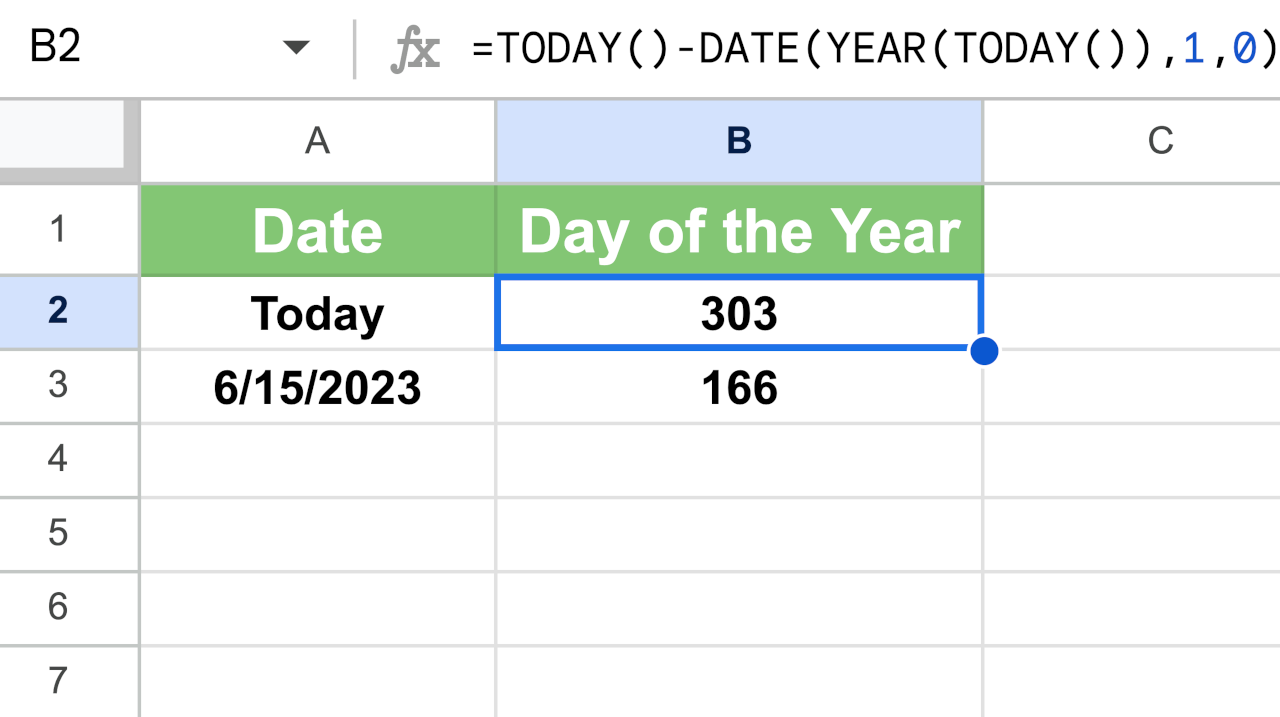
In web development, providing users with live data requires JavaScript. Unlike Python, JavaScript’s native Date object doesn’t have a direct “day of the year” method. Developers must calculate it by finding the difference between the current date and the first day of the year, then dividing by the number of milliseconds in a day. This logic is a common interview question for software engineers because it tests their understanding of mathematical floor functions and time-based objects.
The Role of APIs in Global Time Synchronization
Not every application calculates time locally. In high-stakes environments like fintech or autonomous vehicle navigation, relying on a local system clock can be dangerous due to “clock drift”—the tendency of hardware clocks to lose or gain seconds over time. Instead, these systems query specialized APIs to determine exactly what day and second it is.
World Time APIs and JSON Data
A World Time API provides a RESTful interface where an application can request the current time data for any geographic location. The response is usually delivered in JSON (JavaScript Object Notation), providing a breakdown that includes the day of the week, the week number, and the day of the year. This is vital for cloud-based microservices that need to remain perfectly in sync even if they are hosted on different physical servers across the globe.
Integrating Time Metadata into SaaS Ecosystems
Software-as-a-Service (SaaS) platforms, such as Salesforce or HubSpot, use day-of-the-year metadata to trigger automated workflows. For instance, an enterprise resource planning (ERP) system might be programmed to run a “Year-to-Date” (YTD) financial report every 30 days. By using the day-of-the-year integer, the software can easily calculate how many days are left in the fiscal cycle, providing businesses with real-time insights into their operational efficiency.
Technical Challenges: The 366th Day and Time Zone Anomalies
While the question “what day of the year is today out of 365” sounds simple, technology must account for the exceptions that break the rule. The most notable exception is the leap year, which adds a 366th day to the calendar.
Handling the February 29th Anomaly in Code
Leap years exist to keep our calendar in alignment with the Earth’s revolutions around the Sun. In programming, failing to account for day 366 can lead to “off-by-one” errors that crash databases or corrupt historical data. Robust tech stacks include logic to check if a year is divisible by 4, not divisible by 100, unless it is also divisible by 400. This logic is baked into the low-level kernels of operating systems like Linux and Windows to ensure that when the 366th day occurs, the digital world doesn’t skip a beat.
NTP and the Precision of Network Timing
The Network Time Protocol (NTP) is one of the oldest Internet protocols still in use. Its job is to synchronize the clocks of computers over variable-latency networks. When your smartphone updates the “day of the year” automatically as you cross the International Date Line, it is interacting with NTP servers. This level of precision is what allows global telecommunications to function; without it, data packets would arrive out of order, and digital signatures for secure transactions would be invalidated.
The Future of Time: AI and Temporal Data Processing
As we move further into the era of Artificial Intelligence, the “day of the year” becomes a critical feature in machine learning models. Time-series forecasting—predicting future stock prices, weather patterns, or consumer demand—relies heavily on knowing the exact day count within a cycle.
Seasonality Trends in Machine Learning
AI models use the day of the year to identify “seasonality.” For example, an e-commerce AI knows that as the day count approaches 330 (late November), server load will spike due to Black Friday shopping. By feeding the ordinal date into a neural network, developers allow the AI to recognize patterns that repeat every 365 days. This temporal awareness is what makes modern predictive analytics so powerful.
Automating Productivity with Smart Date-Aware Tools
We are seeing a rise in “AI Agents” that manage our schedules. These tools don’t just see “Friday”; they see “Day 250,” and they understand that based on historical data from the last three years, your productivity usually dips during this specific window of the year. By integrating ordinal date logic with personal productivity software, technology is helping humans optimize their time based on the mathematical reality of the 365-day cycle.

Conclusion
The question “what day of the year is today out of 365” is the entry point into a complex web of digital systems, protocols, and algorithms. From the standardized strings of ISO 8601 to the high-frequency synchronization of NTP servers, the way we track our progress through the year is a testament to the precision of modern technology. Whether you are a developer writing a simple Python script or a data scientist training a global forecasting model, the ordinal day remains an indispensable tool in the tech professional’s toolkit. In the digital age, time is not just a feeling—it is a perfectly indexed, 365-step sequence that powers the world.
aViewFromTheCave is a participant in the Amazon Services LLC Associates Program, an affiliate advertising program designed to provide a means for sites to earn advertising fees by advertising and linking to Amazon.com. Amazon, the Amazon logo, AmazonSupply, and the AmazonSupply logo are trademarks of Amazon.com, Inc. or its affiliates. As an Amazon Associate we earn affiliate commissions from qualifying purchases.