
The celestial bodies that dominate our solar system, beyond the rocky inner planets, are the awe-inspiring gas giants. These colossal worlds, composed primarily of hydrogen and helium, represent a significant frontier in our understanding of planetary formation and the potential for life beyond Earth. While the term “gas planet” is a common descriptor, the scientific community more precisely categorizes them as “gas giants” and “ice giants.” This distinction, rooted in their composition and formation processes, offers a deeper insight into their unique characteristics and the advanced technologies that enable us to study them.
The exploration of these distant realms has been a monumental undertaking, reliant on increasingly sophisticated spacecraft, powerful telescopes, and intricate data analysis techniques. From the pioneering Voyager missions that provided our first close-up views to the ongoing marvels of the Hubble Space Telescope and the James Webb Space Telescope, technology has been the unwavering compass guiding our understanding of these enigmatic worlds. This article delves into what constitutes a gas planet, exploring their defining features, the technological marvels that allow us to observe them, and the scientific questions they continue to pose, all through the lens of technological advancement and discovery.
Defining the Gas Giants: A Technological Perspective
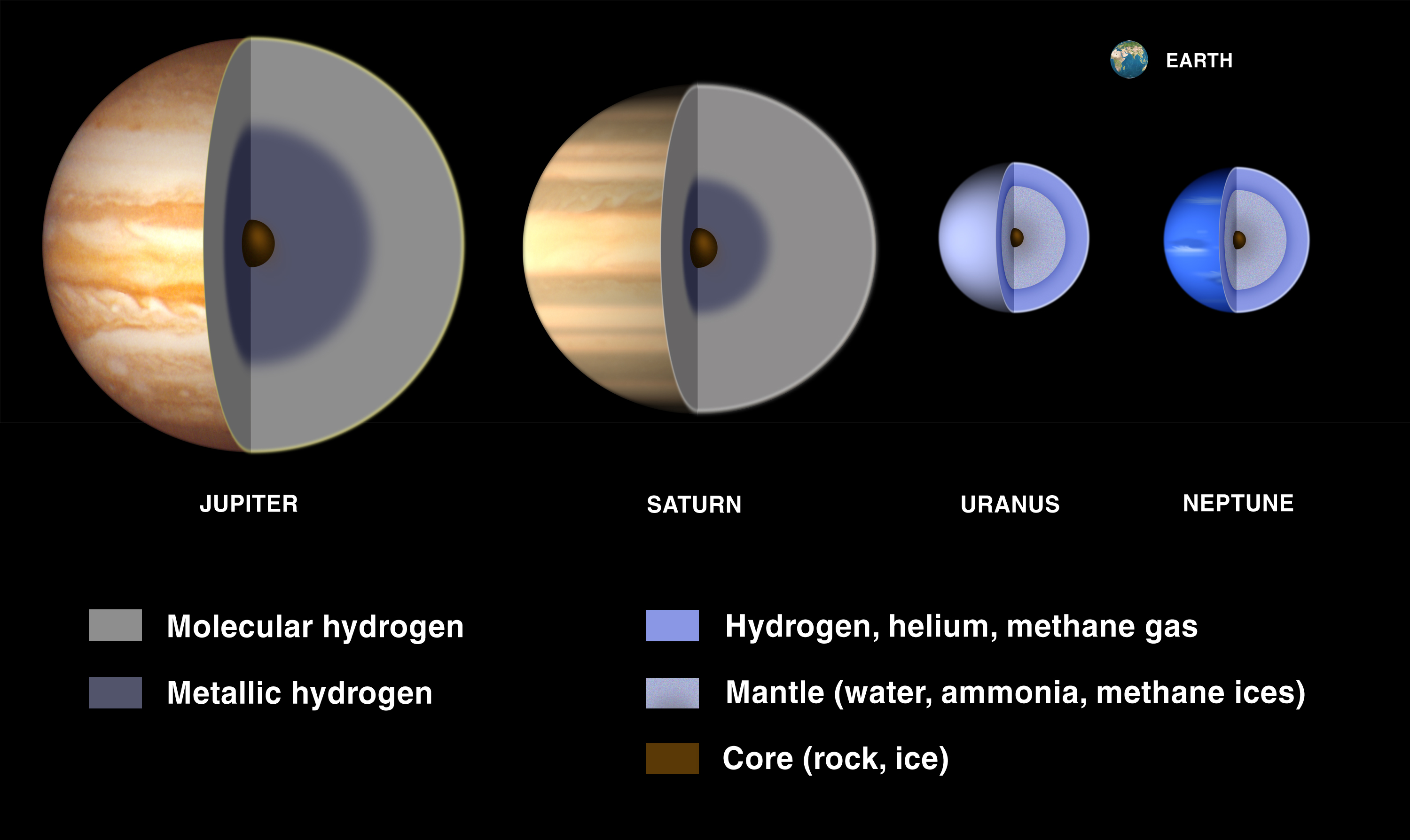
The traditional definition of a gas planet hinges on its dominant elemental composition. Unlike terrestrial planets, which possess solid, rocky surfaces, gas giants are overwhelmingly composed of lighter elements, primarily hydrogen and helium, with only a small rocky or metallic core. However, the nuances of this definition become apparent when we differentiate between the two main types of gas giants: the gas giants (like Jupiter and Saturn) and the ice giants (like Uranus and Neptune). This distinction is not merely semantic; it reflects fundamental differences in their formation history, internal structure, and atmospheric dynamics, all of which are illuminated by technological observation and analysis.
The Jovian Class: Masters of Hydrogen and Helium
Jupiter and Saturn, often referred to as the Jovian planets, are the quintessential gas giants. Their immense size, evident even through basic telescopic observation, is a testament to their substantial mass, primarily made up of hydrogen and helium. These elements, the most abundant in the universe, allowed these planets to accrete vast quantities of gas during the early stages of the solar system’s formation.
Technological Insight: The study of Jupiter and Saturn’s atmospheres has been profoundly advanced by spectroscopy. This technology allows scientists to analyze the light that has interacted with the planet’s atmosphere, revealing the chemical composition of its gases. By measuring the absorption and emission of specific wavelengths of light, researchers can identify not only hydrogen and helium but also trace amounts of methane, ammonia, and water vapor. The Cassini-Huygens mission to Saturn, for instance, utilized advanced spectrometers to map the atmospheric composition and dynamics of the ringed planet and its moons with unprecedented detail. Furthermore, radio astronomy has been crucial in probing the deep atmospheres of these planets, as radio waves can penetrate the cloud layers that are opaque to visible light. This has provided insights into their internal magnetic fields and the dynamics of their massive magnetospheres, fields of study made possible by sophisticated sensor technology and data processing capabilities.
The Ice Giants: A Cooler, Denser Realm
Uranus and Neptune, while still categorized as gas giants due to their large size and gaseous envelopes, possess a significant difference in composition. They are often termed “ice giants” because, in addition to hydrogen and helium, their interiors contain a higher proportion of “ices” – volatile compounds such as water, ammonia, and methane – compared to Jupiter and Saturn. These ices are thought to be more abundant in their cores and mantles, contributing to their denser nature and distinct atmospheric properties.
Technological Insight: The exploration of Uranus and Neptune has been largely the domain of flyby missions, with Voyager 2 being the sole spacecraft to have visited both planets. The data collected by Voyager 2, though decades old, remains invaluable, showcasing the remarkable capabilities of its suite of scientific instruments. Imaging systems, equipped with high-resolution cameras, captured stunning visual details of their atmospheres, revealing the presence of storms, rings, and moons. Magnetometers onboard provided crucial data on their magnetic fields, which are notably tilted and offset compared to those of Jupiter and Saturn. The analysis of atmospheric composition, primarily through infrared and ultraviolet spectroscopy, indicated the presence of methane, which gives these planets their characteristic blue hue. The challenges in studying these distant worlds are immense, requiring robust spacecraft design and highly sensitive instruments capable of operating in extreme environments and over vast distances, pushing the boundaries of deep space communication and autonomous navigation.
Technological Frontiers in Gas Planet Exploration
The pursuit of knowledge about gas planets has consistently driven innovation in space exploration technology. From the development of advanced propulsion systems to sophisticated observational instruments, each mission represents a leap forward in our ability to probe the universe. The ongoing quest to understand these colossal worlds is intrinsically linked to the technological capabilities that enable it.
Advanced Observational Technologies
The distant nature of gas planets necessitates powerful and versatile observational tools. While terrestrial telescopes have made significant contributions, space-based telescopes have revolutionized our ability to study these celestial bodies by overcoming the limitations of Earth’s atmosphere.
Technological Applications: The Hubble Space Telescope (HST), a true titan of astronomical observation, has provided decades of breathtaking images and critical data on gas planets. Its ability to capture light across a wide spectrum, from ultraviolet to near-infrared, has allowed scientists to monitor atmospheric changes, track storm systems, and study the composition of their atmospheres and rings. More recently, the James Webb Space Telescope (JWST), with its unparalleled sensitivity and infrared capabilities, is poised to unlock new secrets. JWST’s advanced instruments, such as the Near-Infrared Spectrograph (NIRSpec) and the Mid-Infrared Instrument (MIRI), are enabling the detailed analysis of atmospheric chemistry, the detection of exoplanet atmospheres (many of which are gas giants), and the study of cloud structures with unprecedented clarity. The development of adaptive optics on ground-based telescopes has also significantly improved their resolution, allowing them to compete with space-based observatories for certain types of observations. These technologies work by actively correcting for atmospheric distortions, providing sharper images and more detailed spectral data.
Probes and Orbiters: In-Situ Exploration
While remote observation provides a broad overview, robotic probes and orbiters offer the invaluable opportunity for in-situ analysis, venturing directly into the environments of gas planets. These missions are engineering marvels, designed to withstand extreme radiation, immense gravitational forces, and extreme temperatures.
Technological Innovations: The Galileo mission to Jupiter, for example, deployed an atmospheric probe that descended directly into Jupiter’s atmosphere, transmitting data on temperature, pressure, and chemical composition until it was crushed by the immense pressure. The Juno mission, currently orbiting Jupiter, utilizes a suite of advanced instruments, including microwave radiometers that can peer beneath the planet’s visible cloud tops to study its interior structure, composition, and magnetic field. The development of radiation-hardened electronics has been paramount for the success of these missions, ensuring that the sensitive components can survive the harsh radiation belts surrounding gas giants like Jupiter. Furthermore, miniaturization of scientific instruments allows more capabilities to be packed onto spacecraft, while advanced power systems, such as radioisotope thermoelectric generators (RTGs), provide reliable energy in the distant, sunless reaches of the outer solar system. The challenges of entry, descent, and landing (EDL), though more commonly associated with rocky planets, are also critical considerations for future probes designed to sample the atmospheres or even the surfaces of some moons of gas giants.
The Technological Quest for Answers: Unraveling Gas Planet Mysteries
The study of gas planets is not just about cataloging their features; it is about answering fundamental questions regarding planetary formation, the potential for habitability beyond Earth, and the very laws of physics that govern our universe. Advanced technology is the bedrock upon which these scientific inquiries are built.
Understanding Planetary Formation and Evolution
The formation of gas giants is a cornerstone of planetary science, and technological advancements are providing crucial data to refine our models. The current paradigm suggests that these planets formed through core accretion or gravitational instability in the protoplanetary disk.
Technological Contributions: High-precision photometry and astrometry from missions like Kepler and TESS, initially designed to discover exoplanets, have provided vast datasets of planetary transits and radial velocities. By studying the characteristics of thousands of exoplanets, many of which are gas giants orbiting other stars, scientists can compare and contrast their formation pathways with those in our own solar system. This comparative planetology, powered by advanced data analysis techniques and sophisticated computational modeling, allows for the testing and refinement of formation theories. Furthermore, the study of isotopic ratios in the atmospheres of gas giants, achievable through highly sensitive mass spectrometry, can provide clues about the initial conditions of the solar nebula from which they formed. Numerical simulations, running on powerful supercomputers, allow scientists to model the complex gravitational interactions and accretion processes involved in gas giant formation, often visualizing these processes in ways never before possible.
The Search for Extraterrestrial Life: Indirect Clues
While gas giants themselves are unlikely to harbor life as we know it due to their extreme environments, their moons present tantalizing possibilities. Many gas giants host moons with subsurface oceans, environments that could potentially support microbial life.
Technological Enablers: Missions to Jupiter’s moon Europa and Saturn’s moon Enceladus, such as NASA’s Europa Clipper and the Cassini-Huygens mission’s detailed observations of Enceladus’s plumes, are at the forefront of this search. Radar sounders are being developed to penetrate the icy crusts of these moons and map potential subsurface oceans. Mass spectrometers and organic molecule detectors are essential for analyzing the composition of plumes ejected from these moons, searching for biosignatures – chemical indicators of life. The development of advanced robotics and autonomous systems will be crucial for future missions that might involve landing on these icy worlds and deploying subsurface probes. The ability to design and deploy instruments capable of operating in extreme cold and detecting subtle chemical anomalies represents a significant technological challenge, pushing the boundaries of materials science, cryogenics, and biotechnology.
Conclusion: The Ever-Expanding Technological Horizon
The question “what are the gas planets” leads us on a journey of scientific discovery that is inextricably linked to technological progress. From the early days of telescopic observation to the cutting-edge capabilities of our current fleet of space observatories and robotic explorers, technology has been the driving force behind our increasing understanding of these colossal worlds. The gas giants and ice giants are not just distant celestial bodies; they are complex laboratories that offer profound insights into the processes that shape planetary systems, the potential for life beyond Earth, and our place in the cosmos.
As we continue to develop more powerful telescopes, more robust spacecraft, and more sophisticated analytical tools, our ability to unravel the mysteries of gas planets will only grow. The challenges are immense, but the rewards – a deeper understanding of our universe and the potential discovery of life elsewhere – are immeasurable. The ongoing technological advancements in areas such as artificial intelligence and machine learning are also beginning to play a role in analyzing the vast datasets generated by these missions, helping to identify patterns and anomalies that might otherwise go unnoticed. The future of gas planet exploration is a testament to human ingenuity and our insatiable curiosity, a horizon continually expanded by the relentless march of technological innovation.
aViewFromTheCave is a participant in the Amazon Services LLC Associates Program, an affiliate advertising program designed to provide a means for sites to earn advertising fees by advertising and linking to Amazon.com. Amazon, the Amazon logo, AmazonSupply, and the AmazonSupply logo are trademarks of Amazon.com, Inc. or its affiliates. As an Amazon Associate we earn affiliate commissions from qualifying purchases.