
In the world of personal finance and institutional investing, we like to believe we are rational actors. We envision ourselves as “Homo Economicus”—a theoretical being who makes consistently optimal choices by weighing costs against benefits with surgical precision. However, the reality of the market is far messier. Financial success is often less about the brilliance of one’s strategy and more about the avoidance of “faulty reasoning.”
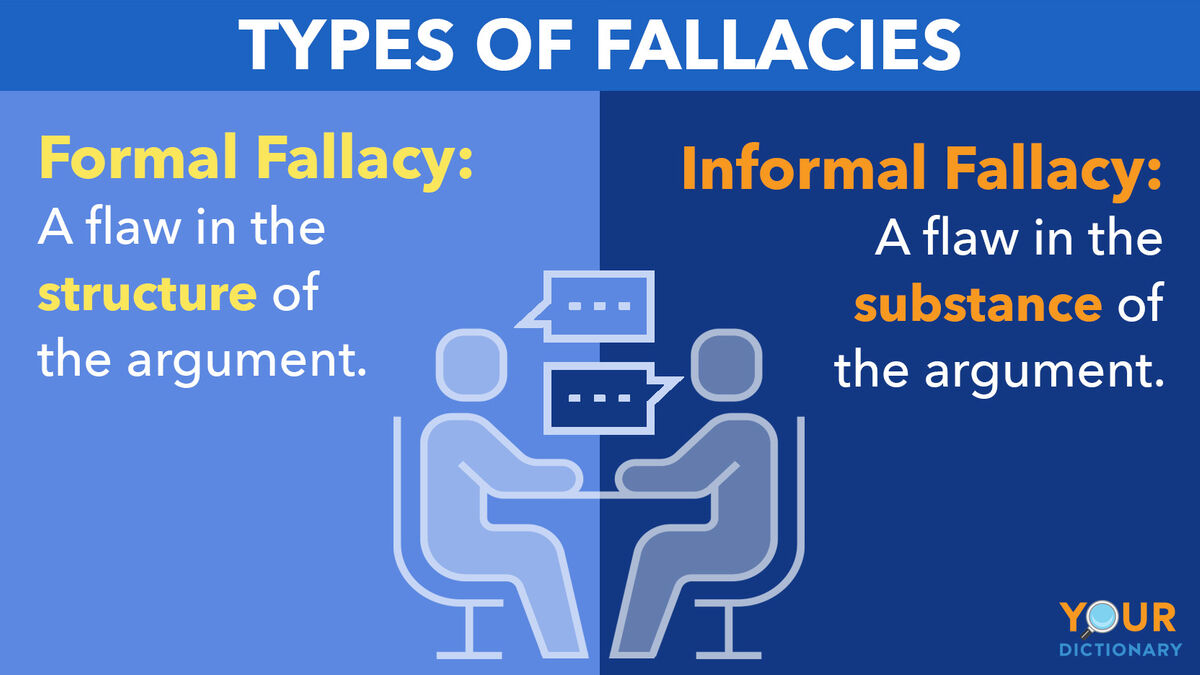
Faulty reasoning, or logical fallacy, occurs when a conclusion is reached through a flawed sequence of thought. In a financial context, these errors in logic act as invisible taxes on your wealth. They lead to holding losing assets for too long, chasing speculative bubbles, or failing to diversify when the signals are clear. To master your money, you must first master the mechanics of your mind.
The Psychology of Financial Error: Why the Brain Struggles with Capital
Before diving into specific fallacies, it is essential to understand why the human brain is prone to faulty reasoning regarding money. Our cognitive architecture evolved for survival on the savannah, not for navigating complex derivative markets or long-term retirement planning.
The Rational Actor Myth
Classic economic theory suggests that if you give a person all the available information, they will make the choice that maximizes their utility. Yet, behavioral economics has proven this is rarely the case. Faulty reasoning persists because humans prioritize social proof, immediate gratification, and emotional comfort over cold, hard data. When we see a stock price plummet, our “lizard brain” triggers a fight-or-flight response, leading us to panic sell at the bottom, even if the long-term fundamentals remain sound.
Cognitive Load and Decision Fatigue
The modern financial landscape is saturated with data. From real-time tickers to 24-hour financial news cycles, the sheer volume of information can lead to cognitive overload. When the brain is tired, it takes shortcuts. These shortcuts, known as heuristics, are often the breeding ground for faulty reasoning. We stop analyzing and start “feeling,” which is the point where logic typically exits the room.
Common Logical Fallacies in Personal Finance
Identifying faulty reasoning requires a high degree of self-awareness. Several specific fallacies appear repeatedly in investment portfolios and household budgets, often masquerading as “common sense.”
The Sunk Cost Fallacy
Perhaps the most damaging form of faulty reasoning in finance is the sunk cost fallacy. This occurs when an individual continues to pour money, time, or emotional energy into a losing venture simply because they have already invested heavily in it.
In investing, this looks like “averaging down” on a company whose business model has fundamentally broken, simply because you don’t want to admit the initial investment was a mistake. Logic dictates that your previous investment is gone; your only concern should be whether the next dollar spent has a high probability of a positive return. If it doesn’t, the reasoning is faulty.
The Gambler’s Fallacy
The gambler’s fallacy is the mistaken belief that if something happens more frequently than normal during a given period, it will happen less frequently in the future (or vice versa). In the stock market, this manifests as the belief that a stock is “due for a rally” simply because it has been down for five days straight.
Market movements are not always a series of independent coin flips, but the reasoning that “the universe owes me a reversal” is a logical error. Prices move based on supply, demand, and fundamentals, not a cosmic sense of balance.
Confirmation Bias in Portfolio Management
Confirmation bias is the tendency to search for, interpret, and favor information that confirms one’s pre-existing beliefs. If an investor is “bullish” on a specific tech sector, they will instinctively gravitate toward news articles and influencers who validate that view, while ignoring warnings from critics. This faulty reasoning creates an echo chamber that blinds the investor to mounting risks until it is too late.
Identifying Faulty Reasoning in Market Trends
Faulty reasoning doesn’t just happen at the individual level; it can infect entire markets, leading to bubbles and subsequent crashes. Understanding the collective logic errors of the crowd is key to protecting your capital.
Narrative Bias and the Hype Cycle
Humans are storytelling animals. We find it much easier to invest in a “compelling story” than a spreadsheet of cash flows. Narrative bias is the faulty reasoning that a great story equates to a great investment.
Whether it was the Dot-com boom, the 2008 housing surge, or recent crypto frenzies, the narrative often outpaces the reality. When the reasoning for an investment is “This is the future of the world” without any accompanying “This is how they will generate a profit,” you are witnessing narrative-driven faulty reasoning.
Survivorship Bias in Wealth Success Stories
We often look at billionaires or wildly successful entrepreneurs to learn how to manage our money. However, this often involves survivorship bias—a logical error where we focus on the people who “survived” a risky path while ignoring the thousands who followed the exact same path and failed.
If you base your financial strategy solely on the success of one outlier who “bet it all on one stock,” your reasoning is faulty because it fails to account for the statistical improbability of that outcome. A sound financial plan must be based on repeatable processes, not the imitation of lucky anomalies.
Strategies to Debug Your Financial Logic
Knowing that your reasoning is faulty is only half the battle; the other half is implementing systems to prevent these errors from manifesting as financial loss.
Implementing Systematic Investing
One of the best ways to combat faulty reasoning is to remove the “reasoning” part of the equation for your day-to-day finances. Systematic investing, such as Dollar-Cost Averaging (DCA), forces you to buy a set amount of an asset at regular intervals regardless of how you “feel” about the market. By automating the process, you bypass the cognitive biases that lead to market timing errors.
The Power of the Pre-Mortem
A “pre-mortem” is a strategy where you imagine a future where your investment has failed. You then work backward to determine what caused that failure. This exercise forces you to confront the flaws in your own logic before you commit capital. It challenges the “confirmation bias” by requiring you to seek out the “bear case” for every “bull case” you hold.
Maintaining an Investment Journal
Writing down the logic behind every financial decision is a powerful deterrent to faulty reasoning. When you buy a stock or start a business, record the specific reasons why. If the investment fails six months later, you can look back at your notes. This prevents “hindsight bias,” where we tell ourselves we “knew it all along,” and allows us to see exactly where our logic went off the rails.
The Role of Financial Tools in Reducing Bias
In the digital age, we have access to tools that can help audit our logic. While technology is not a silver bullet, it provides a layer of objective data that can counteract emotional impulses.
Algorithmic Rebalancing
As certain assets in a portfolio grow, they can become a disproportionately large part of your net worth, increasing your risk. A common faulty reasoning is to “let the winners run” indefinitely because of an emotional attachment to a successful stock. Algorithmic rebalancing tools automatically sell portions of winning assets and buy underperforming ones to maintain your target risk profile. This enforces a “buy low, sell high” discipline that human logic often fails to maintain.
Data-Driven Auditing and Net Worth Tracking
Using financial dashboards allows you to see the “big picture” of your money. Faulty reasoning often thrives in the dark—when we don’t know exactly how much we are spending or what our true rate of return is. By using tools that aggregate your accounts, you can see the cold reality of your financial trajectory. Data doesn’t have an ego, and it doesn’t fall for the sunk cost fallacy; it simply shows the results of your decisions.

Conclusion: The Path to Logical Wealth
Faulty reasoning is a natural part of the human experience, but it does not have to be a permanent feature of your financial life. By recognizing the psychological traps of the sunk cost fallacy, confirmation bias, and narrative-driven investing, you can begin to build a “firewall” around your wealth.
The most successful investors are not necessarily the ones with the highest IQs or the most complex algorithms; they are the ones who are most aware of their own cognitive limitations. To grow your money in an uncertain world, you must commit to a process of constant logical auditing. Question your assumptions, diversify your sources of information, and remember that in finance, the most dangerous person you will ever encounter is the one staring back at you in the mirror. Refine your reasoning, and the results will follow.
aViewFromTheCave is a participant in the Amazon Services LLC Associates Program, an affiliate advertising program designed to provide a means for sites to earn advertising fees by advertising and linking to Amazon.com. Amazon, the Amazon logo, AmazonSupply, and the AmazonSupply logo are trademarks of Amazon.com, Inc. or its affiliates. As an Amazon Associate we earn affiliate commissions from qualifying purchases.