
In the landscape of personal finance, precision is profit. Whether you are navigating the aisles of a retail store, evaluating a new investment opportunity, or negotiating the terms of a loan, the ability to quickly and accurately determine a “percentage off” is one of the most practical skills you can possess. While it may seem like a basic arithmetic exercise, understanding the mechanics of discounts and reductions is a cornerstone of strategic money management.
When we talk about a percentage off, we are essentially discussing the reduction of a base value. In financial terms, this represents “savings”—capital that remains in your pocket rather than being transferred to a merchant or a creditor. Mastering this calculation allows you to move beyond the marketing “noise” and see the actual impact on your cash flow and net worth.

The Fundamentals of Percentage Calculations
To manage money effectively, one must first be comfortable with the underlying math. A percentage is simply a ratio expressed as a fraction of 100. When you see a “30% off” sign, the merchant is offering to reduce the price by 30 units for every 100 units of currency the item costs.
The Basic Formula for Discounts
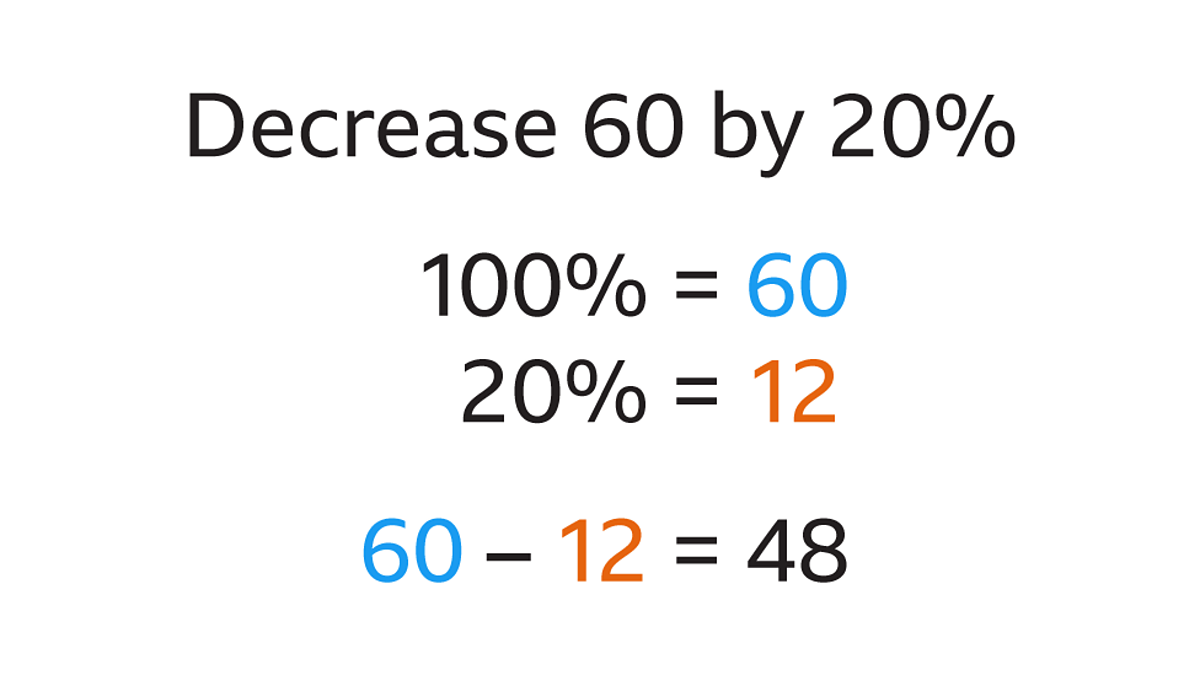
The most direct way to calculate a percentage off is to follow a two-step process. First, determine the amount of the discount, and second, subtract that amount from the original price.
- Calculate the Discount Amount: (Original Price) x (Percentage Off / 100) = Discount Amount.
- Calculate the Sale Price: (Original Price) – (Discount Amount) = Final Price.
For example, if a high-end financial software suite normally costs $500 and is currently offered at 15% off, you would multiply $500 by 0.15 to get $75. Subtracting $75 from $500 leaves you with a final cost of $425. Understanding this formula is the first step toward becoming a more conscious consumer.
Decimal Conversions and Fractions
For many, the easiest way to perform these calculations mentally is to convert the percentage into a decimal. To do this, you simply move the decimal point two places to the left. Thus, 25% becomes 0.25, and 7% becomes 0.07.
Alternatively, using fractions can be faster for common percentages. If you know that 20% is one-fifth (1/5), you can simply divide the price by five to find the discount. If an item is $100, one-fifth of that is $20. These mental shortcuts are invaluable during high-pressure financial negotiations or quick-moving market sales where time is a factor in decision-making.
Why Mental Math is a Financial Superpower
In a digital world, it is tempting to rely entirely on smartphone calculators. However, the ability to perform “back-of-the-envelope” math allows you to evaluate deals in real-time. This skill prevents “sticker shock” at the checkout and protects you from misleading marketing tactics. By internalizing these calculations, you gain a sense of “financial intuition,” enabling you to spot a genuine bargain versus a manipulated price hike.
Real-World Scenarios in Personal Finance
While the formula remains the same, the application of “percentage off” math varies significantly across different financial sectors. Understanding these nuances can save a household thousands of dollars annually.
Retail Discounts and Sales Strategy
In the world of retail, “percentage off” is a primary psychological trigger. However, the savvy money manager looks at the “Unit Price” and the “Opportunity Cost.” When you calculate a 40% discount on a $200 designer jacket, you are saving $80. But from a strict personal finance perspective, you are still spending $120.
The calculation should always be viewed through the lens of your budget. If the $120 wasn’t allocated in your monthly spending plan, the 40% “savings” is actually a $120 drain on your liquidity. Calculating the percentage off is only half the battle; the other half is determining if the remaining 60% is a wise use of your capital.
Calculating Sales Tax After the Discount
A common mistake in budgeting is forgetting that sales tax is typically applied to the discounted price, not the original price. This is a subtle but important distinction for large purchases like electronics or furniture.
If you buy a $1,000 laptop at 20% off, the price drops to $800. If your local sales tax is 8%, you calculate the tax based on the $800 ($64), bringing the total to $864. If the tax were applied to the original $1,000, you would be paying $80 in tax. Understanding this sequence ensures your cash flow projections are accurate to the cent.

Stackable Coupons and Compound Savings
Occasionally, you may encounter “compounded discounts”—for example, a store-wide 20% off sale, plus an additional 10% off for cardholders. It is a common misconception that this equals a 30% discount. In reality, discounts are usually applied sequentially.
On a $100 item, the first 20% takes the price to $80. The subsequent 10% is then taken off the new $80 price (an $8 reduction), resulting in a final price of $72. Mathematically, this is an overall discount of 28%, not 30%. Knowing how to calculate these “discounts on discounts” is essential for accurate price comparisons.
Beyond the Store: Percentages in Investing and Debt
The concept of “percentage off” extends far beyond the shopping mall. In the realms of investing and debt management, these calculations determine your long-term wealth trajectory.
Understanding Interest Rate Reductions
When a lender offers to lower your mortgage interest rate or your credit card APR, they are essentially offering a “percentage off” the cost of your capital. For instance, if you have a $300,000 mortgage at 6% interest and you refinance to 5%, that 1% reduction (a “percentage off” your rate) can save you tens of thousands of dollars over the life of the loan.
Calculating the “percentage off” your interest expenses is perhaps the most impactful way to apply this math. It allows you to weigh the costs of refinancing (closing costs) against the long-term savings to find the “break-even point.”
Analyzing Investment “Drawdowns”
In the stock market, we often hear about “percentage off” in the context of a market correction or a “dip.” If an index fund drops 10% from its peak, investors often view this as a “sale” on future returns.
However, the math of recovery is non-linear. If your portfolio loses 20% of its value, you need a 25% gain just to get back to where you started. This is because the “percentage off” was calculated on a larger base, while the recovery is calculated on a smaller, depleted base. Understanding this relationship is vital for risk management and setting realistic expectations for investment growth.
Tax Brackets and Effective Tax Rates
Managing your taxes is another area where “percentage off” math is king. Tax deductions are essentially a “percentage off” your taxable income. If you are in the 24% tax bracket and you contribute $10,000 to a traditional 401(k), you are effectively getting a 24% “discount” on that contribution because that money isn’t taxed. That $10,000 investment only “costs” you $7,600 in take-home pay. Mastering these calculations allows you to optimize your contributions and minimize your tax liability.
Tools and Strategies for Smarter Money Management
While the math is straightforward, implementing it into a lifestyle of financial discipline requires strategy.
Digital Financial Calculators
For complex scenarios—such as calculating the impact of a 0.5% reduction in an investment’s expense ratio over 30 years—manual math becomes cumbersome. In these cases, utilizing financial tools like compound interest calculators or “discount vs. rebate” spreadsheets is advisable. These tools help visualize how a small “percentage off” in costs can lead to a massive increase in terminal wealth due to the power of compounding.
Creating a “Discount Budget” Strategy
A sophisticated approach to money management involves a “Discount Reallocation” strategy. Whenever you save money via a percentage-off deal on a planned purchase, take the amount saved and immediately transfer it to a savings or investment account.
If you planned to spend $100 on groceries but used coupons and sales to spend only $80, that $20 (20% off) should not be “absorbed” back into your checking account to be spent elsewhere. By calculating the percentage off and moving the difference, you turn a simple discount into an active wealth-building tool.
Recognizing the Psychology of “Percent Off” Marketing
Finally, a professional approach to finance requires an awareness of how “percent off” is used to manipulate consumer behavior. Retailers often use “anchor pricing”—artificially inflating the original price to make a 50% discount look more attractive.
The most important calculation you can make is not “How much am I saving?” but “Is the final price worth the value I am receiving?” If a $1,000 watch is 70% off, it still costs $300. If you didn’t need a watch, you didn’t save $700; you spent $300. True financial mastery comes from combining the math of percentages with the logic of value-based spending.
By mastering the simple question of “how do you calculate a percentage off,” you equip yourself with a versatile tool for every stage of your financial journey. From the daily coffee run to the restructuring of a multi-million dollar portfolio, the principles of reduction, valuation, and capital retention remain the same. Math is the language of money, and percentages are its most eloquent shorthand.
aViewFromTheCave is a participant in the Amazon Services LLC Associates Program, an affiliate advertising program designed to provide a means for sites to earn advertising fees by advertising and linking to Amazon.com. Amazon, the Amazon logo, AmazonSupply, and the AmazonSupply logo are trademarks of Amazon.com, Inc. or its affiliates. As an Amazon Associate we earn affiliate commissions from qualifying purchases.