
When one considers the global financial markets, the mind often drifts toward high-tech semiconductors, precious metals, or volatile energy sectors. Rarely does the humble communion wafer enter the conversation. Yet, behind this simple combination of flour and water lies a remarkably stable, multi-million dollar niche industry characterized by high-volume production, specialized manufacturing, and a level of brand loyalty that most consumer packaged goods (CPG) companies would envy.
To understand what communion wafers are “made of” is to understand more than just a list of ingredients; it is to understand the economics of a religious commodity. In the business world, the wafer represents a fascinating study in “recession-proof” assets, low-cost manufacturing efficiency, and the logistical complexities of a global supply chain serving billions of customers.
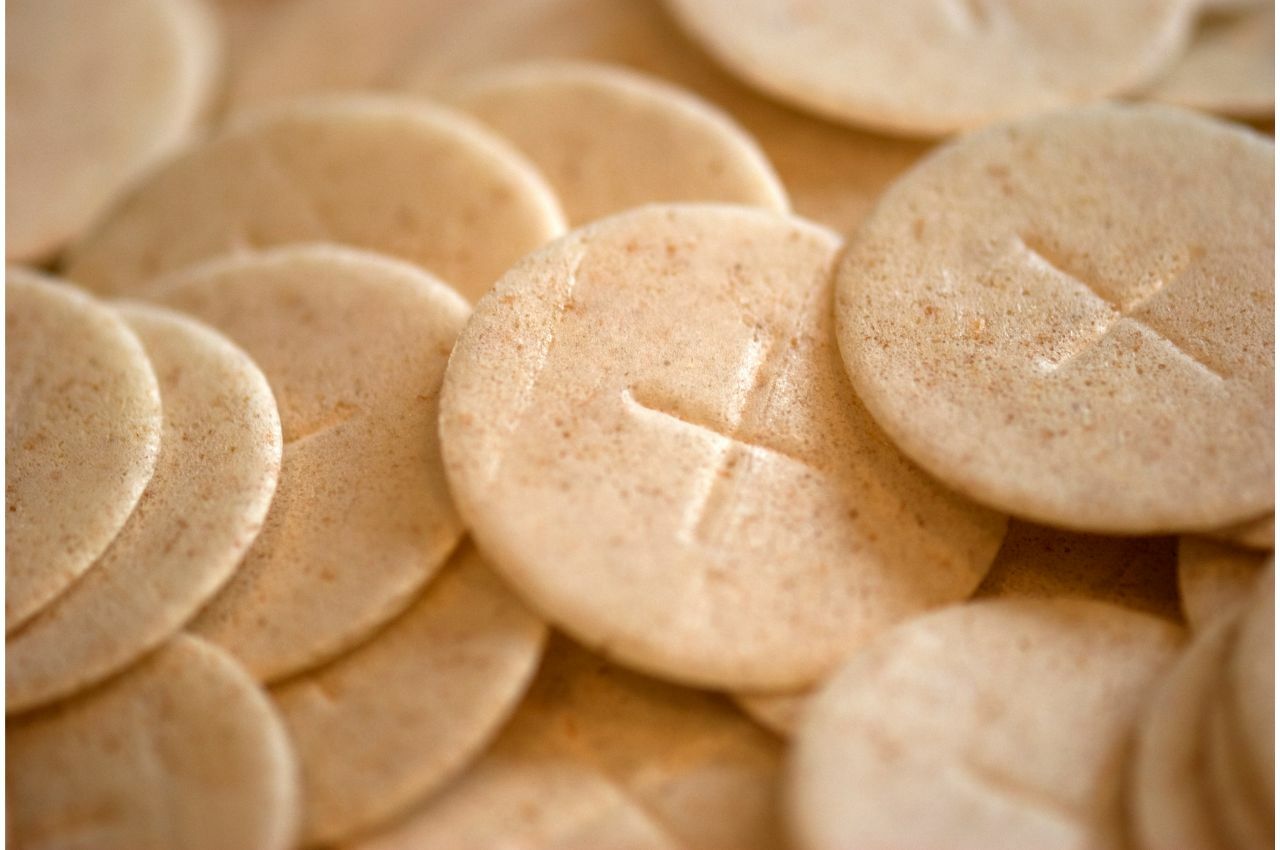
The Business of Belief: Understanding Niche Market Dynamics
The communion wafer market is a textbook example of a specialized monopoly or oligopoly, depending on the geographic region. Unlike the broader snack food industry, which is hyper-competitive and subject to shifting consumer tastes, the market for altar bread is governed by strict liturgical requirements and institutional inertia.
Market Capitalization of Religious Consumables
While exact global figures are difficult to aggregate due to the private nature of many manufacturers, the religious supplies industry is a billion-dollar enterprise. Communion wafers constitute a significant portion of the “consumables” segment of this market. In the United States alone, millions of wafers are consumed weekly. For a manufacturer, this represents a dream scenario: a product with a 100% consumption rate and a recurring, weekly purchase cycle.
The “market cap” of the wafer industry is sustained by the sheer scale of the Catholic, Anglican, and Lutheran denominations, among others. Because these institutions require specific types of wafers—often strictly unleavened and made only of wheat and water—the barriers to entry are surprisingly high. You cannot simply pivot a standard commercial bakery into a communion wafer factory without adhering to specific canonical laws, which effectively acts as a regulatory moat for established players.
Identifying Key Players and Institutional Monopolies
In the North American market, one name dominates the financial landscape: The Cavanagh Company. Based in Rhode Island, this family-owned business produces approximately 80% of the communion wafers used in the U.S. and Canada. Their success is a masterclass in industrial efficiency. By automating a process that was once the province of individual monasteries, they have achieved economies of scale that make it nearly impossible for smaller competitors to price-match.
This institutional dominance is a key financial indicator. When a single company controls the vast majority of a niche market, they dictate the pricing floor. For churches operating on tight budgets, the decision to buy is rarely based on brand marketing and almost always based on the cost-per-unit and reliability of the supply chain.
Production Costs and Profit Margins: The Financial Anatomy of a Wafer
When analyzing what a communion wafer is made of from a financial perspective, we look at the Cost of Goods Sold (COGS). The ingredient list is famously sparse: specialized wheat flour and water. From a commodity investment standpoint, this is an incredibly efficient profile.
The Raw Material Economics of Unleavened Bread
The primary raw material—wheat—is a globally traded commodity. Large-scale wafer manufacturers hedge their costs by buying wheat futures or establishing long-term contracts with mills. Because the wafers contain no yeast, salt, or preservatives, the ingredient cost per unit is fractions of a cent.
However, the “wheat” isn’t just any store-bought flour. To meet the requirements of many denominations, the flour must have a specific gluten content to ensure the wafer doesn’t crumble (a logistical and liturgical nightmare). This requirement for “pure” wheat actually allows manufacturers to charge a premium for a product that is, ironically, less complex than a standard loaf of sandwich bread.
Overhead and the Impact of Specialized Machinery
Where the “money” is truly spent is in the capital expenditure (CapEx) of specialized machinery. Traditional baking equipment cannot produce the wafer’s signature texture—crisp, thin, and sealed at the edges to prevent crumbs.
Modern wafer production involves massive, automated griddles that bake sheets of bread, which are then humidified to prevent shattering before being punched out by precision dies. The investment in these machines is significant, often running into the millions of dollars. For a business owner, this creates a high “break-even” point, but once that point is surpassed, the marginal cost of producing an additional thousand wafers is negligible, leading to healthy profit margins in high-volume years.

Supply Chain Resilience and Global Distribution Logistics
The profitability of the communion wafer industry is heavily dependent on logistics. Because the product is lightweight but fragile, the “cost to ship” vs. “value of product” ratio is a constant challenge for CFOs in this sector.
Navigating High-Volume, Low-Weight Logistics
In the world of logistics, shipping “air” is expensive. Communion wafers are essentially dehydrated, lightweight disks. They are susceptible to moisture and physical damage. Therefore, the packaging must be robust enough to withstand the rigors of global shipping while remaining cost-effective.
Leading manufacturers have optimized their packaging to maximize pallet density. By reducing the “cube” of the package, they can fit hundreds of thousands of dollars worth of inventory into a single shipping container. This logistics optimization is what allows a company in Rhode Island to profitably supply a cathedral in London or a mission in South America.
The Impact of Institutional Contracts on Revenue Stability
From a business finance perspective, the most attractive aspect of the wafer industry is the nature of the contracts. Most wafers are sold through religious supply distributors who have long-standing relationships with dioceses and synods.
These are not “one-off” sales. They are often multi-year procurement agreements. For a business, this creates highly predictable cash flow. Unlike a retail bakery that might see a drop in sales during a low-carb diet fad, a religious supply manufacturer can forecast their revenue years in advance based on the number of congregants in their primary markets. This stability makes these businesses excellent candidates for low-interest commercial loans and long-term capital reinvestment.
Revenue Diversification and the Gluten-Free Market Shift
Innovation is rarely associated with a product that has remained largely unchanged for centuries. However, the modern financial landscape has forced the wafer industry to adapt. The rise of celiac disease and gluten sensitivity has created a new, high-margin sub-sector: the “low-gluten” or “gluten-free” wafer.
Capitalizing on Dietary Trends: The Premiumization of Wafers
In the world of Money and Investing, “premiumization” is the process of making a product more specialized to command a higher price. Standard communion wafers are a commodity. Low-gluten wafers, however, are a “specialty health product.”
A box of standard wafers might sell for a few dollars per hundred. In contrast, low-gluten wafers—which require separate production lines to avoid cross-contamination and specialized ingredients like starch—can sell for three to four times that price. For manufacturers, this shift in consumer (or congregant) needs has opened up a more lucrative revenue stream with higher margins, even if the volume is lower.
The Direct-to-Consumer (DTC) Model and Monastery Economics
While large corporations dominate the volume, there is a thriving “boutique” market for communion wafers made by religious orders. Many monasteries and convents rely on the production of altar bread as their primary source of income—a “side hustle” that has sustained these communities for generations.
In recent years, these smaller producers have moved toward a Direct-to-Consumer (DTC) model via e-commerce. By cutting out the middleman (the religious supply distributor), these smaller communities can capture the full retail margin. They market their products as “artisan” or “prayerfully made,” allowing them to compete not on price, but on brand story and social impact. For the socially conscious investor or donor, purchasing from these sources represents a “Double Bottom Line” (DBL) investment: providing a necessary product while supporting a charitable or religious community.

Conclusion: The Bottom Line on Altar Bread
The next time you consider what a communion wafer is made of, remember that the answer extends far beyond flour and water. From a financial perspective, it is made of strategic market positioning, optimized logistics, and a highly stable revenue model.
The industry demonstrates that even the most ancient traditions are subject to the laws of economics. Between the industrial giants like Cavanagh and the artisanal monastery bakeries, the business of the Eucharist is a testament to how niche markets can provide sustainable, long-term financial growth. In an era of volatile tech stocks and uncertain digital assets, the communion wafer remains a masterclass in the enduring power of a high-volume, low-cost, institutional commodity.
aViewFromTheCave is a participant in the Amazon Services LLC Associates Program, an affiliate advertising program designed to provide a means for sites to earn advertising fees by advertising and linking to Amazon.com. Amazon, the Amazon logo, AmazonSupply, and the AmazonSupply logo are trademarks of Amazon.com, Inc. or its affiliates. As an Amazon Associate we earn affiliate commissions from qualifying purchases.