
In the landscape of digital evolution, few technologies have had as profound an impact on global culture and data management as the MP3. Short for MPEG-1 Audio Layer III, the MP3 is not merely a file extension; it is the cornerstone of the digital music revolution. It bridged the gap between the physical constraints of compact discs and the limitless potential of the internet. By utilizing sophisticated mathematical algorithms to shrink audio data without catastrophic losses in perceived quality, the MP3 changed how we store, share, and experience sound.

To understand the MP3 format is to understand the intersection of acoustics, mathematics, and software engineering. Despite the emergence of high-resolution lossless formats and advanced streaming codecs, the MP3 remains the most recognized and widely used audio format in the world. This article explores the technical intricacies of the MP3, its historical development, and its enduring relevance in a high-bandwidth digital age.
The Science of Compression: How MP3 Works
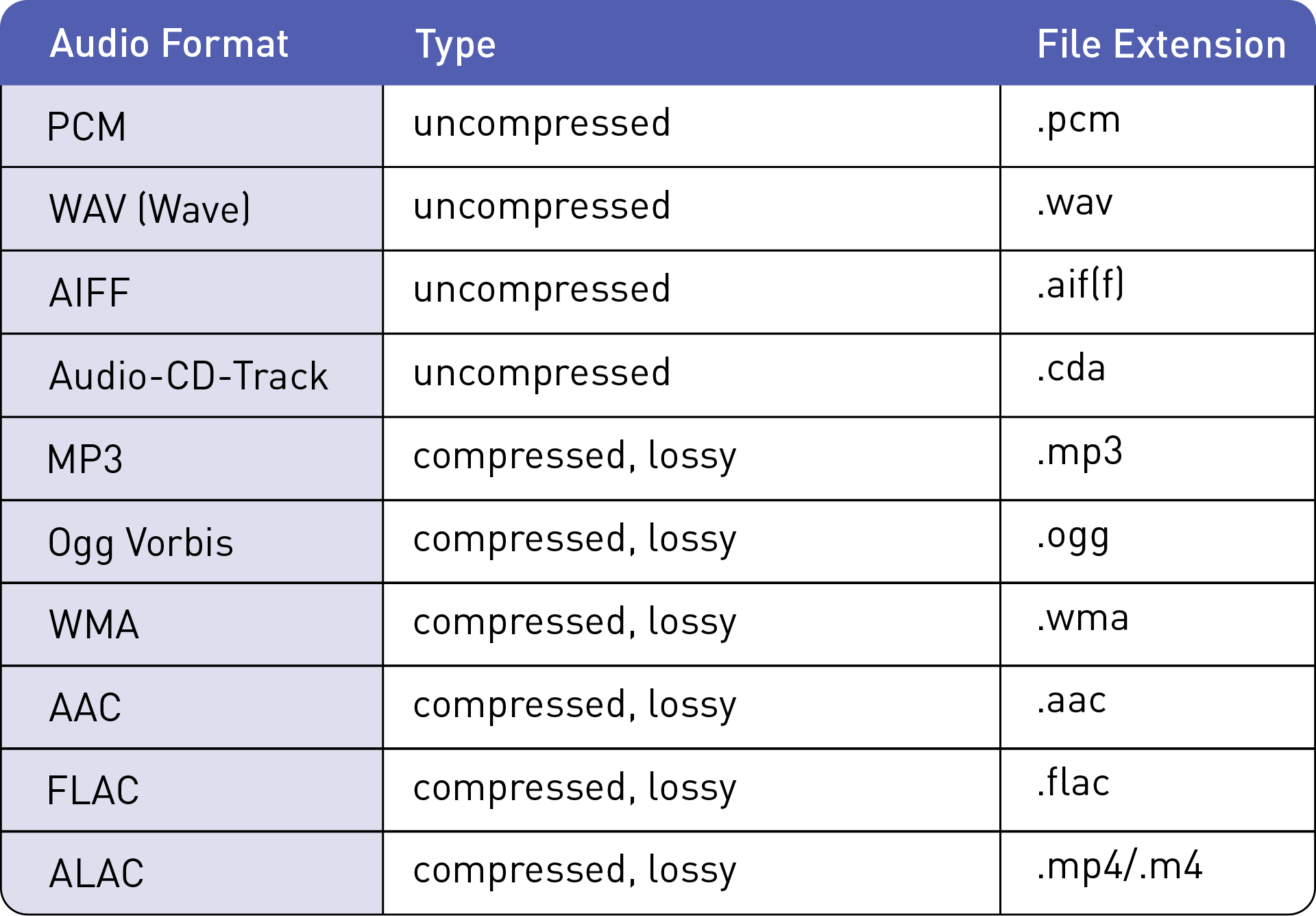
At its core, the MP3 is a “lossy” audio compression format. This means that to achieve a smaller file size, some of the original audio data is permanently discarded. While this might sound detrimental to the listening experience, the genius of the MP3 lies in its use of psychoacoustics—the study of how humans perceive sound.
The Principles of Psychoacoustic Masking
The human ear is a remarkable biological instrument, but it has limitations. MP3 technology exploits these limitations through a process called “auditory masking.” There are two primary types of masking: simultaneous masking and temporal masking. Simultaneous masking occurs when a loud sound drowns out a quieter sound at a similar frequency. Temporal masking occurs when a loud sound prevents the ear from hearing quieter sounds that occur immediately before or after it.
MP3 encoders use an algorithmic “psychoacoustic model” to analyze the audio signal. The encoder identifies the sounds that the human ear is unlikely to hear—such as frequencies above 20 kHz or quiet tones masked by louder ones—and removes them from the data stream. By stripping away this “invisible” data, the file size can be reduced by up to 90% while maintaining a sound that is remarkably close to the original source.
Bitrate and Its Impact on Fidelity
A critical component of the MP3 format is the “bitrate,” which refers to the amount of data processed per second of audio. Measured in kilobits per second (kbps), the bitrate determines the balance between file size and sound quality.
- Low Bitrates (96–128 kbps): These result in very small files but often introduce “artifacts”—metallic-sounding distortions, particularly in high-frequency sounds like cymbals.
- Standard Bitrates (192–256 kbps): This is the “sweet spot” for many listeners, providing high-quality audio that is indistinguishable from a CD for the average ear in most environments.
- High Bitrate (320 kbps): This is the maximum quality for the MP3 format. It offers the highest fidelity possible within the constraint of the codec, favored by audiophiles who require the best possible lossy performance.
Constant vs. Variable Bitrate (CBR vs. VBR)
Advanced MP3 encoders offer two modes of data allocation. Constant Bitrate (CBR) maintains the same data rate throughout the entire file. While predictable, it is inefficient because it uses the same amount of data for a complex orchestral climax as it does for a moment of silence. Variable Bitrate (VBR), conversely, adjusts the data rate dynamically. It uses more bits for complex sections and fewer bits for simple ones, optimizing the ratio of quality to file size.
The Evolution of MP3: From Laboratory to Global Dominance
The development of the MP3 was not an overnight success; it was the result of over a decade of intensive research in digital signal processing (DSP). The journey began in Germany at the Fraunhofer Institute for Integrated Circuits (IIS) in the late 1980s.
The “Starfish” Project and ISO Standardization
Led by Karlheinz Brandenburg, often referred to as the “father of the MP3,” a team of engineers worked on a project initially known as “EUREKA project EU147.” Their goal was to transmit high-quality audio over digital telephone lines (ISDN). The team faced immense pressure to create a format that was efficient enough for low-bandwidth environments.
In 1992, the Moving Picture Experts Group (MPEG) integrated these efforts into the MPEG-1 standard. The “Layer III” designation was the most complex and efficient of the three proposed audio tiers. By 1995, the extension “.mp3” was officially chosen, and the software to play these files began to circulate within the tech community.
The Internet Catalyst and the Rise of Napster
The MP3 format arrived exactly when the world needed it. As the World Wide Web began to enter households, the bottleneck was bandwidth. A standard WAV file from a CD was roughly 50 megabytes for a five-minute song—far too large to download on a 56k dial-up modem. The MP3 reduced that same song to 4 or 5 megabytes.
The late 1990s saw the explosion of MP3 sharing, fueled by Peer-to-Peer (P2P) networks like Napster. While this era was fraught with legal battles over copyright, it proved that the MP3 was the “universal language” of digital audio. It forced the hardware industry to adapt, leading to the creation of portable MP3 players, eventually culminating in the release of the Apple iPod in 2001.

Open Standards and Software Integration
One of the reasons the MP3 became a global standard was its relative openness. While Fraunhofer held patents on the encoding technology for many years, the decoding (playback) was easy for developers to implement. This led to a software ecosystem where every media player—from Winamp on Windows to iTunes on Mac—supported the format natively. In 2017, the final patents associated with MP3 expired, making it a fully royalty-free technology for developers and manufacturers.
Technical Comparison: MP3 vs. Modern Audio Formats
While the MP3 is the most famous audio format, it is no longer the most technologically advanced. In the decades since its release, several other formats have emerged to challenge its dominance in specific niches.
MP3 vs. AAC (Advanced Audio Coding)
AAC was designed to be the successor to the MP3. It is the default format for YouTube, iPhones, and most modern streaming services. At the same bitrate, AAC generally sounds better than MP3 because it uses more sophisticated compression algorithms and handles frequencies above 16 kHz more efficiently. However, the MP3 remains more “universal,” as virtually every digital device ever manufactured can play an MP3, whereas very old hardware may struggle with AAC.
MP3 vs. FLAC (Free Lossless Audio Codec)
The primary difference here is “lossy” vs. “lossless.” FLAC compresses audio without losing a single bit of data. This results in perfect CD-quality audio but with file sizes that are significantly larger than MP3s (often 5 to 10 times larger). In the tech world, FLAC is used for archiving and by audiophiles, while MP3 is used for everyday consumption, podcasts, and mobile storage where space is a priority.
MP3 vs. Ogg Vorbis
Ogg Vorbis is an open-source alternative to MP3. It is often used in the gaming industry and by Spotify for its desktop streaming. Tech-wise, Ogg Vorbis is superior to MP3 at lower bitrates, but because it lacks the massive hardware support that MP3 enjoys, it remains a secondary format in the consumer market.
The Anatomy of an MP3: Metadata and Security
Beyond the audio data itself, the MP3 format contains a sophisticated structure for “metadata.” This is information about the file that isn’t sound, but is essential for modern software and apps to function.
ID3 Tags: Organizing the Digital Library
An MP3 file includes a “container” for ID3 tags. These tags allow the file to store the song title, artist name, album, year of release, and even high-resolution album art within the file itself.
- ID3v1: The original version, which stored simple text at the end of the file.
- ID3v2: The modern version, which resides at the beginning of the file (allowing players to display info instantly while streaming) and supports much larger amounts of data, including lyrics and synchronized timing.
This metadata capability is what allows software like Spotify or Plex to index thousands of files and present them in a searchable, visual interface.
Digital Security and File Integrity
From a digital security perspective, MP3 files are generally considered safe, as they are “data” files rather than “executable” files. However, users should remain vigilant. In some instances, hackers have attempted to disguise malicious software by giving it a “.mp3” extension (e.g., “song.mp3.exe”). Furthermore, because MP3 files can contain large amounts of metadata, there have been theoretical vulnerabilities where specially crafted metadata could cause a buffer overflow in poorly programmed media players. Using modern, updated software and checking file extensions is a standard security protocol for managing digital libraries.
The Future of MP3 in the Age of Streaming
Is the MP3 obsolete? In a world of gigabit internet and terabyte storage, the need to shrink a file to 4 megabytes might seem less urgent. However, the MP3 is far from dead.
The Universal Language of Podcasts and Voice
The MP3 remains the standard for the podcasting industry. Because podcasts are primarily spoken word, they don’t require the massive fidelity of lossless audio. The MP3 format allows creators to distribute content that is light on bandwidth for both the server and the listener’s mobile data plan.
Sustainability and Edge Computing
In the realm of “Green Tech,” the MP3 plays a role in data sustainability. Storing and transmitting smaller files requires less energy in data centers. For companies managing massive amounts of audio data, the efficiency of the MP3 format contributes to lower overhead and a smaller carbon footprint. Additionally, in “Edge Computing”—where data is processed on-device rather than in the cloud—the low computational power required to decode an MP3 makes it ideal for low-power IoT (Internet of Things) devices and smart appliances.
Final Thoughts
The MP3 format is a testament to the power of smart engineering. It proved that by understanding the human experience—in this case, how we hear—we could overcome the physical limitations of hardware. While it may no longer be the “cutting edge” of audio fidelity, its role as the universal, reliable, and highly efficient standard for digital sound ensures that it will remain a staple of the technology industry for decades to come. Whether you are a developer building a new app or a music lover organizing a library, the MP3 remains the foundational brick upon which the digital audio world was built.
aViewFromTheCave is a participant in the Amazon Services LLC Associates Program, an affiliate advertising program designed to provide a means for sites to earn advertising fees by advertising and linking to Amazon.com. Amazon, the Amazon logo, AmazonSupply, and the AmazonSupply logo are trademarks of Amazon.com, Inc. or its affiliates. As an Amazon Associate we earn affiliate commissions from qualifying purchases.