
In the world of personal finance and wealth building, we often focus on external assets: stocks, real estate, and high-yield savings accounts. However, the most significant financial engine you will ever own is your “human capital”—your ability to generate income through your skills, time, and expertise. To maximize the return on investment (ROI) of this asset, you must align your professional efforts with your inherent psychological strengths. This is where the Holland Code becomes an essential financial tool.
Developed by psychologist John L. Holland, the Holland Code (also known as the RIASEC model) is a framework that classifies individuals into six personality types based on their interests and vocational preferences. While often used by guidance counselors, the model is increasingly utilized by high-level career strategists and financial planners to help individuals avoid the “sunk cost fallacy” of pursuing unlucrative or soul-crushing career paths. By understanding your Holland Code, you can strategically position yourself in the labor market to command higher salaries, find sustainable side hustles, and achieve long-term financial independence.
1. The Financial Impact of Career Alignment
The primary reason professionals fail to hit their peak earning potential is not a lack of effort, but a lack of alignment. When you work in a field that contradicts your Holland Code, you experience “vocational friction.” This friction leads to faster burnout, frequent job-hopping, and lower performance ratings—all of which have a direct, negative impact on your lifetime earnings.
Understanding Human Capital as an Asset
In financial terms, your career is a long-term investment. If you spend $100,000 on an MBA but your Holland Code reveals a low “Enterprising” score and a high “Artistic” score, you may find yourself in a high-paying corporate role that you are psychologically ill-equipped to sustain. The resulting burnout often leads to “quiet quitting” or a total career exit, effectively zeroing out the ROI of that expensive degree. Viewing your Holland Code as a roadmap for your human capital allows you to invest in skills that you will actually use and excel in for decades.
Reducing the Cost of Career Pivots
The average person changes careers several times in their life. Each pivot often comes with a financial “reset”—a period of lower pay while learning new skills. By identifying your Holland Code early, you can ensure that even if you change industries, you remain within your “functional niche.” For example, an “Investigative” individual might move from laboratory science to data analytics. While the industry changes, the core activity (analysis) remains the same, allowing for a “horizontal” move that maintains or increases salary levels rather than a “downward” move that resets the clock on wealth accumulation.
2. Breaking Down the RIASEC Model for High-Earning Potential
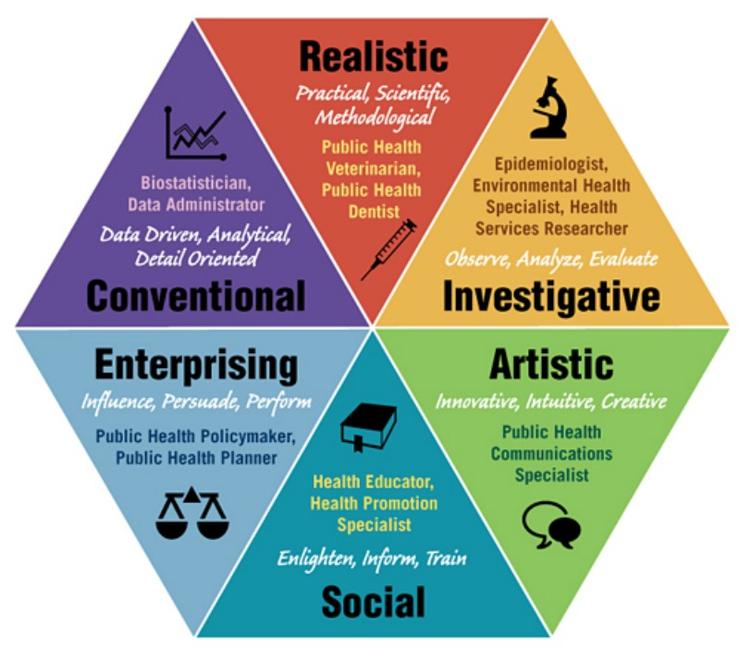
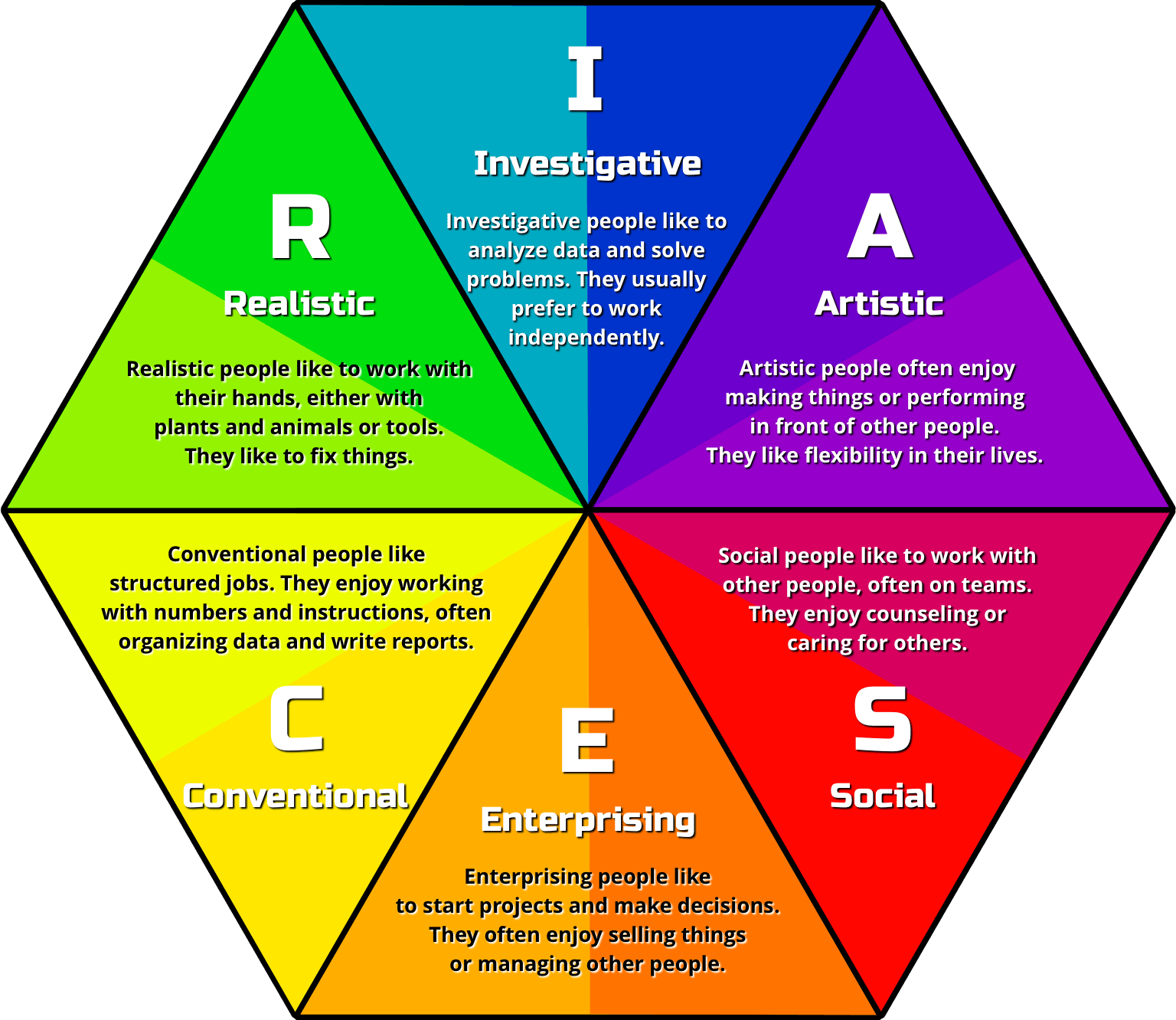
The Holland Code identifies six types: Realistic, Investigative, Artistic, Social, Enterprising, and Conventional. Most people are a combination of two or three (e.g., an “SAE” or “RIC”). Understanding these through a financial lens is the key to identifying where the highest profit margins exist for your specific personality.
Realistic and Investigative: The Technical and Analytical Paydays
The “Realistic” (R) type prefers working with things, tools, and animals. In today’s economy, high-earning R-types are found in specialized engineering, renewable energy infrastructure, and high-end trades. These roles often offer high entry-level pay and strong job security, making them excellent for early-age wealth building.
The “Investigative” (I) type is driven by theory and data. These are the researchers, software developers, and medical specialists. Financially, “I” types benefit from high barriers to entry. Because their work requires deep expertise, they can command significant consulting fees or high-six-figure salaries in the tech and healthcare sectors. For the Investigative type, the path to wealth is often through specialized certification and intellectual property.
Enterprising and Conventional: The Leaders and Scalers
“Enterprising” (E) types are the natural “money-movers.” They enjoy leading, persuading, and managing. These individuals thrive in sales, real estate development, and executive leadership. The financial upside for an “E” type is virtually unlimited, as their income is often tied to performance bonuses, commissions, or equity stakes.
“Conventional” (C) types are the masters of data, organization, and detail. They are the accountants, actuaries, and logistics managers. While an “E” type might start a company, the “C” type ensures it is profitable and compliant. In the world of finance, “C” types are essential. Their path to wealth is built on stability, reliability, and the ability to optimize systems to save money—making them invaluable to any corporate entity.

Artistic and Social: Monetizing Creativity and Human Services
Traditionally, “Artistic” (A) and “Social” (S) types were viewed as having lower earning potential. However, the modern digital economy has flipped this script. “Artistic” types—those who value self-expression and novelty—are now the backbone of the creator economy. By leveraging platforms to build a personal brand, an “A” type can generate passive income through digital products and media that far exceed traditional corporate salaries.
“Social” types—who enjoy helping, teaching, and healing—find their highest ROI in high-ticket coaching, private practice therapy, or corporate training. For “S” types, the key to financial success is moving away from “trading hours for dollars” and toward scalable group models or high-value consulting where their empathy and communication skills are treated as a premium service.
3. Using Holland Codes to Identify Profitable Side Hustles
In the pursuit of financial independence, many people look for side hustles. However, picking a side hustle based solely on what is “trending” often leads to failure. A Holland Code assessment allows you to pick a secondary income stream that feels like play but pays like work.
Matching Personality to Passive Income Streams
If you are a “Conventional/Investigative” type, a side hustle in day trading or managing a niche e-commerce store with complex logistics might be profitable and engaging. However, if you are a “Social” type, those activities will feel draining. Instead, a Social type should look into tutoring, creating an online course, or community management. When your side hustle aligns with your Holland Code, you are more likely to stick with it long enough to see the compound interest of your efforts.
Scaling Based on Vocational Strengths
The way you scale a business should also depend on your code. An “Enterprising” person will scale by hiring a team and expanding their market reach. An “Artistic” person will scale by increasing the “uniqueness” and “premium feel” of their work, allowing them to charge higher prices for less volume. Using your code to determine your scaling strategy prevents the common mistake of building a business that you eventually grow to hate because it requires tasks that sit outside your psychological comfort zone.
4. Strategic Skill Acquisition and Educational ROI
Higher education and professional certifications are significant financial outlays. To ensure these investments pay off, they must be aligned with your Holland Code.
Maximizing ROI on Certifications and Degrees
Before committing to a $50,000 master’s degree or a $10,000 coding bootcamp, analyze the Holland Code of the professionals currently in that field. If you are a high “Realistic” type, a remote-work software engineering bootcamp might seem like a good financial move, but you may find the lack of physical, tangible results deeply unsatisfying. This dissatisfaction leads to underperformance and, eventually, a career change that wastes the initial investment. A more profitable path might be a specialized certification in high-tech manufacturing or civil engineering, where you can apply your “Realistic” interests to high-paying, tangible projects.
Navigating the Modern Job Market via Psychological Profiling
The job market is increasingly moving toward “skills-based hiring.” Employers are looking for more than just a degree; they are looking for “fit.” By knowing your Holland Code, you can interview with more confidence, explaining exactly how your natural inclinations make you a low-risk, high-reward hire for a specific role. From a negotiation standpoint, knowing that you are a perfect “Investigative/Conventional” fit for a risk management role gives you the leverage to ask for the top end of the salary range, as the employer knows you are less likely to quit and more likely to deliver high-quality results.
Conclusion: The Wealth-Building Power of Self-Knowledge
Ultimately, the Holland Code is not just a psychological curiosity; it is a financial roadmap. Wealth is rarely built through sheer willpower alone; it is built through the strategic application of your most valuable asset—yourself.
When you align your career, your side hustles, and your educational investments with your RIASEC profile, you reduce the “friction” in your financial life. You earn more because you are better at what you do; you save more because you aren’t spending money to escape a job you hate; and you invest more effectively because you understand the long-term trajectory of your earning power. By defining your Holland Code, you aren’t just finding a job; you are optimizing your life’s greatest financial engine for maximum growth and long-term security.
aViewFromTheCave is a participant in the Amazon Services LLC Associates Program, an affiliate advertising program designed to provide a means for sites to earn advertising fees by advertising and linking to Amazon.com. Amazon, the Amazon logo, AmazonSupply, and the AmazonSupply logo are trademarks of Amazon.com, Inc. or its affiliates. As an Amazon Associate we earn affiliate commissions from qualifying purchases.