
In the annals of television history, few creatures have captured the public imagination quite like the Direwolves of Game of Thrones. Among them, Ghost—the albino companion to Jon Snow—stood as a fan favorite. However, as the series progressed into its final seasons, audiences frequently asked a recurring question: “What happened to Ghost?” While narrative reasons were often cited, the true answer lies within the complex intersection of visual effects (VFX) technology, computational limits, and the evolution of digital character rendering.
Understanding what happened to Ghost requires a deep dive into the technical architecture of prestige television. It is a story of fur grooming simulations, compositing challenges, and the sheer hardware power required to bring a prehistoric predator to life in a way that avoids the “Uncanny Valley.”

The Technical Challenge of Large-Scale CGI Animals
The primary reason Ghost vanished for long stretches of the show was not a lack of creative interest, but the extreme technical difficulty of rendering realistic animals at scale. Unlike the dragons, which are entirely fantastical and allow for a degree of creative liberty, Ghost was based on a real-world creature: the wolf.
Scaling and Realism in Compositing
In the early seasons, the production used Northern Inuit dogs. As the Direwolves grew in the story, the tech stack had to evolve. The production team moved to filming actual wolves (notably a wolf named Quigley) against green screens in Canada. The technical hurdle here was “comping” or compositing.
To make Ghost appear the size of a small horse, the VFX team had to film the real wolf and then scale the footage up by 150% or more. This creates a massive resolution problem. When you scale footage of a real animal, you lose pixel density. To compensate, digital artists had to reconstruct parts of the fur and eyes using CGI overlays to maintain the “high-definition” look required for 4K broadcasts. This hybrid approach—part real footage, part digital enhancement—is one of the most labor-intensive processes in modern VFX.
The Physics of Fur Rendering
Fur is widely considered one of the most “expensive” assets to render in computer graphics. Each individual hair on Ghost’s body must react to light, wind, and physical contact. In technical terms, this involves “grooming” software and complex physics solvers.
When Ghost interacts with a character—such as Jon Snow petting him—the technology must calculate how the digital fur displaces under human fingers. This requires a high-fidelity collision simulation. During the mid-2010s, the render time for a single frame of a high-resolution furry creature could take hours. When multiplied by 24 frames per second, a thirty-second scene of Ghost becomes a massive computational undertaking that can strain even the most advanced render farms.
Motion Capture vs. Practical Effects: The Hybrid Approach
As the scale of Game of Thrones grew, the technology used to portray Ghost had to bridge the gap between practical animal photography and full-motion capture. The “Ghost problem” was essentially a problem of integration.
The Difficulty of Proportional Interaction
One of the most significant technical roadblocks was the “inter-species” interaction. In the later seasons, the technology needed to place a giant wolf in a scene with human actors in a way that felt grounded. This involved “Matchmove” technology—a tool used to track the movement of a camera through a 3D space so that a digital element can be placed into it perfectly.
Because Ghost was often a scaled-up version of a real wolf, his movements didn’t always match the physics of a larger animal. A larger animal moves with more weight and slower momentum. The VFX editors had to use time-remapping software to subtly slow down the wolf’s gait while ensuring it still looked natural. If the tech failed, the wolf would look like a “floaty” digital asset rather than a physical presence on the set.
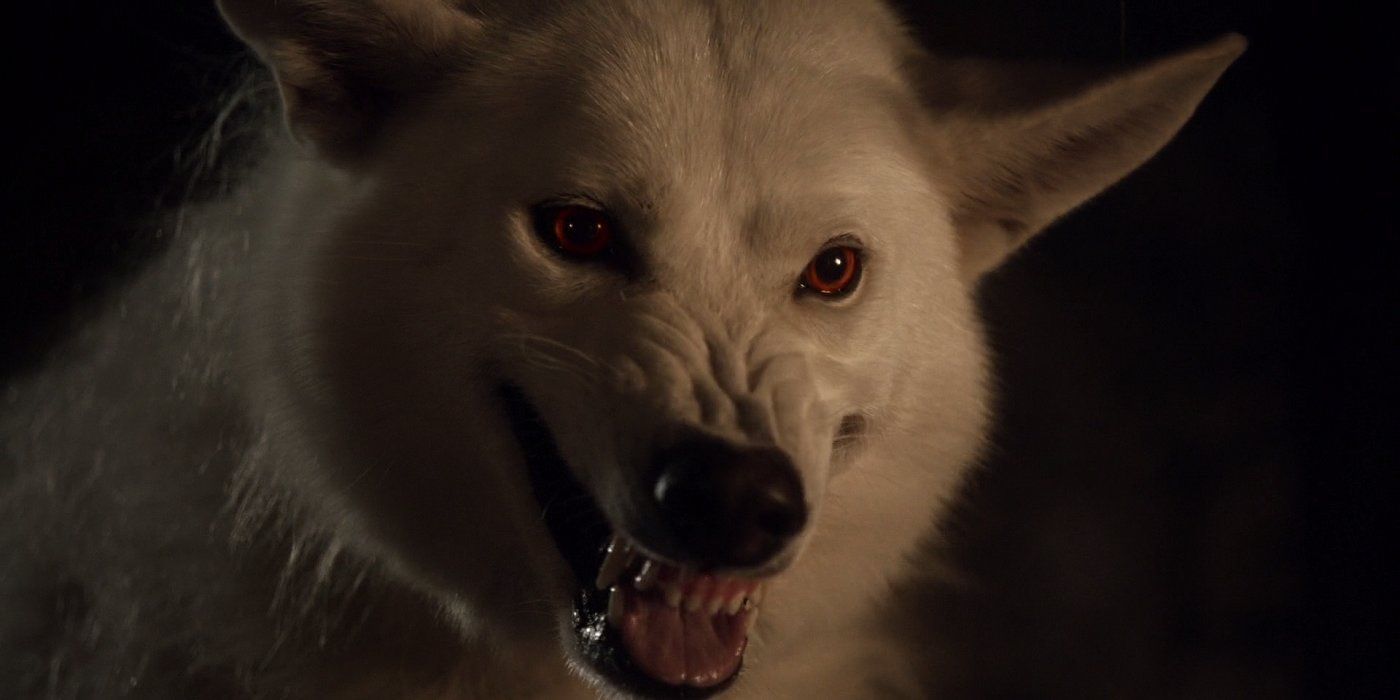
Real Wolves on Green Screens
The technical logistics of “The Wolf Unit” were a nightmare for the production’s digital workflow. Because real wolves are unpredictable, the VFX team couldn’t use traditional motion capture suits on them. Instead, they relied on “Lidar” scans of the environment to create a 1:1 digital twin of the set.
Once the set was digitized, the wolf was filmed in a controlled environment. The technical challenge then became “lighting integration.” If the wolf was filmed in bright Canadian sunlight, but the scene in the show was the dark, moody atmosphere of Winterfell, the digital artists had to “re-light” every strand of white fur using global illumination algorithms. For an albino character like Ghost, this was particularly difficult because white fur reflects every surrounding color, making any technical error in the color grading immediately obvious to the viewer.
The Resource Allocation: Dragons vs. Direwolves
In the world of high-end digital production, resources are finite. The technical “disappearance” of Ghost can be traced back to the prioritization of different digital assets. From a software and hardware perspective, the production team had to choose between the “Wolf Grooming” pipeline and the “Dragon Simulation” pipeline.
The Optimization Trap
Dragons, while complex, offer a technical advantage: they have scales. From a rendering standpoint, scales are “hard-surface” models. While they require complex light-path tracing to look realistic, they do not require the individual fiber physics that fur does.
The VFX house, Pixomondo (responsible for the dragons), and the teams handling the wolves had to compete for “render hours.” As the dragons grew larger and began breathing fire—which requires fluid dynamics and particle simulations—the computational budget shifted. The technology required to render a dragon burning a fleet of ships was deemed more vital to the spectacle than the technology required to simulate a wolf sitting in the background of a council meeting.
Technical Debt and Narrative Culling
“Technical Debt” is a term often used in software development, but it applies to VFX as well. If the production didn’t spend the time and money to upgrade their wolf-rendering pipeline every season, the quality would stagnate. By Season 7 and 8, the visual fidelity of the rest of the show had increased so much that an “under-rendered” Ghost would have looked like a glaring technical flaw. To maintain the prestige “look” of the show, the technical directors often opted to keep Ghost off-screen rather than include a sub-par digital asset that would break the viewer’s immersion.
Lessons for the Future of Virtual Production
What happened to Ghost has become a foundational case study for modern virtual production. The struggles faced by the Game of Thrones tech team have directly influenced how shows like The House of the Dragon and The Mandalorian approach digital creatures.
The Impact of AI and Real-Time Rendering
If Ghost were being rendered today, the process would be drastically different thanks to AI-driven denoising and real-time engines like Unreal Engine 5. We are now entering an era where “Neural Hair Rendering” can simulate millions of strands of fur in a fraction of the time it took in 2016. AI can now analyze the lighting of a scene and automatically adjust the “bounce light” on a digital animal’s coat, a process that used to take human artists weeks of manual “rotoscoping” and color correction.
Beyond Post-Production: The Volume
The “Ghost problem” was largely a post-production problem—trying to fix things after the cameras had stopped rolling. Modern tech now uses “The Volume” (LED walls) to solve lighting issues in real-time. If the show were filmed today, a digital Ghost could be projected onto the LED screens during filming, providing the actors with a physical reference point and providing the scene with accurate interactive lighting. This would have eliminated the “floating wolf” effect and allowed for more frequent appearances of the character.
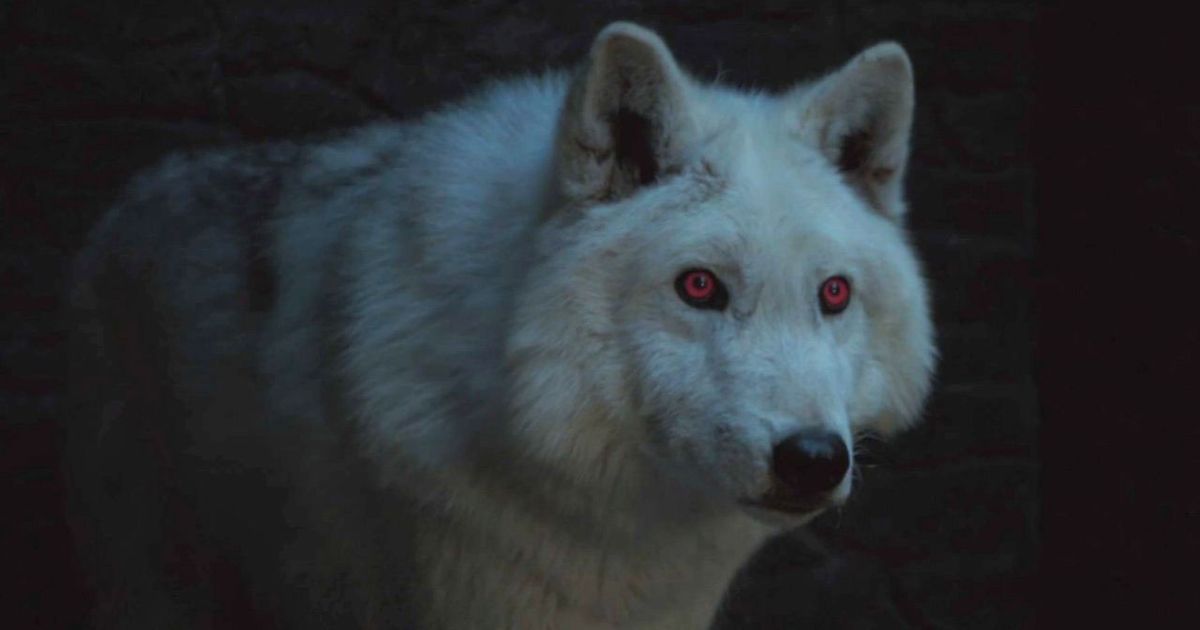
Conclusion: The Digital Legacy of a Direwolf
The disappearance of Ghost on Game of Thrones was not a narrative oversight, but a reflection of the technical boundaries of the time. Ghost existed at the edge of what was possible for television VFX. He was a victim of the high cost of fur simulation, the complexity of scaling real-world animal footage, and the sheer computational demand of competing digital assets.
However, the “Ghost” era was a necessary stepping stone. The technical hurdles the team faced forced the industry to innovate, leading to better grooming tools, more efficient renderers, and a more sophisticated understanding of how to blend digital creatures into live-action environments. While Ghost may have been absent from our screens for longer than fans liked, his legacy lives on in the seamless, high-fidelity digital creatures that now inhabit the modern “Golden Age” of television. The lessons learned from Ghost’s white fur and Quigley’s green-screen performances are now baked into the code of the next generation of visual storytelling.
aViewFromTheCave is a participant in the Amazon Services LLC Associates Program, an affiliate advertising program designed to provide a means for sites to earn advertising fees by advertising and linking to Amazon.com. Amazon, the Amazon logo, AmazonSupply, and the AmazonSupply logo are trademarks of Amazon.com, Inc. or its affiliates. As an Amazon Associate we earn affiliate commissions from qualifying purchases.